

Recent Blogs
Stay updated with our latest blog posts.

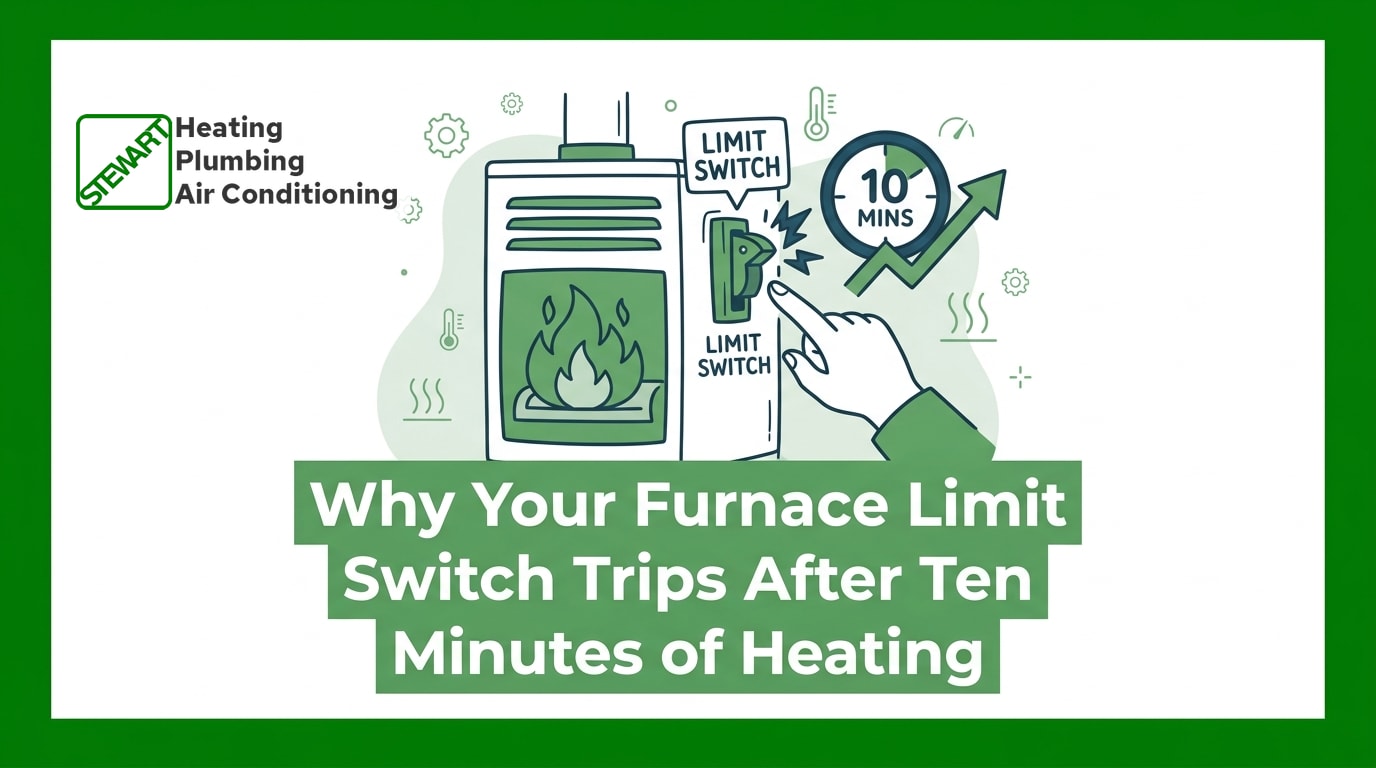
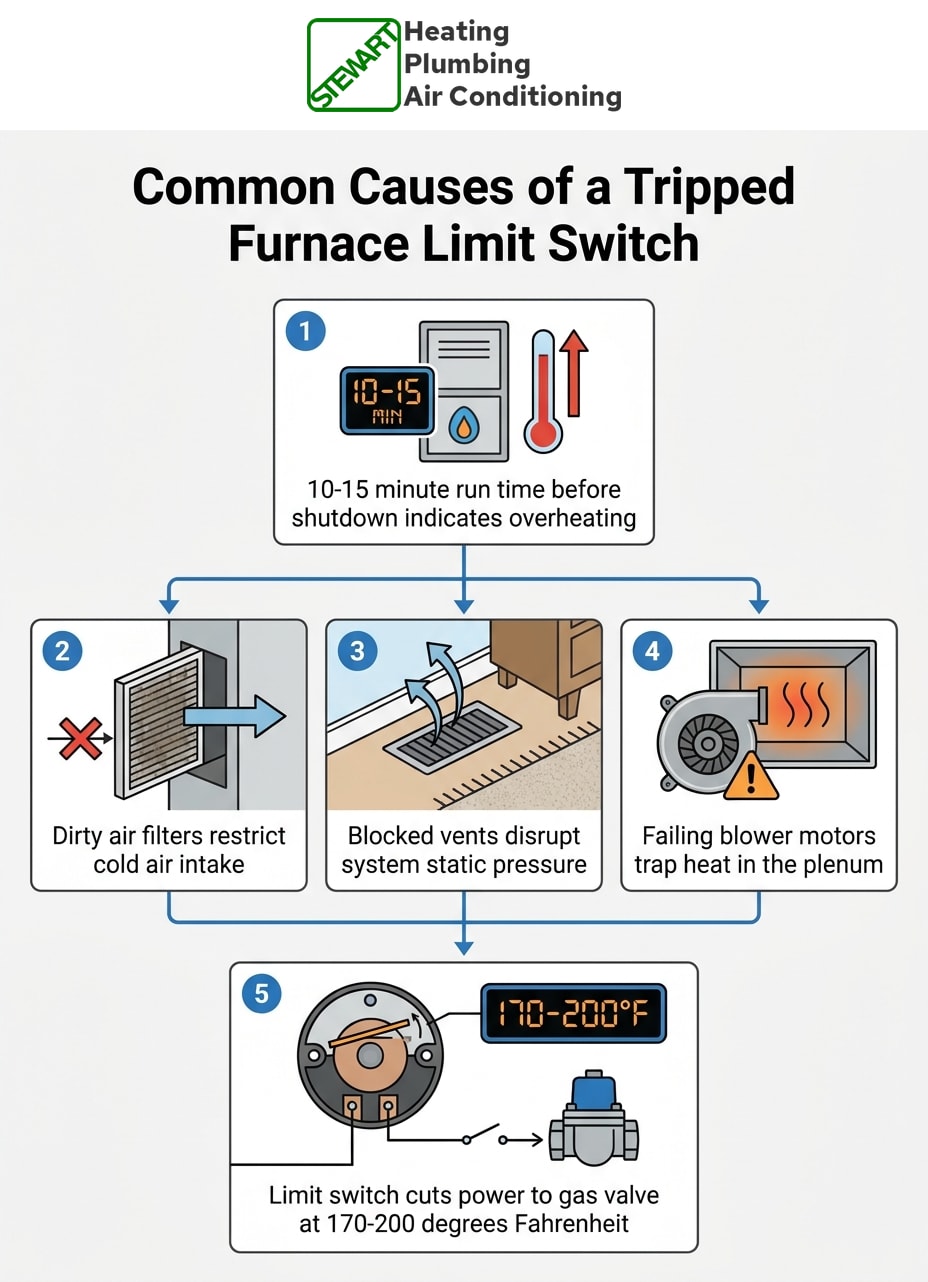
Your thermostat is set to 72 degrees, but the house is stubbornly hovering at 65. The furnace kicks on, warm air begins to flow, and you assume the house will soon be comfortable. But instead of running until the target temperature is reached, the system suddenly goes quiet. If this frustrating cycle repeats itself, you are likely looking for furnace limit switch tripping causes. This specific pattern—a 10-15 minute run time before shutdown—is a massive diagnostic clue for homeowners.
During the first real cold snaps of November in the East Bay, our technicians frequently respond to calls where heating systems are finally forced to run for longer, continuous cycles. These extended runs expose hidden airflow and mechanical issues that shorter, early-autumn cycles mask. When a furnace short-cycles right at the ten-minute mark, our team almost always finds it points to an overheating issue inside the cabinet, rather than an ignition failure. For professional heating services or emergency 24-hour furnace repair in Pittsburg, diagnosing this specific timing is the first step toward restoring reliable warmth.
The timing tells the story:
• Within 3 to 5 seconds: Usually a dirty flame sensor or ignition failure.
• Within 1 to 2 minutes: Often a pressure switch issue related to drafting or venting.
• After 10 to 15 minutes: Almost certainly a furnace limit switch tripping due to internal overheating.
Understanding why this specific delay occurs requires looking closely at how modern heating systems manage internal temperatures and protect your home from severe fire hazards.
The furnace limit switch (often called a high limit switch) is a critical thermal safety device mounted on the furnace housing, with a temperature probe extending directly into the heat exchanger or supply plenum. Its primary job is to monitor the internal temperature of your furnace while it operates. If the internal heat exceeds safe operating thresholds—typically between 170 and 200 degrees Fahrenheit—the switch automatically cuts power to the gas valve, shutting down the burner immediately.
This safety mechanism is a core part of the sequence of operation in a modern gas furnace. The reason you experience a 10-15 minute run time before shutdown is simple physics. It takes time for the heavy metal of the heat exchanger to absorb heat, and it takes time for that trapped heat to build up to dangerous levels if airflow is restricted. The furnace starts normally, the burners ignite, and the blower pushes air. But if that heat isn't being carried away into your ductwork fast enough, the internal temperature steadily climbs until it hits the limit switch's maximum threshold.
Comparing Common Furnace Safety Switches:
• High Limit Switch — Primary Function: Prevents the heat exchanger from overheating — Typical Trip Timing: 10 to 15 minutes — Common Culprit: Restricted airflow (dirty filters, blocked vents)
• Flame Sensor — Primary Function: Confirms burners have actually ignited — Typical Trip Timing: 3 to 5 seconds — Common Culprit: Carbon buildup on the sensor rod
• Pressure Switch — Primary Function: Verifies exhaust gases are venting safely — Typical Trip Timing: 1 to 2 minutes — Common Culprit: Blocked flue pipe or failing inducer motor
• Rollout Switch — Primary Function: Detects flames burning outside the heat exchanger — Typical Trip Timing: Immediate upon ignition — Common Culprit: Cracked heat exchanger or severe draft issue
Once the limit switch trips, the blower motor will usually continue to run for several minutes. This is an intentional design feature meant to cool down the overheated plenum. Once the temperature drops back to a safe level, the limit switch resets, the burners ignite again, and the frustrating short-cycle repeats itself.
When the sudden onset of these 10-minute short-cycles occurs during late fall / November heating prep, homeowners are often caught off guard. The furnace worked perfectly for quick 5-minute morning cycles in October, but fails when asked to heat the house continuously on a freezing night. In our experience working on heating systems across Pittsburg, the root cause is almost always tied to how air moves through the system. If cold air cannot enter the furnace fast enough, or if hot air cannot exit the furnace fast enough, the heat stays trapped inside the metal cabinet.
Based on the hundreds of no-heat calls our team handles every winter, the most frequent culprit behind a tripping limit switch is a clogged air filter. Your furnace needs to breathe. The blower motor pulls cold air from your home through the return ducts, passes it through the air filter, and pushes it over the hot heat exchanger. If the filter is caked in dust, pet dander, and debris, it acts like a solid wall.
When cold air intake is choked off, there is simply not enough air volume moving across the heat exchanger to absorb the heat being generated by the gas burners. The internal temperature spikes rapidly. Checking and replacing a dirty filter is the single most effective way to prevent this specific type of overheating.
Your HVAC system is designed to operate with a specific static pressure balance. Every supply vent (where hot air comes out) and return vent (where cold air gets pulled in) plays a role in maintaining this balance. A common myth our technicians hear from homeowners is that closing vents in unused guest rooms or storage areas will save energy by forcing more heat into the main living spaces.
In reality, closing vents disrupts the system's static pressure. The blower motor has to work against increased resistance, which slows down the overall airflow. Slower airflow means the heat exchanger gets hotter, eventually pushing the internal temperature past the 170-degree threshold. Similarly, blocking large return grilles with heavy furniture, rugs, or dog beds starves the system of the incoming air it desperately needs to keep the limit switch from tripping.
If your filters are clean and your vents are open, the mechanical components of the furnace may be at fault. The blower motor is responsible for physically pushing the heated air out of the plenum and into your ductwork. If the motor is failing, it cannot move enough air to keep the system cool.
Blower motors can fail in several ways. A weak run capacitor can cause the motor to spin too slowly. Worn out bearings can cause the motor to overheat and shut itself down prematurely on its own internal thermal overload. If the blower motor stops or slows down while the gas burners are still firing, the heat has nowhere to go. The limit switch will detect the massive temperature spike and shut off the gas valve to prevent a catastrophic failure.
When a furnace repeatedly shuts down and leaves the house freezing, we unfortunately see some homeowners or inexperienced handymen look for a quick fix. They may find the limit switch and attempt to bypass it by jumping the wires together, forcing the furnace to run continuously regardless of the internal temperature. This is an incredibly dangerous mistake that should never be attempted.
A tripping limit switch is doing exactly what it was engineered to do: protect your home, your family, and your equipment. If you bypass this safety device, the furnace will continue to fire even as the internal temperatures climb to 300, 400, or 500 degrees. This extreme heat creates a severe fire hazard, as the metal housing and nearby combustible materials can ignite.
Furthermore, repeatedly overheating a furnace causes profound metal fatigue. The heat exchanger expands and contracts violently under these extreme temperatures. Over time, this stress causes the metal to crack. A cracked heat exchanger is a fatal failure for a furnace. Worse, it allows deadly carbon monoxide gases from the combustion chamber to leak directly into the supply air being blown into your living room, bedrooms, and hallways. Always respect the 10-15 minute run time before shutdown as a critical warning sign, not a nuisance to be bypassed.
While internal component testing requires a licensed HVAC technician, there are several safe, basic troubleshooting steps you can take. Performing these checks during your late fall / November heating prep can often resolve simple airflow issues without requiring a service call.
1. Check and replace the air filter: Turn off the furnace at the thermostat. Locate your air filter and pull it out. Hold it up to a light source; if you cannot see light shining through the media, it is too dirty and must be replaced. Ensure the arrows on the new filter point toward the furnace unit.
2. Audit all supply and return vents: Walk through every room in your home. Ensure that all supply registers are fully open, even in rooms you don't use often. Check the large return grilles to ensure they are not blocked by sofas, bookshelves, heavy drapes, or thick rugs.
3. Verify thermostat settings: Ensure the thermostat is firmly set to "Heat" and the fan setting is on "Auto." If the fan is set to "On," it will blow continuously, which can sometimes confuse homeowners into thinking the furnace is working even when the burners have shut down.
4. Observe the timing signature: Stand near the furnace and use a stopwatch or your phone to time the cycle. Note exactly when the burners ignite and exactly when they shut off. Confirming the 10 to 15-minute timing signature will be incredibly helpful information to give your technician if a repair is needed.
If you have completed these steps and the furnace continues to short-cycle, it is time to stop troubleshooting and schedule an annual furnace tune-up or diagnostic visit.
There is a strict boundary between basic homeowner maintenance and professional diagnostics. If your filter is clean and your vents are clear, the overheating is likely caused by a mechanical failure that requires specialized training and tools to diagnose safely.
Licensed HVAC professionals do not guess; they measure. When a technician arrives to investigate a limit switch issue, they use a digital manometer to measure the total external static pressure of your ductwork, determining exactly how much resistance the blower motor is fighting. They use a multimeter to safely test the electrical continuity of the limit switch itself, as a switch that has tripped dozens of times can become weak and begin tripping prematurely, even when the furnace isn't actually overheating.
They will also perform a temperature rise test, placing probes in the return and supply plenums to measure the exact difference in air temperature as it moves through the system. This data tells them definitively if the heat exchanger is operating safely. Relying on an established local company for these diagnostics is crucial. At Stewart Heating, Plumbing and Air Conditioning, our team has built a legacy of trusted local service since 1974, emphasizing safety and reliable diagnostics for East Bay homeowners. Regular professional care, such as enrolling in an HVAC maintenance plan, ensures these complex components are tested and calibrated before they leave you in the cold.
This specific 10-15 minute run time before shutdown usually indicates an overheating issue that is triggering the high limit switch. It takes roughly ten minutes for trapped heat to build up inside the furnace cabinet to unsafe levels. The most common reason for this trapped heat is severely restricted airflow caused by a clogged filter or blocked vents.
The primary culprits are dirty air filters, closed or blocked supply vents, obstructed return grilles, and failing blower motors. In more severe cases, a cracked heat exchanger or a failing limit switch that has become overly sensitive from repeated tripping can also cause the system to shut down prematurely.
The only definitive way to know if the switch itself has failed is to have a professional test it with a multimeter. A switch that has been forced to trip repeatedly due to bad airflow may eventually become worn out and trip at lower temperatures, shutting the furnace down even when it is not actually overheating.
No, it is never safe to bypass a limit switch. Disabling this crucial thermal safety device removes the only protection your furnace has against extreme overheating. Bypassing it can lead to cracked heat exchangers, deadly carbon monoxide leaks, and severe house fires.
Yes, a dirty air filter is the most common cause of a tripped limit switch. When the filter is clogged, the blower motor cannot pull enough cold air into the system to absorb the heat generated by the burners. The internal temperature spikes rapidly, forcing the limit switch to shut off the gas valve to prevent a fire.
Your furnace limit switch is an essential safeguard, standing between your family and severe overheating risks. If you are dealing with constant 10-minute short-cycles during your late fall / November heating prep, start by checking your air filters and unblocking your vents. If the system continues to shut down prematurely, do not attempt to bypass the safety controls. Reach out for professional 24-hour furnace repair in Pittsburg to accurately diagnose the airflow or mechanical failure, ensuring your home stays safely warm all winter long.

Very professional and complete. I would recommend Stewart to anyone. Highest quality of workmanship and clean installation.
Stewart Heating Plumbing Air Conditioning just did some work for us for the first time. They did an installation at my home and it turned out well. I thought the price was fair and I definitely would use them again. The technicians were very friendly and knowledgeable about their work. I highly recommend Stewart Heating Plumbing Air Conditioning and already told friends to use them.
We have been using Stewart Heating Plumbing Air Conditioning since 1995. They put the original heating and air unit in the house, and we have just stayed with them. They are dependable and honest people, and they have done a good job for us every time that we have used them!
They came and did an inspection and are coming tomorrow to do the repair.
They replaced a regulator the first time, and then the water heater vent had to be replaced. They did great work.
The gentleman that serviced us was helpful, insightful, and knew what he was talking about. Overall, it was a great experience.