

Recent Blogs
Stay updated with our latest blog posts.

Are you wondering if your aging heating system is truly ready for the incoming November chill, and looking for reliable options comparisons for homeowners to make the right choice? As late fall settles in, our team at Stewart Heating, Plumbing and Air Conditioning knows that many homeowners face a critical pre-winter readiness decision: whether to stick with a familiar gas furnace replacement or transition to a high-efficiency electric heat pump. Evaluating your home's heating setup before temperatures drop significantly is just as critical as securing professional plumbing services before a major pipe leak occurs. Addressing an aging furnace now prevents emergency scrambling later, similar to the urgency of dealing with an unexpected water heater repair.
The primary dilemma centers on balancing two distinct approaches to indoor comfort. On one hand, traditional gas furnaces offer the familiar, high-heat reliability that many households have relied on for decades. On the other hand, modern electric heat pumps provide dual-season efficiency, acting as both an air conditioner in the summer and a highly efficient heater in the winter. Making this choice requires understanding how each system operates, what infrastructure your home currently supports, and how your local climate impacts overall performance.
Waiting until the peak of winter to make a replacement decision often leads to rushed choices and limited equipment availability. By taking the time to evaluate your heating setup in November, you gain the advantage of careful planning. You can weigh the long-term energy savings of electrification against the straightforward installation of a like-for-like gas replacement, ensuring your home remains consistently comfortable throughout the holiday season and beyond.
The problem: In our years of serving Pittsburgh, CA, and the surrounding East Bay Area, we often see homeowners struggle to choose the right heating system because national advice heavily focuses on sub-zero freezing conditions, which rarely apply to our mild Mediterranean climate. The cause: Heating systems are designed with different operational mechanics; some generate intense heat to combat blizzards, while others efficiently move ambient heat to counter moderate chills. The solution: Understanding how heat pumps and gas furnaces operate specifically in our local region allows you to select a system optimized for your actual weather patterns.
Local heating technology has evolved significantly since 1974, and modern systems are uniquely suited to the area's specific climate profile. You no longer have to rely on generic national guidelines that recommend oversized furnaces for mild winter environments.
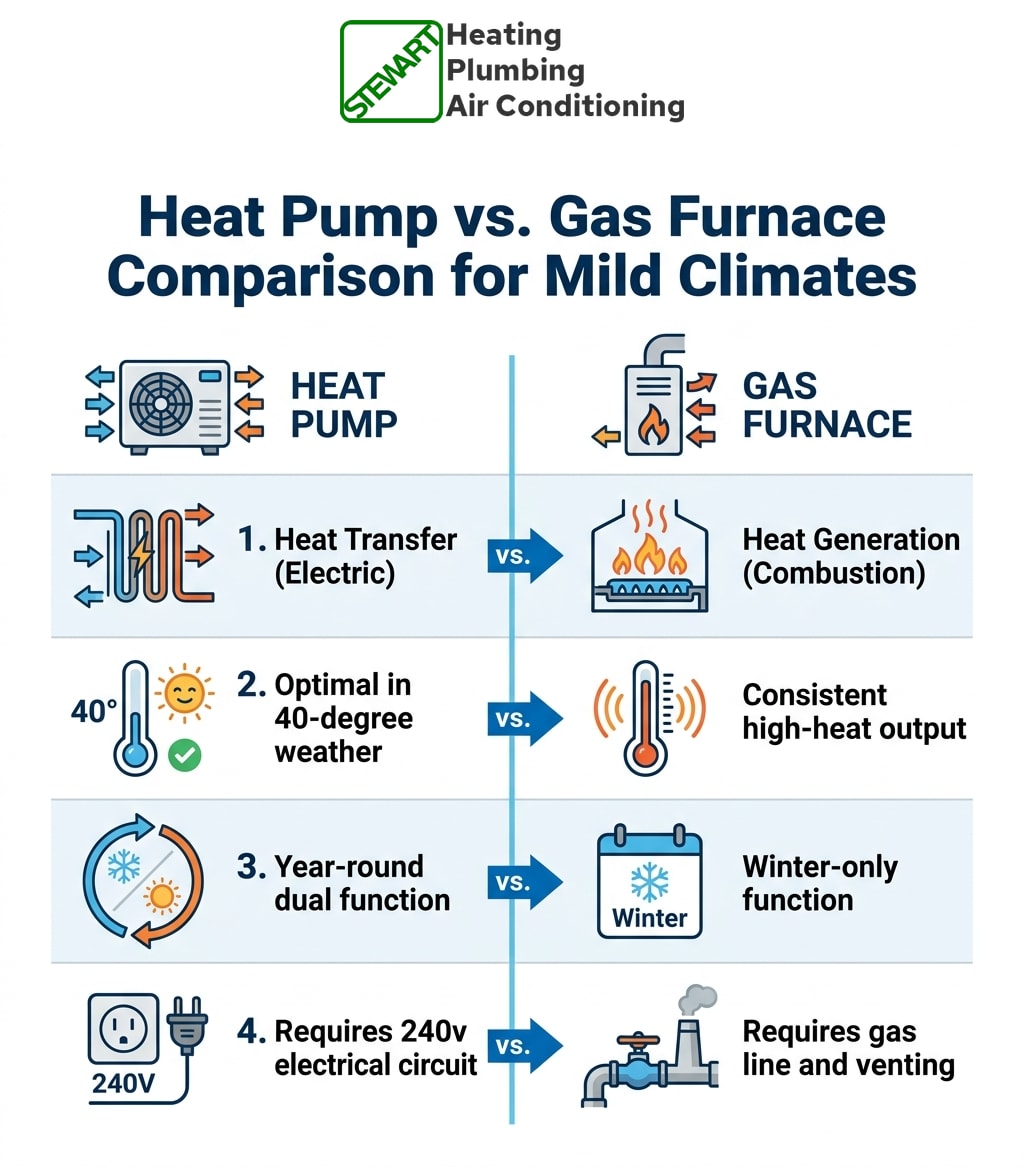
Gas furnaces operate on the principle of heat generation. When your thermostat calls for heat, the furnace opens a gas valve, ignites the burners, and combusts the fuel inside a heat exchanger. The blower motor then forces air over this extremely hot metal surface, delivering rapid, high-temperature air through your ductwork. This combustion process is highly effective at warming a space quickly, but it inherently consumes fossil fuels to create that heat from scratch.
Heat pumps, conversely, operate on the principle of heat transfer. Using a continuous refrigerant cycle, a heat pump extracts existing ambient heat from the outside air, compresses the refrigerant to increase its temperature, and transfers that warmth indoors. Because it moves heat rather than generating it via combustion, a heat pump offers a steady, gradual warmth that is exceptionally energy efficient.
The distinction between heat generation and heat transfer becomes incredibly important when looking at local weather data. Our technicians note that in the East Bay Area, winter lows typically hover in the 40s and rarely drop below freezing. This specific temperature range is the absolute "sweet spot" for heat pump efficiency. At 40 degrees, there is an abundance of ambient thermal energy in the outdoor air for the heat pump to capture and move inside, allowing the system to operate at peak performance without ever needing to activate auxiliary electric heating strips.
Gas furnaces provide consistent, high-heat output regardless of the outdoor temperature. Whether it is 45 degrees or 15 degrees outside, a furnace combusts gas at the same rate to produce the same temperature of air. While this provides a familiar blast of hot air, it can sometimes lead to temperature swings in mild climates, where the system rapidly heats the home, shuts off, and then waits for the temperature to drop again.
When evaluating long-term energy consumption and environmental impact, the metrics used to measure efficiency differ entirely between the two technologies. Transitioning to electric heat generally reduces a home's carbon footprint, especially as the local electrical grid incorporates more renewable energy sources. However, the true efficiency of either system depends on how well it is matched to the home's specific heating load in Pittsburgh, CA.
Gas furnaces are measured by their Annual Fuel Utilization Efficiency (AFUE) rating. This percentage indicates how much of the fuel consumed is successfully converted into usable heat for your home. For example, a modern high-efficiency gas furnace might boast an AFUE rating of 95%, meaning 95% of the gas is turned into heat, while the remaining 5% escapes as exhaust.
Heat pumps are measured by their Heating Seasonal Performance Factor (HSPF) for heating efficiency (and SEER for cooling). Because heat pumps transfer heat rather than creating it, they can deliver more energy into the home than they consume in electricity. A high HSPF rating indicates that the system uses minimal electrical power to move maximum thermal energy, making it vastly more efficient than combustion heating under the right conditions.
Because of the significant reduction in carbon footprint associated with high-efficiency electric heating, various programs exist to encourage homeowners to make the switch. General federal tax credits and utility rebates are widely available to support the installation of qualifying heat pump systems. These electrification incentives can offset the initial investment of transitioning away from fossil fuels.
It is important to remember that generic energy rebates and tax credits change frequently based on legislation and utility funding. Always consult a tax professional or your local utility provider to verify current programs, eligibility requirements, and application processes before finalizing your installation plans.
• Efficiency Metric — Electric Heat Pump: HSPF (Heating Seasonal Performance Factor) — Traditional Gas Furnace: AFUE (Annual Fuel Utilization Efficiency)
• Heat Source — Electric Heat Pump: Transfers ambient heat from outdoor air — Traditional Gas Furnace: Combusts natural gas or propane
• Functionality — Electric Heat Pump: Dual-season (Heats in winter, cools in summer) — Traditional Gas Furnace: Single-season (Heating only)
• Environmental Impact — Electric Heat Pump: Lower carbon footprint, utilizes electricity — Traditional Gas Furnace: Relies on fossil fuel combustion
The physical requirements of your home play a massive role in determining which system is the most practical choice. Replacing a gas furnace with another gas furnace is typically a straightforward process because the necessary infrastructure is already in place. Switching to a heat pump, however, involves a transition from gas to electric power, which requires a thorough professional evaluation of your home's electrical capacity.
Completing this evaluation and subsequent installation during the late fall or November pre-winter readiness window is crucial. It ensures the work is finished before the coldest months of December and January arrive, keeping your household comfortable without interruption.
1. Electrical panel assessment: Heat pumps require dedicated 240-volt circuits to operate the compressor and air handler. A professional must inspect your main breaker box to ensure it has the physical space and amperage capacity to support this new load.
2. Determining upgrade needs: If your home still operates on an older 100-amp service panel, transitioning to a whole-home electric heat pump will likely require a panel upgrade to 200 amps to safely handle the increased electrical demand.
3. Routing new wiring: If you are switching from gas, a licensed electrician will need to run new, heavy-gauge wiring from the electrical panel to the outdoor unit and indoor air handler locations.
1. Safely capping gas lines: If you choose to transition fully to an electric heat pump, the existing gas line that previously fed your furnace must be safely and permanently capped by a licensed professional to prevent any risk of leaks.
2. Evaluating exhaust flues: Gas furnaces require specialized venting to safely expel combustion byproducts like carbon monoxide outside the home. If you are installing a new high-efficiency gas furnace, the existing flue may need to be retrofitted with PVC piping to handle the cooler, acidic exhaust gases produced by modern condensing furnaces.
3. Professional assessment: Under no circumstances should homeowners attempt to modify gas lines or high-voltage electrical circuits. A professional assessment is strictly required to safely manage these connections and ensure all work meets local building codes.
Routine upkeep is a pattern we see often as the deciding factor in how long any mechanical system lasts. Gas furnaces require annual checks focused heavily on safety. A technician must inspect the heat exchanger for microscopic cracks that could leak carbon monoxide, clean the burners to ensure efficient combustion, and test the ignition sequence. Because a furnace sits dormant for half the year, this annual check is vital before firing it up for the first time.
Year-round operation means heat pumps have different maintenance expectations. Because a heat pump operates continuously to provide both air conditioning in the summer and heating in the winter, it processes twice as much air and runs twice as many hours as a standalone furnace. Therefore, heat pumps require bi-annual maintenance—once in the spring before cooling season, and once in the fall before heating season—to clean the coils, check refrigerant levels, and clear the condensate drains.
November is the critical window for heating maintenance. When our technicians perform a pre-winter inspection, we ensure that any worn components, such as failing capacitors or frayed blower belts, are identified and replaced before they cause a complete system breakdown during a cold snap. During a tune-up, technicians check electrical connections, calibrate the thermostat, and measure airflow to ensure the system is operating at the manufacturer's specified efficiency levels.
Comparing heating maintenance to other household systems reveals a clear pattern: preventative care saves time and stress. Just as a routine plumbing maintenance plan keeps water flowing safely and prevents burst pipes, regular HVAC maintenance ensures safe airflow and prevents heating failures. When scheduling your late fall pre-winter readiness checks, it is highly convenient to address multiple home systems simultaneously. Look for comprehensive service providers or plumbing repair specials that allow you to coordinate your HVAC and plumbing inspections, ensuring your entire home is secured for the winter season.
The short answer our team gives is that "better" depends entirely on your local climate and home infrastructure. In the mild East Bay Area, heat pumps are exceptionally efficient because they transfer ambient heat rather than burning fossil fuels, offering dual-season heating and cooling. However, a gas furnace may be the better choice if your home lacks the electrical capacity for a heat pump and you prefer the familiar, rapid high-heat delivery of combustion heating.
Standard air-source heat pumps typically begin to lose efficiency when outdoor temperatures drop below 25 to 30 degrees Fahrenheit. Because winter lows in Pittsburgh, CA, rarely drop below freezing, a heat pump operates in its peak efficiency zone almost all winter long. In regions with severe sub-zero winters, heat pumps must rely on auxiliary electric heating strips, but local homeowners generally do not have to worry about this drop in performance.
Yes, replacing a gas furnace with a heat pump is a very common upgrade, but it requires specific infrastructure changes. You will need a professional to safely cap the existing gas line and assess your electrical panel to ensure it can support the dedicated 240-volt circuits required by the new electric system. Diagnosing a complex heat pump compatibility issue requires the same professional expertise as understanding why your water heater pressure switch failed open.
Heat pumps work exceptionally well in Northern California, particularly in coastal and bay areas. The mild Mediterranean climate provides the perfect operating environment, as the system can easily extract thermal energy from the moderate outdoor air. This allows homeowners to achieve significant energy efficiency without the need for backup combustion heating.
Before switching, you should evaluate your current electrical panel capacity, the condition of your existing ductwork, and your long-term energy goals. You should also consider the availability of general federal tax credits or utility rebates that encourage electrification. Finally, factor in the benefit of gaining a central air conditioning system, as a heat pump provides both heating and cooling from a single unit.
A standard gas furnace replacement typically takes one to two days, assuming the existing ductwork and gas lines are in good condition. Transitioning from a gas furnace to a heat pump can take two to three days, as it often involves running new electrical wiring, capping gas lines, and installing both an indoor air handler and an outdoor compressor unit. Scheduling this work during the late fall ensures the installation is completed before peak winter demand.
Ultimately, the best choice depends on your home's current infrastructure and your preference for familiar gas heat versus dual-season electric efficiency. By reviewing these options comparisons for homeowners, you can clearly see how the mild East Bay climate uniquely benefits heat pump technology, while traditional gas furnaces remain a reliable, straightforward replacement option for homes already equipped with gas lines.
At Stewart Heating, Plumbing and Air Conditioning, we highly recommend making this critical decision during the late fall or November pre-winter readiness period, well before the holiday season and peak winter temperatures arrive. Rushing a heating replacement in the middle of a cold snap often leads to limited choices and stressful installations. Consult with a neutral, experienced professional to evaluate your specific home layout, test your electrical capacity, and help you select the heating system that will provide consistent, efficient comfort for years to come.

Very professional and complete. I would recommend Stewart to anyone. Highest quality of workmanship and clean installation.
Stewart Heating Plumbing Air Conditioning just did some work for us for the first time. They did an installation at my home and it turned out well. I thought the price was fair and I definitely would use them again. The technicians were very friendly and knowledgeable about their work. I highly recommend Stewart Heating Plumbing Air Conditioning and already told friends to use them.
We have been using Stewart Heating Plumbing Air Conditioning since 1995. They put the original heating and air unit in the house, and we have just stayed with them. They are dependable and honest people, and they have done a good job for us every time that we have used them!
They came and did an inspection and are coming tomorrow to do the repair.
They replaced a regulator the first time, and then the water heater vent had to be replaced. They did great work.
The gentleman that serviced us was helpful, insightful, and knew what he was talking about. Overall, it was a great experience.