

Recent Blogs
Stay updated with our latest blog posts.


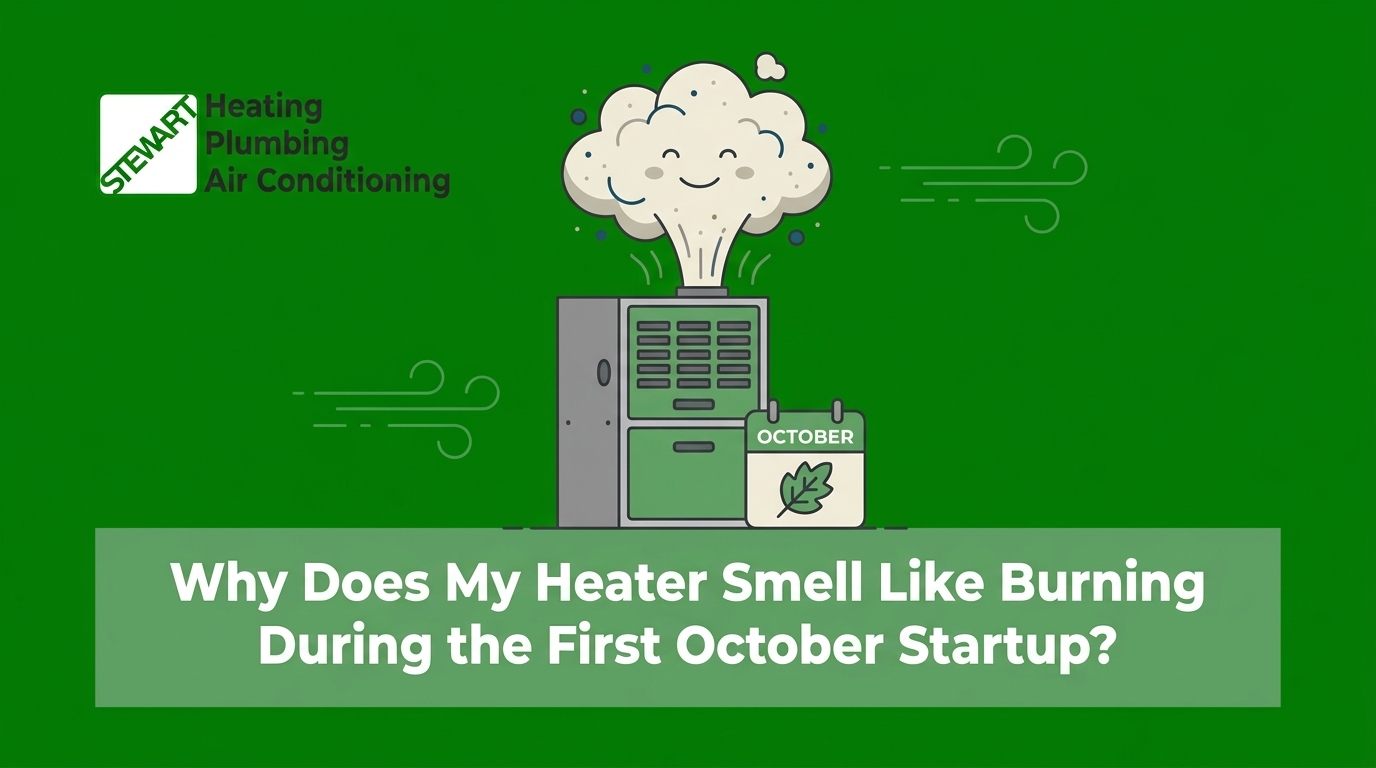
If you are searching for common homeowner questions answered regarding that alarming burning smell coming from your vents during the first October cold snap, you are not alone. In fact, our team at Stewart Heating, Plumbing and Air Conditioning fields this exact concern dozens of times every fall. The transition into autumn brings a specific set of household challenges. You walk over to the thermostat, switch the system from cooling to heating for the first time in months, and wait for that comforting rush of warm air. Instead, within minutes, a distinct, acrid odor begins to fill your hallways and living spaces. For most people, the immediate reaction is panic. You might wonder if something has caught fire inside the ductwork or if the entire heating system is on the verge of a catastrophic failure.
This exact scenario represents a critical decision point for homeowners: identifying whether that odor is a harmless seasonal occurrence or a genuine mechanical emergency. While you might be diligently prepping other household systems like your water heaters for the changing weather, the furnace requires its own specific attention and understanding. A heating system sits dormant for over half the year, accumulating environmental debris. When it finally roars to life, the results are highly noticeable.
The good news is that understanding what is happening inside that metal cabinet can provide immediate peace of mind. Not every unusual odor requires a panicked response. However, if any home system fails during this seasonal transition, you should know that help is readily available. Whether you need to request plumbing service for a sudden leak or require professional HVAC diagnostics for a failing blower motor, having a plan in place removes the stress from the first October cold snap.
To understand why your heating system produces that distinct burning smell, we have to look at the environment surrounding it. Having served Pittsburgh CA and the surrounding East Bay area since 1974, our technicians have seen firsthand how the local Mediterranean climate plays a massive role in how your HVAC equipment operates. We experience long, exceptionally dry summers with virtually no rainfall for months at a time. During this extended dry season, airborne particulate matter, pollen, pet dander, and general household dust circulate through your home and eventually settle heavily on the dormant components of your heating system.
The Mechanics of the Burn-Off
Inside your furnace is a component called the heat exchanger. This is essentially a series of metal tubes or coils that separate the combustion process from the air you breathe. When you turn on your heat for the first time, the burners ignite, and the flames shoot into the heat exchanger. The metal surfaces of the heat exchanger heat up incredibly fast, often reaching temperatures well over 400 degrees Fahrenheit in a matter of seconds.
Because the system has been sitting idle throughout the long, dry summer, a thick layer of dust has coated that metal surface. When the heat exchanger rapidly hits 400 degrees, all of that accumulated dust is instantly vaporized. This sudden incineration creates a highly recognizable warm, dusty, slightly singed odor that the blower motor then forcefully pushes through your ductwork and into every room of your house.
While the smell can be overwhelming—especially if your system is located in a central closet or basement—this specific type of dust burn-off is a completely standard mechanical process. It is a byproduct of the local climate and the system's long dormancy, not an immediate fire hazard. Understanding the underlying cause helps homeowners in East Bay / Pittsburgh CA area homes remain calm and evaluate the situation objectively rather than rushing to shut down a perfectly functional system.
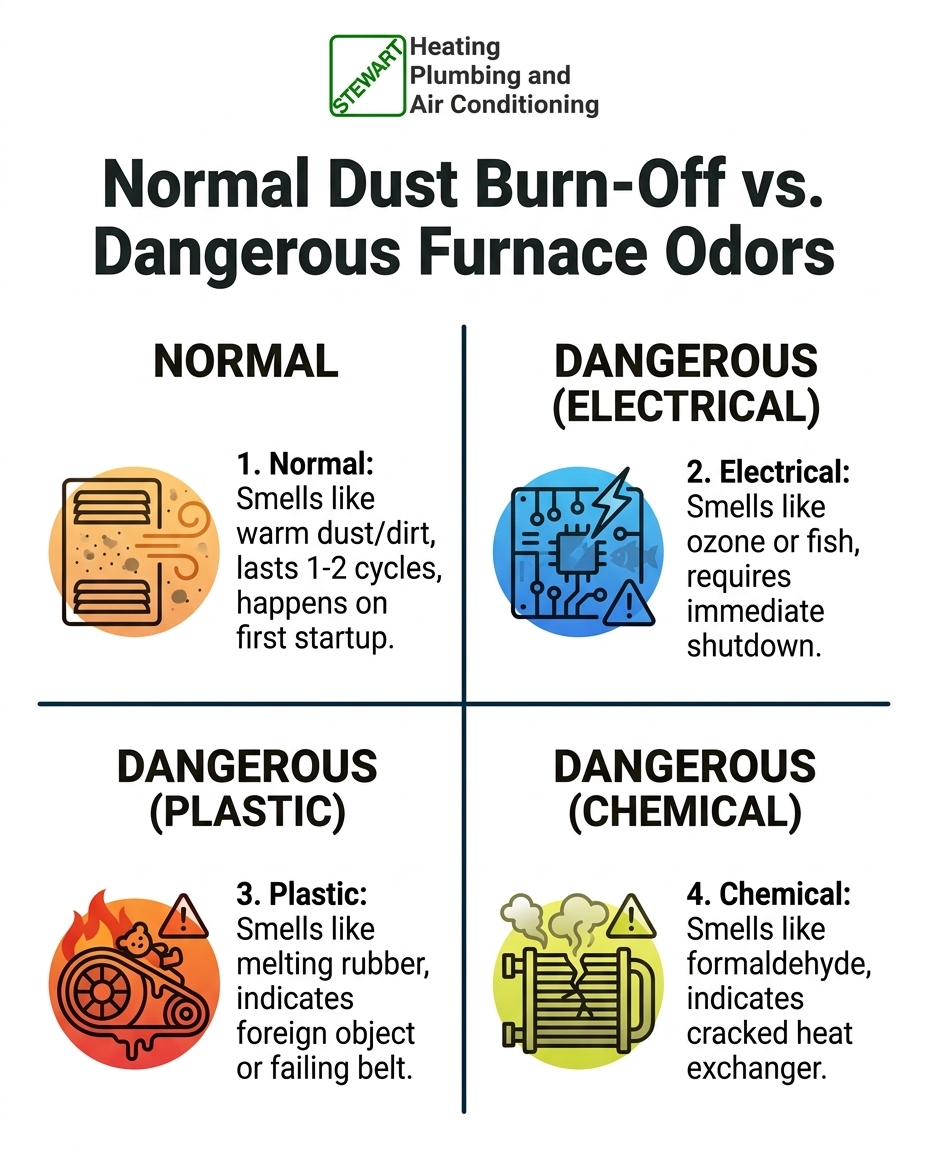
Not all burning smells are created equal. While the initial dust burn-off is harmless, other odors indicate severe mechanical distress. On our fall maintenance routes, our team typically sees a few distinct patterns, and knowing how to categorize the specific scent coming from your vents during the first October cold snap is the most important diagnostic tool you have. Here is a breakdown of the most common odors and what they mean for your system.
• The "Normal Dust" Smell: This odor typically resembles warm dirt, singed lint, or a slightly musty, dry burning scent. It is usually uniform throughout the house and begins to fade relatively quickly after the system reaches its target temperature.
• The "Electrical" Smell: If you detect a sharp, metallic, or ozone-like odor—similar to an overheating appliance or a sparking wire—this is a red flag. It often indicates that the blower motor is overheating, a wire casing is melting, or a capacitor is failing.
• The "Plastic or Rubber" Smell: An acrid, melting odor that catches in the back of your throat usually points to a physical obstruction. This can happen if a foreign object (like a child's toy) falls into the ductwork near the heat source, or if a rubber fan belt inside the blower assembly is slipping and burning due to friction.
• The "Chemical or Gas" Smell: A sharp, formaldehyde-like odor, or the distinct smell of raw natural gas (which resembles rotten eggs), points to a severe, immediate safety threat that requires emergency intervention.
The most critical hazard to watch for is a cracked heat exchanger. Over years of operation, the continuous expansion and contraction of the metal can cause microscopic cracks to form. When this happens, the toxic gases produced during combustion—most notably carbon monoxide—can leak out of the combustion chamber and mix with the clean air being blown into your home.
A cracked heat exchanger often produces a distinct, unpleasant chemical smell, sometimes described as smelling like formaldehyde. Because carbon monoxide itself is odorless and invisible, this chemical byproduct smell is often your only sensory warning. If your carbon monoxide detectors trigger alongside an unusual odor during the first October cold snap, you must shut the system down immediately, open your windows, and evacuate the home until a professional can assess the danger.
Once you have identified that the odor is likely just normal dust burn-off, the next question is how long you should tolerate it. When walking customers through startup issues in Pittsburgh CA area homes, we rely on a clear, non-alarmist timeline to determine when a smell transitions from a harmless nuisance to a problem that requires professional intervention. This is known as the 1-to-2 Cycle Rule.
A "heating cycle" refers to the entire process of the thermostat calling for heat, the system turning on, warming the house to the desired temperature, and then shutting off. Here is how to apply the rule safely:
1. Monitor the First Cycle: When you first turn the system on, note the time. A standard heating cycle usually lasts between 15 to 30 minutes, depending on how cold the house is. The dust smell will be strongest during the first 10 minutes.
2. Ventilate the Space: To help clear the air and make the environment more comfortable, open a few windows or doors to create a cross-breeze. This allows the vaporized particulate matter to escape rather than continuously recirculating through your return vents.
3. Observe the Second Cycle: Once the house reaches the target temperature, the system will shut off. When it kicks on for the second time, pay close attention. The burning dust smell should be significantly reduced, if not entirely gone.
4. Evaluate the Outcome: By the end of the second complete cycle (typically 30 to 60 minutes of total run time), the odor should have dissipated completely.
If the smell persists beyond two full cycles, grows stronger, or rapidly changes from a dusty scent to an electrical or plastic scent, you must take action. Never ignore persistent smells in the hopes that they will eventually fade away. A smell that outlasts the 1-to-2 Cycle Rule in East Bay / Pittsburgh CA area homes is a clear indicator that the issue is mechanical rather than environmental.
Safety must always be the ultimate priority when dealing with combustion appliances. While the 1-to-2 Cycle Rule provides a great baseline for harmless dust, there are exact parameters for when you should skip the waiting period entirely and escalate the issue to an HVAC technician. If the smell is electrical, smells like melting plastic, or triggers any of your home's smoke or carbon monoxide alarms during that first October cold snap, go straight to your thermostat and shut the system off immediately.
Professional diagnostics are absolutely required for persistent or hazardous smells. Allowing a system to run while a blower motor is actively overheating can turn a minor repair into a catastrophic failure, potentially requiring a complete system replacement. Similarly, running a furnace with a compromised heat exchanger puts your family's health at immediate risk.
In our decades of experience, we've found that one of the best ways to avoid the stress of a scary startup is by enrolling in a routine maintenance plan. When a professional technician cleans and inspects your system before the cold weather hits, they remove the thick layer of summer dust from the heat exchanger, lubricate the moving parts, and test the electrical draw of the motors. This proactive approach eliminates the source of the burning smell before you ever turn the thermostat to "heat."
If you do encounter a persistent odor, remember that you should never attempt to disassemble the furnace cabinet or diagnose high-voltage electrical components yourself. Modern heating systems are complex and require specialized tools to test safely. At Stewart Heating, Plumbing and Air Conditioning, we focus on providing trusted, no-pressure diagnostics. This means that if you call us out for an inspection, you won't face aggressive upselling tactics—just honest, straightforward answers about the safety and condition of your equipment during the first October cold snap.
While the furnace often demands the most attention during the first true chill of the season, comprehensive fall maintenance requires looking at the entire house. The sudden shift from hot late-summer days to chilly autumn nights puts sudden, immense stress on all household mechanical systems simultaneously. The transition to cooler weather in East Bay / Pittsburgh CA area homes impacts much more than just the ambient air temperature inside your living room; dropping temperatures also drastically affect incoming groundwater.
As the ground temperature cools throughout October and November, the water traveling through the municipal pipes to your house gets significantly colder. This means your water heating systems have to work much harder to raise that cold water to a comfortable shower temperature. This sudden increase in demand is exactly why your tankless water heater randomly runs cold during showers if it has not been properly descaled and maintained for the season. The heat exchanger inside the water heater struggles to overcome the temperature differential of the freezing incoming water.
To prevent multiple systems from failing at once, our plumbing and HVAC experts highly recommend addressing all your seasonal utility needs simultaneously. Securing professional plumbing solutions in the fall ensures that your pipes are insulated, your water pressure is regulated, and your water heaters are flushed and ready for the heavy winter workload. Taking a holistic approach to home maintenance provides the ultimate peace of mind, knowing that whether it's the air in your vents or the water in your pipes, your home is fully prepped and winter-ready.
Yes, a brief burning dust smell is entirely normal for the first use of the season as settled particles vaporize off the heat exchanger. Because the system sits unused throughout the long summer, airborne dust accumulates heavily on the internal components. When the furnace ignites during the first October cold snap, the metal surfaces heat up rapidly, instantly incinerating this dust layer and pushing the resulting odor through your vents.
The standard dust burn-off odor should last no longer than 1 to 2 heating cycles, typically clearing out within 30 to 60 minutes. As the furnace runs and reaches its target temperature, the accumulated debris is completely burned away. If you open a few windows to ventilate the space during this initial run, the smell will dissipate even faster.
While dust smells are harmless, odors resembling burning plastic, ozone, electrical melting, or formaldehyde indicate dangerous mechanical failures and require immediate shutdown. A sharp electrical scent often means a motor is failing or wires are overheating, which can lead to a fire hazard. You must differentiate between the smell of warm dirt and the acrid smell of melting components.
A cracked heat exchanger often produces a sharp, unpleasant chemical odor similar to formaldehyde, and may be accompanied by carbon monoxide detector alerts. This happens because the toxic gases created during the combustion process are escaping the chamber and mixing with your breathing air. If you notice this specific chemical smell, turn off the system immediately and evacuate the area.
In our experience, a burning plastic smell usually means a foreign object has fallen into the ductwork, or an internal component like a fan belt or wire casing is overheating and melting. This often occurs if items are stored too close to the furnace cabinet or if small objects find their way into the floor registers. This is not a smell that will simply fade away; it requires a professional inspection to locate and remove the melting material.
You should be worried if the burning smell persists beyond two complete heating cycles, if the odor is sharp and chemical rather than dusty, or if any safety alarms in your home are triggered. Persistent smells indicate that the system is actively damaging itself or venting dangerous gases. In these scenarios, keeping the system running will only cause further damage to the equipment.
Knowing the difference between normal dust burn-off and dangerous mechanical odors provides the ultimate peace of mind as the weather cools down. For East Bay / Pittsburgh CA area homes, dealing with a dusty startup is often just a normal part of transitioning into the colder months. The core takeaway is simple: wait out the dust for one to two cycles, but never ignore sharp electrical, plastic, or chemical smells.
If you have followed the 1-to-2 Cycle Rule and the odor hasn't faded, or if you simply feel unsafe operating the equipment, it is always better to err on the side of caution. Reach out to a trusted local expert if you have any lingering doubts about your system's safety. With our family-owned, community-focused legacy serving Pittsburgh CA since 1974, the Stewart Heating, Plumbing and Air Conditioning team is dedicated to providing honest advice and thorough inspections rather than high-pressure sales pitches. Schedule a comprehensive inspection today to ensure your home remains safe, warm, and comfortable all season long.

Very professional and complete. I would recommend Stewart to anyone. Highest quality of workmanship and clean installation.
Stewart Heating Plumbing Air Conditioning just did some work for us for the first time. They did an installation at my home and it turned out well. I thought the price was fair and I definitely would use them again. The technicians were very friendly and knowledgeable about their work. I highly recommend Stewart Heating Plumbing Air Conditioning and already told friends to use them.
We have been using Stewart Heating Plumbing Air Conditioning since 1995. They put the original heating and air unit in the house, and we have just stayed with them. They are dependable and honest people, and they have done a good job for us every time that we have used them!
They came and did an inspection and are coming tomorrow to do the repair.
They replaced a regulator the first time, and then the water heater vent had to be replaced. They did great work.
The gentleman that serviced us was helpful, insightful, and knew what he was talking about. Overall, it was a great experience.