

Recent Blogs
Stay updated with our latest blog posts.

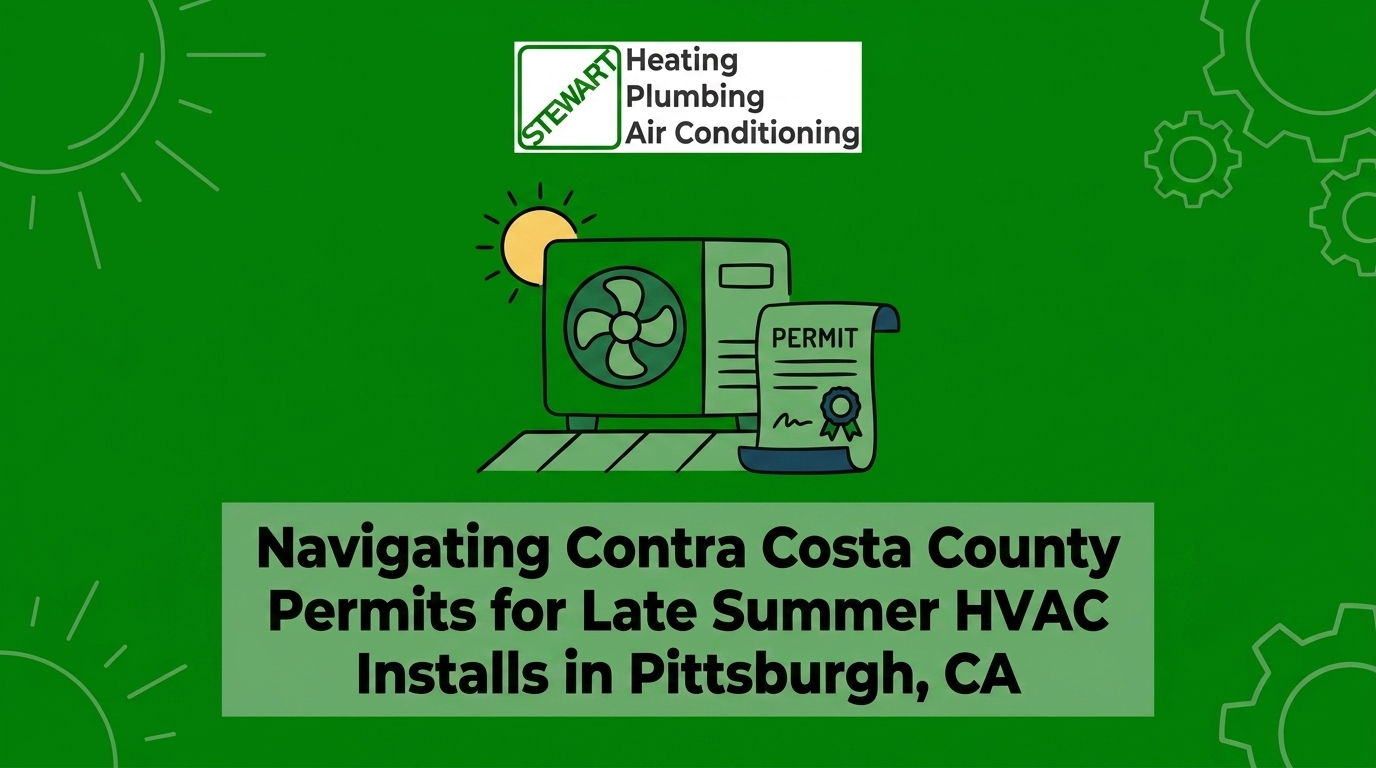
Your AC is running nonstop, but the house still feels warm. Navigating Contra Costa County permits for late summer HVAC installs might be the last thing on your mind when your system suddenly dies. When the August late-summer heat hits the region and temperatures push into the 90s and 100s, a broken air conditioner turns your home into an uncomfortable, sweltering environment. The panic sets in quickly, and your first instinct is simply to get the cold air flowing again as fast as humanly possible.
We see this urgency all the time. One local homeowner reached out during a hot summer holiday weekend when their air conditioning started blowing warm air. A technician was dispatched on Friday evening of Labor Day weekend, spent two hours troubleshooting, and discovered a loose wire that had caused the system to fail. They had their cooling restored right in the middle of the heatwave. But when a system cannot be repaired and requires a full replacement, the timeline changes, and homeowners face a critical choice.
The temptation to skip municipal permitting to get your cooling restored faster is incredibly high during these peak demand months. However, choosing a fully permitted installation over a risky, unpermitted rush job is one of the most important decisions you will make for your home. Proper permitting is a vital homeowner protection, not just bureaucratic red tape. If you are looking for professional air conditioning services, understanding this process is the first step toward a safe, long-lasting installation.
High seasonal demand in Pittsburgh, CA, often leads to a surge in unpermitted "cash" installations. When reputable companies are booked out for days or weeks, you might find an unlicensed contractor willing to swap out your equipment the very next morning—provided you pay in cash and do not ask for a permit. This shortcut is a dangerous gamble that puts your home, your family, and your wallet at serious risk.
Bypassing the county permit means bypassing mandatory safety checks on a major, high-voltage appliance. A typical pattern we see with unpermitted jobs is a complete disregard for electrical load calculations and mechanical clearances. If the new unit draws more power than the old wiring can handle, or if it is installed too close to combustible materials, the immediate safety risks are severe.
Furthermore, rushing the installation process almost always leads to poor system performance and premature breakdowns. An unpermitted contractor has no incentive to double-check their work, measure airflow, or ensure the refrigerant charge is exact. Proper permitting forces accountability. It ensures the contractor performing the work is licensed, bonded, and insured to operate in Contra Costa County.
• Electrical Safety — Permitted & Code-Compliant Job: Verified by a neutral county inspector. — Unpermitted "Cash" Job: No oversight; high risk of overloaded circuits.
• Contractor Accountability — Permitted & Code-Compliant Job: License and insurance verified by the county. — Unpermitted "Cash" Job: Often unlicensed; contractor can disappear after payment.
• System Performance — Permitted & Code-Compliant Job: Tested to meet strict state efficiency standards. — Unpermitted "Cash" Job: Rarely calibrated correctly; higher energy bills.
• Legal Standing — Permitted & Code-Compliant Job: Fully documented for insurance and future home sales. — Unpermitted "Cash" Job: Undocumented; can cause major real estate hurdles.
The bottom line: Taking a shortcut during an August heatwave might get you cold air a day sooner, but it leaves you vulnerable to massive liabilities down the road.
Many homeowners dread the idea of a county inspection because they assume it will be intrusive or overly complicated. In reality, the Contra Costa County building inspection process is straightforward and designed entirely to protect you. The inspector works for the county, acting as an unbiased third party whose only goal is to ensure your new HVAC system is safe to operate.
After the physical installation is complete and your home is cooling again, the final step is scheduling the municipal inspection. The inspector will visit your property to evaluate the work against current building codes. They are looking for specific mechanical clearances to prevent fire hazards and ensure the equipment has proper airflow for optimal performance. They will check the exhaust venting on gas furnaces, the structural integrity of the mounting pad or brackets, and the sealing of the ductwork connections.
The most critical part of the county inspection revolves around electrical safety. Modern air conditioning units draw significant amperage, requiring perfectly calibrated breakers, disconnect boxes, and wiring. The inspector will verify that the wire sizing matches the unit's requirements and that the system is on a dedicated circuit.
Unpermitted electrical work is a leading cause of preventable home electrical fires. If a contractor uses an undersized wire for a high-efficiency compressor, the wire can overheat, melt its insulation, and spark a fire inside your walls. The county inspector physically checks these electrical connections, verifying that the disconnect switch is properly located and that all high-voltage wiring is safely housed in conduit.
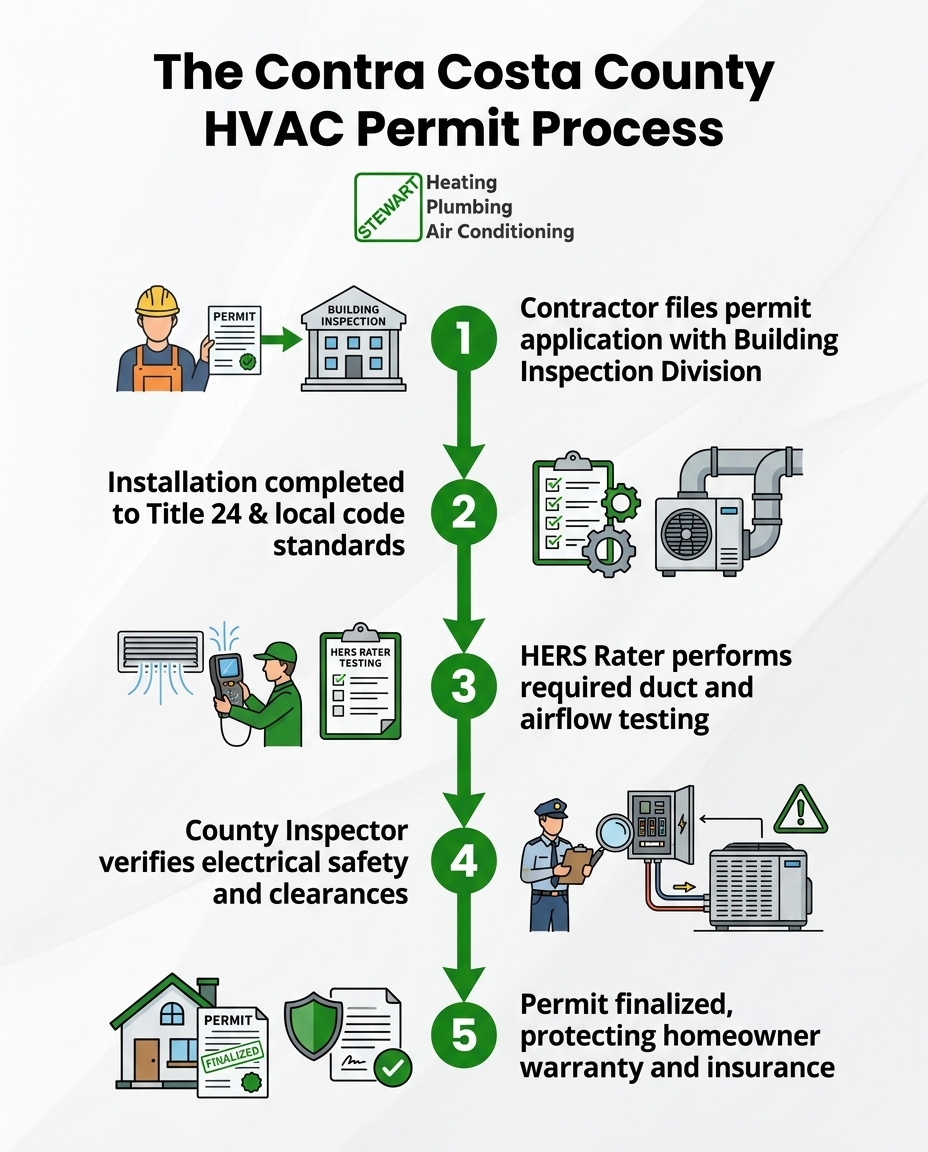
Beyond local county codes, every new HVAC installation in Pittsburgh, CA, must comply with state-level energy efficiency mandates. California Title 24 energy efficiency standards apply to all residential HVAC alterations, ensuring that homes consume less power and place less strain on the state's electrical grid during peak summer months.
Pittsburgh falls under specific climate zone regulations—specifically Climate Zone 12—which dictate strict equipment efficiency minimums. Because this region experiences significant temperature swings, the state requires that your new system meets baseline performance metrics tailored to this exact climate.
A major component of Title 24 compliance is the HERS (Home Energy Rating System) duct testing requirement. Here is what this process entails:
• Independent Verification: A certified, third-party HERS rater visits your home to test the system, completely separate from your installation contractor.
• Duct Leakage Testing: They pressurize your ductwork to measure how much air is escaping into unconditioned spaces like your attic or crawlspace.
• Airflow Measurement: They verify that the blower motor is pushing the correct volume of air over the indoor coil, preventing the system from freezing up.
• Refrigerant Charge Verification: They ensure the system has the exact amount of refrigerant required for peak efficiency.
The long-term benefit: While Title 24 adds a step to the installation process, it guarantees that your cooled air isn't leaking into a 130-degree attic. Compliance with these standards ultimately lowers your monthly utility bills and extends the lifespan of your equipment.
The consequences of skipping the permitting process extend far beyond the installation day. A permit is an investment in your home's legal and structural integrity, protecting your finances for years to come.
First, consider your equipment warranty. Major HVAC manufacturers explicitly require proof of a licensed, permitted installation to honor their warranties. If your compressor fails three years down the line and the manufacturer discovers the unit was installed without a permit, they can—and often will—void the warranty entirely, leaving you to cover the cost of a major repair out of pocket.
Second, unpermitted electrical work poses a massive risk to your homeowners insurance. If an unpermitted, incorrectly wired air conditioner causes a fire or significant property damage, your insurance provider will investigate the cause. When they find undocumented electrical modifications, they have grounds to deny your claim entirely.
Finally, unpermitted work creates massive headaches when it is time to sell your home. During a real estate transaction, buyers will request a home inspection. If the inspector notices a brand-new AC unit but the county has no permit on file, the buyer can demand that you pull a retroactive permit. This often requires opening up walls to expose wiring or paying hefty fines to the county. Doing the job right the first time is a key part of understanding how a new HVAC system increases home value without leaving hidden liabilities behind.
It is true that permitted, code-compliant installations require a larger upfront investment compared to under-the-table jobs. Pulling permits, hiring HERS raters, and ensuring every piece of wiring meets current codes takes time and resources. However, when you look at the total cost of ownership, compliance is always the more affordable route.
Avoiding future county fines, voided equipment warranties, and catastrophic safety hazards makes a permitted installation significantly cheaper in the long run. The hidden costs of cheap labor usually surface right when you need your system the most—during the next major heatwave.
Additionally, choosing a compliant installation opens the door to financial incentives. Many local utility programs and federal tax credits offer generic energy rebates for high-efficiency upgrades. These programs almost always require proof of a permitted installation, a HERS test, and a licensed contractor to qualify. If you hire an unpermitted contractor, you forfeit your right to claim these valuable incentives.
If the upfront investment is a concern, established contractors offer flexible payment solutions that make doing the job right financially accessible. You do not have to settle for unsafe work just to fit a budget. Exploring air conditioning and heating financing options allows you to spread the cost of a premium, fully permitted installation over time while enjoying immediate, reliable comfort.
The most common reason homeowners hesitate to pull a permit is the fear of dealing with local government bureaucracy. The good news is that you do not have to navigate this process yourself. A reputable HVAC contractor handles the entire permitting process on your behalf, from filing the initial application to scheduling the final county inspection.
Since 1974, Stewart Heating, Plumbing and Air Conditioning has built strong, established relationships with local municipal offices. This decades-long local experience means we have mastered the Contra Costa County permitting process, ensuring zero homeowner stress. We know exactly what the inspectors require, which paperwork to file, and how to streamline the approval timeline.
Most importantly, you do not have to wait for the final inspection to get your cooling back. Your contractor can safely install the new system and get your air conditioning running immediately. While you enjoy a comfortable home, your contractor will act as your advocate, managing the administrative HERS testing and county inspection process in the background. If you are ready to upgrade your comfort the right way, you can schedule your HVAC installation estimate today.
Yes, California law requires a building permit for any HVAC replacement or significant alteration. This state-wide mandate ensures that all new equipment meets strict safety and energy efficiency standards. Bypassing this requirement violates local building codes and can result in significant fines from your local municipality.
Contra Costa County requires permits to verify that the installation is mechanically and electrically safe. The county inspector acts as a neutral third party who checks that the high-voltage wiring is correctly sized and that the unit has proper clearances to prevent fire hazards. It is a critical layer of consumer protection for your home.
Replacing your AC without a permit leaves you vulnerable to safety hazards, voided warranties, and future real estate complications. If the county discovers the unpermitted work, you may face retroactive fines and be forced to hire a contractor to bring the system up to code. It also creates major hurdles during the home appraisal process if you ever decide to sell.
Yes, almost all major HVAC manufacturers require proof that the system was installed by a licensed contractor according to local building codes. If your system fails and you cannot produce a permit or a licensed installation record, the manufacturer will likely deny your warranty claim, leaving you to pay for replacement parts out of pocket.
It certainly can. If an unpermitted, improperly wired HVAC system causes an electrical fire or property damage, your insurance provider will investigate the source. Discovering illegal, undocumented electrical work often gives the insurance company grounds to deny the claim, making you fully responsible for the repair costs.
Yes, Pittsburgh, CA falls under California Title 24 regulations, which mandate HERS (Home Energy Rating System) testing for HVAC changeouts. A certified HERS rater must test your ductwork for leaks and verify proper airflow to ensure the new system meets the state's energy efficiency requirements for Climate Zone 12.
A county permit is the ultimate guarantee of a safe, reliable, and efficient air conditioning installation. While the August heat might tempt you to rush the process with an unpermitted contractor, taking the time to ensure code compliance protects your home, your family, and your equipment warranty for years to come.
You do not have to navigate the paperwork, the HERS testing, or the county inspectors alone. By partnering with a trusted local expert, you can restore your home's comfort quickly while the administrative details are handled seamlessly in the background. Reach out to a professional today to evaluate your system and secure your comfort the right way.

Very professional and complete. I would recommend Stewart to anyone. Highest quality of workmanship and clean installation.
Stewart Heating Plumbing Air Conditioning just did some work for us for the first time. They did an installation at my home and it turned out well. I thought the price was fair and I definitely would use them again. The technicians were very friendly and knowledgeable about their work. I highly recommend Stewart Heating Plumbing Air Conditioning and already told friends to use them.
We have been using Stewart Heating Plumbing Air Conditioning since 1995. They put the original heating and air unit in the house, and we have just stayed with them. They are dependable and honest people, and they have done a good job for us every time that we have used them!
They came and did an inspection and are coming tomorrow to do the repair.
They replaced a regulator the first time, and then the water heater vent had to be replaced. They did great work.
The gentleman that serviced us was helpful, insightful, and knew what he was talking about. Overall, it was a great experience.