

Recent Blogs
Stay updated with our latest blog posts.

Annual HVAC maintenance is it worth it for most homeowners — and the short answer is yes. Here's a quick summary before we dive deeper:
At a glance: Is annual HVAC maintenance worth it?
| Factor | With Annual Maintenance | Without Annual Maintenance |
|---|---|---|
| System lifespan | 15-20 years | As few as 8-10 years |
| Energy efficiency | Up to 15% lower bills | 5-15% efficiency loss over time |
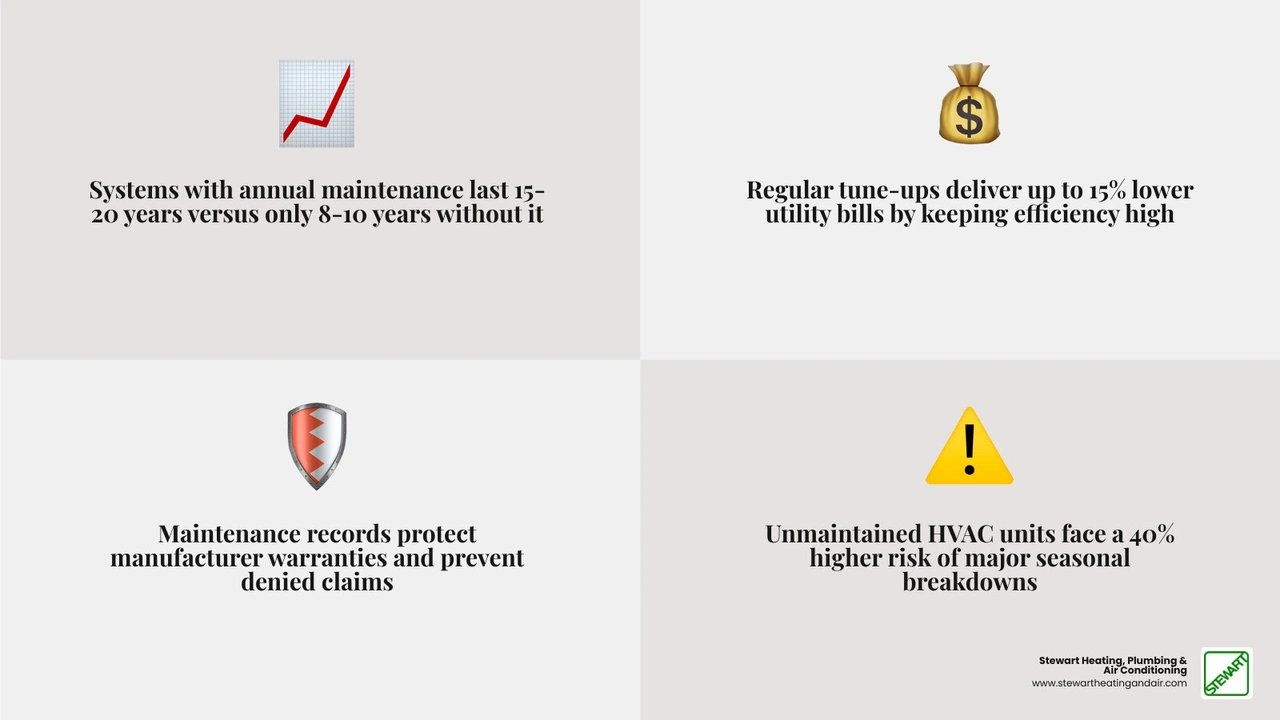
| Breakdown risk | Significantly reduced | Up to 40% higher chance of major failure |
| Warranty protection | Maintained with service records | Risk of denied claims |
| Safety | Carbon monoxide and electrical issues caught early | Problems may go undetected |
Think of your HVAC system the way you think about your car. You wouldn't skip oil changes and hope for the best — not if you wanted the engine to last. The same logic applies to the heating and cooling equipment keeping your home comfortable through Contra Costa County's hot summers and cool winters.
A skipped tune-up here and there might seem harmless. But small problems — a slow refrigerant leak, a dirty coil, a clogged condensate drain — quietly compound over time. What starts as a minor inefficiency can end in a system failure that costs far more to fix than years of routine maintenance ever would.
For property owners in Pittsburg, Antioch, Concord, Brentwood, Walnut Creek, Pleasant Hill, Bay Point, and the surrounding area, keeping your HVAC system in good shape isn't just about comfort. It's about protecting a significant investment and avoiding the kind of emergency breakdown that always seems to happen on the hottest day of the year.
This guide walks you through what annual maintenance actually involves, what it costs you to skip it, and how to decide whether a maintenance plan or a one-time tune-up makes more sense for your situation.
In most homes, yes. Preventative maintenance helps catch wear before it turns into a breakdown, improves efficiency, supports safer operation, and keeps your heating and cooling equipment ready for peak season.
That matters in Contra Costa County, where AC systems work hard during long hot spells and heating equipment still needs to perform reliably on colder nights. Dust, debris, filter neglect, and normal wear all add up. HVAC systems are machines, and machines do not get better with neglect. If only they did, we would all be driving immortal cars.
Here is the practical comparison:
| Situation | Proactive maintenance | Reactive repairs only |
|---|---|---|
| Small issues | Found early during inspection | Often discovered after comfort drops |
| Utility use | Better efficiency when cleaned and adjusted | Higher energy waste from dirty or strained parts |
| Breakdowns | Less likely during peak weather | More likely when the system is under the most stress |
| Safety concerns | Checked during service | May go unnoticed until symptoms appear |
| Records | Documented service history | Little proof of upkeep for warranty claims |
Maintenance usually pays off when you want to:
Research consistently points in the same direction: well-maintained systems often last around 15 to 20 years, while neglected equipment may fail much sooner. Considering how major HVAC replacement can become a large household expense, protecting that lifespan matters.
There are situations where a full maintenance plan may be less compelling:
That said, even newer systems still benefit from professional inspection, especially because many manufacturer warranties require documented maintenance. So the better question is often not "maintenance or no maintenance?" but "plan or pay-as-you-go?"
A professional maintenance visit is more than a quick glance at the thermostat. A proper tune-up usually includes inspection, cleaning, testing, and adjustment of the system's most important components.
Typical maintenance items include:
For heating equipment, the checklist also commonly includes combustion and venting safety items. For a closer look at heating-specific service, see Annual Furnace Tune Up.
Spring and early summer maintenance is focused on your air conditioning or cooling side of the system. Common tasks include:
These checks matter because dirty coils, low refrigerant, or weak electrical components can make the system run longer, cool less effectively, and increase wear on the compressor.
Fall maintenance focuses on the heating side, especially for gas furnaces. Common tasks include:
This is one area where professional service is especially important. Heating equipment involves combustion safety, and a proper inspection helps identify concerns before you depend on the system during colder weather.
This is where homeowners should read carefully. A maintenance plan often covers scheduled inspections and tune-ups, but not necessarily repairs.
Common exclusions may include:
Some plans include discounts on repairs or priority scheduling, while others are closer to prepaying for routine visits. Before signing up, it helps to know exactly what is included, what is discounted, and what still comes out of pocket.
For most homes in our service area, the ideal schedule is twice a year:
That recommendation is widely supported across the industry because air conditioning and heating each have different demands, failure points, and safety concerns. If your home has both a furnace and an AC, two visits a year is the gold standard. If you want a deeper breakdown, see our HVAC Service Frequency Complete Guide.
Factors that may justify more attention include:
Heat pumps run in both summer and winter, so they often need more frequent attention than a system with separate heating and cooling equipment. They do double duty, which means more wear across the year.
Professional maintenance for heat pumps often focuses on:
If you have a heat pump, our Seasonal Heat Pump Tune Up Guide can help you understand what to expect.
In Pittsburg, Antioch, Concord, Brentwood, Walnut Creek, Pleasant Hill, Bay Point, and nearby Contra Costa County communities, maintenance needs are shaped by local conditions.
A few examples:
For more location-specific guidance, see our HVAC Maintenance Pittsburg CA Guide.
Homeowners usually notice the value of maintenance in a few practical ways:
Regular maintenance can also support resale appeal by showing that major home systems were cared for responsibly. If you are thinking longer term, our article on How a New HVAC System Increases Home Value is a helpful companion read.
This is one of the strongest arguments in favor of routine service.
Well-maintained HVAC systems often reach 15 to 20 years of service life. Neglected systems can fail much earlier. That gap is often driven by preventable issues such as:
Even small efficiency losses matter because HVAC is one of the largest energy users in most homes. Research commonly shows neglected systems losing around 5% to 15% in efficiency over time. That means the equipment works harder just to deliver the same comfort.
Annual or biannual maintenance can help prevent or catch:
Many of these problems do not announce themselves dramatically at first. They start quietly. Higher utility bills. Longer run times. One room that never gets comfortable. A little extra noise. HVAC systems are often polite right up until they are not.
Yes, homeowners can absolutely help maintain their HVAC systems. In fact, a good maintenance routine at home makes professional service more effective.
Safe DIY tasks include:
Filter care is especially important. If you need guidance, see How Often Should You Change Your HVAC Air Filter.
Heat pump owners may also find our Preventative Heat Pump Maintenance Tips useful.
What homeowners should not do is open sealed electrical compartments, handle refrigerant, or perform combustion-related furnace work. Those tasks require proper tools, training, and safety procedures.
This is where the decision becomes personal.
A maintenance plan usually includes scheduled service reminders, recurring tune-ups, and sometimes extras like priority scheduling or repair discounts. A one-time tune-up is simpler: you schedule service when needed and pay visit by visit.
Neither is automatically best for everyone.
A plan may offer better value if you want:
A one-time tune-up may make sense if you:
For a deeper comparison, read Is an HVAC Maintenance Plan Worth It.
Before you enroll in any agreement, ask for clear answers to these questions:
A written checklist matters. Vague promises are not maintenance.
A maintenance plan is more likely to make sense when:
Pay-as-you-go can be perfectly reasonable when:
The key is not to confuse "I do not need a plan" with "I do not need maintenance." Those are very different statements.
No. Homeowners can handle basic upkeep, but not all maintenance.
DIY tasks are great for:
Professional service is still needed for:
Often, yes. Many manufacturers require documented professional maintenance to support warranty claims. Without records, a claim on a major part may be harder to approve. This is one of the strongest reasons not to skip service, especially on newer equipment.
We recommend focusing on the basics first:
If your system already shows warning signs like uneven temperatures, rising energy bills, strange smells, short cycling, or weak airflow, it is smart to schedule service sooner rather than later.
So, annual HVAC maintenance is it worth it? For most homeowners in Contra Costa County, yes. Not because maintenance makes your system magically perfect, but because it reduces avoidable wear, helps protect efficiency, supports safety, and gives your equipment a better chance of reaching a full service life.
The best choice depends on how you use your system, how old it is, and whether you prefer a maintenance plan or one-time tune-ups. Either way, regular professional care is one of the simplest ways to protect your comfort and avoid bigger problems later.
At Stewart Heating, Plumbing & Air Conditioning, we believe in practical recommendations, quality work, and doing things right the first time. If you want help deciding what kind of HVAC maintenance makes sense for your home in Pittsburg, Antioch, Concord, Brentwood, Walnut Creek, Pleasant Hill, Bay Point, or the surrounding Contra Costa County area, learn more here: More info about HVAC maintenance services

Very professional and complete. I would recommend Stewart to anyone. Highest quality of workmanship and clean installation.
Stewart Heating Plumbing Air Conditioning just did some work for us for the first time. They did an installation at my home and it turned out well. I thought the price was fair and I definitely would use them again. The technicians were very friendly and knowledgeable about their work. I highly recommend Stewart Heating Plumbing Air Conditioning and already told friends to use them.
We have been using Stewart Heating Plumbing Air Conditioning since 1995. They put the original heating and air unit in the house, and we have just stayed with them. They are dependable and honest people, and they have done a good job for us every time that we have used them!
They came and did an inspection and are coming tomorrow to do the repair.
They replaced a regulator the first time, and then the water heater vent had to be replaced. They did great work.
The gentleman that serviced us was helpful, insightful, and knew what he was talking about. Overall, it was a great experience.