

Recent Blogs
Stay updated with our latest blog posts.

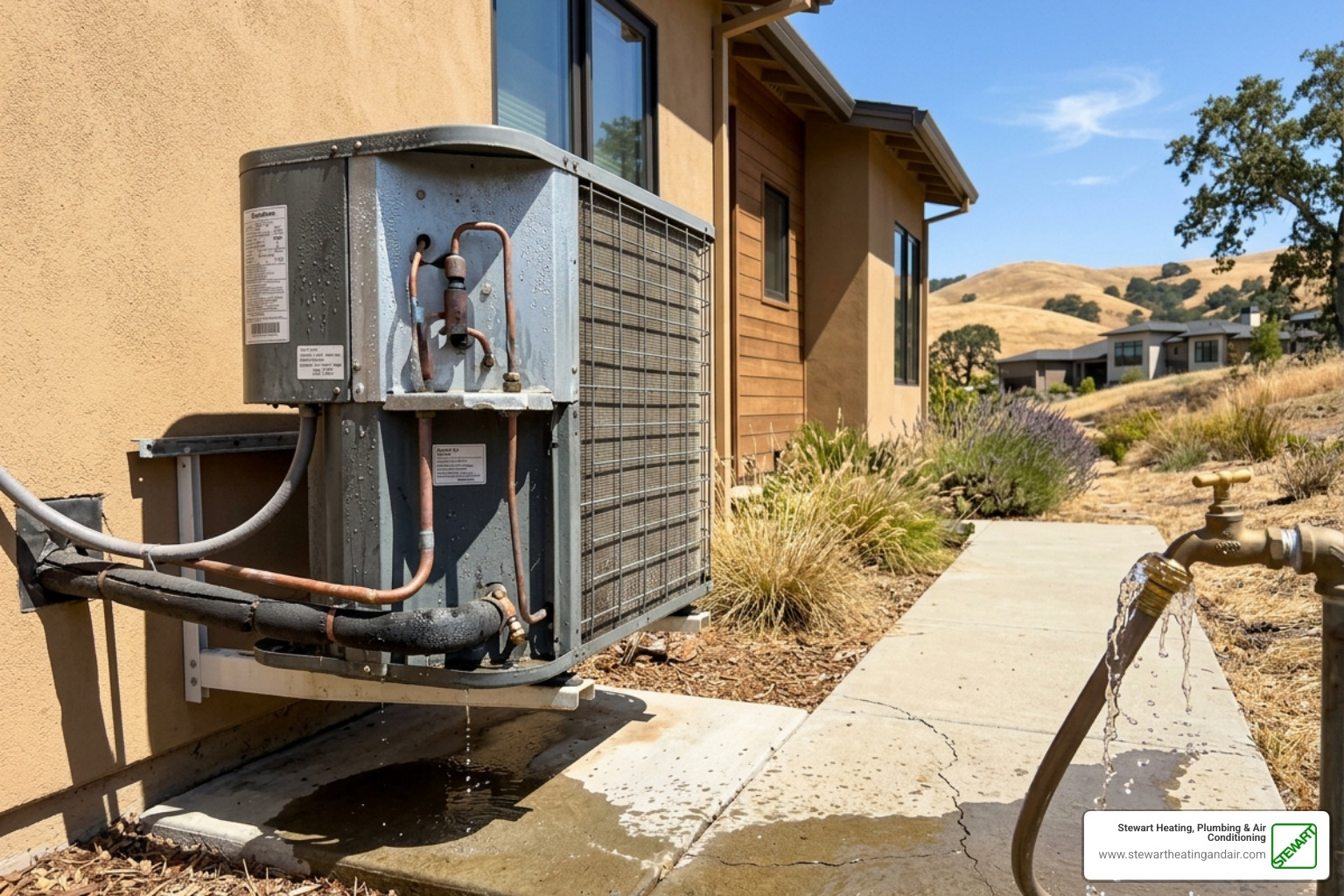
How Contra Costa County climate affects your HVAC and plumbing is something every local homeowner should understand — because the shifts happening right now are already putting real pressure on the systems keeping your home comfortable and your water running.
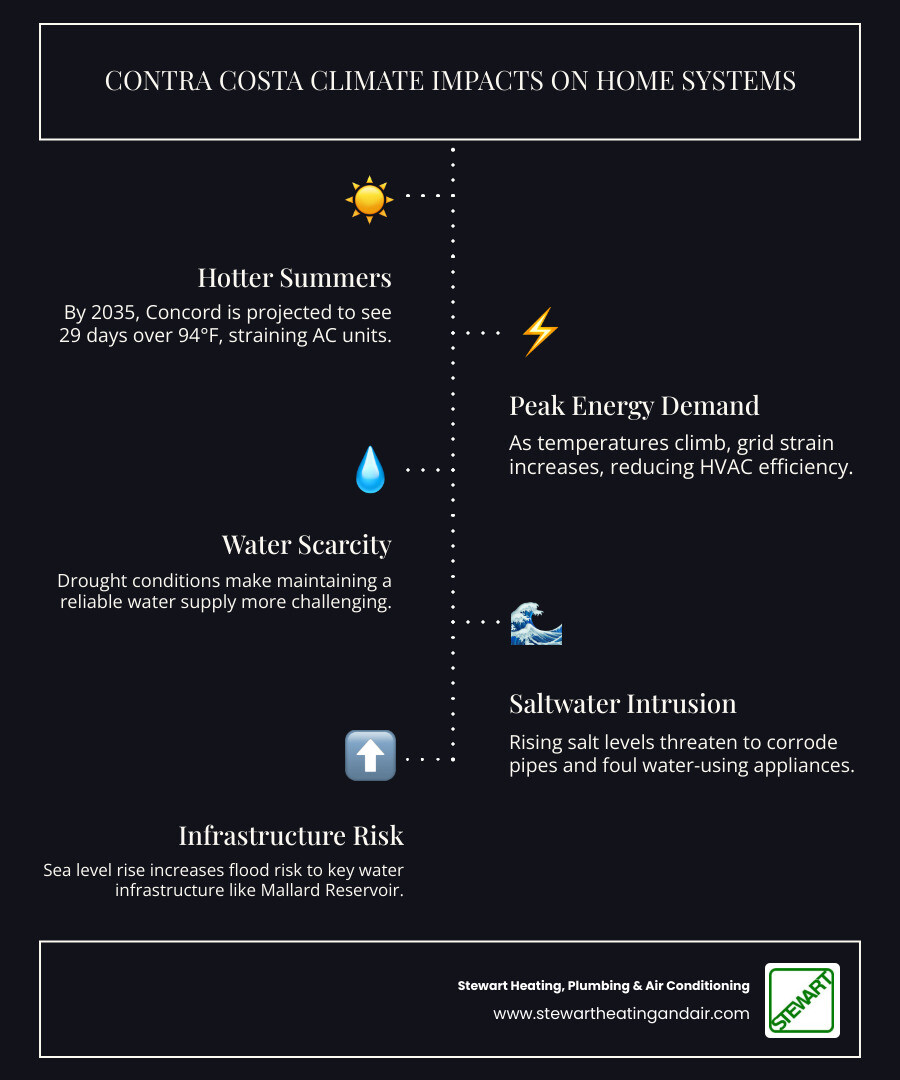
Here's a quick look at the key ways local climate conditions impact your home systems:
Contra Costa County's climate runs from cool, wet winters to scorching dry summers — with temperatures swinging from the low 30s all the way into the high 90s. That kind of range is tough on any home system. And as of April 2026, the trends are only heading in one direction: warmer, drier, and more unpredictable.
Whether you're worried about your AC struggling through the next heat wave or your pipes handling increasingly stressed water supplies, understanding the local climate picture is the first step to protecting your home and your wallet.
Living in the East Bay means enjoying a beautiful, diverse landscape, but it also means our homes are on the front lines of California’s changing environment. When we talk about how contra costa county climate affects your hvac and plumbing, we are looking at a "pincer movement" of sorts: rising heat from above and shifting water quality from below.
The HVAC in Contra Costa County is no longer just a luxury; it’s a critical piece of health infrastructure. As heatwaves become more frequent and more intense, your air conditioner isn't just working to keep you cool—it’s fighting against a climate that is actively trying to overheat your living space.
On the other side of the coin, our Plumbing Services in Contra Costa County have seen a shift in the types of problems homeowners face. We aren't just dealing with the occasional clogged drain anymore. We are seeing the effects of water scarcity and changing mineral content in the water table, which can lead to premature pipe failure and appliance damage.
Efficiency is the name of the game in April 2026. As the climate warms, your systems have to work harder to achieve the same results. This is particularly evident in the 2035 projections for cities like Concord. Moving from 7 days of extreme heat (over 94°F) to 29 days is a massive 314% increase in high-stress operating conditions.
When the temperature outside stays high for days on end, your AC never gets a "rest." This leads to a phenomenon where the system loses its ability to shed heat effectively. If your unit is older or poorly maintained, its efficiency can plummet, leading to astronomical energy bills. This is why many residents are seeking specialized Air Conditioning Services in Contra Costa County to ensure their SEER (Seasonal Energy Efficiency Ratio) ratings are actually being met in real-world conditions.
Furthermore, peak energy demand is a growing concern. When everyone in Walnut Creek, Danville, and San Ramon turns on their AC at 4:00 PM, the grid feels the weight. If your system is inefficient, it’s not just costing you money—it’s contributing to a local energy strain that can lead to brownouts. Prompt AC Repair in Contra Costa County is essential to keep these systems running lean and mean.
It’s not just about the monthly bill; it’s about how long your equipment lasts. Extreme heat causes mechanical parts to expand and contract more violently, leading to faster wear on compressors and fan motors. In the plumbing world, drought conditions often lead to a higher concentration of minerals in the water supply. This "harder" water causes scale buildup inside your pipes and water heater, effectively "choking" your plumbing system from the inside out.
To combat this, working with a NATE Certified Contractor in Contra Costa County ensures that your HVAC system is tuned to withstand these specific local stressors. Similarly, a proactive Plumbing Maintenance Program in Contra Costa County can identify mineral corrosion or pressure issues before they turn into a flooded basement or a burst pipe.
The heat in the East Bay is changing. Historically, we could rely on the "Delta Breeze" to cool things down at night, but as average temperatures rise, those nighttime recovery periods are shrinking. In Concord and the surrounding areas, the projected increase in heatwaves means your HVAC system is moving from "intermittent use" to "continuous duty."
This shift impacts more than just the machine in your backyard; it impacts the entire energy ecosystem. Climate change is reducing snowmelt in the Sierras, which historically provided a steady stream of hydroelectric power. With less "green" energy available during peak summer months, the cost of running an inefficient AC goes up, and the reliability of the power supply can go down.
We’ve found that Air Conditioning Installation in Contra Costa County now requires a more strategic approach. We have to consider not just the size of the home, but the orientation of the sun and the quality of the insulation. Additionally, as we keep our windows closed longer to escape the heat, Indoor Air Quality Contra Costa County becomes a major factor. Without proper filtration and ventilation, the air inside your home can become more polluted than the air outside, especially during wildfire season—a frequent byproduct of our warming climate.
While the heat gets all the headlines, what’s happening underground is just as serious. The Contra Costa Water District (CCWD) faces an uphill battle. With drought patterns becoming the "new normal," water levels in reservoirs like Mallard Reservoir are under constant threat.
One of the most unique challenges in our area is saltwater intrusion. As sea levels rise, the salty water from the San Francisco Bay can push further into the Delta and seep into the groundwater. For residents in parts of the county that rely on well water, or even those on municipal lines near the coast, this increase in salinity is bad news for plumbing. Salt is incredibly corrosive. It eats away at copper pipes, damages the seals in your dishwasher, and can ruin a traditional tank-based water heater in half the time it would take in a "normal" environment.
This is why we emphasize the importance of our Leak Detection Contra Costa County Guide. In a water-scarce environment, a "pinhole" leak caused by corrosion isn't just a nuisance—it’s a waste of a precious resource and a threat to your home’s structural integrity.
The good news? We have the tools to fight back. As we move through 2026, the technology available to homeowners has never been better. We are seeing a massive shift toward electrification and high-efficiency systems that are designed to handle the exact climate stressors we face in the East Bay.
The modern solution for many is Heat Pump Installation in Contra Costa County. Unlike traditional AC units that just "blast" cold air, heat pumps are incredibly efficient at moving heat out of your home in the summer and pulling it in during the winter. They are particularly effective in our Mediterranean climate. For homes with older ductwork or those looking for zoned comfort, our Ductless Installation Contra Costa County Guide offers a path to cooling only the rooms you are using, drastically reducing energy waste.
On the plumbing side, tankless water heaters are becoming the standard. By heating water on demand, you aren't keeping 50 gallons of water hot all day, and because they don't have a large tank where minerals can settle and corrode, they often last much longer in areas with variable water quality.
Contra Costa County and cities like Concord have implemented green building ordinances and Climate Action Plans (CAP). These policies aren't just red tape; they are designed to make our community more resilient. From water metering that helps identify leaks to incentives for installing solar panels and high-efficiency HVAC, these local initiatives are helping us adapt to the "29 days over 94 degrees" future.
| Feature | Traditional Systems | High-Efficiency Systems (2026 Standards) |
|---|---|---|
| Energy Source | Often Gas/Electric Mix | Fully Electric / Solar-Ready |
| Water Usage | High (Traditional Tanks) | Low (Tankless/Low-Flow) |
| Climate Resilience | Low (Struggles in Heatwaves) | High (Variable Speed Compressors) |
| Lifespan | 10–12 Years | 15–20 Years with Maintenance |
| Environmental Impact | Higher GHG Emissions | Minimal Carbon Footprint |
Heatwaves force your AC to run for longer cycles without stopping. As the outdoor temperature rises, the air conditioner has a harder time releasing the heat it gathered from inside your home. This makes the compressor work harder and consume significantly more electricity. If the outdoor coils are dirty, this efficiency drop is even more dramatic, which can lead to the system "tripping" a breaker or failing entirely.
Saltwater is highly corrosive to metal. If salt concentrations increase in the local water supply, it can lead to "pitting" in copper pipes and accelerated corrosion in water heaters and faucets. It can also affect the taste of your water and the effectiveness of soaps and detergents. For homeowners with private wells, saltwater intrusion can eventually make the water undrinkable without expensive desalination equipment.
Water-saving fixtures like low-flow toilets, aerated showerheads, and tankless water heaters reduce the total volume of water your home demands from the municipal supply. During a drought, this helps ensure there is enough water for everyone in the county. Additionally, using less hot water means your water heater runs less, saving you money on your energy bill—a win-win for the environment and your budget.
At Stewart Heating, Plumbing & Air Conditioning, we’ve seen how the local climate has shifted over the decades. Serving Pittsburg, Concord, Walnut Creek, and the surrounding areas has given us a unique perspective on the challenges our neighbors face. Whether it’s the record-breaking heat in the summer or the concerns over water quality in the Delta, we are committed to providing solutions that actually work for our specific corner of California.
Ensuring your Residential Indoor Comfort in Contra Costa County requires more than just a "quick fix." It requires a long-term strategy that accounts for rising temperatures and changing resources. From high-efficiency Heating Contra Costa County solutions to advanced leak detection, we are here to help you navigate these changes.
Don't wait for the next 94-degree day to find out if your system can handle the heat. Let’s work together to make your home resilient, efficient, and comfortable for years to come.

Very professional and complete. I would recommend Stewart to anyone. Highest quality of workmanship and clean installation.
Stewart Heating Plumbing Air Conditioning just did some work for us for the first time. They did an installation at my home and it turned out well. I thought the price was fair and I definitely would use them again. The technicians were very friendly and knowledgeable about their work. I highly recommend Stewart Heating Plumbing Air Conditioning and already told friends to use them.
We have been using Stewart Heating Plumbing Air Conditioning since 1995. They put the original heating and air unit in the house, and we have just stayed with them. They are dependable and honest people, and they have done a good job for us every time that we have used them!
They came and did an inspection and are coming tomorrow to do the repair.
They replaced a regulator the first time, and then the water heater vent had to be replaced. They did great work.
The gentleman that serviced us was helpful, insightful, and knew what he was talking about. Overall, it was a great experience.