

Recent Blogs
Stay updated with our latest blog posts.


A persistent myth among homeowners is that heat pumps are only effective in tropical or desert climates, leaving cold-weather heating entirely to traditional combustion systems. If you are facing the decision of a Gas Furnace vs Electric Heat Pump: Choosing Your Next Heating System, understanding how modern technology actually performs in your specific region is critical. As we enter the September pre-heating season, the window to make a proactive replacement decision is closing fast. Waiting until the first major freeze often leads to rushed choices, emergency service fees, and limited equipment options.
If you are ready to evaluate your home's needs, explore our heating services or schedule an HVAC installation estimate today.
Every home requires a tailored approach to indoor comfort. An aging heating system rarely fails on a convenient schedule. Instead, it slowly loses efficiency, struggles to maintain a consistent temperature, and quietly drives up your monthly utility bills. By addressing this dilemma in early fall, you gain the luxury of time. You can carefully weigh the benefits of sticking with a traditional natural gas furnace against the advantages of transitioning to a high-efficiency electric heat pump.
This guide provides a clear roadmap for your decision matrix. We will break down how local weather patterns influence equipment performance, explore the mechanical differences between combusting fuel and transferring ambient heat, and outline the long-term maintenance expectations for both systems. By the time the winter chill sets in, you will have the knowledge needed to choose the most reliable, efficient, and comfortable heating solution for your home.
Your local climate is the single most important variable when selecting a new heating system. Equipment that works perfectly in the snowy Northeast may be entirely oversized or inefficient for a West Coast home. In Pittsburgh, CA and surrounding East Bay/Delta region, the weather patterns dictate a very specific approach to residential heating and cooling.
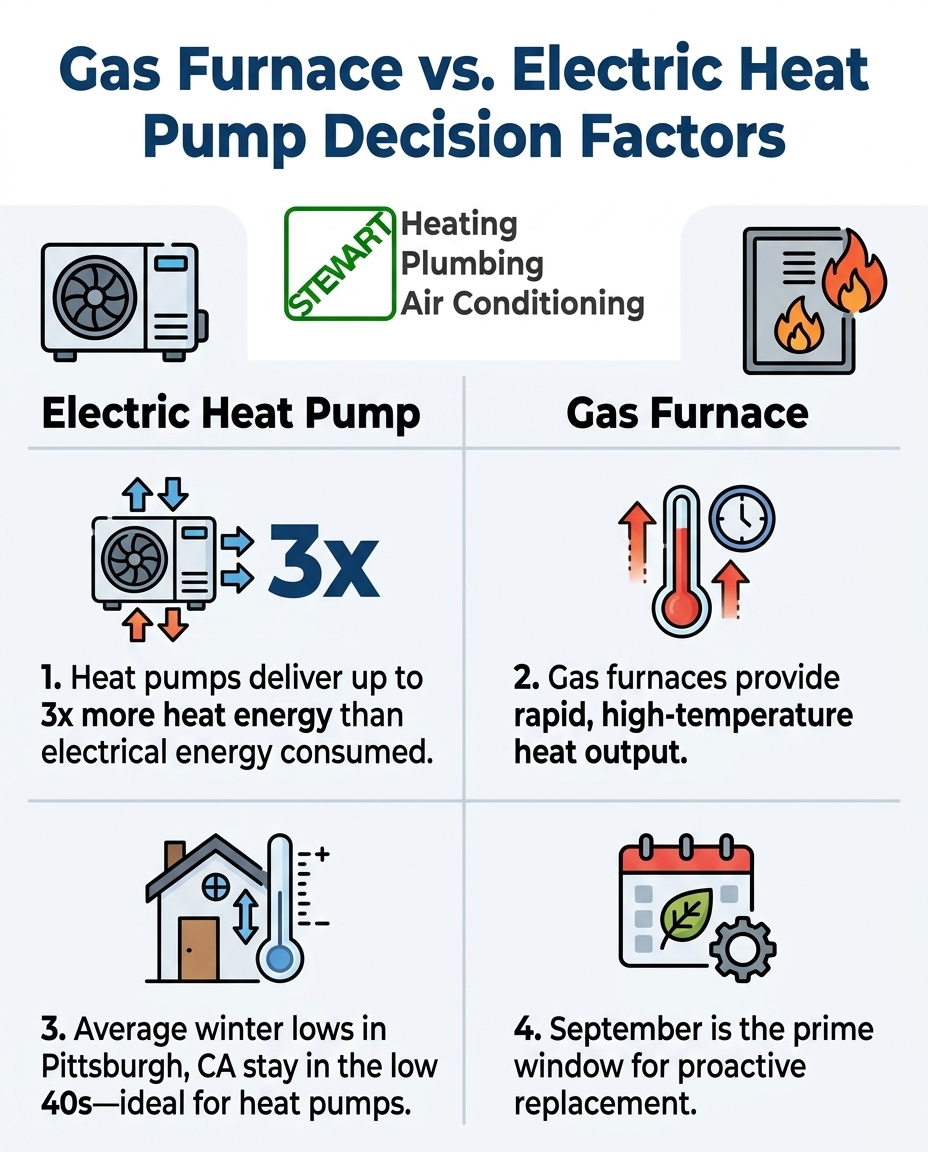
1. Analyzing local temperature floors: Unlike regions that experience deep, prolonged freezes, the East Bay features a Mediterranean climate. Average winter lows rarely dip below the low 40s. This specific temperature range is crucial because it sits well above the threshold where standard heat pumps begin to lose their efficiency.
2. Evaluating humidity and damp chill: Winters here are characterized by a damp, penetrating cold rather than dry, sub-zero air. Both modern gas furnaces and electric heat pumps are highly effective at managing indoor humidity, but they approach the task differently. Continuous, low-stage heating from a heat pump excels at keeping dampness at bay without overheating the space.
3. Assessing year-round climate demands: Homeowners in this area need robust cooling for hot summer afternoons just as much as they need reliable heating for winter mornings. Selecting a system that can handle both extremes effectively is a major factor in the overall decision process.
Because the outside air in our region retains a significant amount of heat energy even in December and January, heating systems do not have to work nearly as hard to keep your living room comfortable. For a heat pump, this mild weather means less wear and tear on the compressor and reversing valve during the coldest months. The unit simply extracts the ambient thermal energy from the outdoor air and moves it inside. In freezing climates, gas furnaces are heavily favored because extracting heat from sub-zero air requires specialized, cold-climate heat pump technology. Here in the East Bay, standard high-efficiency heat pumps operate in their absolute sweet spot, delivering consistent warmth with minimal electrical strain.
The transition toward electrification has made modern heat pumps one of the most popular upgrades for residential comfort. Unlike a furnace that must burn fossil fuels to create heat, a heat pump uses a chemical refrigerant cycle to absorb existing heat from the outside air and transfer it indoors. By simply moving heat rather than generating it from scratch, investing in modern electric heat pumps offers a significant leap in energy efficiency.
The mechanics of heat transfer: In the winter, the system's outdoor unit absorbs thermal energy from the air, pressurizes the refrigerant to increase its temperature, and pumps it inside to warm your home. In the summer, a reversing valve flips the entire process, allowing the system to act exactly like a high-performance air conditioner by pulling heat out of your house and releasing it outdoors.
Unmatched energy output: Because of this transfer process, high-efficiency models can deliver up to three times more heat energy to your living space than the electrical energy they consume to operate. This high coefficient of performance drastically reduces your home's overall carbon footprint while providing smooth, even temperatures.
During a recent fall system efficiency review, a local homeowner requested a thorough evaluation of their aging equipment. The technician walked them through the specific performance issues of their current combustion unit and suggested tailored measures to improve overall system efficiency with a heat pump transition. The customer was left fully informed and confident in their upgrade path, understanding exactly how the new technology would benefit their daily comfort.
When comparing electric systems, you will encounter two primary acronyms that dictate performance:
• HSPF (Heating Seasonal Performance Factor): This metric measures the heating efficiency of the unit over an entire winter season. A higher HSPF rating indicates that the system uses less electricity to deliver the required warmth.
• SEER (Seasonal Energy Efficiency Ratio): Because heat pumps also provide air conditioning, they carry a SEER rating. This measures the cooling efficiency over a typical summer season. Upgrading to a high-SEER and high-HSPF unit ensures your home remains comfortable year-round without excessive energy waste.
While electric technology is advancing rapidly, traditional natural gas furnaces remain a highly reliable and powerful option for residential heating. A gas furnace operates through controlled combustion. When your thermostat signals a drop in temperature, the furnace opens a gas valve, ignites the burners, and heats a metal component called a heat exchanger. The blower motor then forces indoor air over this hot metal, rapidly raising the air temperature before distributing it through your ductwork.
The primary advantage of a gas furnace is its sheer heating power. The air coming out of your vents from a furnace is noticeably hotter than the air produced by a standard heat pump. This high-temperature output is exceptional at rapidly overcoming a cold house, making furnaces a popular choice for homeowners who prefer a blast of intense heat on a chilly morning.
Furthermore, if your home is already equipped with an existing gas line, proper exhaust venting, and ductwork sized specifically for a furnace, a direct replacement is often a straightforward process. Standard AFUE-rated furnaces have a long track record of durable performance, and many homeowners appreciate the familiar, robust heat they provide.
There are specific scenarios where the aggressive heating profile of a gas furnace is highly beneficial. If you regularly utilize programmable thermostats to drop the temperature significantly while you are away at work or asleep, a furnace excels at quick recovery times. It can bridge a ten-degree temperature gap much faster than a heat pump. Additionally, during sudden, unseasonable cold snaps, a gas furnace provides immediate, high-capacity warmth that quickly restores comfort to every room in the house.
To make an informed decision, it helps to view the core differences between these two technologies directly. Both systems require professional upkeep and represent a long-term investment in your home, but their maintenance schedules, efficiency metrics, and expected lifespans differ significantly.
• Primary Function — Natural Gas Furnace: Heating only (requires separate AC for summer) — Electric Heat Pump: Year-round heating and cooling
• Efficiency Metric — Natural Gas Furnace: AFUE (Annual Fuel Utilization Efficiency) — Electric Heat Pump: HSPF (Heating) and SEER (Cooling)
• Expected Lifespan — Natural Gas Furnace: Often slightly longer (used only during winter) — Electric Heat Pump: Slightly shorter (runs year-round for heating and cooling)
• Maintenance Needs — Natural Gas Furnace: Annual fall tune-up (checking heat exchanger, burners, venting) — Electric Heat Pump: Bi-annual checks (spring for cooling, fall for heating)
• Heat Profile — Natural Gas Furnace: Rapid, high-temperature blasts of air — Electric Heat Pump: Gradual, consistent, and even warmth
Upgrading your HVAC system is a major financial decision, but understanding the long-term energy savings and available incentive programs can make high-efficiency upgrades much more accessible. Modern systems, whether gas or electric, utilize advanced variable-speed motors and better heat transfer materials that significantly reduce monthly utility consumption compared to equipment built just ten years ago.
Financing your comfort: Many homeowners choose to manage the upfront investment by offsetting initial costs through heating and cooling financing options. This allows you to install a premium, high-efficiency system immediately while paying for it over time, often utilizing the monthly energy savings to help cover the payment.
Incentives and rebates: The push for household energy efficiency has resulted in various financial incentives at both the federal and local levels. General federal tax credits often apply to qualifying high-efficiency upgrades, particularly heat pumps that meet strict performance criteria. Additionally, exploring programs such as PG&E rebates for energy-efficient upgrades can provide further financial relief. Because these programs frequently update their eligibility requirements, it is vital to consult with a professional tax advisor or your local utility provider to verify current guidelines before making a purchase.
Local utility companies heavily favor energy-efficient upgrades because they reduce the overall strain on the community's power grid. Choosing a system with high SEER, HSPF, or AFUE ratings often qualifies your installation for regional incentives. However, these programs usually require that the new system be installed by a licensed professional to meet strict compliance and safety standards. Attempting a DIY installation or using unverified contractors will almost certainly void your eligibility for any utility-backed financial incentives.
While efficiency ratings and climate data are essential, the final decision depends heavily on the specific architecture and existing infrastructure of your home. A system that works flawlessly in a modern, open-concept build might struggle in a multi-story historic home with aging ductwork. This is where professional expertise becomes invaluable.
Your home's existing ductwork plays a massive role in system selection. Heat pumps require a higher volume of airflow to distribute their moderate-temperature heat effectively. If your current ducts are undersized, damaged, or poorly sealed, a new heat pump will struggle to keep you comfortable. Conversely, a gas furnace might push air through those same ducts more easily due to its high heat output, but leaky ducts will still waste expensive energy. Furthermore, your home's insulation levels, window quality, and overall square footage dictate the exact size of the equipment you need.
A trustworthy local expert will perform a professional, unbiased load calculation (often called a Manual J calculation) to determine your home's precise thermal needs. Stewart Heating, Plumbing and Air Conditioning has built a legacy of trust serving Contra Costa County since 1974. This deep local experience allows our team to provide unbiased recommendations tailored to your specific layout, rather than just pushing a single technology.
When it comes time for the actual installation, a professional approach makes all the difference. During a recent winter installation in the area, the installation team arrived early, carefully covered the entire work area with protective tarps, and completed a meticulous cleanup afterward. Before leaving, they ensured the new furnace was fully operational and walked the homeowner through the exact operation of their new thermostat, ensuring complete confidence in the new system.
The September pre-heating season is the absolute best time to evaluate, select, and install a new heating system. Waiting until your current unit fails in late November eliminates your ability to carefully research your options.
• Avoid peak-season emergency delays: Once the first freeze hits, HVAC schedules fill up instantly with emergency repair calls. Booking your installation in early fall guarantees prompt service and flexible scheduling.
• Ensure full operational readiness: Installing your system now allows technicians to thoroughly test both the heating and cooling cycles before you actually rely on them for daily comfort.
• Benefit from wider equipment availability: Supply chains often tighten during peak winter demand. Shopping in September gives you access to a broader range of models, ensuring you get the exact unit your home needs.
• Enjoy peace of mind: Knowing your home is fully prepped for the heating season allows you to enjoy the changing weather without the looming anxiety of a sudden system breakdown.
Do not wait for the cold to make the decision for you. Take the next step and schedule an HVAC installation estimate to secure your home's comfort for the years ahead.
Will an electric heat pump work efficiently in Northern California winters?
Yes, heat pumps operate exceptionally well in Northern California. Our local average winter lows rarely drop below the 40s, which is the ideal temperature range for a heat pump to extract ambient heat with maximum efficiency. Unlike freezing climates where specialized cold-weather units are required, standard high-efficiency heat pumps thrive in the mild, damp winters of the East Bay.
Which is better for California homes: a heat pump or a gas furnace?
The best choice depends entirely on your home's infrastructure and your comfort preferences. Heat pumps offer incredible year-round efficiency and handle our mild winters perfectly, making them highly popular for California homes. However, if you already have robust gas infrastructure, prefer rapid, high-temperature heat blasts, or have specific ductwork limitations, a gas furnace remains a powerful and reliable option.
Should I replace my gas furnace in September before winter starts?
Replacing your system in September is highly recommended. This pre-heating season window allows you to avoid emergency rush fees, secure flexible installation dates, and ensure your new equipment is fully tested before the first cold snap. Proactive replacement prevents the stress of dealing with a complete breakdown in the middle of a winter storm.
Is it cheaper to heat a home with gas or an electric heat pump?
Operating costs fluctuate based on local utility rates for natural gas versus electricity. Generally, because a heat pump transfers heat rather than generating it, it uses significantly less total energy to warm a space. However, we always recommend reviewing your current utility bills and discussing efficiency ratings with a professional to accurately project your specific monthly savings.
Do I still need a gas furnace if I install a heat pump?
In the mild climate of the East Bay, a standard electric heat pump is fully capable of handling all your heating needs without a backup furnace. Systems that combine both technologies are known as dual-fuel systems, which are typically reserved for regions that experience severe, sub-zero winters. For most local homeowners, a standalone heat pump is completely sufficient.
What are the main disadvantages of switching to a heat pump?
The primary adjustment for homeowners switching to a heat pump is the change in heating style; the air coming from the vents feels warm and consistent rather than hot and intense like a furnace. Additionally, heat pumps run year-round for both heating and cooling, which means they require bi-annual maintenance checks and may have a slightly shorter overall lifespan than a furnace that sits idle for half the year.
Choosing between a traditional gas furnace and a modern electric heat pump comes down to understanding your home's infrastructure and taking advantage of our mild local climate. By addressing this upgrade during the September pre-heating season, you avoid the winter rush. If you are ready for a clear, climate-specific decision matrix tailored to your exact floor plan, schedule an HVAC installation estimate today and enter the winter season with total confidence.

Very professional and complete. I would recommend Stewart to anyone. Highest quality of workmanship and clean installation.
Stewart Heating Plumbing Air Conditioning just did some work for us for the first time. They did an installation at my home and it turned out well. I thought the price was fair and I definitely would use them again. The technicians were very friendly and knowledgeable about their work. I highly recommend Stewart Heating Plumbing Air Conditioning and already told friends to use them.
We have been using Stewart Heating Plumbing Air Conditioning since 1995. They put the original heating and air unit in the house, and we have just stayed with them. They are dependable and honest people, and they have done a good job for us every time that we have used them!
They came and did an inspection and are coming tomorrow to do the repair.
They replaced a regulator the first time, and then the water heater vent had to be replaced. They did great work.
The gentleman that serviced us was helpful, insightful, and knew what he was talking about. Overall, it was a great experience.