

Recent Blogs
Stay updated with our latest blog posts.

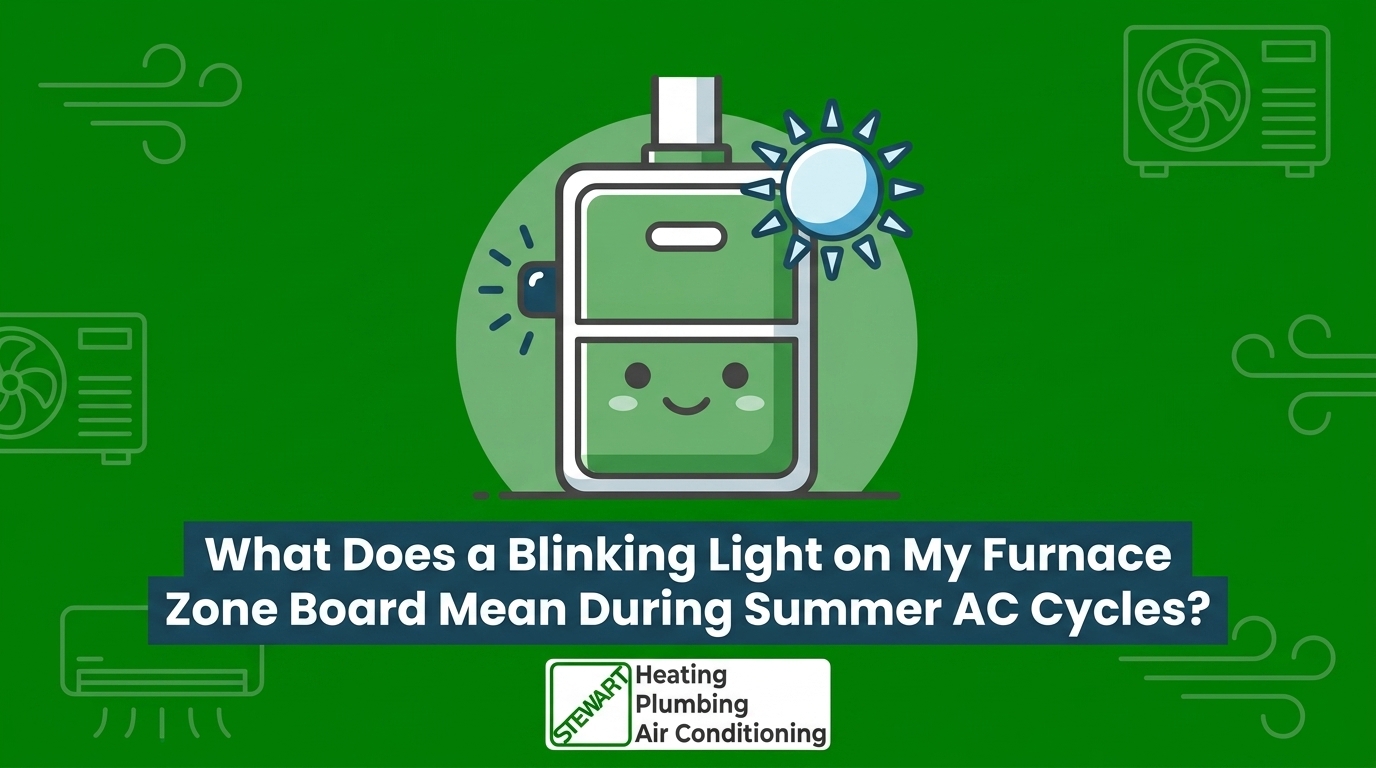
Are you staring at your indoor HVAC equipment, asking yourself, "What does a blinking light on my furnace zone board mean?" and worrying that your system is on the verge of a total breakdown? It is incredibly common to discover a flashing diagnostic LED while changing an air filter or checking the unit during heavy, late-summer August cooling cycles. When the air conditioner is running constantly to combat the heat, seeing a blinking light on the furnace panel often triggers immediate panic. At Stewart Heating, Plumbing and Air Conditioning, our dispatchers field countless calls every August from homeowners who assume that any flashing light indicates a critical failure, especially when they rely on that airflow to keep their home comfortable during the back-to-school transition.
The good news is that a flashing light is often a completely normal operational signal, not an immediate sign of failure. HVAC manufacturers design these control boards with built-in diagnostic LEDs to communicate the system's current status. By learning how to read specific LED flash patterns—such as a continuous heartbeat versus intermittent error flashes—you can quickly determine whether your system is functioning perfectly or if it needs professional attention. Understanding these basic signals provides immediate peace of mind and helps you make an informed decision before you schedule a diagnostic service call.
A common point of confusion for many homeowners is why the furnace control board is doing anything at all during the summer. It is easy to assume that the furnace only works in the winter, but your indoor and outdoor HVAC units function as a paired team. Understanding this relationship helps clarify why that zone board is active right now.
Your outdoor air conditioning unit is responsible for chilling the refrigerant and releasing heat, but it does not actually blow the cold air through your home. The indoor furnace unit houses the main blower motor. When your thermostat calls for cooling, the furnace control board activates this blower motor to pull warm indoor air over the chilled evaporator coil and push the newly cooled air out through your vents. Because the furnace blower is doing the heavy lifting for air distribution, its control board remains highly active all summer long.
If your home has a zoned HVAC system, the zone board acts as the central traffic controller for your ductwork. It communicates with multiple thermostats located in different areas of your house. When one zone needs cooling, the board opens the motorized dampers for that specific area while closing off airflow to zones that are already comfortable.
During the late-summer heat in Pittsburg, CA, continuous blower operation is critical for maintaining comfort in multi-story homes. Because the upper floors often require more cooling than the lower levels, the zone board is working overtime, constantly adjusting dampers and communicating with the blower motor. This heavy summer workload is exactly why our technicians so often point out these diagnostic lights flashing away on the board during end-of-season tune-ups.
If you ever have concerns about how your overall system integrates, reaching out for professional heating services and cooling diagnostics can ensure both sides of your HVAC equipment are communicating efficiently.
Before you worry about a system failure, it helps to understand what a healthy control board looks like. Just like a computer server or an internet router, your HVAC zone board uses a simple light to show that its internal processor is awake and functioning.
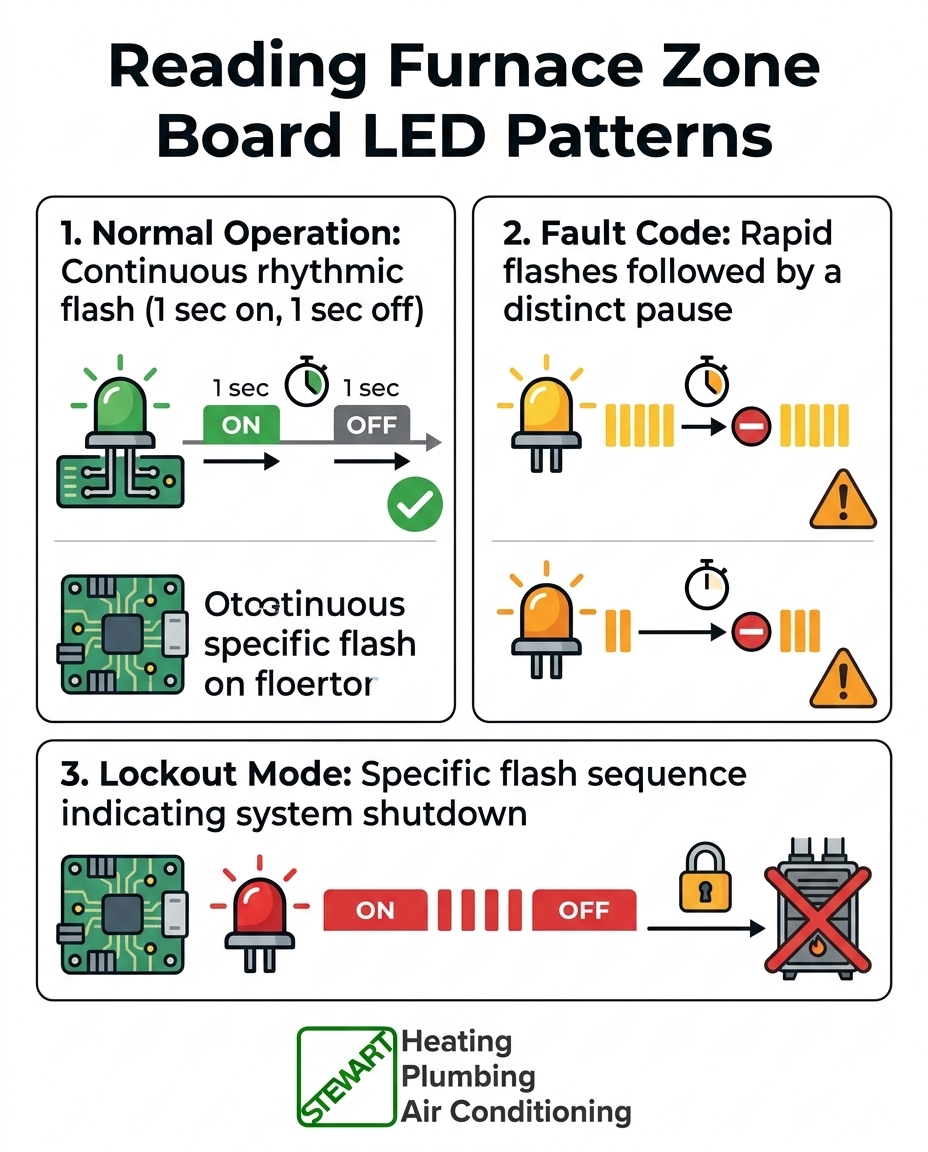
The most common LED flash pattern you will see is known in the HVAC industry as the "heartbeat" signal. In our decades of serving the local community, we always tell homeowners to look for this continuous, rhythmic flash—typically one second on, followed by one second off. The light will pulse steadily without any long pauses or erratic rapid flickering. This steady rhythm indicates normal microprocessor function. It is the board's way of saying, "I have power, I am awake, and my internal software is running correctly."
Beyond basic power, the heartbeat simply confirms the board is successfully communicating with your home's thermostats. As long as that steady, rhythmic pulse continues, the system is actively monitoring temperature requests and operating the zone dampers as designed. There is no need for concern when you see this steady flash pattern, even if the blower motor is running at full capacity during a hot afternoon.
While a steady heartbeat is perfectly normal, a change in that rhythm is your system's way of asking for help. When the board detects an operational issue, it switches from the steady heartbeat to a specific fault code. These codes are designed to help technicians pinpoint the exact nature of the problem quickly.
Fault codes are communicated through a specific number of rapid flashes followed by a distinct, longer pause. To read the code, you simply count the number of fast blinks between each long pause. For example, if the light blinks rapidly three times, goes dark for two seconds, and then blinks rapidly three times again, the system is displaying a "Code 3."
It is also helpful to differentiate between an intermittent fault and a hard lockout. A soft lockout means the system has detected a problem but is still trying to run or will attempt to restart after a brief waiting period. A hard lockout means the system has shut down completely for safety reasons and will not restart until the underlying issue is resolved and the board is reset.
Here is a breakdown of typical LED flash patterns to help you understand what the board is communicating:
• Continuous, steady pulse (1 sec on, 1 sec off) — System Status: Normal Operation (Heartbeat) — What It Means for Your HVAC: The board has power and is communicating properly. No action is needed.
• Rapid, continuous flickering (no pauses) — System Status: Data Transmission — What It Means for Your HVAC: The board is actively sending or receiving data from the thermostats. Normal operation.
• Numbered rapid flashes followed by a long pause — System Status: Specific Fault Code — What It Means for Your HVAC: The system has detected an error. The number of flashes corresponds to a specific issue (e.g., limit switch trip).
• Solid light (no blinking at all) — System Status: Board Error / Lockout — What It Means for Your HVAC: Depending on the manufacturer, a solid light can indicate a failed circuit board or a hard safety lockout.
If you notice a numbered fault code rather than a heartbeat, you are likely dealing with zone board communication errors that require further investigation.
If you suspect an issue and want to check the diagnostic lights, safety must be your top priority. The furnace cabinet houses high-voltage components, moving parts, and sensitive electronics. You can gather valuable diagnostic information without ever putting yourself at risk.
Since 1974, our core philosophy at Stewart Heating, Plumbing and Air Conditioning has been empowering homeowners with transparent diagnostic knowledge, establishing trust long before a technician even arrives. During a late-summer service visit just as the kids were heading back to school, a homeowner asked us to review their system because they were confused by the panel lights. Our technician performed a thorough inspection, explained the diagnostic issues clearly without using overly technical jargon, and suggested a few efficiency measures. We believe you should understand your system's basic signals, but you should also know how to observe them safely.
1. Locate the equipment: Walk to your indoor furnace unit, ensuring the area is well-lit.
2. Find the sight glass: Look for a clear plastic viewing window or a small grated opening on the lower blower access door. Manufacturers place this window here specifically so you can see the control board without opening the cabinet.
3. Observe the light: Peer through the sight glass to locate the LED. Watch it for at least 30 seconds to determine if it is a steady heartbeat or a numbered flash code.
4. Record the pattern: If it is flashing a code, carefully count the flashes between pauses. Write this number down.
5. Do not open the panel: Never remove the access doors or panels to get a closer look. Removing the door will often trigger a safety switch that cuts power to the system, which will erase the fault code you are trying to read.
We issue a strong safety warning against touching high-voltage internal components. This visual check is solely for gathering information to relay to a professional technician, saving time during the diagnostic process.
When the zone board moves away from its steady heartbeat and starts flashing an error code, it means a specific component is struggling to perform its job. While only a professional can safely test and repair these components, understanding the common causes can demystify the process.
One of the most frequent triggers for a fault code is a loss of communication between the zone board and one of the home's thermostats. This can be caused by disconnected low-voltage wiring, a dying thermostat battery, or a thermostat that has completely failed. When the board stops receiving temperature data, it flags an error.
The control board is protected by a small automotive-style fuse (usually 3-amp or 5-amp). If there is a short circuit anywhere in the low-voltage wiring—perhaps caused by a pinched wire or a failing contactor outside—this fuse will blow to protect the expensive circuit board. When this happens, the board will lose power or flash a specific error, and the system will shut down.
Your HVAC system is equipped with multiple safety switches. If the air filter is severely clogged, or if too many zone dampers are closed at once, the system cannot move enough air. This lack of airflow can cause the evaporator coil to freeze during the summer. Safety limit switches will detect this abnormal condition and force the system to shut down, prompting the board to flash an error code.
Sometimes, the board itself is the problem. Age, power surges, or exposure to moisture can cause the internal relays and microprocessors to fail. During a particularly brutal August heatwave, a customer called us regarding a malfunctioning circuit board located in an unusually tight and difficult-to-reach spot for their heating and cooling unit. Our technician was able to quickly fix the problem and clearly explained the repair process. Once the immediate board issue was resolved, a follow-up appointment was scheduled for a new thermostat to ensure complete system reliability through the rest of the cooling season. If you are facing similar issues, you may end up weighing the options of repairing vs replacing a failing zone control board.
Before we answer specific questions about LED patterns, remember that if your system is completely unresponsive and the board shows no lights at all, you may need to look into emergency furnace repair to safely restore your home's airflow and comfort.
Yes, a steady, rhythmic blink is typically a "heartbeat" signal indicating normal operation. This continuous flash shows that the microprocessor is awake, functioning properly, and actively communicating with your thermostats. As long as the blinking is steady without long pauses, your system is in good health.
The furnace houses the blower motor that pushes cooled air through your vents, so its control board remains active during summer cooling. The outdoor AC unit only chills the refrigerant, while the indoor furnace board manages the airflow and zone dampers. Therefore, seeing an active, blinking heartbeat light during the summer is completely expected.
Count the number of rapid flashes that occur between long pauses, and provide this number to your HVAC technician. For example, four fast blinks followed by a two-second pause is a "Code 4." Always look through the exterior sight glass to read the code, as opening the furnace door will cut the power and erase the diagnostic memory.
A solid or rhythmically pulsing green light usually signifies that the board has power and is functioning properly. On many Honeywell models, the green LED acts as the heartbeat indicator for normal operation. If the light turns red or begins flashing erratically with pauses, that is when a fault has been detected.
Specific flash counts like a 3-flash code indicate a specific fault, such as a pressure switch error or a limit switch trip, requiring professional diagnosis. A 3-flash code often points to airflow restrictions or venting issues that force the system to shut down for safety. You should change your air filter and contact a technician if the code persists.
Understanding the signals your HVAC system sends is the best way to avoid unnecessary stress during the peak cooling season. To summarize: continuous heartbeats mean the system is fine and communicating normally, while numbered rapid flashes with pauses require attention. The sight glass on your furnace door is your window into the system's health, allowing you to check the status without risking exposure to high voltage.
If you observe that the system is locked out, displaying a solid error light, or repeatedly flashing a numbered fault code, it is time to bring in a professional. Ignoring these warning signs can lead to more severe damage to the blower motor or the outdoor compressor. Our team at Stewart Heating, Plumbing and Air Conditioning encourages the safety and longevity of your equipment by scheduling a diagnostic visit to resolve the communication error safely and accurately. A qualified technician can decipher the exact code, test the internal components, and restore your home's cooling efficiency.

Very professional and complete. I would recommend Stewart to anyone. Highest quality of workmanship and clean installation.
Stewart Heating Plumbing Air Conditioning just did some work for us for the first time. They did an installation at my home and it turned out well. I thought the price was fair and I definitely would use them again. The technicians were very friendly and knowledgeable about their work. I highly recommend Stewart Heating Plumbing Air Conditioning and already told friends to use them.
We have been using Stewart Heating Plumbing Air Conditioning since 1995. They put the original heating and air unit in the house, and we have just stayed with them. They are dependable and honest people, and they have done a good job for us every time that we have used them!
They came and did an inspection and are coming tomorrow to do the repair.
They replaced a regulator the first time, and then the water heater vent had to be replaced. They did great work.
The gentleman that serviced us was helpful, insightful, and knew what he was talking about. Overall, it was a great experience.