

Recent Blogs
Stay updated with our latest blog posts.

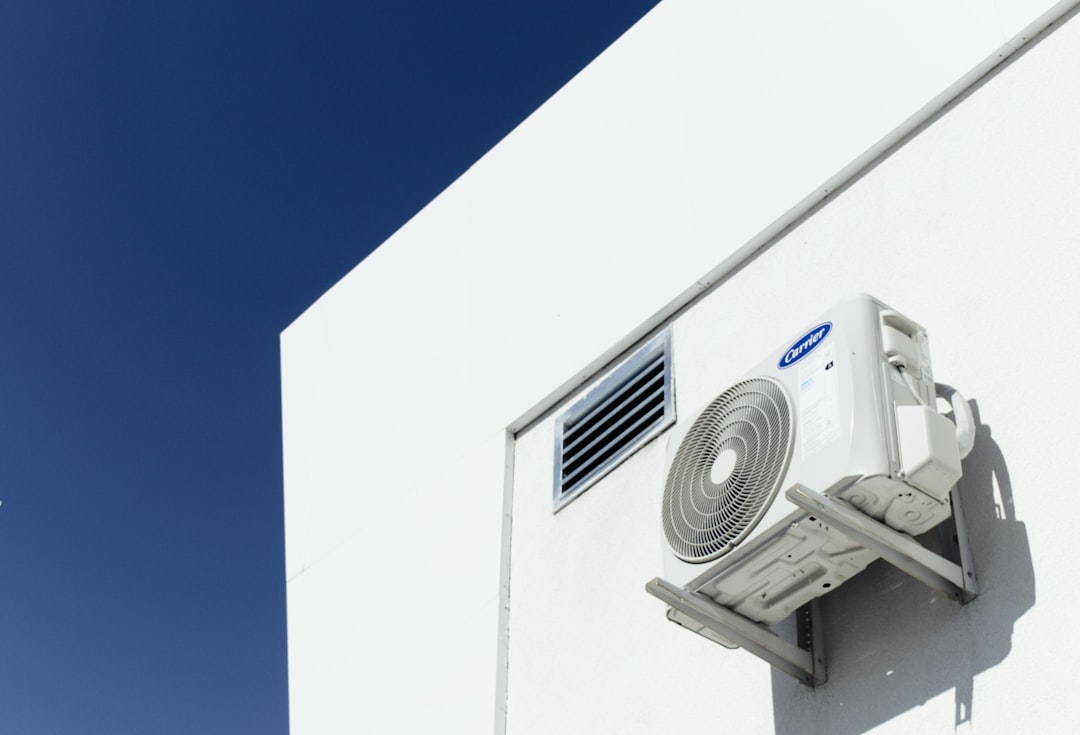
Choosing between central air vs mini split for Contra Costa County homes is one of the most important HVAC decisions a homeowner can make — and the right answer depends on your home's age, existing ductwork, and where in the county you live.
Here's a quick comparison to help you decide:
| Factor | Central Air | Ductless Mini-Split |
|---|---|---|
| Best for | Homes with existing ductwork | Homes without ducts or with problem rooms |
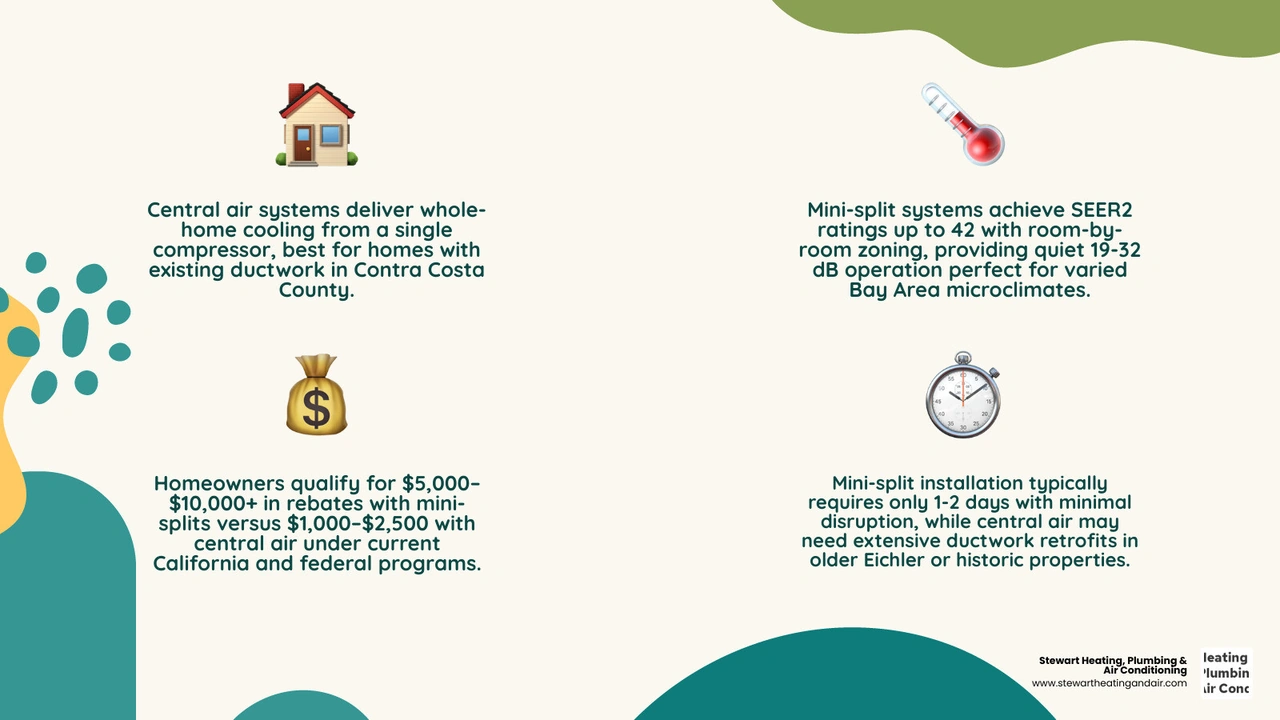
| Energy efficiency (SEER2) | 14–24 | 18–42 |
| Installation disruption | Higher (if ducts needed) | Low (1–2 days typical) |
| Zoning control | Limited (without add-ons) | Yes, room-by-room |
| Lifespan | 15–20 years | 20–25 years |
| Available rebates | Lower ($1,000–$2,500) | Higher ($5,000–$10,000+) |
| Indoor noise level | 40–50 dB | 19–32 dB |
Contra Costa County spans dramatically different climates — from the hot inland summers of Concord, Pittsburg, and Antioch to the cooler, fog-influenced neighborhoods closer to the bay. That range matters when you're comparing systems. Central air works well in newer homes with good ductwork already in place, while ductless mini-splits are often the smarter fit for older properties, room additions, or homes where ducts were never installed.
Both systems have real advantages. Central air delivers uniform whole-home cooling from a single unit. Mini-splits offer precise room-by-room control, quieter operation, and significantly higher energy efficiency ratings — plus they qualify for much larger rebates under current California and federal incentive programs.
This guide walks through every key factor so you can make a confident choice for your home.
To make the right choice for your household, it helps to understand how these two systems operate. While both are designed to keep your home cool and comfortable during our intense East Bay summers, they handle the process of cooling and distributing air in entirely different ways.
Traditional central air conditioning is a centralized, ducted system. It relies on a single outdoor condenser unit paired with an indoor evaporator coil (typically attached to your furnace). The system cools air at this central point and uses a heavy-duty blower fan to push it through a network of sheet metal or flexible ductwork hidden in your attic, crawlspace, or walls. The conditioned air enters your living spaces through wall, floor, or ceiling registers. Because a single thermostat regulates the entire house, central air is designed to cool your entire home to one uniform temperature.
In contrast, a ductless mini-split system bypasses ductwork completely. Instead of one central indoor unit, a mini-split system consists of an outdoor compressor connected to one or more individual indoor air handlers mounted directly on the walls, ceilings, or floors of specific rooms. These units are linked to the outdoor compressor by thin refrigerant lines, electrical cables, and a condensate drain line, all of which pass through a small three-inch hole drilled in your exterior wall.
Because each indoor unit operates independently, mini-splits allow for true zoned temperature control. You can cool your living room to a crisp temperature during the day while leaving empty guest bedrooms completely uncooled, saving significant energy. If you want to explore how these mechanical differences translate to daily performance, you can read our detailed Central AC vs. Ductless Mini-Split Comparison.
The layout of your home and its existing infrastructure are the most significant factors in determining which system is the most practical and efficient to install. Introducing a new climate control system can range from a quick, painless upgrade to a major construction project.
For homes that already have a network of air ducts in good condition, installing a central air conditioner is relatively straightforward. Our team can typically complete a standard central AC swap-out in just one day. The process involves placing the new outdoor condenser, installing the indoor coil, connecting the refrigerant lines, and updating your thermostat.
On the other hand, if your home does not have existing ductwork, installing central air becomes a major undertaking. Adding a full duct system to an established home requires cutting into drywall, plaster, or ceilings, and sacrificing closet space or attic clearance to run the bulky trunk lines. This level of retrofitting can take up to a week or more, causing significant disruption, dust, and localized construction noise in your living spaces.
Ductless mini-split installations are remarkably non-invasive. Because they do not require ductwork, there is no need to tear open walls or rebuild ceilings. Most multi-zone mini-split installations are completed within one to two days. The technicians simply mount the indoor units, drill a small hole behind each unit to run the conduit outside, and secure the outdoor compressor. The disruption to your daily routine is minimal, and you won't have to deal with major drywall repairs or extensive post-installation cleanup.
If your home already has ductwork, it is crucial to have it professionally evaluated before deciding on a new system. Many homeowners assume that having ducts automatically makes central air the superior option, but older ductwork can harbor hidden efficiency drains.
Over time, residential ductwork degrades. Seams pull apart, flexible ducts get crushed or pinched in crawlspaces, and insulation deteriorates. In fact, central AC systems typically lose 20% to 30% of their conditioned air through duct leaks and poor insulation before that air ever reaches your living spaces. If your ducts are located in a scorching-hot attic in Concord or Antioch, your system has to work twice as hard just to overcome the heat radiating through those leaky, unconditioned spaces.
If a professional inspection reveals that your ductwork is severely deteriorated, you face a choice: pay to seal, repair, or entirely replace your duct system to support a new central air unit, or bypass the issue entirely by switching to a ductless system. Mini-splits deliver 100% of their conditioned air directly into your rooms with zero duct loss. To learn more about how we evaluate duct integrity and design optimal cooling paths, check out our comprehensive Air Conditioning Services.
Contra Costa County is home to a beautiful variety of architectural styles, from historic mid-century Victorians in Martinez to iconic Eichler homes in Concord and Walnut Creek. These architectural gems present unique challenges when it comes to modern climate control.
Many of these older properties were built long before central air conditioning was standard. They often feature plaster walls, radiant floor or baseboard heating, and flat roofs or vaulted ceilings with no attic space whatsoever. In these homes, retrofitting a traditional central air system is often a functional impossibility without destroying the home's historic charm and structural integrity. Cutting into lath-and-plaster walls or dropping ceilings to hide bulky ducts ruins the very character that makes these homes special.
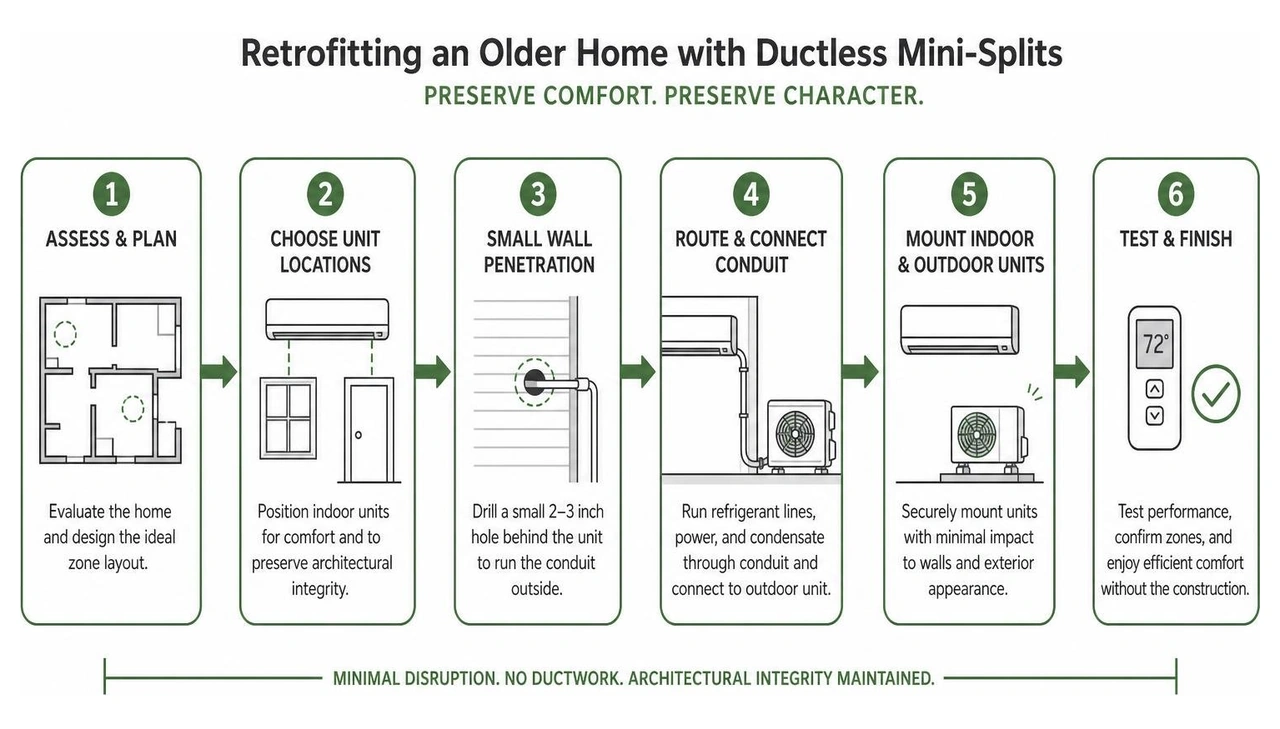
Ductless mini-splits are widely considered the gold standard for preserving the architectural integrity of historic and mid-century homes. Because they require only a tiny, easily patched hole in the exterior wall, they leave plaster walls and vaulted ceilings completely untouched. Sleek, modern indoor units can be strategically placed on walls, or low-profile ceiling cassettes can be recessed between rafters to remain virtually invisible. For a deep dive into how we handle these delicate installations locally, refer to our Ductless Installation Contra Costa County Guide.
With PG&E electricity rates in Northern California remaining among the highest in the country, energy efficiency is no longer just an environmental concern — it directly impacts your household budget. Choosing a highly efficient system is the single best way to keep your summer utility bills manageable.
| Metric | Central Air Conditioning | Ductless Mini-Split Heat Pump |
|---|---|---|
| SEER2 Range | 14 – 24 SEER2 | 18 – 42 SEER2 |
| Average Lifespan | 15 – 20 Years | 20 – 25 Years |
| Energy Consumption | Standard baseline usage | 20% – 40% lower energy use |
| Compressor Type | Single, two-stage, or variable | Variable-speed inverter (standard) |
| Duct Energy Loss | 20% – 30% loss through leaks | 0% loss (direct delivery) |
Traditional central air conditioners rely on older compressor technology that operates much like a light switch: it is either 100% on or completely off. When your home warms up, the system kicks on at full blast, runs until it hits the target temperature, and then shuts down. This constant cycling consumes a massive amount of starting electricity and creates noticeable temperature swings.
Ductless mini-splits utilize advanced, inverter-driven variable-speed compressors. Instead of constantly turning on and off, an inverter compressor operates like a dimmer switch. It starts up smoothly and runs continuously at a very low, highly efficient speed to maintain your desired temperature. By avoiding the energy spikes associated with frequent on/off cycles, and by eliminating duct losses entirely, mini-split systems can reduce your overall cooling energy consumption by 20% to 40% compared to traditional central AC.
When shopping for an HVAC system, you will see efficiency measured by SEER2 (Seasonal Energy Efficiency Ratio 2). The higher the SEER2 rating, the more cooling comfort the system delivers per watt of electricity consumed.
While modern central air conditioning systems have made great strides, typically topping out around 24 SEER2, ductless mini-splits occupy a class of their own, with ratings reaching up to an incredible 42 SEER2. This difference in efficiency ratings translates directly to your monthly utility bills. Because mini-splits allow you to turn off units in unoccupied rooms, your active energy footprint is dramatically smaller. If you are interested in exploring how ductless technology achieves these high marks, visit our dedicated page on Ductless Mini-Split Systems.
Contra Costa County is famous for its distinct microclimates. The weather you experience in Orinda or Lafayette can be completely different from what your neighbors experience in Brentwood or Oakley on the very same afternoon.
In our hot inland valleys — including Concord, Pittsburg, Antioch, and Walnut Creek — summer temperatures regularly soar into the high 90s and low 100s. These regions experience sustained, dry heat waves that put immense pressure on air conditioning systems. In these hot zones, the extreme efficiency of a high-SEER2 mini-split can save you a substantial amount of money over a long cooling season. Furthermore, because inland attics can easily reach 130°F, central AC ductwork running through those attics is subjected to extreme thermal stress, compounding duct losses.
In contrast, cooler microclimates closer to the bay, such as El Cerrito or parts of Richmond, experience milder summers influenced by coastal fog. Homeowners in these areas may only need cooling on a handful of exceptionally warm days each year. In these milder zones, a smaller, single-zone mini-split or a budget-friendly central AC system may make the most sense, as the long-term energy savings of an ultra-high-efficiency system take longer to offset the initial upgrade. To understand how our local weather patterns shape your home's mechanical needs, read How Contra Costa County Climate Affects Your HVAC and Plumbing.
Beyond efficiency and installation, your daily comfort is heavily influenced by how a system looks, how loud it runs, and how evenly it cools your home.
Aesthetics are often a point of debate for homeowners. Central air is virtually invisible; the only indoor signs of the system are flush-mounted wall or ceiling grates and a single wall thermostat. All the heavy machinery sits outside or in a closet. Ductless mini-splits, however, require indoor air handlers to be mounted directly inside your living spaces. While modern wall units are sleek, compact, and designed to blend into neutral walls, some homeowners still prefer the completely hidden look of central ducted vents. Fortunately, for those who want ductless performance without the wall-mounted look, low-profile ceiling cassettes and floor-mounted consoles offer excellent alternative design options.
When it comes to noise, mini-splits are the clear winner. The indoor blower of a central AC system typically operates at 40 to 50 decibels (dB), which is comparable to a loud hum or rushing wind through the registers. You might find yourself turning up the television or raising your voice slightly when the central system kicks on. Ductless indoor units operate at a whisper-quiet 19 to 32 dB. To put that in perspective, 19 dB is quieter than rustling leaves or a soft whisper. The loud compressor components are kept entirely outdoors, and the indoor fans glide so smoothly you will barely register that they are running.
Zoning control is another area where mini-splits excel. Traditional central air cools your entire home based on the temperature of one single thermostat, which is usually located in a central hallway. This setup often leads to uneven temperatures, such as an upstairs bedroom that remains uncomfortably hot while the downstairs living room feels like an icebox. Mini-splits solve this problem by giving every single zone its own thermostat.
Each family member can enjoy their preferred level of comfort, and you can easily integrate your system with smart home platforms like Amazon Alexa, Google Home, or smartphone apps to adjust temperatures remotely or set custom schedules.
Because California is committed to reducing carbon emissions and transitioning homes away from fossil fuels, there are substantial financial incentives available for homeowners who upgrade to energy-efficient heat pump technology.
Under the federal Energy Efficient Home Improvement Credit (Section 25C), homeowners can claim a tax credit of up to 30% of the cost of installing a qualified heat pump, up to a maximum credit of $2,000. In addition to federal tax credits, local California programs like TECH Clean California and the federally funded HEEHRA (Homeless High-Efficiency Electric Home Rebate Act) provide substantial point-of-sale rebates.
Because ductless mini-split heat pumps achieve exceptionally high efficiency ratings, they qualify for the maximum tier of these incentives, often yielding thousands of dollars more in combined rebates than standard central air conditioning systems.
These savings, combined with lower monthly PG&E bills, help offset the initial investment of a ductless upgrade. Furthermore, mini-splits boast an impressive lifespan of 20 to 25 years when properly maintained, compared to the 15 to 20 years typical of central air units.
Because modern home buyers in the Bay Area highly value energy efficiency, zone control, and low utility costs, installing a high-quality ductless system can also provide a strong boost to your home's overall resale value.
Yes, absolutely! A hybrid approach is an excellent solution for many multi-story or expanded homes in Contra Costa County. Many homeowners choose to keep their existing, functional central HVAC system to handle the main living spaces downstairs, while adding targeted ductless mini-splits to solve specific comfort problems.
This hybrid configuration is incredibly popular for:
Both systems require regular attention to perform at their best, but the tasks differ slightly:
For both systems, scheduling an annual professional tune-up before the summer heat hits is the single best way to ensure reliable performance and maximize system longevity.
Both systems can provide excellent air quality, but they do so differently:
The choice between central air vs mini split for Contra Costa County homes comes down to your home's unique layout, your personal comfort goals, and your long-term energy savings priorities. If your home has a solid, clean network of existing ducts and you prefer completely hidden equipment, a modern central air conditioning system is a reliable, time-tested choice. However, if you live in an older or historic home, struggle with hot and cold spots, or want to maximize your energy efficiency to beat high PG&E bills, a ductless mini-split system offers unmatched zoning control, whisper-quiet operation, and access to the highest available rebates.
At Stewart Heating, Plumbing & Air Conditioning, we have spent decades helping our neighbors in Pittsburg, Concord, Walnut Creek, and throughout Contra Costa County find the perfect climate control solutions. Our family-owned business is built on a foundation of quality, integrity, and customer satisfaction — meaning we take the time to evaluate your home carefully and recommend the system that truly fits your needs, doing the job right the first time.
If you are ready to upgrade your home's comfort and explore your options, contact us today to schedule a professional home evaluation. To learn more about our ductless options, visit our Ductless Mini-Split Systems page.

Very professional and complete. I would recommend Stewart to anyone. Highest quality of workmanship and clean installation.
Stewart Heating Plumbing Air Conditioning just did some work for us for the first time. They did an installation at my home and it turned out well. I thought the price was fair and I definitely would use them again. The technicians were very friendly and knowledgeable about their work. I highly recommend Stewart Heating Plumbing Air Conditioning and already told friends to use them.
We have been using Stewart Heating Plumbing Air Conditioning since 1995. They put the original heating and air unit in the house, and we have just stayed with them. They are dependable and honest people, and they have done a good job for us every time that we have used them!
They came and did an inspection and are coming tomorrow to do the repair.
They replaced a regulator the first time, and then the water heater vent had to be replaced. They did great work.
The gentleman that serviced us was helpful, insightful, and knew what he was talking about. Overall, it was a great experience.