

Recent Blogs
Stay updated with our latest blog posts.

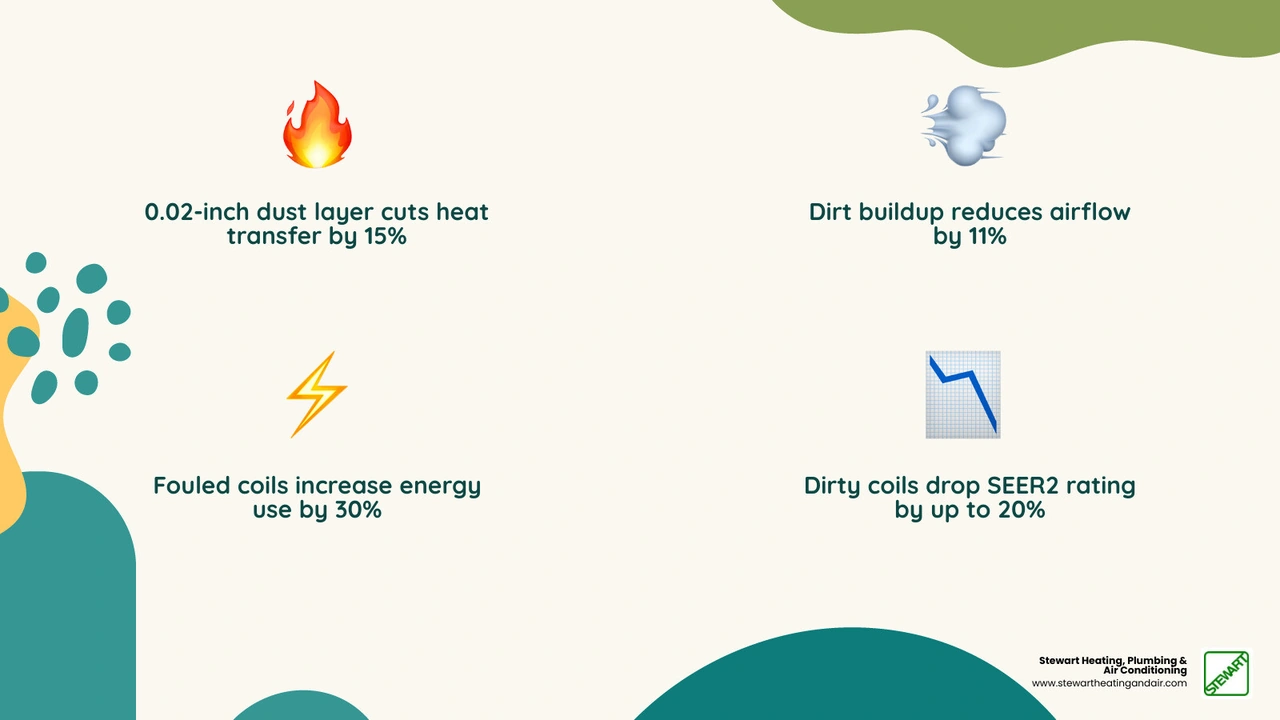
How dirty coils reduce your AC efficiency comes down to one simple problem: dirt acts as insulation. When a layer of dust, pollen, or grime coats your AC coils, heat can't move the way it's supposed to. Your system works harder, runs longer, and uses more electricity — all without cooling your home any better.
Here's a quick look at the main ways dirty coils hurt your system:
If your energy bills have been climbing and your home isn't cooling the way it used to, dirty coils are often the hidden culprit. This guide walks you through exactly what's happening inside your system, what warning signs to watch for, and what you can do about it.
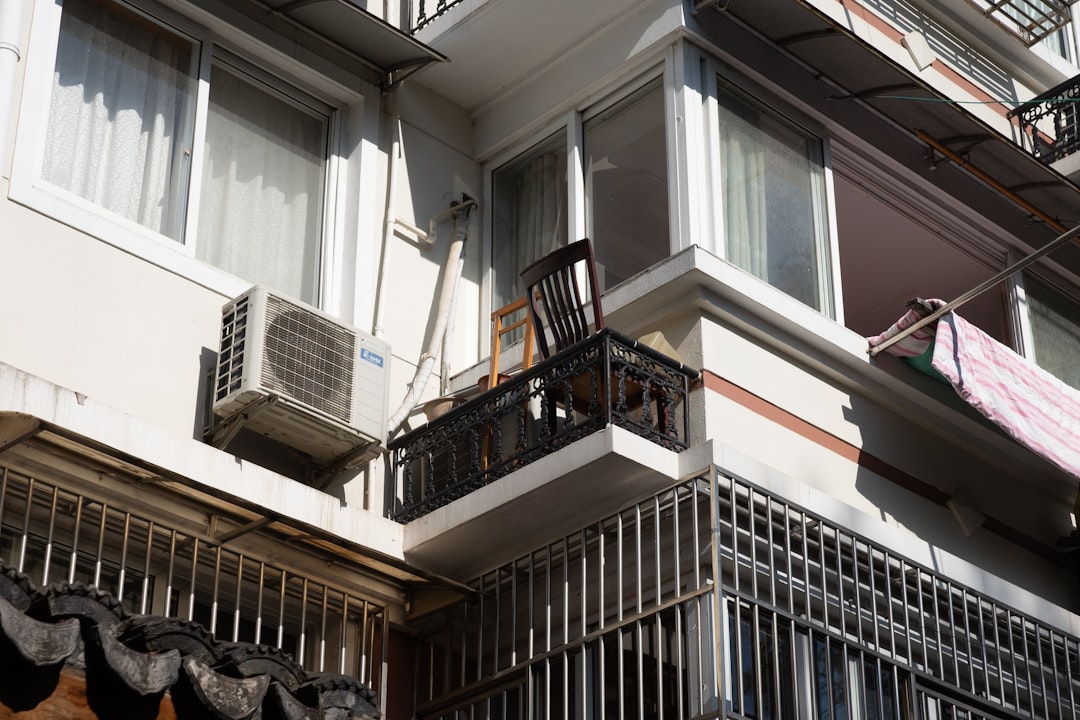
To understand why a little bit of dust is such a big deal, we need to look at what your AC coils actually do. Your air conditioner doesn't "create" cold; it removes heat. This happens through two main components: the evaporator coil (located inside your home) and the condenser coil (located in the outdoor unit).
The evaporator coil is filled with cold refrigerant. As your indoor fan blows warm air over these coils, the refrigerant absorbs the heat, leaving the air cool. The heat is then carried outside to the condenser coil, where it is released into the outdoor air. Both of these coils are made of copper tubing surrounded by hundreds of thin aluminum fins. These fins are designed to provide as much surface area as possible for heat exchange.
When dirt enters the picture, it creates a physical barrier. In some cases, if the damage or corrosion is too severe due to years of neglected cleaning, you might even face an Evaporator Coil Replacement. Dirt buildup increases thermal resistance, meaning the heat has to fight through a layer of "insulation" just to reach the refrigerant.
The physics here are unforgiving. Think of your AC coils like a radiator in a car. If you wrap that radiator in a wool sweater, the engine will overheat. Dirt on an AC coil acts exactly like that sweater.
Research shows that a microscopic layer of dust—just 0.02 inches thick—can reduce heat transfer efficiency by a staggering 15%. This happens because dirt is a poor conductor of heat compared to aluminum. Instead of a smooth "thermal bridge" where heat moves easily from the air to the refrigerant, you get a thermal wall. Because the heat isn't being absorbed efficiently, the refrigerant stays warmer than it should, and the cycle has to repeat much more often to reach your desired temperature.
| Coil Condition | Heat Transfer Capacity | Airflow Efficiency | Energy Consumption |
|---|---|---|---|
| Clean Coils | 100% | 100% | Baseline |
| Light Soiling (0.02") | 85% | 89% | +10-15% |
| Heavy Fouling | 60-70% | 75% | +30% or more |
Beyond just blocking heat, dirt physically blocks the air itself. The gaps between the aluminum fins on your coils are tiny. As dust, pet hair, and dander accumulate, they bridge these gaps, creating "static pressure." This is essentially resistance that your blower motor has to fight against.
When airflow is reduced by just 10%, your system’s SEER2 (Seasonal Energy Efficiency Ratio) efficiency falls by about 6–8%. If the dirt is thick enough to cause an 11% reduction in airflow, your system is no longer the high-efficiency unit you bought. It’s now straining to push air through a "clogged straw," which leads to uneven temperatures in your house and much higher wear and tear on the blower motor.
Living in Contra Costa County, from the hills of Lafayette to the valleys of Antioch, our systems face plenty of dust and pollen. We often see homeowners ignore the subtle signs of dirty coils until the system stops working entirely on a 100-degree July afternoon.
One of the most obvious signs is a spike in your utility bills that doesn't match a change in weather. If you want to know more about the specifics of local maintenance, check out our AC Coil Cleaning Concord Complete Guide. Other red flags include the system running for much longer cycles than usual or air coming out of the vents that feels "lukewarm" rather than crisp and cold. If you're in the neighborhood, we provide specialized AC Coil Cleaning Pleasant Hill CA to catch these issues before they lead to a breakdown.
If you can see dirt, the problem is already advanced. For outdoor condenser units, look for "shag carpet" growth—this is usually a mix of grass clippings, spider webs, and dust. Inside, the evaporator coil is harder to see, but it often gives itself away through your nose.
Moisture naturally condenses on the evaporator coil as it removes humidity from your home. When you mix that moisture with dust and organic matter (like skin cells or pet dander), you get a breeding ground for mold and bacteria. This leads to the infamous "dirty sock smell." If you notice a musty odor every time the AC kicks on, it’s a sign that biological contaminants are thriving on your coils. For our friends in the Delta area, we offer AC Coil Cleaning Antioch CA to scrub away these pollutants and restore your indoor air quality.
It sounds counterintuitive, but a dirty AC can actually freeze solid. When the evaporator coil is coated in dirt, it can't absorb heat from your home's air. This causes the refrigerant inside the coil to stay too cold. Eventually, the condensation on the outside of the coil turns to ice.
Once a layer of ice forms, it blocks even more airflow, leading to a "vicious cycle" where the ice gets thicker and thicker until the system shuts down. Furthermore, since the coil is the primary way your AC removes humidity, a dirty coil will leave your home feeling sticky and "heavy" even if the temperature is dropping. We frequently handle these "freeze-ups" through our AC Coil Cleaning Pittsburg CA services, where we safely thaw and deep-clean the system.
Neglecting your coils doesn't just cost you in monthly bills; it eats away at the life of your equipment. An air conditioner is a balanced machine. When one part—the coils—fails to do its job, every other part has to compensate.
The compressor is the heart of your AC. It is also the most expensive part to replace. When coils are dirty, the compressor has to work much harder to move heat. This increases the operating pressure and temperature within the compressor. Research indicates that dirty coils can increase compressor wear by up to 35%. In practical terms, this means a system that should have lasted 15 years might die after only 10. For residents in the Concord area, staying on top of AC Coil Cleaning Concord CA is the best way to protect this vital component.
As the condenser coil struggles to release heat outdoors, the refrigerant pressure inside the lines spikes. This puts immense strain on the seals, valves, and the compressor motor itself. A system with fouled condenser coils has been shown to draw 25% more power just to keep the refrigerant moving against that high pressure.
This extra electrical consumption isn't just a bill issue; it's a heat issue. Electrical components like capacitors and contactors are sensitive to heat and high amperage. When your system is "choking" on dirty coils, these smaller parts are much more likely to pop or burn out, leading to those frustrating emergency repair calls in the middle of a heatwave.
In April 2026, efficiency is the name of the game. Most modern systems are rated using the SEER2 standard, which measures how much cooling you get for every watt of electricity used. However, those ratings are based on clean, lab-condition equipment.
Real-world dirt can drop a 15 SEER2 unit down to a 12 SEER2 or lower. That’s a 20% loss in efficiency. You’re essentially paying for a high-performance machine but getting the results of a budget unit from twenty years ago. Regular cleaning is the only way to ensure you are actually getting the energy savings you paid for when you bought your system.
We always recommend an annual professional tune-up, but there are things you can do to keep your system breathing easy. Cleaning AC coils requires a gentle touch; those aluminum fins are very thin and can be bent easily, which further restricts airflow.
When we perform a professional cleaning, we use specialized tools. This includes foaming coil cleaners that penetrate deep into the fins to lift dirt that a garden hose can't reach. We also use fin combs to straighten any bent metal, ensuring the maximum amount of air can pass through.
Can you clean your coils yourself? For the outdoor condenser unit, many homeowners can handle basic maintenance.
Safety First: Always turn off the power at the thermostat AND the outdoor disconnect box (or the main circuit breaker) before touching the unit.
Essential Supplies:
The indoor evaporator coil is a different story. It is often located in a tight space, like an attic or a closet, and requires removing panels that are sealed to prevent air leaks. Because the evaporator coil is often wet, it can be very delicate and prone to mold. Professionals use "no-rinse" cleaners for these indoor units to avoid water damage to your home’s interior.
The best way to deal with dirty coils is to prevent them from getting dirty in the first place. Here are our top tips for homeowners in Contra Costa County:
For most homes in our service area, including Walnut Creek and Danville, a professional cleaning once a year is standard. However, if you have multiple pets, live near a construction site, or have a lot of cottonwood trees or pollen-heavy plants nearby, you might need a check-up every 4–6 months.
Yes! If the coils are so dirty that heat transfer is blocked, the refrigerant can't absorb the heat from your home. The air coming out of your vents will feel warm or room-temperature. This is a sign that your system is failing to complete the refrigeration cycle.
Absolutely. Professional cleaning can restore up to 95% of a system's lost heat transfer capacity. Homeowners often see a 10% to 30% reduction in their cooling costs after a deep clean, as the system doesn't have to run nearly as long to keep the house comfortable.
At Stewart Heating, Plumbing & Air Conditioning, we’ve spent years helping our neighbors throughout Contra Costa County—from Martinez to Alamo—keep their homes comfortable and their energy bills low. We know that how dirty coils reduce your AC efficiency is a technical process, but the results are very real for your wallet.
Our team is dedicated to doing things right the first time. Whether you need a simple cleaning or a full system inspection, we focus on quality and customer satisfaction above all else. Don't let a layer of dust burn through your hard-earned cash. Schedule your professional AC maintenance today and let us help you get the most out of your air conditioner this summer.

Very professional and complete. I would recommend Stewart to anyone. Highest quality of workmanship and clean installation.
Stewart Heating Plumbing Air Conditioning just did some work for us for the first time. They did an installation at my home and it turned out well. I thought the price was fair and I definitely would use them again. The technicians were very friendly and knowledgeable about their work. I highly recommend Stewart Heating Plumbing Air Conditioning and already told friends to use them.
We have been using Stewart Heating Plumbing Air Conditioning since 1995. They put the original heating and air unit in the house, and we have just stayed with them. They are dependable and honest people, and they have done a good job for us every time that we have used them!
They came and did an inspection and are coming tomorrow to do the repair.
They replaced a regulator the first time, and then the water heater vent had to be replaced. They did great work.
The gentleman that serviced us was helpful, insightful, and knew what he was talking about. Overall, it was a great experience.