

Recent Blogs
Stay updated with our latest blog posts.

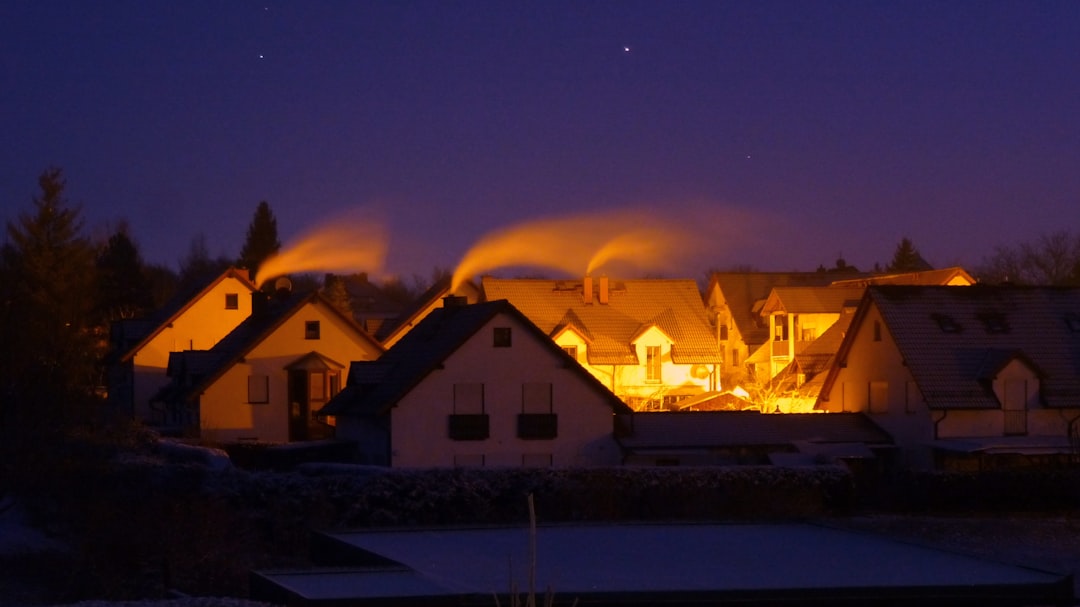
Understanding how wildfire smoke season impacts your air quality is no longer just a concern for people living near active fires. For homeowners across Pittsburg, Antioch, Concord, and the greater Contra Costa County area, smoky skies have become a recurring reality every summer and fall — and the health stakes are serious.
Here is a quick overview of how wildfire smoke affects your air quality:
Wildfire smoke is not just an outdoor problem you can wait out. In 2023 alone, Canadian wildfires sent smoke plumes across North America, exposing an estimated 120 million Americans to unhealthy air. Research from 2024 links wildfire smoke globally to 1.2 million deaths and 35 million disability-adjusted life years lost. Closer to home, the East Bay's dry summers and proximity to California's fire-prone interior mean that Contra Costa County residents are increasingly breathing air that fails to meet safe standards — sometimes for days or weeks at a stretch.
This guide walks you through what wildfire smoke is made of, how it gets into your home, the real health risks it poses, and the practical steps you can take to protect your family — starting with your HVAC system and indoor air quality.
When we talk about how wildfire smoke season impacts your air quality, we are looking at a complex cocktail of pollutants. Unlike the "clean" woodsmoke you might smell from a campfire, wildfire smoke is a massive chemical event. As of May 2026, we’ve seen that these seasons are starting earlier and hitting harder, often due to the persistent droughts and high-heat cycles that define our modern climate.
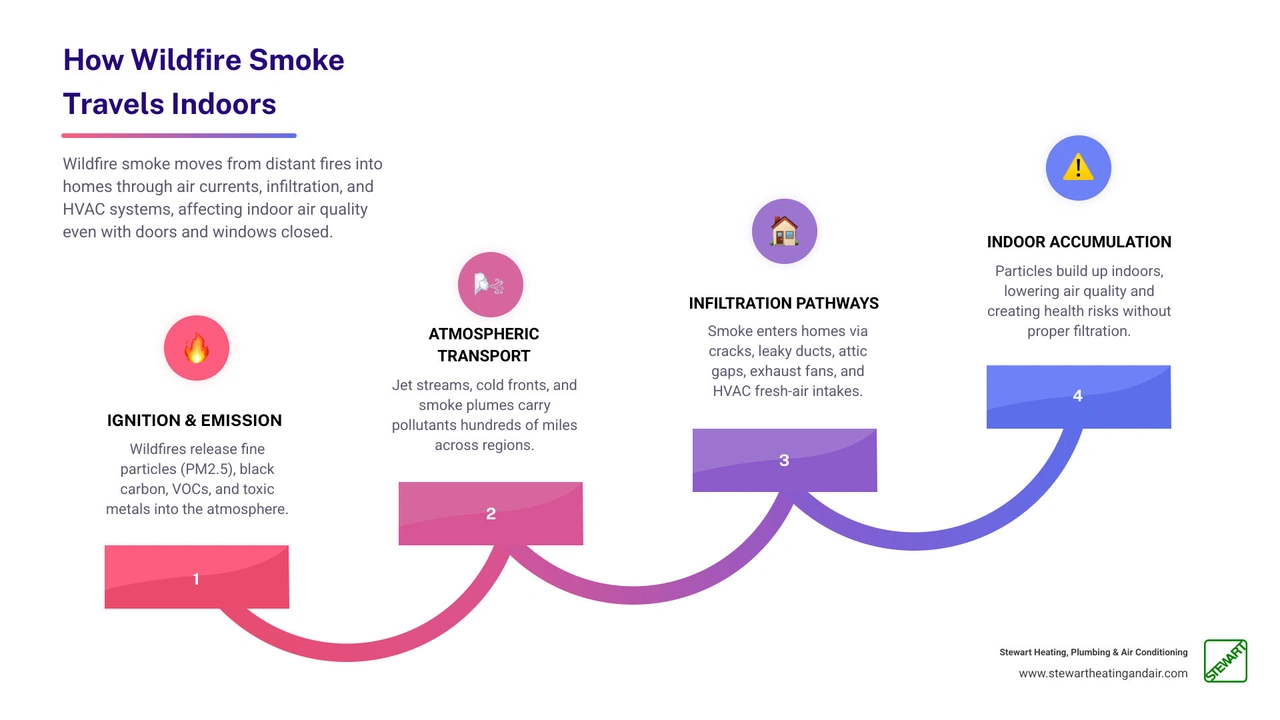
Wildfire smoke is a mixture of hazardous air pollutants. The primary threat is particulate matter, specifically PM2.5 (particles smaller than 2.5 micrometers). These are roughly 30 times smaller than a human hair. Because they are so tiny, they don't just sit in your throat; they travel deep into the lungs and can enter the bloodstream directly.
Beyond PM2.5, smoke contains:
You don’t need to see the flames to feel the effects. Smoke plumes can rise high into the atmosphere, where the jet stream carries them thousands of miles. In 2024, global fires generated approximately 1,940 megatonnes of carbon monoxide.
In California, we often experience "inversion layers," where warm air traps cooler, smoke-filled air near the ground. This creates a regional haze that can linger over cities like Walnut Creek or Martinez for weeks. Even fires in central Canada have been known to push PM2.5 levels in the U.S. Midwest to "Very Unhealthy" levels (AQI over 200), proving that smoke is a continental problem.
Wildfire smoke is often more toxic per microgram than typical urban smog. While city pollution comes largely from fossil fuels, wildfire smoke includes burning biomass plus everything in its path: houses, cars, plastics, and industrial chemicals. This releases endotoxins and heavy metals that cause higher levels of oxidative stress and systemic inflammation in the human body compared to standard traffic pollution.
Exposure to smoke isn't just an "irritation." It is a physiological assault. Within 24 hours of high smoke exposure, the risk of an acute heart attack increases by 15–25%.
Most people will notice immediate effects like burning eyes, a runny nose, and a scratchy throat. However, you should watch for "red flag" symptoms that require urgent medical attention:
We are now learning that the damage doesn't always clear when the skies turn blue. Repeated exposure over several years—a reality for many in Contra Costa County—can lead to:
While everyone is affected, certain groups are at much higher risk:
A common misconception is that closing your windows makes your home a "sealed vault." Unfortunately, most homes are "leaky." Smoke enters through infiltration—the process where air seeps through cracks in window frames, doors, and even electrical outlets.
Smoke is persistent. It finds its way in through:
Your HVAC system is your primary defense, but only if used correctly. If your system is set to pull in "fresh air," you are essentially pumping smoke into your bedrooms.
For more specialized help, you can explore our Indoor Air Quality Services or learn How Often Should You Change Your HVAC Air Filter? to keep your system ready.
If you can't filter the whole house, designate one "Clean Air Room."
Preparation is the difference between a minor inconvenience and a health crisis. In Contra Costa County, our climate means we should be "Smoke Ready" by May of each year.
Monitor the Air Quality Index (AQI) using tools like AirNow.gov.
| AQI Level | Category | Action Recommended |
|---|---|---|
| 0-50 | Good | Enjoy the outdoors! |
| 51-100 | Moderate | Sensitive individuals should consider reducing heavy exertion. |
| 101-150 | Unhealthy for Sensitive Groups | Kids, seniors, and those with asthma should stay indoors. |
| 151-200 | Unhealthy | Everyone should limit outdoor time; wear N95 if outside. |
| 201-300 | Very Unhealthy | Stay indoors; run air filtration on high. |
| 301+ | Hazardous | Avoid all outdoor physical activity. |
Once the air clears, the pollutants remain in the form of ash and settled dust.
The "vicious cycle" of climate change is a major factor in how wildfire smoke season impacts your air quality. Warmer temperatures lead to drier fuels (trees and brush), which lead to more intense fires. These fires release massive amounts of carbon and black carbon, which further accelerate the warming of the planet.
Fires are no longer "going to sleep" at night. Historically, cooler night temperatures and higher humidity helped slow fires down. Now, due to the "thirsty atmosphere" caused by climate change, plants dry out faster, and fires continue to burn aggressively 24/7. This leads to larger burn areas—like the 18 million hectares burned in Canada in 2023—and more smoke for us to breathe.
Governments are shifting from reactive firefighting to the "Fire Ready Formula," which focuses on prevention and forest management. For us as a community in Contra Costa County, this means supporting:
Don't rely on your eyes alone; sometimes the smallest, most dangerous particles are invisible.
Yes. As mentioned, "infiltration" allows fine particles to enter through small gaps. Additionally, if your HVAC system has a fresh air intake that isn't closed, you are actively bringing smoke inside. Proper filtration and home sealing are essential.
We recommend a MERV 13 filter or higher. However, you must ensure your HVAC system is compatible with high-efficiency filters; some older systems may struggle with the restricted airflow. For residents in Concord, you can look into Air Filter Replacement in Concord, CA for expert installation and advice.
Yes, but set it to "On" rather than "Auto." This ensures that air is constantly pulled through your MERV 13 filter, cleaning the air even when the system isn't heating or cooling. Just remember that running the fan constantly means you need to check the filter more often. Regular maintenance also helps—see How Proper HVAC Maintenance Prevents Mold Growth for more on keeping your system healthy.
At Stewart Heating, Plumbing & Air Conditioning, we know that your home should be your sanctuary. Understanding how wildfire smoke season impacts your air quality is the first step toward protecting your family’s health. From upgrading to MERV 13 filters to ensuring your ductwork isn't pulling in attic soot, a proactive indoor air strategy is essential for every Contra Costa County homeowner.
Don't wait for the sky to turn orange to check your system. Whether you need a duct inspection, a filter upgrade, or a comprehensive air quality solution, we are here to help you breathe easier. For more information on how our local environment affects your home, read How Contra Costa County Climate Affects Your HVAC and Plumbing or visit our guide on Residential Indoor Comfort in Contra Costa County.
Stay safe, stay informed, and let us help you keep your indoor air clean this season.

Very professional and complete. I would recommend Stewart to anyone. Highest quality of workmanship and clean installation.
Stewart Heating Plumbing Air Conditioning just did some work for us for the first time. They did an installation at my home and it turned out well. I thought the price was fair and I definitely would use them again. The technicians were very friendly and knowledgeable about their work. I highly recommend Stewart Heating Plumbing Air Conditioning and already told friends to use them.
We have been using Stewart Heating Plumbing Air Conditioning since 1995. They put the original heating and air unit in the house, and we have just stayed with them. They are dependable and honest people, and they have done a good job for us every time that we have used them!
They came and did an inspection and are coming tomorrow to do the repair.
They replaced a regulator the first time, and then the water heater vent had to be replaced. They did great work.
The gentleman that serviced us was helpful, insightful, and knew what he was talking about. Overall, it was a great experience.