

Recent Blogs
Stay updated with our latest blog posts.

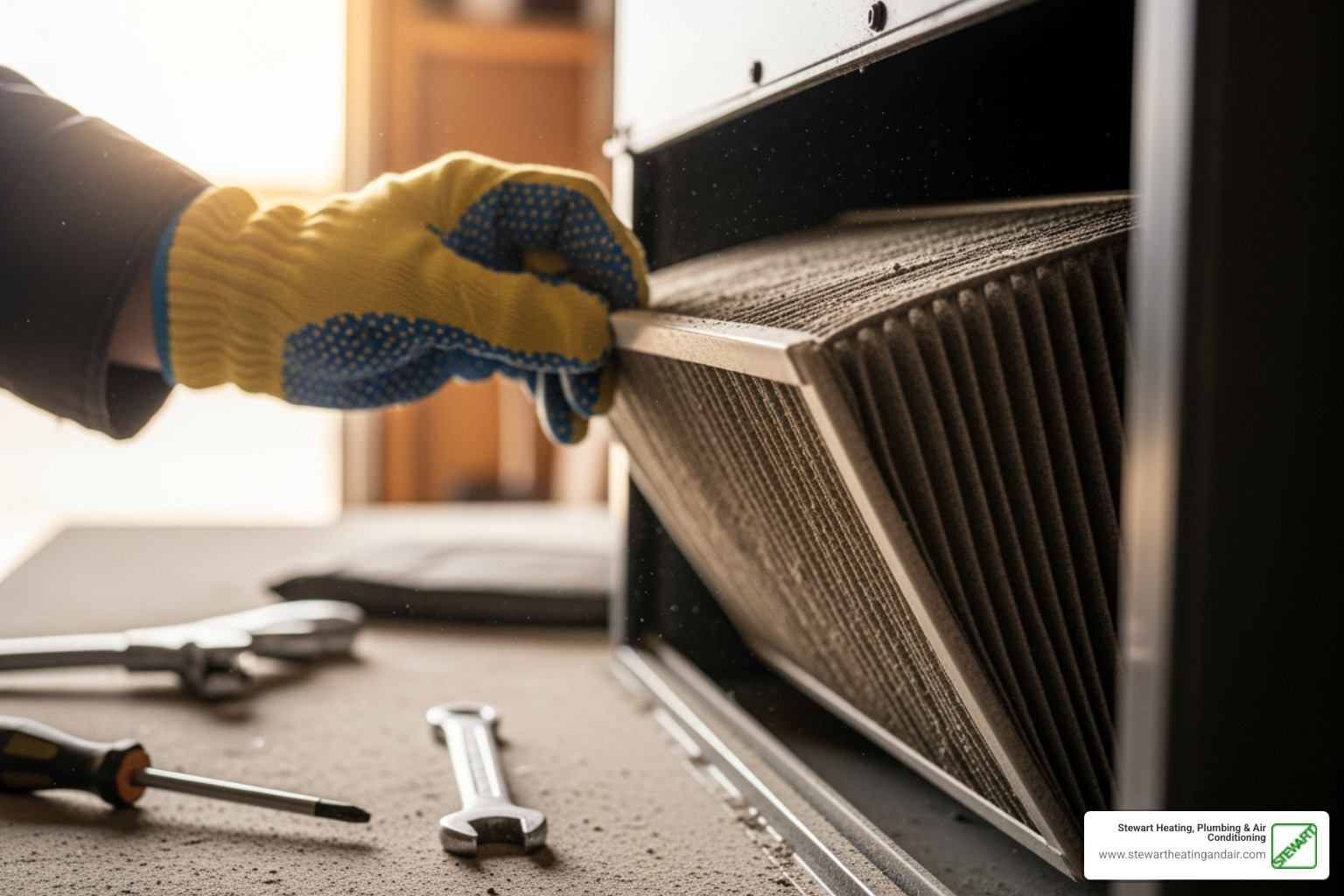
Air filter replacement in Antioch, CA is essential for both your home's HVAC system and your vehicle, yet many property owners overlook this simple maintenance task until problems arise. Whether you're noticing higher energy bills, reduced airflow, or your car's engine running rough, a clogged air filter is often the culprit. In Antioch's unique climate—with seasonal pollen, construction dust, and temperature swings—your filters work overtime to keep the air you breathe clean and your systems running efficiently.
Quick Guide: Finding Air Filter Replacement Services in Antioch, CA
For home HVAC systems, contact Stewart Heating, Plumbing & Air Conditioning for professional filter replacement and HVAC maintenance in Antioch, CA. Our technicians can assess your system, recommend the right filter, and ensure proper installation. Request service today to improve your indoor air quality and system efficiency.
For vehicle air filters (engine and cabin), you have several local options. Many drivers can perform a DIY replacement, as most engine and cabin filters are accessible and can be changed at home by following the owner's manual. Alternatively, auto parts stores in the Antioch area stock a wide range of filters. For professional service, numerous auto service shops provide replacement services. It's also common for shops to check and replace air filters during a routine oil change appointment.
This guide will help you understand when to replace filters, recognize warning signs, and find the right solution for your home or vehicle in Antioch. Most homeowners should replace HVAC filters every 60-90 days, while vehicle engine filters typically need replacement every oil change or as conditions dictate. Neglecting this simple task can cost you up to 2 MPG in fuel efficiency for your car and up to 30 percent more on energy bills for your home.
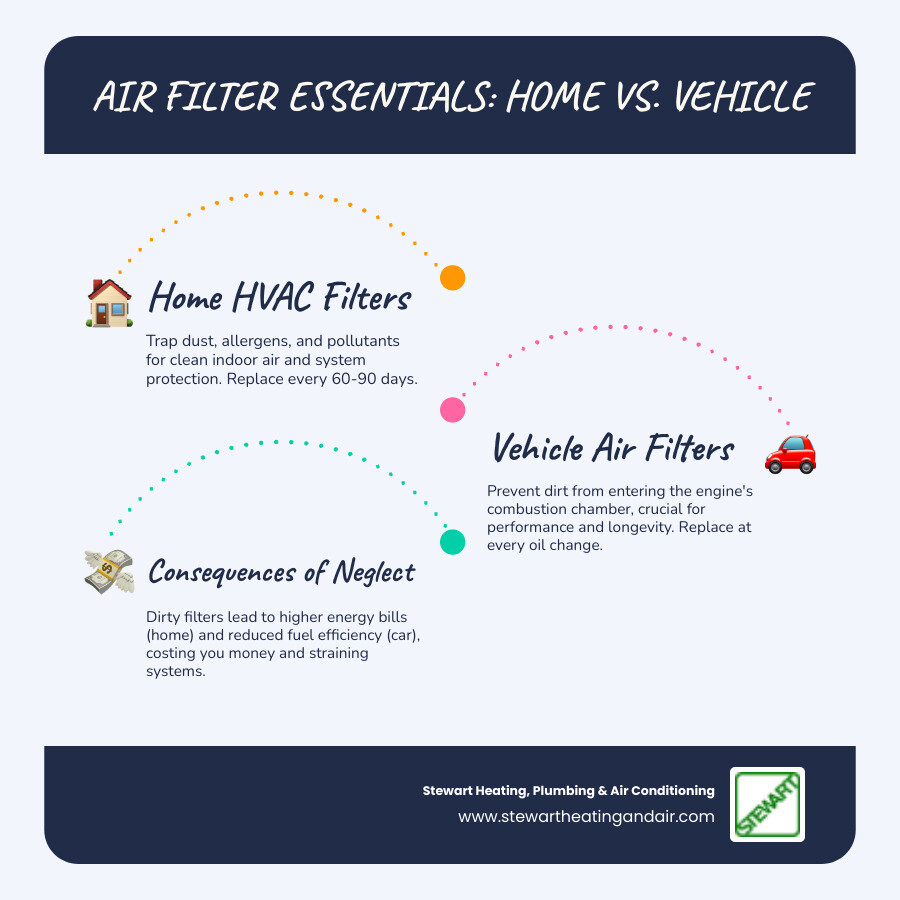
While both your home and your vehicle rely on air filters to keep things running smoothly, they serve distinct purposes and operate in different environments. Understanding these differences is key to proper maintenance and ensuring both your living space and your ride are in top condition.
First, let's look at the purpose of an HVAC filter for your home. These filters are primarily designed to maintain indoor air quality by trapping dust, allergens, pet dander, mold spores, and other airborne pollutants. They act as a protective barrier, not just for your lungs, but also for your HVAC system itself, preventing these particles from accumulating on sensitive components like the evaporator coil and fan motor. This ensures your heating and cooling systems operate efficiently and last longer.
On the other hand, vehicle air filters come in two main types: engine air filters and cabin air filters. An engine air filter has a critical job: it allows outside air into your engine’s intake manifold, where that air mixes with fuel to power your vehicle. Its primary purpose is to prevent dirt particles, bugs, and other harmful contaminants from entering the engine. A clean engine air filter is vital for proper combustion, optimal engine performance, and protecting expensive engine components from wear and tear.
Cabin air filters, found in most vehicles manufactured after 2006, focus on the air you breathe inside your car. They are often electrostatically charged, working like a magnet to collect pollutants such as dust, pollen, and bacteria as they try to enter and move through your car's ventilation system. This is especially important in a compact area like a vehicle interior, where concentrations of these contaminants can be high, potentially aggravating allergies and affecting the health of drivers and passengers.
The location of these filters also differs significantly. HVAC filters are typically found in a slot near your furnace or air handler, or sometimes in return air vents throughout your home. Engine air filters are located under the hood, usually in a plastic housing connected to the engine's air intake. Cabin air filters are commonly found behind the glove compartment or under the dashboard.
Material differences are also notable. Home HVAC filters can range from basic fiberglass to more advanced pleated or HEPA filters, designed with varying levels of filtration efficiency. Vehicle engine filters often use paper, foam, or cotton materials, each with their own characteristics. Paper filters are common and inexpensive but wear out faster. Foam filters offer strong filtering capabilities and are popular for off-road vehicles. Cotton filters, often found on race cars, can be used as aftermarket upgrades for everyday vehicles.
The impact on health versus machine performance is the biggest differentiator. Home HVAC and vehicle cabin air filters primarily impact the air quality you breathe, directly affecting your health and comfort. Engine air filters, however, are all about machine performance and longevity, ensuring your vehicle's heart (the engine) stays healthy and efficient.
This section will focus on residential and commercial property air filters, a key service for maintaining your HVAC Antioch CA.
Just like us, air filters have a unique lifespan, and it's influenced by a surprising number of factors right here in Antioch and Contra Costa County. What goes on inside and outside your home directly impacts how quickly your filter gets clogged.
One major factor is your household composition and lifestyle. Do you have multiple occupants? Pets? Smokers? Each adds to the particulate matter floating in your indoor air. Homes with furry friends, for instance, generate significantly more pet dander, which quickly clogs filters. Likewise, homes with smokers will see filters degrade much faster due to smoke particles. If anyone in your home suffers from allergies or respiratory issues, you'll likely need to change filters more frequently to maintain optimal indoor air quality.
Environmental conditions also play a huge role. Living in Antioch, we experience various external factors that affect our air quality. Areas prone to dust, pollen, or general pollution will naturally put more strain on your HVAC system's filter. If you live near construction zones or industrial areas, your filters will be exposed to more airborne contaminants, accelerating their saturation. Seasonal changes bring their own challenges; spring and summer, with their high pollen counts and increased dust, can congest filters rapidly.
Finally, the filter material and its MERV (Minimum Efficiency Reporting Value) rating are critical. Standard fiberglass filters are inexpensive but offer basic filtration and typically last about 30 days. Pleated or HEPA filters, on the other hand, are designed to trap finer particles and can function efficiently for up to 90 days. However, while higher-rated MERV filters capture more pollutants, they can also restrict airflow and clog faster, especially in dusty environments or homes with pets. Choosing the right MERV rating for your specific needs is a delicate balance.
Knowing when to swap out your home's air filter isn't just about following a calendar; it's about paying attention to the signs your home (and filter) are giving you.
Here are some tell-tale signs a home air filter needs changing:
Seasonal changes significantly affect the need for air filter replacement in HVAC systems. In spring and summer, when pollen counts are high and we're dealing with more dust and humidity, your filters work overtime. We often recommend monthly checks during these seasons, as filters can congest quickly. As fall and winter arrive, reduced ventilation can trap allergens indoors, increasing the need for frequent changes to prevent respiratory issues and maintain air circulation.
While factors like pets, allergies, or poor air quality may necessitate monthly changes, homeowners in Antioch should generally aim to replace their filters every 60 to 90 days. For commercial properties in Contra Costa County, the demands are often higher due to increased occupancy rates and airborne contaminants. Most commercial HVAC systems require monthly or even bi-weekly replacements to maintain efficiency and ensure a healthy environment for occupants. Standard fiberglass filters typically last about 30 days, whereas pleated or HEPA filters can function efficiently for up to 90 days.
Regularly replacing your HVAC filter is one of the easiest and most impactful maintenance tasks you can perform for your home. The benefits extend far beyond simply keeping your system running; they contribute to your family's health, your home's comfort, and your wallet.
First and foremost, regular filter replacement leads to significantly improved Indoor Air Quality Antioch CA. Our air filters are designed to trap dust, allergens, and other airborne pollutants, preventing them from circulating throughout your home. This is crucial for anyone, but especially for those with allergies, asthma, or other respiratory sensitivities. Cleaner air means fewer irritants, leading to a healthier and more comfortable living environment.
Beyond health, timely replacements offer substantial financial advantages. A well-maintained, clean air filter improves energy efficiency by allowing your HVAC system to "breathe" easily. When a filter is clogged, your system has to work harder to pull air through, leading to unnecessary strain on components. This increased effort translates directly into reduced energy consumption and lower utility bills. In fact, the U.S. Department of Energy (DOE) states that you could save up to 30 percent on your energy expenses with regularly scheduled maintenance, which includes filter replacement. Who doesn't love saving a bit of cash?
Finally, consistent air filter replacement helps prolong your system's lifespan and improves the performance of your Heating Antioch CA and Air Conditioning Antioch CA systems. A clogged filter can cause your HVAC unit to overheat, leading to premature wear and tear on expensive parts. By ensuring clean airflow, you reduce the strain on your system, preventing costly repairs and extending its overall operational life. This proactive approach ensures better airflow, reduced energy consumption, and a healthier home for years to come.
This section covers both engine and cabin air filters for cars, trucks, and SUVs.
When it comes to keeping your vehicle happy and healthy, air filters are often the unsung heroes. Just like your home, your car has specific filters designed to keep things clean. We generally talk about two main types: engine air filters and cabin air filters.
Engine air filters are crucial for your vehicle's performance. They protect the engine from dirt, dust, bugs, and other debris that could enter the intake system. Without a clean engine air filter, these contaminants can cause serious damage to internal engine components and affect the delicate air-to-fuel ratio needed for efficient combustion. There are a few common types of engine air filters:
Cabin air filters are all about your comfort and health inside the vehicle. As mentioned earlier, they filter the air that enters the passenger compartment through the HVAC system, trapping dust, pollen, bacteria, and other allergens. This is incredibly important for maintaining good air quality inside your car, especially for those with allergies or sensitivities. Most vehicles manufactured after 2006 include a cabin air filter, and their replacement ensures a cleaner, fresher environment for you and your passengers.
Your car is pretty good at telling you when something's not quite right, and a clogged air filter is no exception. Paying attention to these signs can save you headaches and money down the road.
One of the most common indicators of a dirty engine air filter is reduced fuel efficiency. A dirty air filter can negatively affect gas mileage, potentially penalizing your MPG by up to 2 miles per gallon. This happens because a clogged filter restricts airflow to the engine, preventing the clean air and fuel from mixing correctly.
You might also notice a decrease in acceleration and overall engine performance. When your engine isn't getting enough air, it can feel sluggish, leading to slower acceleration and a general loss of power. In severe cases, a dirty air filter can even cause your engine to run roughly or idle unevenly. With reduced airflow, your engine can become stressed and lose performance, which is exactly what we want to avoid.
Sometimes, a severely clogged engine air filter can even trigger your check engine light. While this light can indicate a myriad of issues, a restricted air filter is one possibility, as it can throw off the engine's air-fuel mixture sensors.
Beyond performance issues, a quick visual inspection can also reveal a problem. If you pull out your engine air filter and it's visibly dark, covered in dirt, leaves, or debris, it's definitely time for a change.
For cabin air filters, the signs are a bit different but equally important. If you detect a musty or stale odor coming from your car's vents, especially when the AC or heater is on, your cabin filter is likely clogged with bacteria and mold. Reduced airflow from the vents, or an increase in dust settling on your dashboard, can also point to a cabin air filter that needs attention. A clean cabin filter helps keep the air in the passenger cabin clean and protects your vehicle's heating and air conditioning systems from dirt and debris.
When it's time for a vehicle air filter replacement, you have a few options right here in Antioch, CA.
For many drivers, DIY replacement of both engine and cabin air filters is a feasible option. Engine air filters are often easily accessible under the hood, and cabin air filters typically reside behind the glove compartment or under the dashboard, often requiring only basic tools or no tools at all. Your vehicle's owner's manual is your best friend here, providing specific instructions and recommended intervals. If you're comfortable with a wrench and a bit of elbow grease, this can be a cost-effective way to keep your filters fresh.
However, if you're not comfortable getting your hands dirty, or simply prefer professional assistance, there are excellent options available. Many local auto parts stores in Antioch stock a wide variety of engine and cabin air filters for different makes and models.
For comprehensive service, you can turn to local auto service shops. These establishments offer professional air filter replacement services. This might include replacing the air filter, the breather element to keep contaminants out of the engine oil, and the PCV Valve to reduce fumes and wear on engine parts.
A great rule of thumb is to have your engine air filter checked every time you get your oil changed. Many service centers, including those providing oil change services in Antioch, will inspect your air filter as part of their routine maintenance check. For cabin air filters, a common recommendation is to replace them about every 15,000 miles, but always refer to your vehicle's owner's manual for factory-recommended maintenance intervals. Taking a proactive approach ensures your vehicle runs efficiently and the air you breathe inside is clean.
This section details the negative impacts of not changing filters in both your home and vehicle. It's easy to put off replacing an air filter, but the consequences can be surprisingly significant, affecting both your comfort and your wallet.
Neglecting your home's HVAC air filter is like trying to run a marathon while breathing through a pillow – it's going to be inefficient and cause a lot of strain.
One of the most immediate impacts you'll notice is higher energy bills. A clogged air filter forces your HVAC system to work much harder to pull air through, consuming more electricity or gas than necessary. This unnecessary strain means your system uses more energy to achieve the same heating or cooling, leading to those frustratingly higher utility costs. A well-maintained air filter improves energy efficiency, reducing unnecessary strain on HVAC components.
Alongside increased costs, you'll likely experience poor air circulation and a noticeable increase in the presence of dust and allergens throughout your home. If your filter isn't effectively trapping pollutants, they're simply recirculating. This means more dust settling on surfaces, more pet dander floating around, and a higher concentration of pollen and other allergens in the air you breathe. A neglected air filter can lead to poor air circulation and an increased presence of allergens in your home, directly impacting your Indoor Air Quality Antioch CA.
This constant overworking puts unnecessary strain on HVAC components, increasing the likelihood of breakdowns and leading to potential for costly repairs. Your furnace, air conditioner, and other parts of the system are designed to operate with a certain airflow. When that's restricted, it can cause motors to burn out, coils to freeze, and other critical components to fail prematurely. Compromised filtration can lead to reduced system performance, increased energy consumption, and potential long-term damage, shortening your system's lifespan. This all leads to reduced comfort in your own home, as your system struggles to maintain consistent temperatures and clean air.
Your vehicle also suffers significantly when its air filters are neglected. Just like your home, a car needs to breathe freely to perform its best.
The most commonly cited consequence of a dirty engine air filter is poor gas mileage. A dirty air filter can negatively affect gas mileage and make an engine run roughly. In fact, a dirty air filter can prevent clean air and fuel from mixing correctly, potentially causing an MPG penalty of up to 2 miles per gallon. Over time, this adds up to significant extra costs at the pump.
When airflow is restricted, your engine becomes stressed and will experience reduced performance and acceleration. The engine needs a specific air-to-fuel ratio to operate properly. A clogged filter starves the engine of air, making it work harder to produce power. This results in sluggish acceleration and a noticeable drop in overall performance.
Perhaps most critically, a neglected engine air filter means contaminants entering the engine. The filter's job is to prevent dirt particles, bugs, and other harmful debris from getting into the engine's intake manifold. When it's clogged or damaged, these particles can bypass the filter and cause abrasive increased wear on engine parts, leading to premature component failure and potentially very expensive repairs down the line. A clean air filter helps to protect your car, truck, or SUV from these harmful particles and helps to reduce wear on engine components.
And let's not forget the cabin air filter. A clogged cabin filter means you're breathing in a higher concentration of dust, pollen, and bacteria inside your car, which can aggravate allergies and lead to a less pleasant driving experience.
We hear a lot of questions about air filters, and we're always happy to clear things up. Here are some of the most common queries we receive about air filter replacement in Antioch, CA.
Regular visual inspection is your first line of defense. For your home's HVAC system, we recommend checking your filter monthly. This is especially true during peak seasons like spring and summer, when pollen, dust, and humidity can quickly congest filters. For your vehicle's engine air filter, it should be checked at every oil change. This is a common practice at most auto service centers and a good habit to adopt if you're doing your own maintenance. A quick glance can tell you a lot about its condition and whether it's nearing the end of its life.
Absolutely, yes! A dirty HVAC filter in your home can indeed be the source of unpleasant odors. Over time, dust, moisture, and organic matter trapped in the filter can create an environment where mold, mildew, and bacteria can grow. When your HVAC system runs, it then circulates these musty, stale smells throughout your home. Similarly, a clogged cabin air filter in your car can lead to musty or stale odors inside the vehicle, as it struggles to filter out bacteria and other airborne contaminants effectively. If you're noticing an odd smell, checking your filters is a smart first step.
MERV stands for Minimum Efficiency Reporting Value, and it's a very important concept for your home's HVAC filters. Essentially, the MERV rating is a scale from 1 to 16 (though some go higher) that measures how effectively an air filter captures airborne particles of varying sizes. A higher MERV rating indicates that the filter is designed to capture smaller particles, providing finer filtration. For example, a MERV 8 filter is good for general household dust and pollen, while a MERV 13 filter can capture much smaller particles like pet dander, mold spores, and even some bacteria. While higher MERV ratings mean cleaner air, they can also restrict airflow more, so it's important to choose a filter that's appropriate for your HVAC system's capabilities and your household's needs. We can help you determine the best MERV rating for your home during a service visit.
Keeping up with air filter replacement in Antioch, CA is a small task with monumental benefits for both your home and your vehicle. From ensuring optimal engine performance and fuel efficiency in your car to maintaining pristine indoor air quality and extending the life of your HVAC system, clean filters are truly the unsung heroes of daily life. We've seen how proactive maintenance can prevent costly repairs and significantly improve comfort.
We pride ourselves on a strong focus on quality and customer satisfaction, striving to do every project right the first time. Our commitment to you is to provide personalized recommendations and proactive maintenance strategies that keep your systems running smoothly. For expert help with your home's heating, cooling, and indoor air quality needs, trust the professionals at Stewart Heating, Plumbing & Air Conditioning to provide a seamless Air Filter Replacement Antioch CA service.
Don't let a clogged filter compromise your comfort or your budget. Take the proactive step towards cleaner air and more efficient systems today. Request Service with us, and let us be your local partner in maintaining a healthier, happier home in Antioch.

Very professional and complete. I would recommend Stewart to anyone. Highest quality of workmanship and clean installation.
Stewart Heating Plumbing Air Conditioning just did some work for us for the first time. They did an installation at my home and it turned out well. I thought the price was fair and I definitely would use them again. The technicians were very friendly and knowledgeable about their work. I highly recommend Stewart Heating Plumbing Air Conditioning and already told friends to use them.
We have been using Stewart Heating Plumbing Air Conditioning since 1995. They put the original heating and air unit in the house, and we have just stayed with them. They are dependable and honest people, and they have done a good job for us every time that we have used them!
They came and did an inspection and are coming tomorrow to do the repair.
They replaced a regulator the first time, and then the water heater vent had to be replaced. They did great work.
The gentleman that serviced us was helpful, insightful, and knew what he was talking about. Overall, it was a great experience.