

Recent Blogs
Stay updated with our latest blog posts.

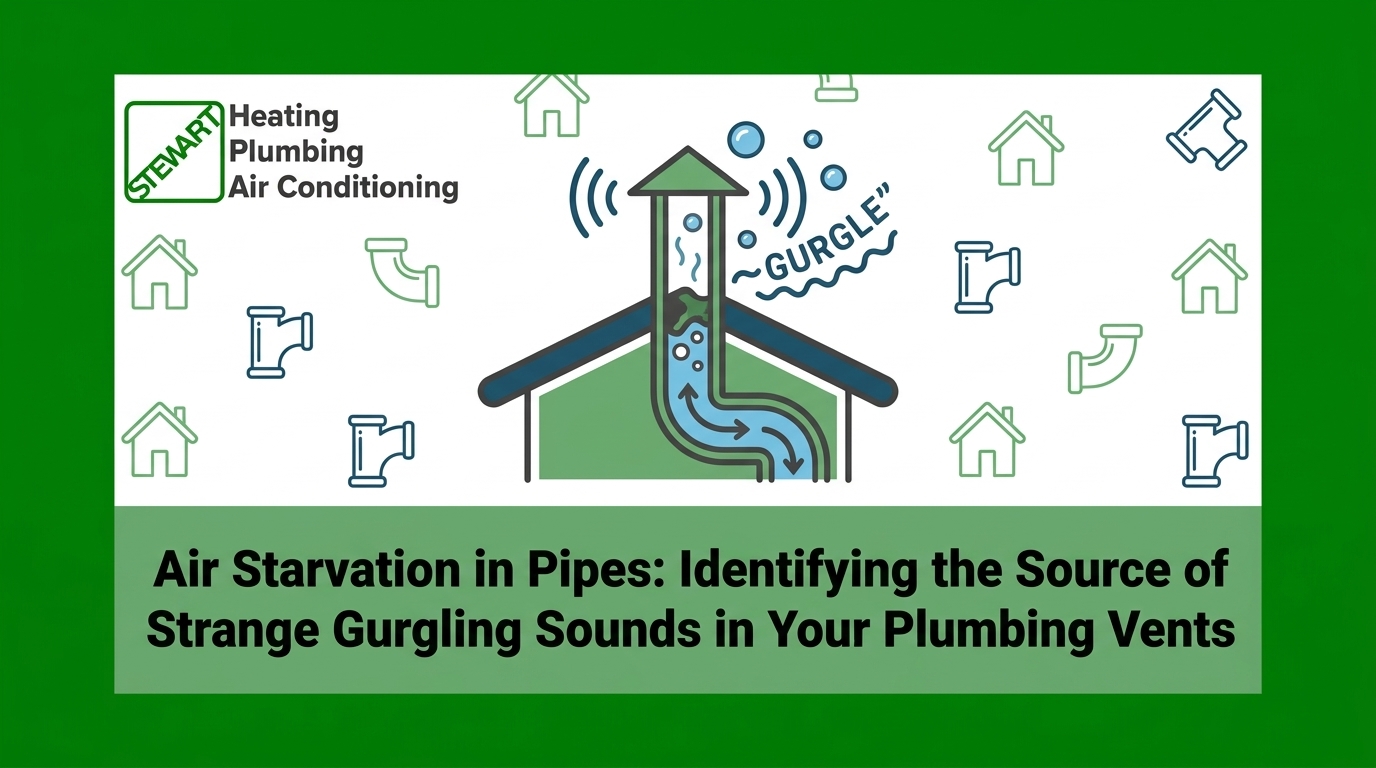
At Stewart Heating, Plumbing and Air Conditioning, we frequently receive calls from homeowners panicked by a very specific and unsettling problem: a loud glug-glug noise echoing from behind the drywall every time they flush a toilet or drain a sink. When you are identifying the source of strange gurgling sounds in your plumbing vents, you might watch the water swirl down the bowl, but instead of a smooth, quiet exit, the pipes protest. That distinct, rhythmic chugging sound is not normal water flow. It is a clear symptom of a vacuum effect occurring deep within your home's hidden pipe network.
If you need immediate help diagnosing these system imbalances, our team is ready to provide expert plumbing services—just request plumbing service to get a professional assessment today.
The critical decision point: As a homeowner, you must determine whether this noise indicates a simple, localized drain clog directly beneath the fixture, or a much deeper plumbing vent blockage that is choking your entire drainage system. Misdiagnosing the issue often leads to wasted time and poured chemicals that never reach the actual problem. We frequently hear from homeowners concerned about vacuum sounds in walls, assuming their main sewer line is failing. More often than not, the pipes are simply gasping for air. By understanding the mechanics behind these noises, you can skip the dangerous guesswork and make informed decisions about your home's maintenance.
Most people think of plumbing strictly in terms of water moving through pipes. However, our technicians will be the first to tell you that a properly functioning drainage system is just as dependent on air. Plumbing systems are meticulously designed to breathe. They require a constant intake of atmospheric air to allow wastewater to flow smoothly downward toward the municipal sewer or septic tank without creating a suction effect.
The straw analogy: Think about holding a straw in a glass of water and placing your finger tightly over the top opening. When you lift the straw out of the glass, the water stays trapped inside because no air can enter from behind to replace the liquid. The moment you remove your finger, air rushes in, and the water drops instantly. Your home's plumbing operates on the exact same principle.
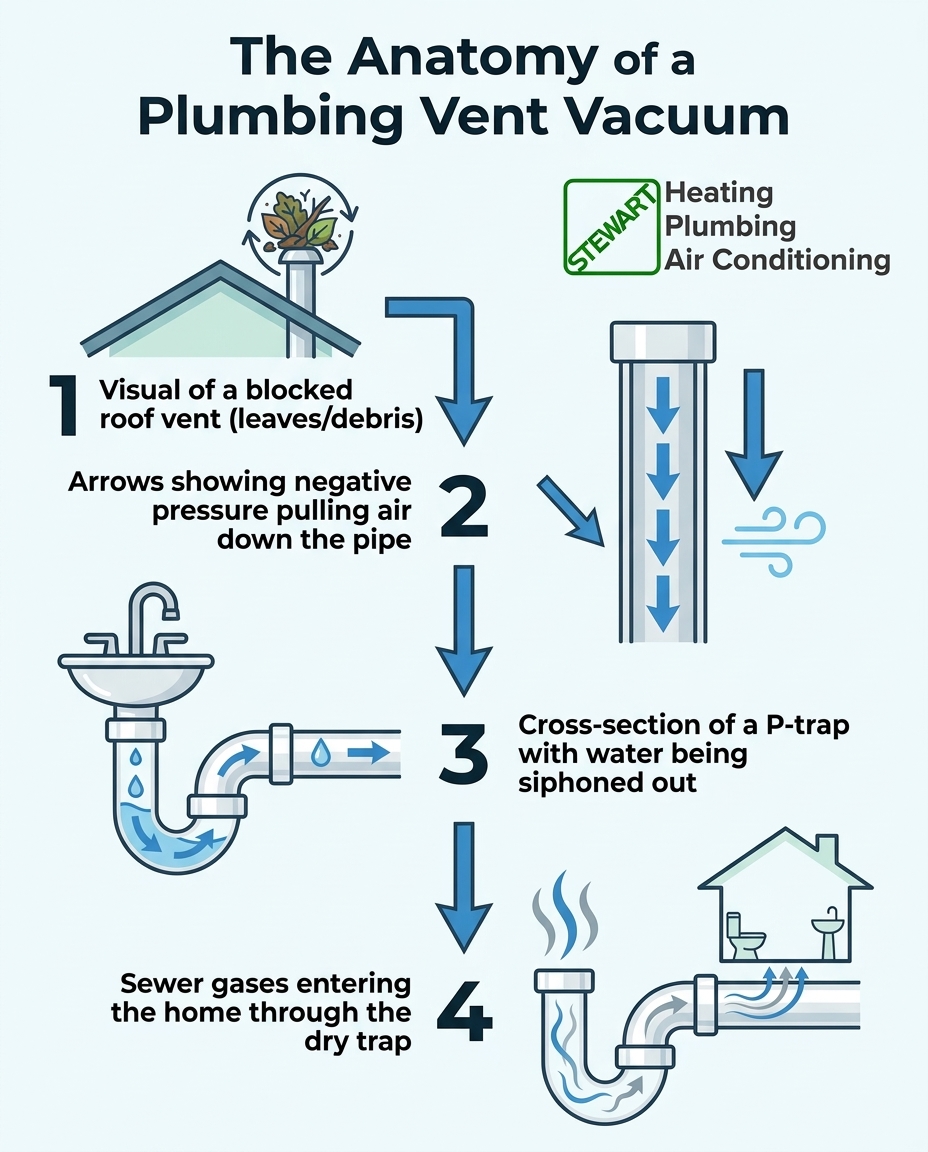
Both the Uniform Plumbing Code (UPC) and the International Plumbing Code (IPC) mandate that every single plumbing fixture in a home must be properly vented. When a vent is blocked, the draining water creates negative pressure behind it. This condition is known as air starvation. Because the draining water must pull air from somewhere to keep moving, it will violently suck air from the nearest available opening. That gurgling noise you hear is literally atmospheric air being violently pulled through the water seal of a nearby fixture's P-trap to satisfy the vacuum.
The primary lung of your plumbing system is the main vent stack. This is the vertical pipe that extends upward, usually exiting through the roof of your home. It serves two critical functions: releasing noxious sewer gases safely outdoors and drawing fresh air into the system to equalize pressure.
This main stack connects to an intricate network of smaller vent pipes hidden behind your drywall, linking every sink, shower, and toilet. When the main stack on the roof becomes compromised, the entire network suffers. Those unsettling vacuum sounds in walls are the mechanical result of the system struggling to equalize its internal pressure without a clear airway.
Differentiating between a standard drain clog and a system-wide venting issue is essential for effective troubleshooting. In our years of servicing Pittsburgh, CA homes, a pattern we see often is homeowners pouring harsh liquid drain cleaners down a slow drain, assuming it is a localized clog, when the real culprit is a blocked vent on the roof. A localized drain clog typically affects only one fixture. If hair and soap scum block your bathroom sink, that specific sink will drain slowly or hold standing water, but flushing the toilet right next to it will sound completely normal.
A vent blockage, on the other hand, creates a pressure imbalance that affects multiple fixtures simultaneously. The classic, undeniable symptom of a vent issue is a toilet gurgling aggressively when a nearby sink or bathtub is drained. Because the vent is choked, the draining bathtub water pulls air through the toilet's trap, causing the bowl water to bubble and glug.
Just as clearing a clogged AC drain line requires treating a specific, localized pathway, resolving a vent issue requires addressing the system's overall pressure mechanics. Pouring liquid drain cleaners down a sink will do absolutely nothing to clear a bird's nest out of a roof vent. Understanding this distinction saves you from damaging your pipes with harsh chemicals while the real problem remains unresolved.
• Primary Sound — Localized Drain Clog: Silent standing water or faint trickling. — Vent Blockage (Air Starvation): Loud gurgling or glug-glug noises from nearby drains.
• Water Movement — Localized Drain Clog: Water backs up into the basin or tub. — Vent Blockage (Air Starvation): Water drains, but pulls adjacent trap water with it.
• Affected Fixtures — Localized Drain Clog: Isolated to a single sink, shower, or toilet. — Vent Blockage (Air Starvation): Multiple interconnected fixtures react simultaneously.
• Odor Presence — Localized Drain Clog: Mild, localized mildew or soap scum smell. — Vent Blockage (Air Starvation): Strong, distinct sewer gas odor in the room.
Those persistent vacuum sounds in walls almost always point to the right side of this chart. If multiple fixtures are interacting with one another, you are dealing with a pressure issue, not a localized pipe blockage.
Plumbing vents do not block themselves; they are highly susceptible to environmental factors. Because the main vent stack is exposed on your roof, it acts as an open funnel for whatever the weather brings. The transition into early fall creates a particularly high-risk period for these exposed pipes.
Here in the East Bay, our team typically sees a spike in vent-related service calls every September. With summer fading, East Bay autumn winds can easily carry debris like early fall leaves, snapping twigs, and even abandoned bird nests directly onto rooftops and into exposed roof vent stacks, making this a common regional issue. Furthermore, as temperatures begin to drop, pests such as rodents and small birds often seek out the warmth radiating from vent pipes, occasionally building nests directly inside the stack.
The process of a vent becoming completely choked usually happens gradually. Here is how seasonal debris transforms from a minor nuisance into a major mechanical failure:
1. Initial Debris Entry: Heavy autumn winds blow dry leaves and loose twigs across the roofline, where they catch on the lip of the PVC or cast-iron vent pipe and fall inside.
2. Moisture Accumulation: Rain or morning dew wets the organic material trapped inside the pipe. The September / early fall leaf drop is particularly problematic because these wet leaves stick to the interior pipe walls rather than falling straight down to the sewer line.
3. Decomposition and Compaction: The wet leaves and twigs begin to decompose, forming a dense, papier-mâché-like plug that narrows the pipe's diameter.
4. Complete Seal: Eventually, additional debris or a shifting nest completes the blockage. The pipe is entirely sealed, air starvation begins, and the vacuum effect takes over your drainage system.
The Problem: Ignoring the gurgling sounds in your plumbing is a mistake that moves quickly from a minor annoyance to a legitimate health and safety concern. Based on our field experience, the primary danger lies in the failure of your P-traps.
The Cause: A P-trap is the curved, U-shaped section of pipe located directly beneath your sinks and showers. Its sole purpose is to hold a small, continuous amount of water. This water seal acts as an impenetrable barrier, blocking noxious sewer gases from rising out of the municipal sewer line and entering your living space. When a blocked vent causes severe negative pressure, the suction is strong enough to completely siphon the water out of the P-trap. This violent siphoning action is the exact source of those vacuum sounds in walls.
The Solution: Once the trap is sucked dry, the protective barrier is gone. Harmful, foul-smelling sewer gases—which include methane and hydrogen sulfide—now have a direct, unobstructed pathway into your home. This severely degrades your indoor air quality and introduces potential health hazards, including headaches and respiratory irritation. Restoring the vent's airflow is the only way to re-establish the pressure balance, allowing the P-traps to refill and effectively block the gases once again.
When homeowners realize their roof vent is blocked, a common but highly dangerous DIY instinct is to climb onto the roof with a garden hose to forcefully flush out the stack. We strongly advise against this approach. Roof work is inherently dangerous, posing severe fall risks, especially during wet or windy fall conditions. Furthermore, spraying high-pressure water into a compacted plug of leaves often backfires; instead of clearing the blockage, the water pressure heavily compacts the debris, turning a partial clog into an impenetrable seal.
Professional diagnostics eliminate these risks entirely. Licensed technicians utilize specialized equipment, such as high-resolution inline cameras, to safely and accurately locate the exact depth and composition of the blockage without risking injury or pipe damage. An inline camera inspection also ensures that a failing main sewer line isn't masquerading as a simple vent issue—a distinction that is impossible to make from the roof with a garden hose.
One local homeowner recently experienced a disruptive plumbing issue requiring service that was causing unusual noises in their home. After scheduling an inspection, our technician arrived on time, was highly efficient, and polite while assessing the system. Because the root cause was accurately identified and resolved without unnecessary guesswork, the customer highly recommends our team for plumbing service.
As a family-owned business serving Contra Costa County since 1974, our team brings decades of deep local knowledge to accurately diagnose complex residential plumbing issues safely. We know exactly how the September / early fall leaf drop affects local homes, and we have the tools to resolve it properly. If you suspect your vents are compromised, exploring our plumbing repair specials is a safe, effective way to restore your system's balance.
Your sink gurgles when the toilet flushes because a blocked plumbing vent is forcing the system to pull air from the sink's drain to compensate for negative pressure. When the large volume of toilet water rushes down the pipe, it creates a vacuum behind it. Without a clear vent to supply fresh air, the suction pulls atmospheric air right through the water seal in your sink's P-trap, causing the bubbling sound.
Safely unclogging a plumbing vent requires professional diagnostic tools, such as inline drain cameras and motorized drain snakes, accessed either from the roof stack or through cleanouts. Homeowners should never attempt to climb onto the roof with a garden hose, as this creates a severe fall hazard and can compact the debris further into the pipe. A licensed professional can accurately locate the depth of the blockage and clear it without damaging the pipe walls.
Yes, a clogged vent is the primary reason you hear gurgling or vacuum sounds echoing from inside your walls. The vent pipes run vertically behind your drywall, connecting your fixtures to the roof stack. When air starvation occurs, the violent suction of air moving through the system reverberates through these hidden pipes, making it sound as though the walls themselves are gurgling.
If a plumbing vent remains clogged, the continuous negative pressure will eventually siphon the water completely out of your P-traps. Once these traps are dry, toxic and foul-smelling sewer gases will enter your home's living spaces freely. Additionally, the lack of airflow will cause all the drains in your home to run sluggishly, increasing the likelihood of secondary, localized clogs forming.
The most common signs of a clogged plumbing vent include multiple fixtures draining slowly at the same time, toilets bubbling when nearby sinks are used, and distinct sewer gas odors lingering in bathrooms or kitchens. Unlike a simple drain clog, which isolates to one sink or tub, a vent blockage affects the interconnected pressure of the entire plumbing network.
A professional can typically diagnose and clear a standard roof vent stack blockage within one to two hours. The process involves running an inline camera to identify whether the blockage is caused by leaves, a bird's nest, or structural pipe damage, followed by using the appropriate auger to safely extract or break up the obstruction.
Your home's drainage network is a delicate balance of water flow and atmospheric pressure. Plumbing systems require clear, unobstructed airways to function properly, and those unsettling wall noises are a clear cry for help from a system experiencing air starvation. Addressing these symptoms promptly does more than just quiet the pipes; it prevents hazardous sewer gas leaks, protects your P-traps, and ensures smooth, reliable drainage throughout the house.
As you prepare your property for changing weather, including routine water heater maintenance and gutter cleaning, do not ignore the signs of a choked roof stack. Identifying the source of strange gurgling sounds in your plumbing vents early can save you from severe indoor air quality issues down the road. If your fixtures are bubbling or draining poorly, reach out for a thorough professional diagnostic check to restore your system's breath and balance.

Very professional and complete. I would recommend Stewart to anyone. Highest quality of workmanship and clean installation.
Stewart Heating Plumbing Air Conditioning just did some work for us for the first time. They did an installation at my home and it turned out well. I thought the price was fair and I definitely would use them again. The technicians were very friendly and knowledgeable about their work. I highly recommend Stewart Heating Plumbing Air Conditioning and already told friends to use them.
We have been using Stewart Heating Plumbing Air Conditioning since 1995. They put the original heating and air unit in the house, and we have just stayed with them. They are dependable and honest people, and they have done a good job for us every time that we have used them!
They came and did an inspection and are coming tomorrow to do the repair.
They replaced a regulator the first time, and then the water heater vent had to be replaced. They did great work.
The gentleman that serviced us was helpful, insightful, and knew what he was talking about. Overall, it was a great experience.