

Recent Blogs
Stay updated with our latest blog posts.

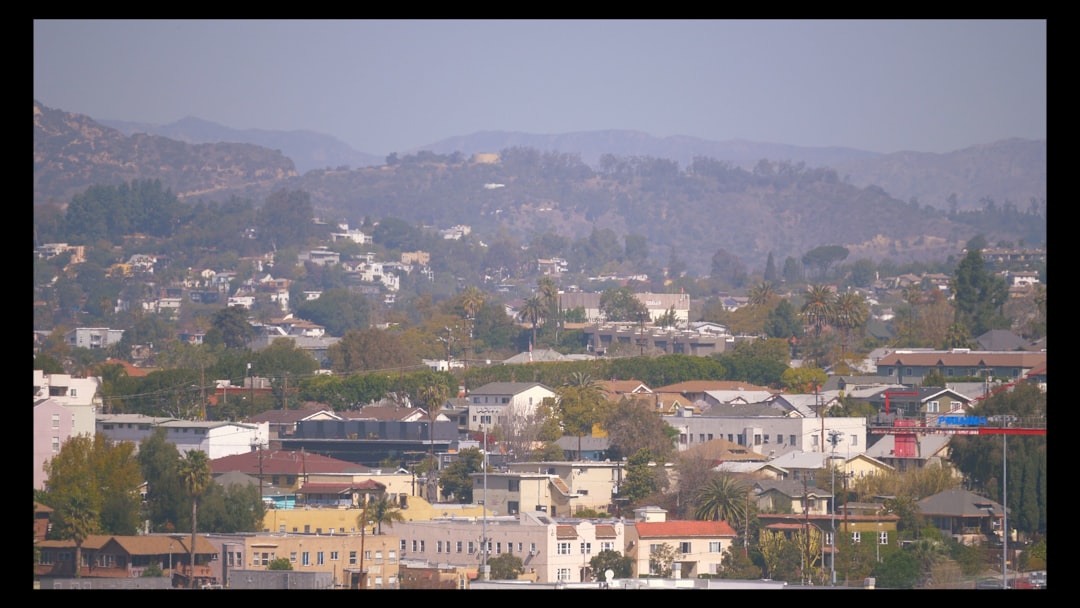
How wildfire smoke season changes your air quality needs is something every homeowner in Contra Costa County should understand before smoke arrives — not after. When wildfire smoke rolls in, the air inside your home is no longer the safe haven you might assume it is.
Here is a quick summary of how wildfire smoke season shifts what your home needs:
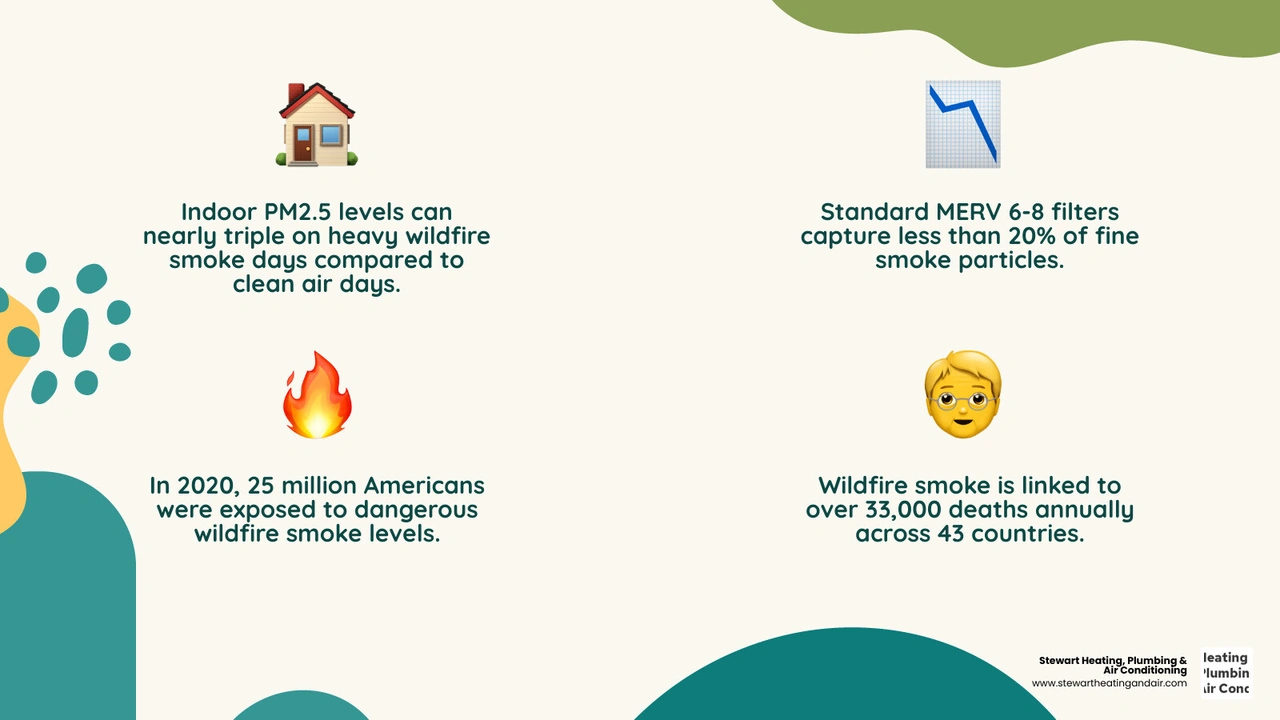
The numbers behind this issue are striking. In 2020 alone, 25 million Americans were exposed to dangerous wildfire smoke levels — a figure that was less than half a million just a decade earlier. A 2021 study linked wildfire smoke to more than 33,000 deaths annually across 43 countries, with many of those deaths occurring in cities hundreds of miles from any active fire. Research has shown that indoor particulate matter can nearly triple on heavy smoke days compared to clean air days, and homes built before 2000 are especially vulnerable to smoke infiltration through aging seals and building materials.
For homeowners in Pittsburg, Antioch, Concord, Brentwood, Walnut Creek, and the broader Contra Costa County area, wildfire smoke is no longer a distant problem. Smoke from fires burning across California and even as far as Canada and the Pacific Northwest can push unhealthy air quality into your neighborhood within hours, with little warning.
This guide walks you through exactly what changes during smoke season — from your HVAC filter choices to how you seal your home — so you can protect your family before conditions become dangerous.
Simple guide to how wildfire smoke season changes your air quality needs:
When we think about our home comfort systems, we usually focus on temperature. But when wildfire season arrives, our focus has to expand to include intensive air filtration and purification. Understanding How Wildfire Smoke Season Impacts Your Air Quality is the first step toward keeping your home safe.
Wildfire smoke is not just simple ash; it is a complex, toxic cocktail of gases, heavy metals, volatile organic compounds (VOCs) like formaldehyde and benzene, and microscopic particulate matter. Because these particles are so incredibly small, they do not behave like standard household dust. Instead of settling quickly on your furniture, they remain suspended in the air and easily slip through the tiny gaps in your home's building envelope.
If you do not actively adjust your filtration strategies, your indoor air will quickly mirror the hazardous conditions outside. In fact, research shows that without proper mitigation, indoor PM2.5 levels can easily reach 50% to 70% of outdoor concentrations.
If you live in an older home in Concord, Martinez, or Pittsburg, your indoor air is at an even higher risk. Homes built before 2000 were constructed under different building codes that allowed for more natural ventilation. While this "breathing" is fine during normal weather, it becomes a major liability during a smoke event.
Micro-gaps around aging window frames, worn-out door seals, attic hatches, and floorboards allow outdoor air to seep inside constantly. This process, known as infiltration, means that even with all your doors and windows shut tight, smoke is quietly entering your living spaces.
Upgrading your approach to Indoor Air Quality Concord CA is essential for older properties. Without a high-efficiency filter and targeted air purification, these older structures act like slow-moving sponges, absorbing and trapping fine particulate matter inside your living areas.
Why are we so concerned about these microscopic particles? The primary culprit in wildfire smoke is PM2.5—particulate matter that is 2.5 micrometers or smaller in diameter (about 30 times smaller than the width of a human hair).
Because these particles are so incredibly small, our body's natural defenses—like nose hairs and mucus—cannot filter them out. When inhaled, PM2.5 travels deep into our lungs, reaching the tiny air sacs (alveoli). From there, ultrafine particles can actually cross directly into the bloodstream.
This exposure triggers a cascade of health issues:
Vulnerable groups—including young children, pregnant individuals, the elderly, and anyone with pre-existing heart or lung conditions—are at an incredibly high risk. Protecting them requires transitioning your home's defenses from passive to active before the skies turn orange.
The worst time to prepare for wildfire smoke is when the smoke is already here. During major fire events, supply chains get strained, and high-quality air filters and portable purifiers sell out almost instantly. By taking a few proactive steps in the spring, you can ensure your home is fully prepared.
Start by reviewing these Air Filter Replacement Concord CA Tips and gathering your essential wildfire season supplies:
Most standard residential HVAC systems are fitted with basic MERV 8 filters. These are designed purely to protect the heating and cooling equipment from large dust bunnies and hair—they do almost nothing to capture fine wildfire smoke. To protect your family, you need to upgrade to a filter rated MERV 13 or higher.
However, not all MERV 13 filters are created equal. Many cheap filters rely on an electrostatic charge to attract particles. While this works well initially, heavy wildfire smoke carries a massive load of particles that quickly neutralizes this electrostatic charge. Within just a few days of heavy smoke exposure, an electrostatic filter's efficiency can drop by up to 95%.
To avoid this, look for mechanical MERV-A rated filters (such as MERV 13-A). These rely on physical density and advanced fiber structures to trap particles, maintaining their efficiency even under heavy smoke loads.
Before you make the swap, it is crucial to consult with a professional about Indoor Air Quality Pleasant Hill CA. High-efficiency filters are thicker and denser, which creates a larger "pressure drop" across your system. If your HVAC blower motor is not designed to handle this increased resistance, it can overheat, reduce your system's efficiency, or even cause expensive damage.
Once your filtration is upgraded, you need to minimize the amount of smoke entering your home. Think of your house like a boat—any leak will let the water (or in this case, smoke) in.
Even with a closed home and an upgraded HVAC filter, some smoke will still find its way inside. This is where a "zonal defense" strategy becomes highly effective. Rather than trying to keep your entire house perfectly pristine, focus your efforts on creating a designated "clean room"—typically a main bedroom where you spend eight or more hours sleeping.
To optimize your clean room, close all doors and windows, seal any large door gaps with a draft stopper, and run a dedicated, properly sized True HEPA air purifier continuously. By concentrating your purification efforts, you can achieve a 60% to 80% reduction in indoor PM2.5. For customized advice on setting up these zones, exploring options for Indoor Air Quality Walnut Creek CA can help you select the right equipment for your home's layout.
When purchasing a portable air purifier for wildfire smoke, ignore the general square-footage ratings on the box, which are often calculated for normal dust levels. Instead, look for the unit's Clean Air Delivery Rate (CADR) for smoke.
Because wildfire smoke is so intense, we recommend using the 1.5x CADR Rule:
To help you compare your options, here is a breakdown of common filtration methods:
| Filtration Type | PM2.5 Capture Efficiency | Gas/Odor Removal | Ideal Use Case |
|---|---|---|---|
| True HEPA Purifier | 99.97% (down to 0.3 microns) | Excellent (if fitted with Activated Carbon) | Bedrooms, living rooms, and long-term protection |
| DIY Box Fan Filter | 60% - 80% (using MERV 13 filter) | Poor (no gas/odor removal) | Emergency stopgap or budget-friendly auxiliary filtration |
| Standard HVAC Filter (MERV 8) | < 20% | None | Protecting HVAC equipment only (unsuitable for smoke) |
| Upgraded HVAC Filter (MERV 13) | 85% - 90% | None | Whole-house particle reduction (requires compatible system) |
If you have children, elderly family members, or anyone with asthma living in your home, your air quality needs become much more urgent. Children breathe more rapidly than adults relative to their body size, meaning they inhale a larger volume of pollutants. Older adults often have weaker cardiovascular systems, making them highly susceptible to smoke-induced heart strain.
For these vulnerable groups, a clean room is not a luxury—it is a medical necessity. Ensure their bedrooms are equipped with True HEPA purifiers that include an activated carbon stage. While HEPA filters trap physical smoke particles, only activated carbon can absorb the toxic gases and chemical odors that accompany wildfire smoke.
When a wildfire event is active and the Air Quality Index (AQI) begins to spike, you need to transition into active protection mode. Do not wait until you can smell smoke inside your home. By utilizing a consumer-grade PM2.5 monitor, you can track invisible particulate levels in real-time and take immediate action.
Keep your home healthy by ensuring your Clean Ducts and Vents are not recirculating old dust and debris, and follow these AQI action thresholds:
During a severe smoke event, your central heating and air conditioning system can be your greatest ally—if configured correctly.
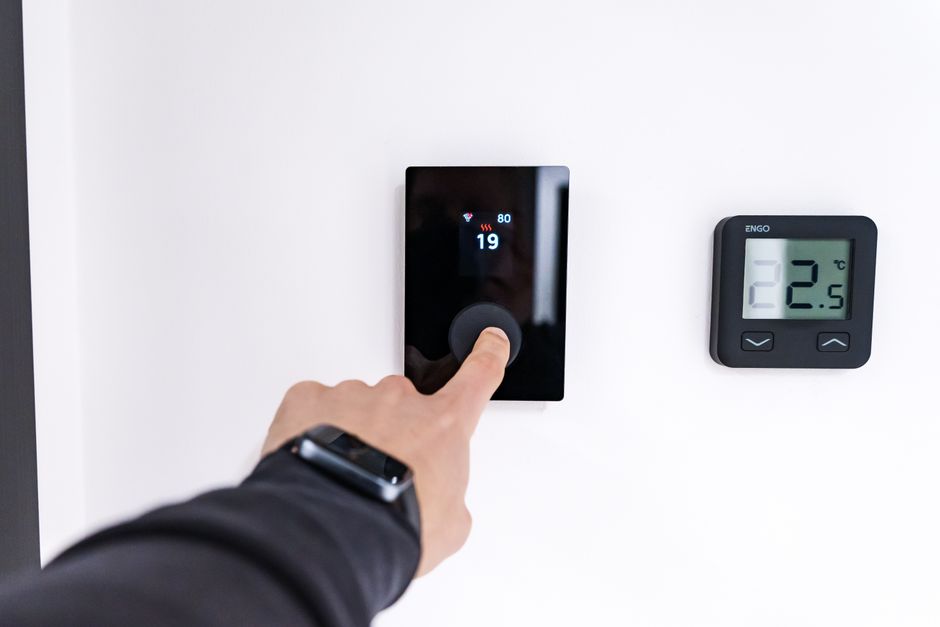
First, set your thermostat's fan setting from "Auto" to "On". In Auto mode, the system only filters the air when it is actively heating or cooling. In "On" mode, the blower runs continuously, providing constant filtration through your upgraded MERV 13 filter.
Second, be prepared for rapid filter degradation. Under normal conditions, a high-quality filter can last up to three months. During a heavy smoke event, however, the sheer volume of particulate matter can clog a filter in as little as two to four weeks.
Inspect your filter weekly. If it appears dark gray, soot-covered, or if you notice a drop in airflow from your vents, replace it immediately. If you notice a persistent smoky smell or reduced heating and cooling performance even after replacing the filter, it may be time to schedule professional Duct Cleaning Concord CA to clear out settled ash and soot from your ductwork.
Once the fires are contained and the outdoor AQI stays below 50 for at least 48 hours, you can begin the recovery process to restore your home's air quality.
No. Most standard residential HVAC systems use thin, fiberglass MERV 8 filters. These are designed solely to protect the internal components of your furnace and air conditioner from large dust particles and hair. They have wide gaps in their fiber structure that allow fine PM2.5 smoke particles to pass through completely unhindered. To protect your indoor air quality, you must upgrade to a MERV 13 or higher filter, provided your system can handle the airflow resistance.
A Corsi-Rosenthal box is a DIY air purifier constructed by taping four or five MERV 13 filters together into a box shape, with a standard 20-inch box fan sealed on top. Studies have shown that these DIY units are incredibly effective, often delivering CADR performance that matches or exceeds commercial purifiers costing hundreds of dollars. They serve as an excellent, low-cost emergency stopgap during severe smoke events when commercial purifiers are sold out. Just ensure you use a modern box fan (manufactured after 2012) with built-in safety fuses to prevent overheating.
You should wear a well-fitted N95 or KN95 respirator indoors if your home has high infiltration rates (common in older homes) and your indoor air quality monitor shows PM2.5 levels exceeding 55 µg/m³ (the threshold for "Unhealthy for Sensitive Groups"). This is especially important during active cleanup, such as when you are wiping down settled ash, which can easily become airborne and be inhaled.
Preparing for wildfire smoke season is all about proactive action. By understanding how wildfire smoke season changes your air quality needs, upgrading your home's filtration, sealing drafty gaps, and setting up a dedicated clean room, you can keep your family safe and comfortable no matter what the outdoor air looks like.
At Stewart Heating, Plumbing & Air Conditioning, we have spent decades helping our neighbors throughout Contra Costa County breathe easier. Our family-owned team is committed to doing every job right the first time, ensuring your home's comfort systems are fully prepared for whatever summer and autumn bring.
If you want to ensure your heating and cooling system is ready to handle a high-efficiency MERV 13 filter, or if you need professional air purification solutions tailored to your home, we are here to help. Contact us today to explore our comprehensive indoor air quality and heating solutions in Contra Costa County.

Very professional and complete. I would recommend Stewart to anyone. Highest quality of workmanship and clean installation.
Stewart Heating Plumbing Air Conditioning just did some work for us for the first time. They did an installation at my home and it turned out well. I thought the price was fair and I definitely would use them again. The technicians were very friendly and knowledgeable about their work. I highly recommend Stewart Heating Plumbing Air Conditioning and already told friends to use them.
We have been using Stewart Heating Plumbing Air Conditioning since 1995. They put the original heating and air unit in the house, and we have just stayed with them. They are dependable and honest people, and they have done a good job for us every time that we have used them!
They came and did an inspection and are coming tomorrow to do the repair.
They replaced a regulator the first time, and then the water heater vent had to be replaced. They did great work.
The gentleman that serviced us was helpful, insightful, and knew what he was talking about. Overall, it was a great experience.