

Recent Blogs
Stay updated with our latest blog posts.

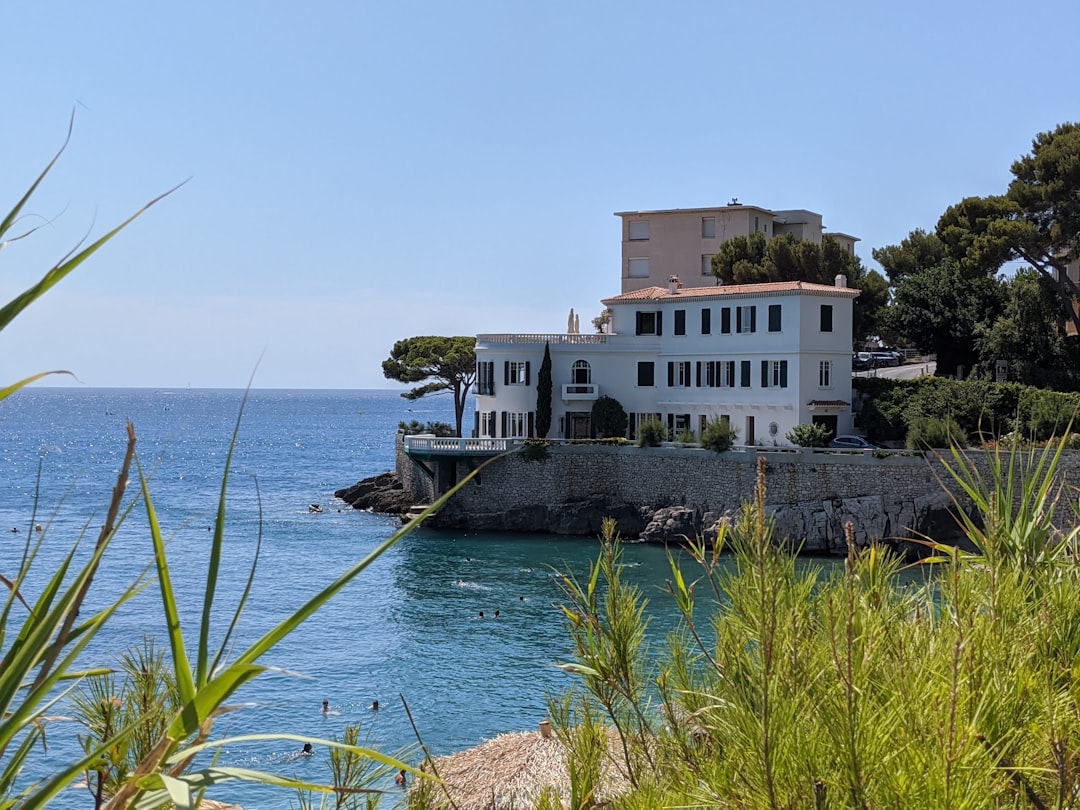
Are heat pumps ideal for Mediterranean climates — and specifically for homes here in Contra Costa County? The short answer is yes, and in many ways, the mild winters and warm summers of our region are almost perfectly suited to how heat pumps work.
Quick Answer: Heat Pumps and Mediterranean Climates
| Factor | How It Affects Heat Pump Performance |
|---|---|
| Mild winters | Heat pumps run at peak efficiency when outdoor temps stay above freezing |
| Hot summers | Heat pumps double as efficient air conditioners — no separate system needed |
| Variable humidity on the coast | May require added dehumidification in humid zones |
| Moderate heating demand | Lower annual heating loads mean lower operating costs |
| Year-round use | One system handles both heating and cooling, improving overall payback |
Unlike furnaces or standard AC units, heat pumps move heat rather than generate it. That makes them 2 to 4 times more efficient than electric resistance heating or oil-fired systems. In climates where winters rarely push temperatures to extremes — think Pittsburg, Antioch, Walnut Creek, and the broader Contra Costa County area — a heat pump rarely has to work at its limits to keep your home comfortable.
Research also shows that space heating is still the dominant energy demand in most Mediterranean climates, even though many people assume cooling takes the top spot. That's actually good news for heat pump owners: these systems are most efficient precisely when heating loads are moderate.
That said, not every home is a perfect fit out of the box. Coastal humidity, aging ductwork, and poor insulation can all affect how well a heat pump performs. This guide walks through everything a property owner in our region needs to know — from seasonal efficiency and building design to system types, installation quality, and long-term savings.
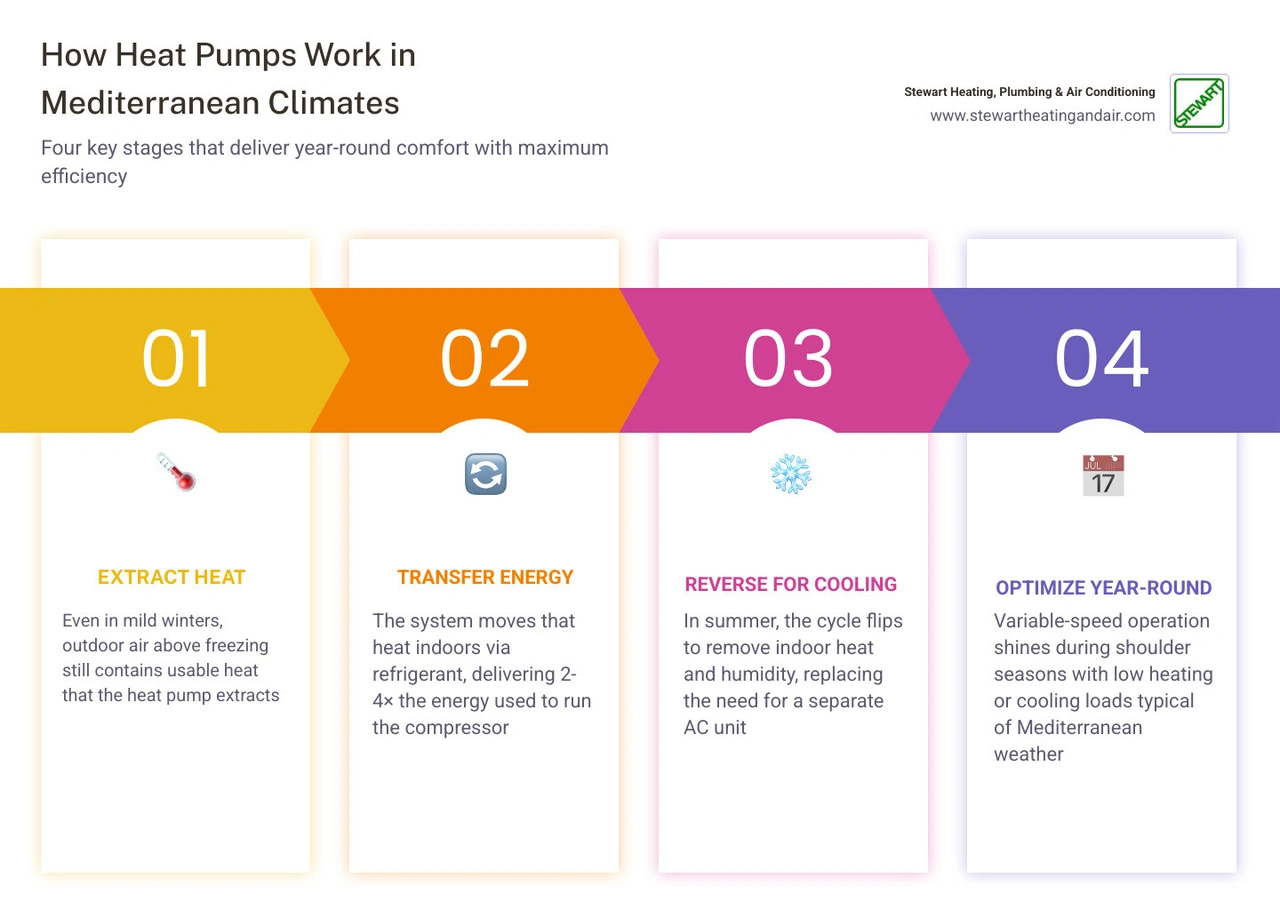
When we look at the climate profiles of cities like Martinez, Lafayette, and Danville, we see a classic Mediterranean pattern: mild, wet winters and warm, dry summers. This specific environment is where heat pumps truly shine. Because these systems extract heat from the outside air to warm your home, they perform best when that air isn't "bone-chilling" cold.
In our region, the heating demand is often higher than the cooling demand over the course of a year, even if the summer heat feels more intense. A heat pump is uniquely suited to handle these "shoulder seasons" (spring and fall) by providing just enough warmth or cooling without the massive energy spikes associated with traditional furnaces.
The primary reason are heat pumps ideal for mediterranean climates is their ability to maintain steady comfort while using very little electricity. In places like Orinda or Walnut Creek, where temperatures rarely stay below freezing for long, air-source heat pumps operate at maximum efficiency.
Furthermore, as California moves toward electrification, heat pumps are the cornerstone of the all-electric home. They help homeowners reduce their carbon footprint—research indicates that switching to a heat pump can trim household CO2 emissions by about 40% compared to gas furnaces. For those of us in Contra Costa County looking for low-carbon living, it's a win-win.
While they are fantastic systems, they aren't "plug-and-play" for every single building. In humid coastal areas, the latent heat load (moisture in the air) can challenge a heat pump's dehumidification limits. If a home has poor insulation or significant duct leakage, even the best heat pump will struggle to keep up.
We also see challenges in retrofits where existing ductwork is undersized. A heat pump requires specific airflow to work correctly; if the ducts are too small, the system can become noisy or inefficient. This is why professional sizing and a thorough home evaluation are critical before making the switch.
How does a heat pump stack up against the traditional "furnace + central AC" combo we see in many older homes in Pittsburg and Antioch?
| Metric | Traditional Gas Furnace & AC | Modern Heat Pump System |
|---|---|---|
| Efficiency | 80%–98% AFUE | 200%–400% (2 to 4 times more efficient) |
| Comfort | On/Off cycles cause temp swings | Variable-speed steady comfort |
| Emissions | Burns fossil fuels locally | All-electric; zero local emissions |
| Lifespan | 15–20 years (Furnace) | ~15 years (Combined system) |
One of the biggest Heat Pump Benefits for Bay Area Homeowners is the shift from "blasting" heat to "maintaining" it. Traditional furnaces turn on, blast hot air until the thermostat is satisfied, and then turn off. This creates those annoying cold spots.
Modern heat pumps use variable-speed compressors. They run continuously at a low, quiet level, adjusting their output to match the heat loss of your home. This leads to fewer temperature swings and a much quieter indoor environment. Because our winters are moderate, the heat pump rarely has to work at 100% capacity, which extends the life of the equipment and keeps your bills lower.
In some scenarios, a "dual-fuel" or hybrid approach is the smartest move. For example, a Dual Mode Heat Pump Walnut Creek setup pairs an electric heat pump with a gas furnace. The heat pump handles the vast majority of the year, but the gas furnace kicks in only during those rare, freezing winter nights when electric rates might spike or extra capacity is needed.
For those who want to ditch gas entirely, a Cold Climate Heat Pump Concord is designed to provide high-heat output even when temperatures drop well below freezing, ensuring you never have to worry about a "cold snap" leaving you shivering.
You wouldn't put a Ferrari engine in a go-kart and expect a smooth ride. Similarly, a high-efficiency heat pump needs a well-designed home envelope to reach its full potential. In Mediterranean architecture, passive design strategies—like thermal mass and proper shading—work in tandem with your HVAC system.
If you are looking to optimize your home in Pleasant Hill or Alamo, consider these passive upgrades:
In Mediterranean climates, the way your home "breathes" is vital. Heat recovery ventilation (HRV) can ensure you have fresh indoor air without losing all your heated or cooled air. In our region, utilizing "night ventilation"—bringing in that crisp, cool Bay Area night air—can significantly reduce the workload on your heat pump the following day.
However, in more humid pockets of the county, we have to be careful. If the dew point is high, night ventilation might just bring in sticky moisture. A well-designed system will include a bypass control to use night air only when the humidity levels are right.
One of the most common issues we see is "oversizing." Homeowners often think bigger is better, but an oversized heat pump will "short cycle," turning on and off too frequently. This leads to poor dehumidification and increased wear and tear.
Properly Selecting the Right Heat Pump Size involves a "Manual J" load calculation, which looks at your home's insulation, windows, and orientation. Without this, you might run into issues like Why Heat Pump Freezes During Summer Operation, which is often caused by restricted airflow or incorrect refrigerant charges.
When evaluating if are heat pumps ideal for mediterranean climates, we have to look at two key metrics: SCOP (Seasonal Coefficient of Performance) and SEER (Seasonal Energy Efficiency Ratio).
As we look toward 2050 and 2080, climate models suggest our region will see longer, hotter summers and even shorter, milder winters. This shift actually makes heat pumps more valuable. While traditional heating needs will decrease, the demand for efficient cooling will skyrocket. A heat pump installed today is a "future-proof" investment, as it is already built to handle the cooling loads of a warming planet while remaining more efficient than a standalone AC.
Not all heat pumps are the same. Depending on your home’s structure in Concord or Martinez, different configurations might be better.
For the majority of residential properties, air-to-air systems are the standard. These can be:
If you're considering a new setup, our Heat Pumps Concord Ultimate Guide and Heat Pump Installation Pittsburg Guide offer deep dives into these specific configurations.
If your home currently uses radiators (common in some older, historic Bay Area homes), you might think you’re stuck with a boiler. However, high-temperature heat pumps can now produce water temperatures of 70-80°C, making them a viable Heat Pump Replacement Antioch CA Guide option for radiator-based systems.
In some Mediterranean regions, engineers are getting creative. For example, research has shown that using an outdoor swimming pool as a heat source is economically feasible for buildings larger than 300 m². The pool acts as a giant thermal battery, providing a stable temperature for the heat pump to draw from. While ground-source (geothermal) systems are also incredibly efficient, the higher installation cost often makes air-source systems the more practical choice for the average Contra Costa home.
The world is waking up to the benefits of this technology. In Mediterranean countries like Spain, heat pump sales grew by 30% in 2022 alone. This trend is mirrored here in California, driven by rebates, environmental goals, and the simple desire for better home comfort.
Reduced dependence on gas and the ability to integrate with solar panels are huge drivers. When you pair a heat pump with a solar array on a sunny Brentwood roof, you can theoretically heat and cool your home for next to nothing.
Before you sign a contract, we recommend a "whole-home" approach.
Surprisingly, yes. In most Mediterranean locations, the annual energy demand for space heating is actually higher than for cooling. This is why the high heating efficiency of a heat pump is so valuable, even in "warm" places.
Yes, but sizing is key. A correctly sized heat pump with variable-speed technology is excellent at removing moisture. In extremely humid coastal pockets, we might recommend a system with enhanced dehumidification modes or a dedicated whole-home dehumidifier integrated into the vents.
For very large estates (over 3,000–4,000 square feet) or homes with large, year-round heated pools, these alternative sources can offer incredible efficiency. However, for the average residential home, modern air-source heat pumps provide the best balance of performance and upfront cost.
So, are heat pumps ideal for Mediterranean climates? Absolutely. They offer a unique combination of energy efficiency, carbon reduction, and superior comfort that traditional gas-burning systems simply can't match. In the specific climate of Contra Costa County—from the breezes of Martinez to the summer heat of Brentwood—a heat pump is often the smartest investment you can make for your home.
At Stewart Heating, Plumbing & Air Conditioning, we specialize in helping our neighbors navigate these choices. Whether you are looking for a full system replacement in Antioch or a seasonal tune-up in Walnut Creek, our focus is always on quality and doing the job right the first time. We live and work in these same Mediterranean conditions, and we know exactly what it takes to keep a local home comfortable year-round.
Ready to see if a heat pump is the right fit for your home? More info about heat pumps services is just a click away, or give us a call to schedule a professional home comfort assessment.

Very professional and complete. I would recommend Stewart to anyone. Highest quality of workmanship and clean installation.
Stewart Heating Plumbing Air Conditioning just did some work for us for the first time. They did an installation at my home and it turned out well. I thought the price was fair and I definitely would use them again. The technicians were very friendly and knowledgeable about their work. I highly recommend Stewart Heating Plumbing Air Conditioning and already told friends to use them.
We have been using Stewart Heating Plumbing Air Conditioning since 1995. They put the original heating and air unit in the house, and we have just stayed with them. They are dependable and honest people, and they have done a good job for us every time that we have used them!
They came and did an inspection and are coming tomorrow to do the repair.
They replaced a regulator the first time, and then the water heater vent had to be replaced. They did great work.
The gentleman that serviced us was helpful, insightful, and knew what he was talking about. Overall, it was a great experience.