

Recent Blogs
Stay updated with our latest blog posts.

AC coil cleaning benefits and why it matters comes down to one simple truth: dirty coils make your air conditioner work harder, cost you more money, and wear out faster. Here's a quick summary of what you need to know:
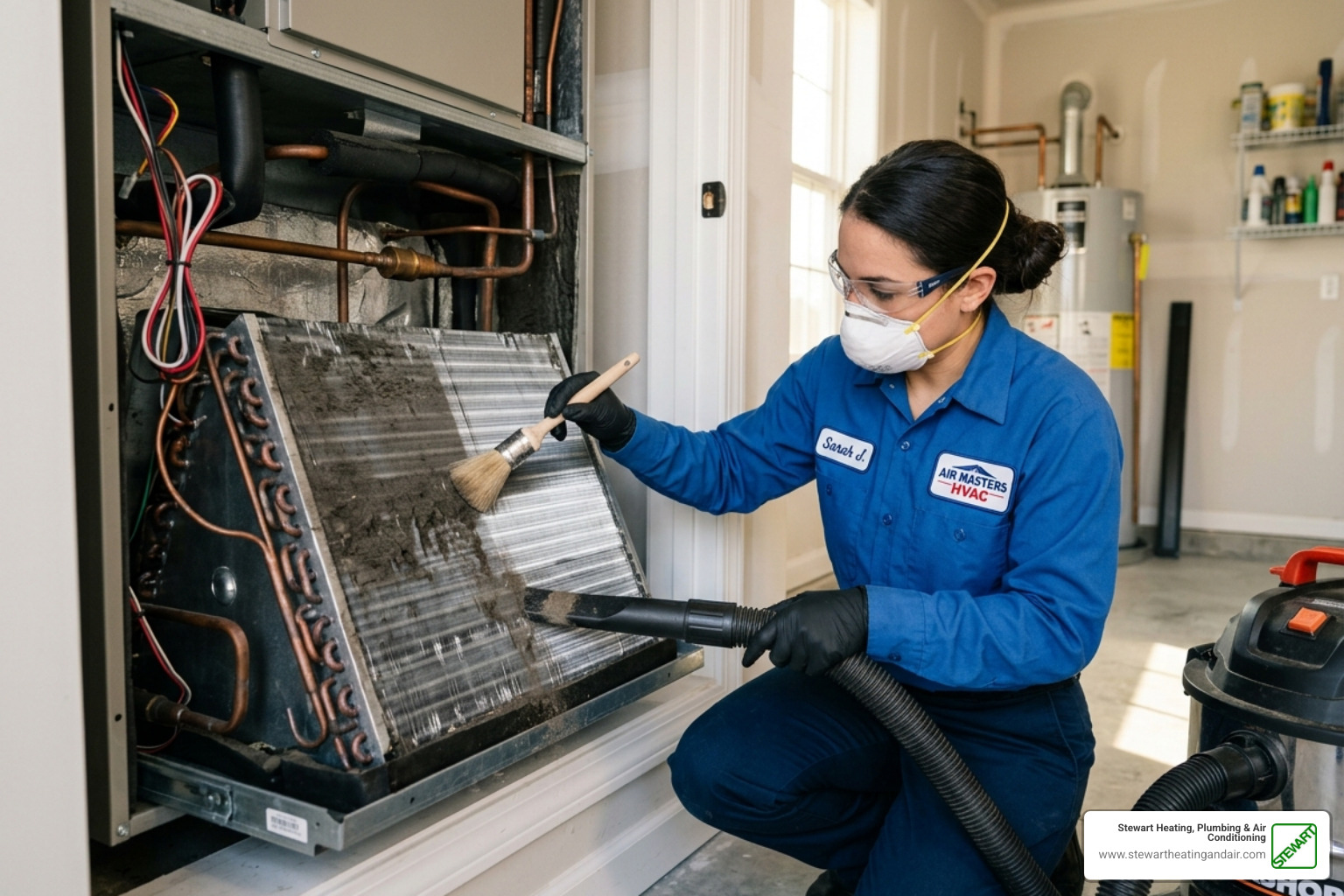
One HVAC technician described arriving at a veterinary clinic on a 90-degree day to find the evaporator coil packed solid with animal hair — as thick as a rug. After one hour of cleaning, the cool air was back. That's the kind of immediate, measurable difference coil cleaning can make.
Most homeowners never think about their AC coils until something goes wrong. By then, the compressor is straining, the energy bills have climbed, and a simple maintenance task has turned into an expensive repair. Annual coil cleaning is one of the most cost-effective ways to protect your system — and your comfort — all season long.
To appreciate why ac coil cleaning benefits and why it matters, we first need to understand what these components actually do. Your air conditioner doesn't "create" cold air; instead, it removes heat from the inside of your home and moves it outside. This entire process relies on two sets of coils acting like a relay team.
Located inside your home, usually within the indoor air handler or attached to your furnace, the evaporator coil is where the cooling magic begins. Cold refrigerant flows through these copper or aluminum tubes. As your indoor fan blows warm house air over these cold coils, the refrigerant absorbs the heat. This process also pulls moisture out of the air, which is why your AC helps dehumidify your home during those sticky East Bay summers.
Once the refrigerant has "soaked up" the heat from your living room, it travels outside to the condenser unit. Here, the condenser coils perform the opposite task. The hot refrigerant gas is compressed, and a large fan blows outdoor air across the condenser coils to dissipate that heat into the environment.
When either of these coils is coated in grime, the heat exchange process hits a wall. Think of it like trying to cool off while wearing a thick winter parka in the middle of July. If you are looking for professional help to ensure this process remains seamless, our team offers expert AC Coil Cleaning Pittsburg CA to keep your system breathing easy.
Even if you are diligent about changing your air filters, coils will eventually get dirty. It is an inevitable part of moving massive amounts of air through a mechanical system.
For residents dealing with the unique dust and pollen patterns of the Delta region, scheduling AC Coil Cleaning Antioch CA is essential for maintaining peak performance.
While both coils need to be clean, the approach for each is different.
Common Coil Contaminants Include:
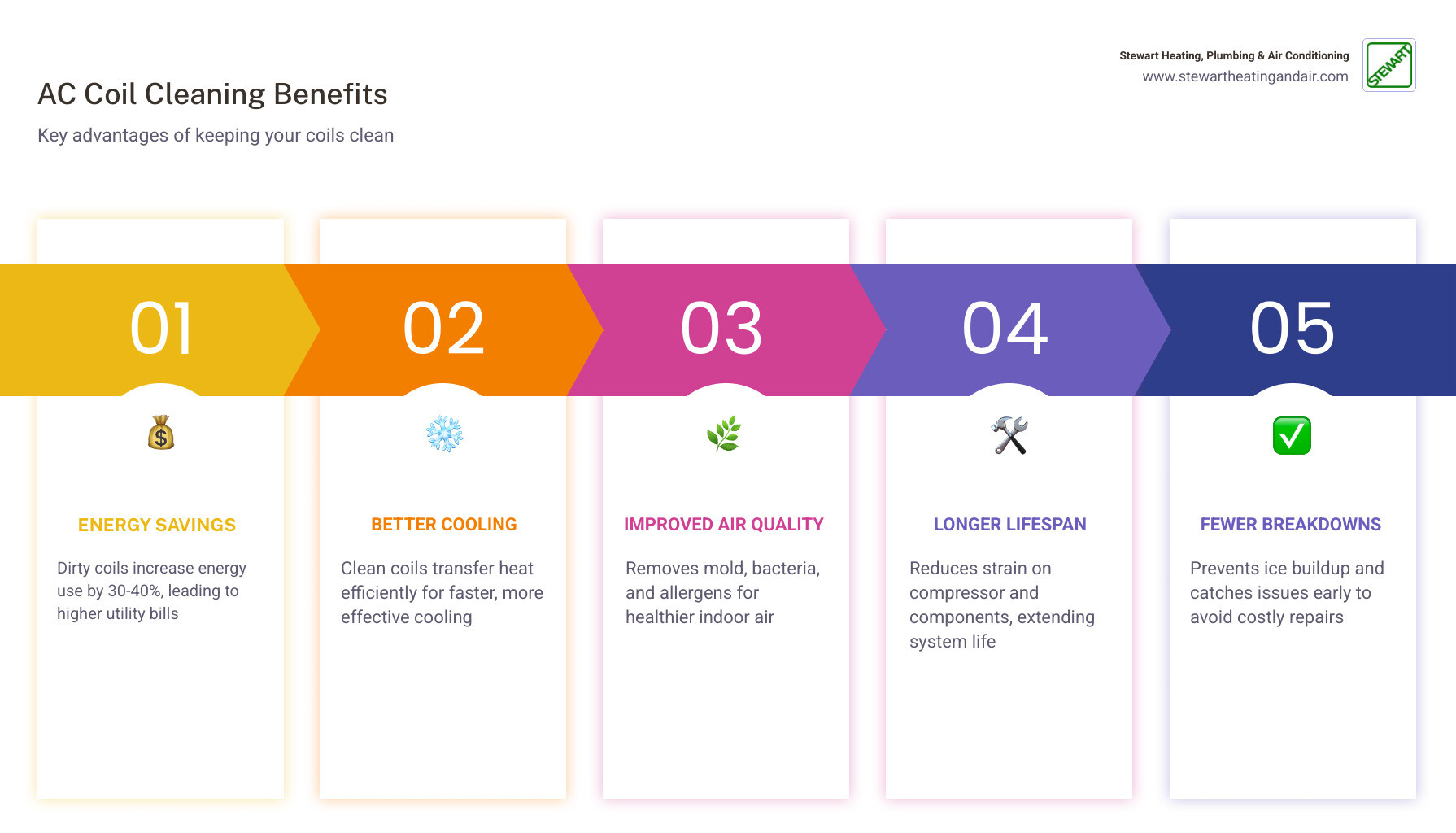
When we talk about ac coil cleaning benefits and why it matters, we aren't just talking about a "nice-to-have" service. It is a fundamental requirement for a healthy HVAC system.
The most immediate benefit you will notice is in your wallet. According to the U.S. Department of Energy, a dirty condenser coil can increase energy consumption by up to 30%. Other industry data suggests that heavily soiled coils can force a system to consume 37% more energy just to provide the same amount of cooling.
When coils are dirty, they act as an insulating blanket. The heat can’t escape the condenser, and it can’t be absorbed by the evaporator. This forces the compressor—the "heart" of your AC—to run longer and harder. By keeping these surfaces clean, you can reduce fan and blower energy use by 41–60% and increase overall airflow by up to 46%. If you’ve noticed your bills creeping up in the Pleasant Hill area, it might be time for AC Coil Cleaning Pleasant Hill CA.
| Coil Condition | Energy Consumption Increase | Cooling Capacity |
|---|---|---|
| Clean | 0% (Baseline) | 100% |
| Lightly Soiled | 10–15% | 90–95% |
| Heavily Soiled | 30–40% | 70% or less |
Your AC system circulates the same air through your home multiple times a day. If your evaporator coil is covered in mold, bacteria, or a layer of old dust, those particles are being introduced into your breathing air.
Regular cleaning prevents the musty "dirty sock" smell often associated with neglected AC units. It also reduces the presence of allergens, which is a major win for families in Contra Costa County who struggle with seasonal allergies. Clean coils mean a cleaner home and a healthier respiratory environment for everyone inside.
How do you know if your coils are crying out for help? Your air conditioner will usually give you several warning signs before it gives up entirely.
Neglecting your coils doesn't just make you uncomfortable today; it shortens the life of your equipment. HVAC systems are designed to last 12 to 15 years, but dirty coils can cut that lifespan significantly.
The extra strain on the compressor leads to overheating. In the HVAC world, heat is the enemy of mechanical parts. Over time, this heat breaks down the lubricants in the compressor, leading to a total system failure. Replacing a compressor is one of the most expensive repairs in the industry—often costing nearly as much as a new unit. Regular cleaning is essentially "insurance" for your compressor.
We often get asked: "Can I just spray my coils with a garden hose?" While we love a proactive homeowner, there are significant risks to DIY coil cleaning.
For a comprehensive look at what a true professional cleaning entails, check out our AC Coil Cleaning Concord Complete Guide.
When we perform a professional cleaning, we follow a rigorous process to ensure your system is protected and perfected:
For most homes in the Walnut Creek and Danville areas, an annual cleaning is the gold standard. We recommend scheduling this as part of your spring maintenance before the summer heat hits. However, if you have multiple shedding pets, live near a dusty construction site, or run your system year-round, you may benefit from a semi-annual check-up.
You can safely perform "light" maintenance, such as clearing leaves and tall grass away from your outdoor unit (maintain at least two feet of clearance). You can also change your air filters every 1–3 months to protect the indoor coil. However, for the actual chemical cleaning of the coils, we strongly recommend professional service to avoid damaging the delicate fins or risking electrical shock.
Neglect leads to a "domino effect" of failure:
At Stewart Heating, Plumbing & Air Conditioning, we’ve spent years serving our neighbors in Pittsburg, Concord, and throughout Contra Costa County. We know that a little bit of preventive maintenance goes a long way. AC coil cleaning benefits and why it matters is about more than just cold air; it’s about peace of mind, lower monthly costs, and protecting one of your home’s most important investments.
Our commitment to doing projects right the first time means we don't just "splash and dash." We take the time to ensure your coils are truly clean and your system is operating at peak efficiency. Don't wait until the next 100-degree day to find out your coils are clogged.
Schedule your professional AC maintenance today and let us help you stay cool all summer long!

Very professional and complete. I would recommend Stewart to anyone. Highest quality of workmanship and clean installation.
Stewart Heating Plumbing Air Conditioning just did some work for us for the first time. They did an installation at my home and it turned out well. I thought the price was fair and I definitely would use them again. The technicians were very friendly and knowledgeable about their work. I highly recommend Stewart Heating Plumbing Air Conditioning and already told friends to use them.
We have been using Stewart Heating Plumbing Air Conditioning since 1995. They put the original heating and air unit in the house, and we have just stayed with them. They are dependable and honest people, and they have done a good job for us every time that we have used them!
They came and did an inspection and are coming tomorrow to do the repair.
They replaced a regulator the first time, and then the water heater vent had to be replaced. They did great work.
The gentleman that serviced us was helpful, insightful, and knew what he was talking about. Overall, it was a great experience.