


Recent Blogs
Stay updated with our latest blog posts.

The heat pump advantages over traditional HVAC systems are real, measurable, and increasingly hard to ignore — especially if you're a homeowner in Contra Costa County tired of paying too much to heat and cool your home with aging, inefficient equipment.
Here's a quick look at the top reasons homeowners are making the switch:
In 2026, more than 5 million heat pumps were sold in the U.S. — outselling gas furnaces for the first time. That's not a trend driven by hype. It's homeowners doing the math and choosing the smarter long-term investment for their comfort, their budget, and their home's future.
If your furnace or AC is getting older and you're weighing your replacement options, this guide breaks down everything you need to know.
Heat pump advantages over traditional hvac further reading:
To fully appreciate the heat pump advantages over traditional HVAC, it helps to understand what a heat pump actually is. Many homeowners think a heat pump is a completely unique, mysterious technology. In reality, it is almost identical to a standard central air conditioner.
Both systems use a closed loop of refrigerant, an outdoor compressor, and an indoor evaporator coil to absorb heat from one area and release it in another. The defining difference is a simple but highly engineered component: the reversing valve.
In a traditional HVAC setup, you have two entirely separate systems:
A heat pump eliminates this dual-appliance layout. Because of the reversing valve, a heat pump can reverse the flow of its refrigerant cycle. During the summer, it functions exactly like a high-efficiency air conditioner, transferring heat from your living room to the outdoors. When winter arrives, the reversing valve flips, allowing the system to extract ambient thermal energy from the outdoor air and pump it inside to warm your home.
Even when it feels chilly outside, there is still a massive amount of heat energy present in the atmosphere. In fact, even at 0°F, the outdoor air retains about 85% of the heat energy it has at 70°F. By shifting existing heat instead of creating it through fuel combustion, heat pumps unlock unprecedented efficiency.
Understanding how does a heat pump work is the first step toward making an informed choice for your home. However, to get the most out of this technology, proper installation is key. This begins with selecting the right heat pump size to match your home's layout, insulation levels, and local weather patterns.
Here is a direct comparison of how these systems stack up:
| Feature | Heat Pump System | Traditional HVAC (Furnace + AC) |
|---|---|---|
| Primary Energy Source | Electricity | Electricity (Cooling) + Natural Gas/Propane (Heating) |
| Heating Method | Heat Transfer (Moving existing heat) | Fuel Combustion (Creating new heat) |
| Max Heating Efficiency | 200% to 400%+ (COP of 2 to 4+) | 80% to 98% (AFUE) |
| System Footprint | One outdoor unit + indoor air handler | One outdoor unit + indoor furnace + evaporator coil |
| Indoor Air Quality | Excellent (No combustion gases, continuous filtration) | Moderate (Risk of carbon monoxide, dry winter air) |
| Operational Sound | Quiet, continuous variable-speed operation | Periodic loud on/off cycles |

When evaluating heat pump advantages over traditional HVAC, the most obvious benefit is convenience. Instead of maintaining, repairing, and eventually replacing two separate systems, you rely on a single, streamlined system for year-round climate control.
This two-in-one system convenience means fewer service appointments, less cluttered utility closets, and a simplified approach to home maintenance. Furthermore, because a heat pump does not burn fossil fuels to generate heat, it eliminates the risk of carbon monoxide leaks inside your home, significantly enhancing peace of mind for your family.
Beyond convenience, there is a major comfort advantage. Traditional gas furnaces heat your home in short, intense bursts. They blast hot air through your vents until the thermostat is satisfied, shut off, and then let the temperature dip before cycling back on. This leads to noticeable temperature swings and drafty rooms.
Conversely, modern heat pumps operate on longer, gentler cycles. They deliver a steady stream of warm air at a slightly lower temperature than a furnace, maintaining a perfectly consistent indoor climate. This continuous operation also allows the system's air filter to constantly scrub dust, pollen, and allergens from the air, while keeping humidity levels perfectly balanced.
To learn more about how these systems function in local homes, read up on the heat pump benefits for Bay Area homeowners and discover the science of how heat pumps keep home comfortable year-round.
While comfort is a major selling point, the financial heat pump advantages over traditional HVAC are often the deciding factor for local families.
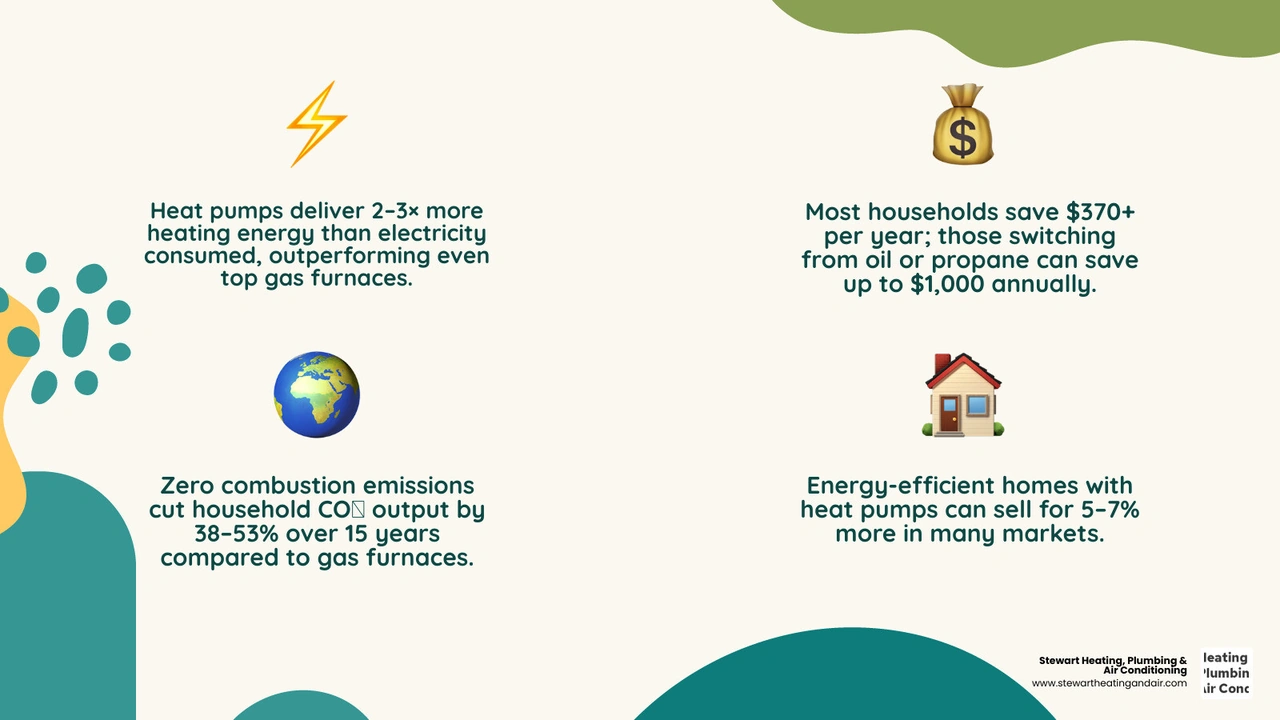
The secret to these savings lies in the system's Coefficient of Performance (COP). Traditional electric resistance heating and high-efficiency gas furnaces have a maximum COP of 1.0 (meaning 100% of the energy put into the system is converted to heat). Heat pumps, however, regularly achieve a COP between 2.0 and 4.0. In other words, for every single kilowatt of electricity consumed, a heat pump can deliver two to four kilowatts of heat energy to your home.
This incredible efficiency translates directly to lower utility bills. On average, U.S. households save $370 per year by transitioning to a heat pump. If you are currently heating your home with propane, fuel oil, or older electric baseboards, your annual savings can easily climb to $1,000 or more.
Additionally, the transition is heavily supported by financial incentives. Under the Inflation Reduction Act, homeowners can claim federal tax credits up to $2,000 for qualifying heat pump installations. State-level programs and local utility rebates can offer several thousand dollars more in direct savings, drastically narrowing the upfront cost gap between a heat pump and a traditional AC-furnace combo.
As an added bonus, investing in a heat pump can pay off when it's time to sell. Modern, energy-efficient homes are highly sought after by buyers, with studies showing that homes with heat pumps often enjoy a 5% to 7% premium on the real estate market.
To explore how these financial benefits apply locally, check out our guide on installing an energy efficient heat pump Brentwood CA.
For many homeowners, reducing their carbon footprint is just as important as saving money. Residential heating and cooling represent the single largest source of direct greenhouse gas emissions in the average American home.
Because traditional gas furnaces rely on combustion, they inevitably release carbon dioxide and other greenhouse gases into the atmosphere. Heat pumps run entirely on electricity. As our local power grid continues to integrate more renewable energy sources like solar and wind power, a heat pump automatically becomes cleaner and more sustainable over time.
According to research from UC Davis, switching from a natural gas furnace to an air-source heat pump reduces operational greenhouse gas emissions by 38% to 53% over a 15-year system lifecycle. If you want to take your home's sustainability a step further, pairing a heat pump with a residential solar panel system allows you to heat and cool your home with virtually zero operational emissions.
For a deeper dive into how electrification is transforming local communities, take a look at our Heat Pumps Concord Ultimate Guide.
A common myth surrounding heat pumps is that they only work in warm, southern climates. While it is true that early heat pump models from the 1970s and 1980s struggled when temperatures dipped below freezing, the technology has advanced dramatically.
Today, heat pumps are the primary heating source in some of the coldest regions on Earth, including Norway, Sweden, and Finland. In the U.S., states like Maine have successfully installed hundreds of thousands of cold-climate heat pumps to replace old oil boilers.
Modern cold-climate heat pumps utilize advanced variable-speed inverter compressors and vapor-injection technology. This allows them to extract heat from outdoor air even when temperatures plunge as low as -20°F.
However, if you live in Contra Costa County, you don't have to worry about sub-zero blizzards. In our region, we enjoy a gorgeous Mediterranean climate characterized by warm, dry summers and mild, wet winters. This environment is the absolute "sweet spot" for heat pump performance.
Because our winter temperatures rarely drop below freezing, a heat pump will operate at peak efficiency almost 100% of the time, providing incredible utility savings without ever needing to rely on backup electric resistance heat strips.
For homeowners who want the ultimate peace of mind, we also design and install dual-fuel (or hybrid) systems. These setups pair an electric heat pump with a high-efficiency gas furnace. The heat pump handles all the cooling in the summer and the heating during mild winter days. If we experience an unusually cold winter night, the system automatically switches over to the gas furnace to maintain maximum indoor comfort.
To learn more about climate-specific configurations, read about why are heat pumps ideal for mediterranean climates, explore options for a cold climate heat pump Concord, or find out how a dual mode heat pump Walnut Creek can provide the best of both worlds.
Investing in a new HVAC system is a long-term commitment. Understanding the maintenance requirements and lifespan of your equipment is crucial to protecting your investment.
Because a heat pump provides both heating and cooling, it runs year-round. This continuous operation means it experiences more wear and tear than a dedicated gas furnace, which sits idle all summer. A well-maintained heat pump typically has a lifespan of about 15 years.
To maximize this lifespan, regular maintenance is absolutely essential. While a traditional furnace and AC setup requires separate annual tune-ups (furnace in the fall, AC in the spring), a heat pump should be professionally serviced twice a year to clean the coils, check refrigerant levels, and ensure the reversing valve is operating flawlessly.
As of 2026, there are also new environmental regulations regarding refrigerants that homeowners should keep in mind. Newly manufactured HVAC systems are transitionining to lower Global Warming Potential (GWP) refrigerants, such as R-32 and R-454B. These new refrigerants are highly efficient and environmentally friendly, but they require specialized tools and training to handle safely. This makes professional installation more important than ever.
When transitioning to a heat pump, a qualified technician will also evaluate your home's existing ductwork. Because heat pumps deliver air at a slightly lower temperature but a more consistent volume than gas furnaces, ensuring your ducts are properly sized and sealed is critical to preventing energy loss and system strain.
To make sure your system is installed and maintained correctly, read our comprehensive guides on:
Switching to a new heating and cooling technology naturally brings up questions. Here are some of the most common concerns we hear from local homeowners.
Yes! Thanks to modern engineering, cold-climate heat pumps are designed to work exceptionally well in freezing temperatures. Using variable-speed inverter compressors and vapor-injection technology, these units can operate efficiently at temperatures as low as -20°F. In Contra Costa County, where our winters are incredibly mild, a standard heat pump will perform beautifully year-round without any trouble.
A well-maintained air-source heat pump typically lasts about 15 years. Because they handle both heating and cooling duties, they run more hours per year than a standalone furnace or air conditioner. By comparison, a gas furnace that only runs a few months a year can last 15 to 20 years, while a standalone central AC lasts about 15 years. Scheduling biannual professional maintenance is the single best way to ensure your heat pump achieves a long, efficient operating life.
Absolutely. This is one of the primary heat pump advantages over traditional HVAC systems. A heat pump is a true all-in-one comfort solution. By reversing its refrigerant flow, it provides crisp, efficient cooling in the summer and cozy, reliable warmth in the winter. This allows you to completely remove your old furnace and air conditioner, consolidating your home comfort into a single, high-performance system.
When it comes to future-proofing your home, lowering your energy bills, and enjoying unparalleled year-round comfort, the heat pump advantages over traditional HVAC make the decision simple. Whether you want to reduce your carbon footprint, take advantage of generous 2026 tax incentives, or simply replace an aging furnace and AC with a single, highly efficient system, a heat pump is the smartest upgrade you can make.
At Stewart Heating, Plumbing & Air Conditioning, we have spent decades helping homeowners throughout Contra Costa County — including Pittsburg, Concord, Walnut Creek, Brentwood, and Antioch — stay comfortable in their homes. We pride ourselves on doing the job right the first time, backed by our unwavering commitment to quality and customer satisfaction.
If you are ready to explore how a heat pump can transform your home's comfort and energy efficiency, we are here to help. Contact our friendly, licensed team today to find out which system is perfect for your home.
Ready to take the next step? Learn more about our high-efficiency solutions on our Stewart Heating & Air Heat Pumps page and schedule your professional consultation today!

Very professional and complete. I would recommend Stewart to anyone. Highest quality of workmanship and clean installation.
Stewart Heating Plumbing Air Conditioning just did some work for us for the first time. They did an installation at my home and it turned out well. I thought the price was fair and I definitely would use them again. The technicians were very friendly and knowledgeable about their work. I highly recommend Stewart Heating Plumbing Air Conditioning and already told friends to use them.
We have been using Stewart Heating Plumbing Air Conditioning since 1995. They put the original heating and air unit in the house, and we have just stayed with them. They are dependable and honest people, and they have done a good job for us every time that we have used them!
They came and did an inspection and are coming tomorrow to do the repair.
They replaced a regulator the first time, and then the water heater vent had to be replaced. They did great work.
The gentleman that serviced us was helpful, insightful, and knew what he was talking about. Overall, it was a great experience.