


Recent Blogs
Stay updated with our latest blog posts.

How a new HVAC system increases home value is one of the most practical questions a homeowner can ask before listing a property. The short answer: it can add 5% to 7% to your home's value, help it sell faster, and reduce the repair concessions buyers demand after inspection.
Here's a quick breakdown of the key numbers:
| Factor | What to Expect |
|---|---|
| Average value increase | 5% - 7% of home value |
| Dollar value added | $2,500 - $3,000 (varies by home price) |
| Typical ROI at sale | 20% - 30% on installation cost |
| Energy bill savings | 10% - 30% per year |
| Speed of sale | Up to 11 days faster |
| Risk if system is old | Buyer concessions, failed financing, smaller buyer pool |
Most homeowners think about curb appeal - fresh paint, landscaping, updated kitchens. But buyers and lenders also look hard at what's behind the walls. A working, modern HVAC system signals that a home has been cared for. An old or failing one? It becomes a negotiating weapon for buyers the moment an inspector flags it.
Think of your HVAC system as the engine of your home. Just like a car with a worn-out engine loses value fast, a home with an aging heating and cooling system raises red flags - even if everything else looks great. Real buyers who have purchased multiple homes consistently report that a new HVAC system moves the price they're willing to pay, and in some cases, it's what sealed the deal entirely.
If you're a homeowner in Contra Costa County weighing whether to replace your system before selling - or just want to protect your investment long-term - this guide walks you through everything you need to know.
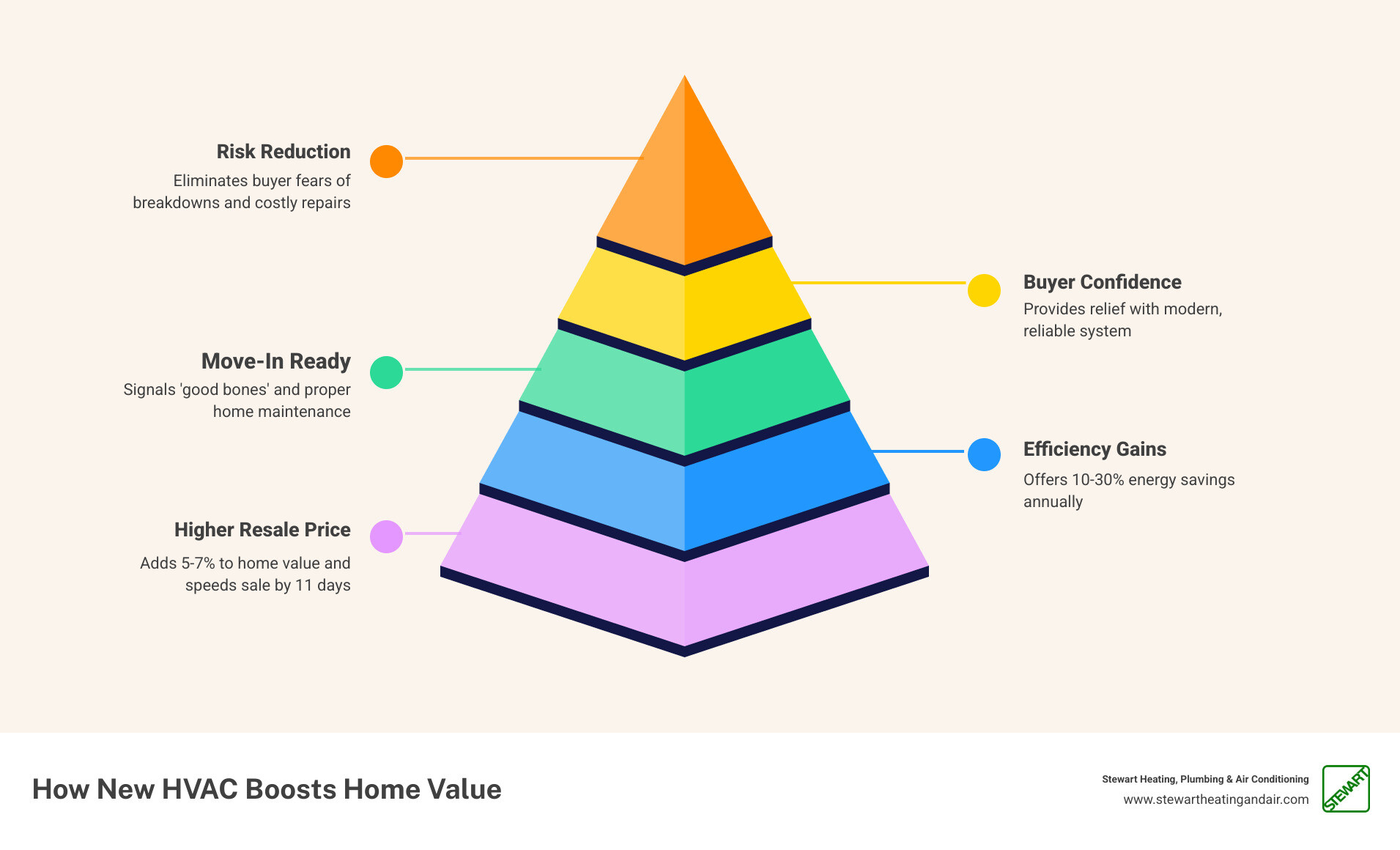
When we talk about real estate in places like Martinez or Walnut Creek, "value" isn't always just a single number on a page. It is a combination of marketability, buyer confidence, and what real estate pros call "good bones." While a kitchen remodel might get the "wow" reaction, a new HVAC system provides the "phew" reaction—relief that a major, expensive mechanical system won't fail the week after the buyer moves in.
Installing a new system is a powerful form of risk reduction for the seller. In a competitive market, a move-in-ready home is gold. If your system is ancient, buyers often assume the worst about the rest of the house. They might think, "If they didn't maintain the furnace, did they ignore the roof too?" By upgrading, you eliminate a major hurdle.
Furthermore, a new system prevents the dreaded "seller concessions." During the inspection phase, if a 20-year-old unit is found, the buyer will almost certainly ask for thousands of dollars off the price to cover the eventual replacement. By taking care of it beforehand, you keep control of the negotiation. For a deeper look at the process, check out our HVAC Replacement Estimate Complete Guide.
For the modern buyer, peace of mind is a luxury. They are often stretching their budgets just to make the down payment; the last thing they want is a $10,000 emergency repair in their first year of ownership. A new system offers:
In April 2026, energy efficiency is no longer just a "nice to have"—it’s a top priority for buyers. As utility costs continue to fluctuate, a home that promises lower monthly overhead is objectively more valuable. This is one of the primary ways how a new hvac system increases home value.
Modern HVAC systems are significantly more advanced than those built just a decade ago. We now look at SEER2 ratings (Seasonal Energy Efficiency Ratio), which measure how much cooling a system delivers per watt of electricity. High-SEER2 units can slash annual energy bills by 10% to 30%.
Additionally, we are seeing the impact of the EPA’s AIM Act, which mandates the move toward eco-friendly R-454B refrigerants. Older systems using phased-out refrigerants like R-22 are becoming "dinosaurs"—expensive to repair and impossible to recharge legally. A new system using modern, sustainable refrigerants tells the buyer the home is future-proofed.
Today's eco-conscious buyers are looking for a smaller carbon footprint. They want high-efficiency performance that aligns with sustainable living. When you can show a potential buyer two years of utility bills that dropped after a system replacement, you aren't just selling a furnace; you're selling a lower cost of living. Smart home integration, where the HVAC system talks to the home’s Wi-Fi to optimize cooling schedules, is another "tech-forward" feature that drives up desirability in modern listings.
Timing is everything. If your system is only 8 years old and running perfectly, a total replacement might not offer the best ROI. However, there are several "red flag" scenarios where we recommend homeowners in Martinez or Pleasant Hill consider a swap before hitting the market:
Maintaining a clear service history is vital. If you aren't ready to replace, ensure you stay up to date with HVAC Maintenance Pleasant Hill CA to show buyers you've been a responsible steward of the home. If replacement is the only logical path, look into HVAC Replacement Martinez CA to get the job done before the "For Sale" sign goes up.
Repairs are like patching a sinking boat. They might keep you afloat for a month, but they don't add equity. A buyer might see a newly repaired 18-year-old unit and still demand a $5,000 credit because the "bones" are still old. Conversely, a total HVAC Replacement Walnut Creek CA removes the objection entirely. It transforms a liability into an asset.
Not all HVAC systems are created equal in the eyes of a buyer. In Contra Costa County, the climate varies from the breezy hills of Orinda to the hotter inland areas like Antioch. Choosing the right technology is key to maximizing your return.
| System Type | Best For | Value Impact |
|---|---|---|
| Central Air & Heat | Standard suburban homes | Baseline expectation; adds 5-7% value. |
| Heat Pumps | Eco-conscious buyers; mild climates | High appeal due to all-in-one heating/cooling and efficiency. |
| Ductless Mini-Splits | Older homes without ducts; additions | Great for "bonus" rooms or converted garages; adds specific functional value. |
| Zoned Systems | Large, multi-story homes | High-end appeal; solves the "hot upstairs" problem. |
When browsing Heating Air Conditioning Products, consider what the neighbors have. If every home on your block has central air and you’re still using window units, you are at a massive disadvantage.
For homeowners in specific areas, professional installation is non-negotiable. Whether it's HVAC Installation Danville CA or HVAC Installation Antioch CA, ensuring the system is sized correctly for the square footage prevents short-cycling and ensures the indoor air quality is top-tier—another major selling point for families with allergies.
Appraisers are the gatekeepers of your home’s sale price. While they don't have a button that says "+$10,000 for a new AC," they do make "condition adjustments." A home with a brand-new, high-efficiency system will be compared to other "updated" homes, while a home with a failing unit will be compared to "fixer-uppers."
There is also the matter of loan viability. Certain lenders (especially for FHA loans) require that the home’s primary systems be in good working order for the loan to fund. If your furnace is cracked or the AC doesn't blow cold, the bank might refuse to lend to the buyer, killing the deal entirely.
To ensure your appraisal goes smoothly, always use a NATE Certified Contractor in Contra Costa County. This certification proves the work was done to the highest industry standards. Whether you need Residential HVAC Alamo CA or service in Pittsburg, having the permits verified and the paperwork ready for the appraiser can make a measurable difference in your final valuation.
While you rarely get a 1:1 dollar return (meaning a $10,000 install doesn't automatically add $10,000 to the asking price), the "real" ROI is often 20% to 30% in direct equity, plus the indirect value of a faster sale. Homes with new HVAC systems sell up to 11 days faster on average. In a market like ours, 11 days of mortgage payments, taxes, and utilities saved is a significant return in itself. It also prevents "price drops" that happen when a home sits on the market too long.
Yes! Under the Inflation Reduction Act, homeowners can often claim federal tax credits for installing ENERGY STAR certified heat pumps or high-efficiency central systems. These credits can range from several hundred to a few thousand dollars. Additionally, local utility providers in Contra Costa County frequently offer rebates for switching to high-efficiency equipment. These incentives lower your net cost, which effectively increases your ROI when you sell.
This depends on your local market. If you are in a "hot" seller's market where buyers are waiving inspections, you might get away with an older system. However, in a balanced or buyer's market, that 15-year-old unit is a target. Buyers will use it as a reason to offer less or demand a massive credit. If you want to position your home as "turnkey" and attract the highest number of offers, replacing it is usually the smarter strategic move.
At Stewart Heating, Plumbing & Air Conditioning, we’ve spent years helping our neighbors in Pittsburg, Concord, and throughout Contra Costa County make smart decisions about their homes. We understand that an HVAC system is a major investment, and our focus is always on quality and customer satisfaction. We don’t just "swap boxes"—we ensure your system is designed to provide comfort and efficiency for the next two decades.
Whether you are looking to boost your resale price or simply want a home that stays cool during a Brentwood summer, we are here to help you do it right the first time. Our high referral business is a testament to the trust our community places in us.
Ready to see how a modern HVAC system can transform your home's value? Give us a call today. We'll help you find the perfect balance between upfront cost and long-term gain.

Very professional and complete. I would recommend Stewart to anyone. Highest quality of workmanship and clean installation.
Stewart Heating Plumbing Air Conditioning just did some work for us for the first time. They did an installation at my home and it turned out well. I thought the price was fair and I definitely would use them again. The technicians were very friendly and knowledgeable about their work. I highly recommend Stewart Heating Plumbing Air Conditioning and already told friends to use them.
We have been using Stewart Heating Plumbing Air Conditioning since 1995. They put the original heating and air unit in the house, and we have just stayed with them. They are dependable and honest people, and they have done a good job for us every time that we have used them!
They came and did an inspection and are coming tomorrow to do the repair.
They replaced a regulator the first time, and then the water heater vent had to be replaced. They did great work.
The gentleman that serviced us was helpful, insightful, and knew what he was talking about. Overall, it was a great experience.