

Recent Blogs
Stay updated with our latest blog posts.

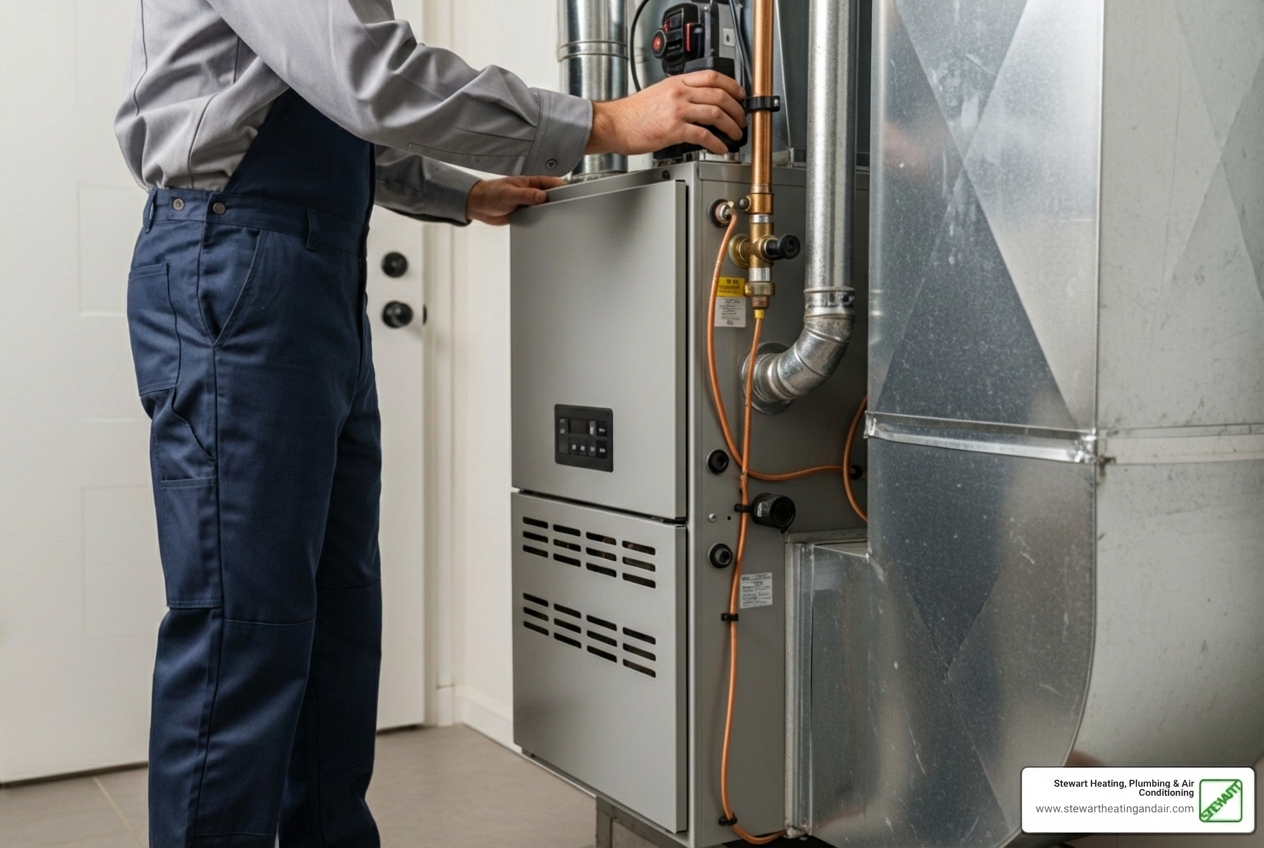
When your heater struggles to keep your Pittsburg home warm, you're not just facing discomfortyou're watching your energy bills climb while wondering if each cold night will be the one your system finally gives out. The constant worry, the uneven temperatures, and the looming threat of a complete breakdown can disrupt your peace of mind. An affordable heater replacement in Pittsburg, CA isn't about finding the cheapest box on the shelf; it's a strategic investment in your home's comfort, safety, and long-term value. It means choosing a system that perfectly balances upfront investment with years of reliable, efficient performance custom to your home and budget.
Quick Answer: What Makes Heater Replacement Affordable and Smart
If you're exploring heating options in Pittsburg or need immediate assistance, our team at Stewart Heating, Plumbing & Air Conditioning is here to guide you through every step. We help you understand your options and make a confident choice, from selecting the right system to scheduling your heater replacement.
Most Pittsburg homeowners begin considering a replacement when their system reaches the 15-year mark or when repair bills start to equal half the cost of a new unit. The good news is that today's heating technology is a world away from what was available even a decade ago. Modern systems are significantly quieter, more efficient, and designed to integrate seamlessly with smart home technology like programmable thermostats and zone control systemsfeatures that older models simply cannot support.

This infographic highlights five clear signs it may be time to think about a new system, helping you decide when an affordable heater replacement in Pittsburg, CA is the right next step for your home.
No one wants to replace a major home appliance, especially when it seems to be "working." However, there's a significant difference between a heater that is merely functioning and one that is working efficiently and safely. Ignoring the warning signs of a failing heater can lead to sudden breakdowns in the middle of winter, increasingly expensive repairs, and dangerously high utility bills. Recognizing these indicators allows you to plan for a replacement on your own terms.
Your Heater's Age: One of the most reliable indicators is age. Most furnaces are designed for a lifespan of 10-15 years. Even with meticulous maintenance, a unit pushing 20 years is living on borrowed time. Not only is it more prone to mechanical failure, but it also lacks the energy-saving technology that has become standard in the last decade.
Rising Energy Bills: Have your heating costs been creeping up month after month, even though your habits haven't changed? This is a classic sign of declining efficiency. As internal components wear out, your heater has to work harder and run longer to produce the same amount of heat, consuming more energy in the process and directly impacting your wallet.
Inconsistent Heating and Cold Spots: Are you constantly adjusting the thermostat because some rooms are sweltering while others feel like an icebox? This uneven heating is a clear signal that your system is struggling. It may be due to an aging blower motor that can no longer circulate air effectively, or the unit itself may no longer be capable of meeting your home's heating demands.
Strange Noises: Your heater should operate with a gentle hum. If you start hearing loud or unusual sounds, it's a cry for help. Banging or popping can indicate ductwork issues or delayed ignition. Rattling may point to loose panels or components. A high-pitched squealing or grinding noise often signals a serious mechanical problem with the motor or bearings that needs immediate attention.
Frequent Cycling: Does your heater turn on and off in short, frequent bursts? This is known as "short cycling." It indicates that the system is struggling to regulate temperature, possibly because it's oversized for your home or has a malfunctioning component. This constant starting and stopping puts immense stress on the system, accelerating wear and tear and leading to premature failure.
We understand the temptation to opt for a repair to squeeze another season out of your existing unit. However, there's a point where this becomes financially unwise. If you find yourself calling for service multiple times a year, or if a single repair quote approaches 50% of the cost of a new system, it's more cost-effective to invest in a replacement. Pouring money into an aging unit is a temporary fix that doesn't provide the long-term benefits of improved efficiency, reliability, or a new warranty.
Furthermore, as a heater ages, replacement parts can become scarce and expensive. Manufacturers eventually discontinue parts for older models, which can lead to long waits and higher costs as technicians search for compatible components.
Most importantly, safety is a non-negotiable concern. A critical component in a gas furnace is the heat exchanger, which keeps combustion byproducts separate from your breathing air. Over time, this part can develop cracks, allowing deadly, odorless carbon monoxide (CO) to leak into your home. A cracked heat exchanger is a major safety hazard that cannot be repaired; it requires immediate replacement of the entire furnace to protect your family.
For more detailed information on common issues and solutions, you can explore our resources on heater repair in Pittsburg, CA. And in those critical moments when your heater gives out, professional emergency heater repair services are available to restore your home's comfort and safety swiftly.
Selecting a new heater for your Pittsburg home isn't a one-size-fits-all decision. To achieve true efficiency and comfort, the system must be perfectly custom to your property and our local climate. Proper system sizing is the most critical first step. An oversized furnace will constantly short-cycle—turning on and off rapidly—which wastes energy, creates uneven temperatures, and puts excessive strain on components. Conversely, an undersized unit will run constantly without ever reaching the desired temperature, leading to high energy bills and a chilly home. To avoid this, our experts perform a detailed Manual J heat load calculation. This industry-standard analysis considers your home's square footage, insulation levels (in walls, ceilings, and floors), window type and placement, air leakage rates, ceiling height, and even local climate data to determine the precise heating capacity your home requires.
Your home's unique characteristics, such as its layout and insulation quality, also play a significant role. A well-insulated, modern home may require a smaller, more sophisticated variable-speed system to maximize comfort, while an older home might benefit from a different solution. Pittsburg's distinct delta climate—with its hot summers and cool, breezy winters—means your heating system must be robust enough for cold snaps while also integrating seamlessly with your cooling system for year-round efficiency. This unique climate influences our recommendations, ensuring you get a solution built for total home comfort.
Understanding these variables is key to making an informed decision. For more information on how different systems can benefit your home, explore our general resources on heating systems.
When considering an affordable heater replacement in Pittsburg, CA, you'll encounter several primary types of heating systems, each with its own advantages. The right choice depends on your home's existing infrastructure, your budget, and your efficiency goals.
| Heater Type | Description | Pros | Cons |
|---|---|---|---|
| Gas Furnace | The most common type of heating system in the U.S. It combusts natural gas or propane to generate heat, which is then distributed through the home's ductwork. | - Lower fuel costs (natural gas is often cheaper than electricity) - High heat output, ideal for very cold climates - High-efficiency models are widely available | - Requires a gas line connection - Produces carbon monoxide, requiring safety checks - Can have higher installation costs than electric models |
| Electric Furnace | Uses electric heating elements (similar to coils in a toaster) to warm the air, which is then circulated through ductwork. | - Lower upfront equipment cost - Widely available and easier to install - Does not produce carbon monoxide - Quieter operation | - Higher operating costs due to electricity prices - May struggle to heat large homes in very cold weather - Less energy-efficient than modern gas furnaces or heat pumps |
| Heat Pump | An all-in-one system that provides both heating and cooling. In winter, it extracts heat from the outside air and moves it inside. In summer, it reverses the process. | - Extremely energy-efficient for both heating and cooling - Lower energy consumption and reduced carbon footprint - Provides dehumidification for better summer comfort | - Higher initial investment - Less effective in sub-freezing temperatures (may require a backup heat source) - Performance depends on outdoor temperature |
Beyond these primary types, modern HVAC technology offers even more options, such as ductless mini-splits, which are perfect for heating and cooling individual rooms or home additions without existing ductwork. For a comprehensive look at your options, learn more about our heating and cooling systems.
When you invest in a new heater, you're also investing in advanced features that improve comfort and reduce costs. Look for these key elements during your search:

Very professional and complete. I would recommend Stewart to anyone. Highest quality of workmanship and clean installation.
Stewart Heating Plumbing Air Conditioning just did some work for us for the first time. They did an installation at my home and it turned out well. I thought the price was fair and I definitely would use them again. The technicians were very friendly and knowledgeable about their work. I highly recommend Stewart Heating Plumbing Air Conditioning and already told friends to use them.
We have been using Stewart Heating Plumbing Air Conditioning since 1995. They put the original heating and air unit in the house, and we have just stayed with them. They are dependable and honest people, and they have done a good job for us every time that we have used them!
They came and did an inspection and are coming tomorrow to do the repair.
They replaced a regulator the first time, and then the water heater vent had to be replaced. They did great work.
The gentleman that serviced us was helpful, insightful, and knew what he was talking about. Overall, it was a great experience.