

Recent Blogs
Stay updated with our latest blog posts.

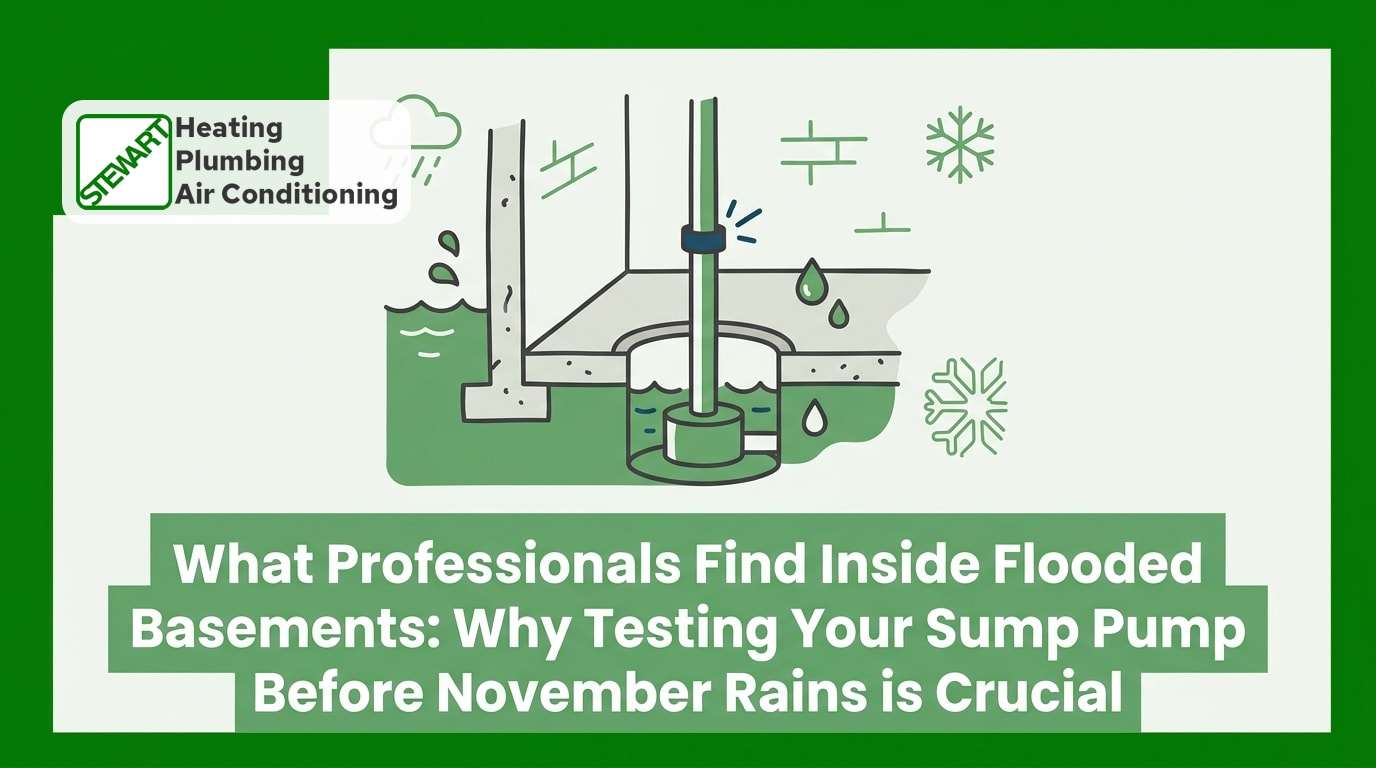
November marks a distinct and rapid shift in Northern California weather. The dry, warm days of early autumn fade, and the threat of sudden, heavy precipitation takes over. If you want to protect your home from extensive water damage, testing a sump pump before winter rains is the single most important maintenance task on your list. Taking a few minutes to verify your system is operational can mean the difference between a dry, secure foundation and a catastrophic basement flood.
To ensure your home is fully prepared for the changing season, partnering with our experts for professional plumbing services is a smart proactive step. At Stewart Heating, Plumbing and Air Conditioning, we find that most homeowners do not think about their drainage systems until water is already pooling on the floor. By that point, the damage is done, and the repair process is incredibly stressful.
In the Bay Area and Contra Costa County, the late fall season frequently brings atmospheric rivers. These intense, concentrated bands of moisture act like rivers in the sky, dumping massive volumes of water over a very short period. The parched summer soil in Pittsburgh, CA often becomes hydrophobic, meaning it repels water initially rather than absorbing it. This leads to rapid, heavy runoff that channels directly toward residential foundations.
When thousands of gallons of water rush toward your home, your sump pump is your primary line of defense. Unfortunately, these mechanical devices often fail silently. Because they sit idle in a dark pit for most of the year, a broken part or a jammed switch goes entirely unnoticed. Homeowners only discover the silent failure when the November winter rains arrive and the basement is already taking on water. Performing a basic, safe test right now allows you to determine if your system is ready for the deluge or if maintenance is required.
When a sump pump fails during a major storm, the aftermath is devastating. The reality of a flooded basement goes far beyond a few puddles on the floor. Water intrusion immediately begins compromising the safety and structural integrity of your home.
Our plumbers routinely encounter the same heartbreaking scenario after a heavy downpour. Water quickly saturates drywall, ruins baseboards, and destroys stored belongings. Within just twenty-four to forty-eight hours of a flood, toxic mold begins to colonize on organic materials. The moisture seeps into structural wooden supports, leading to long-term rot and compromised foundations. The cleanup process requires professional water extraction, aggressive dehumidification, and often tearing out the lower half of the basement walls.
Having served the local community since 1974, our team at Stewart Heating, Plumbing and Air Conditioning has decades of experience observing exactly what happens to homes in Pittsburgh, CA during severe winter storms. The most frustrating part of these catastrophic floods is that the vast majority of them were entirely preventable. In many cases we've responded to, the pump motor itself was perfectly fine, but a minor, easily fixable issue prevented it from turning on when the water level rose.
The cost of inaction is staggering when compared to the minimal effort required for a simple pre-season test. Skipping maintenance leaves your home vulnerable to sudden atmospheric shifts. If you suspect your system is aging or you have never had it professionally evaluated, we highly recommend you schedule a plumbing inspection before the severe weather patterns lock in.
To understand why a proactive test is so critical, you need to understand how these systems operate and where they most commonly fail. Sump pumps are relatively simple mechanical devices, but they operate in harsh, damp environments that accelerate wear and tear. Industry data from the Sump and Sewage Pump Manufacturers Association (SSPMA) and FEMA flood preparation guidelines highlight several common points of failure—which aligns closely with the repair calls our dispatchers field every winter.
By learning where your system is most vulnerable, you can target your inspections more effectively and know exactly what to look for during the November winter rains.
The average lifespan of a residential sump pump is roughly seven to ten years, depending heavily on how frequently it runs and how well it is maintained. As the equipment ages, the internal motor begins to lose efficiency. The bearings wear down, and the electrical components degrade from constant exposure to moisture.
If you do not know the installation date of your current unit, check the manufacturer's plate on the side of the motor housing. If the pump is approaching a decade of service, it is operating on borrowed time. Even if it sounds like it is running smoothly, an aging motor is far more likely to seize up or burn out when forced to run continuously during a multi-day storm.
In our experience, the float switch is the most common point of mechanical failure in any sump pump system. This switch acts as the brain of the operation. As water fills the basin, a buoyant float rises. Once the water reaches a specific critical level, the float triggers the switch, sending power to the motor to begin pumping the water out.
Because the float relies on physical movement, it is highly susceptible to jamming. Debris, dirt, and gravel often wash into the pit over time. This debris can trap the float against the side of the basin wall. If the float cannot rise, the switch never engages, and the pump simply sits idle while the basement floods. Conversely, a jammed switch can also get stuck in the "on" position, causing the motor to run continuously until it burns out completely.
• Jammed Float Switch — Visible Symptom: Water rises, but pump does not turn on. — Underlying Cause: Debris in the pit or switch pinned against the wall.
• Clogged Intake Screen — Visible Symptom: Motor runs continuously, but water level stays high. — Underlying Cause: Mud or gravel blocking the bottom intake valve.
• Frozen Discharge Pipe — Visible Symptom: Pump runs, but water backflows into the pit. — Underlying Cause: Blockage or ice in the exterior drainage line.
• Power Failure — Visible Symptom: System is completely dead during a storm. — Underlying Cause: Tripped breaker, blown GFCI, or grid outage without a backup.
Another major vulnerability is power loss. Heavy storms in Pittsburgh, CA frequently knock out local power grids. Because your primary sump pump relies on your home's electricity, a power outage renders it completely useless exactly when you need it most. This is why our team considers having a dedicated battery backup system a critical component of complete home protection.
Testing your equipment is a straightforward process, but safety must always be your top priority. You are dealing with a combination of electricity and standing water, which creates a serious shock hazard. Never reach your hands into the water or touch the pump while it is plugged in. If you need to clear debris from the basin, unplug the unit entirely from the wall outlet first.
Here is a safe, effective method to test your system before the heavy weather arrives.
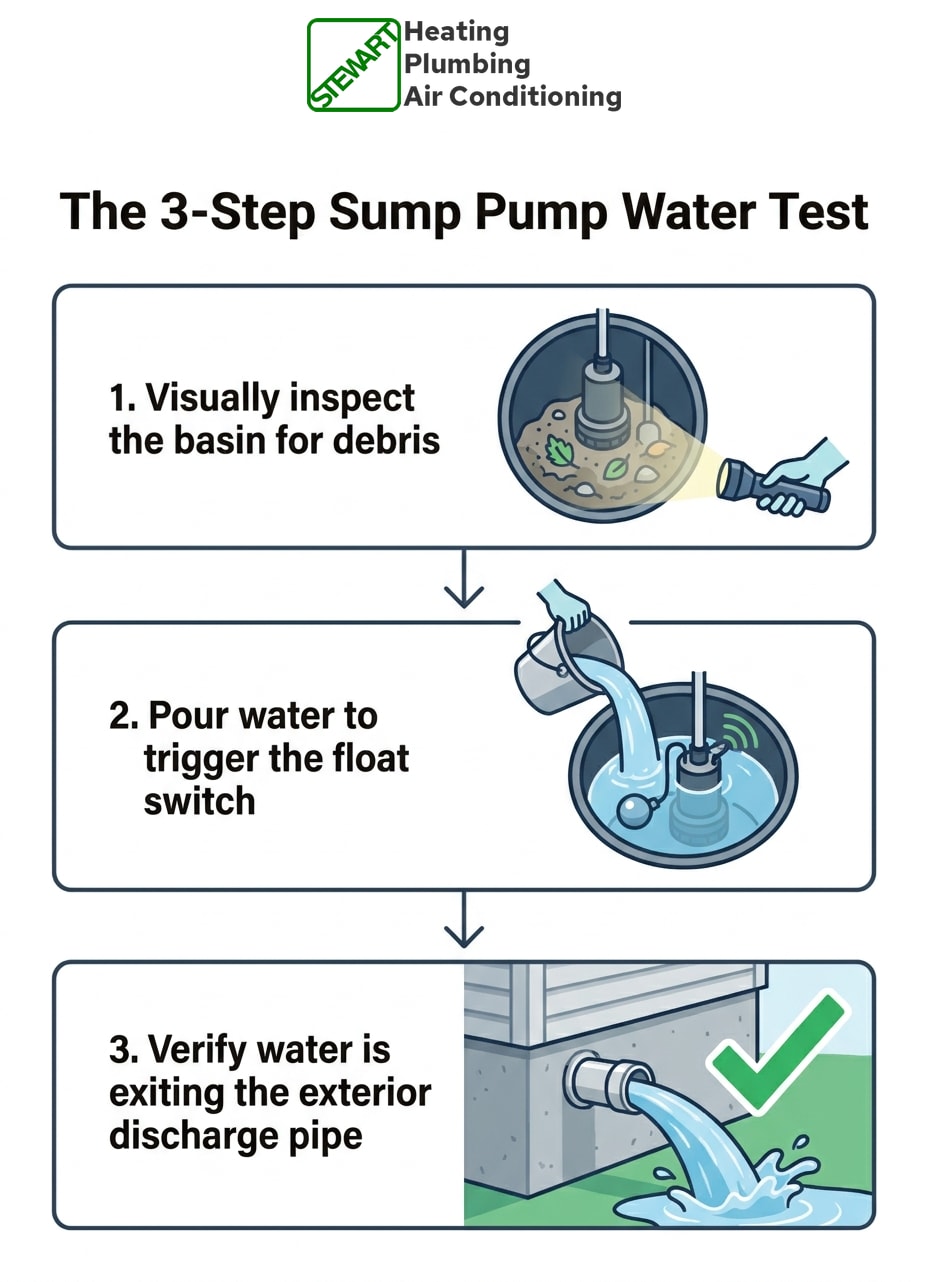
Before introducing any water, perform a thorough visual check of the surrounding area. Ensure the power cord is in good condition without any fraying or exposed wires. Verify that the pump is plugged directly into a working GFCI (Ground Fault Circuit Interrupter) outlet. You should never use an extension cord for a sump pump, as they cannot safely handle the electrical draw and pose a significant fire hazard.
Look down into the pit using a flashlight. Check for visible debris like mud, rocks, children's toys, or garbage that may have fallen into the basin. If you see debris that needs to be removed, unplug the unit completely before using a tool or gloved hand to clear the obstruction.
The most reliable way to test the system is to simulate a rising water level. Fill a large five-gallon bucket with tap water. Slowly pour the water directly into the sump pit. Pour the water steadily, aiming for the center of the pit rather than dumping it directly onto the float switch assembly.
Watch the float carefully as the water level rises. The float should lift smoothly without catching on the sides of the basin or the power cord. Once the water reaches the activation level, the pump should turn on automatically. Listen to the sound of the motor. It should hum smoothly and consistently. Any grinding, rattling, or whining noises indicate worn bearings or a damaged impeller.
Hearing the motor run is only half the test. You must verify that the pump is actually moving water out of your home. While the pump is running, quickly go outside to locate the exterior discharge pipe. Confirm that water is flowing freely from the pipe and being directed safely away from your home's foundation.
If the motor is running but no water is coming out outside, you likely have an airlock, a broken check valve, or a severe clog in the discharge line. This requires immediate professional attention from a licensed plumber.
While the DIY water bucket test is a fantastic way to gauge baseline readiness, there is a strict boundary between simple testing and mechanical repairs. Sump pumps are hardwired into your home's electrical and plumbing systems. Attempting to fix a malfunctioning unit on your own can lead to severe electrical shocks, voided warranties, and building code violations.
If your pre-season test reveals any of the following warning signs, it is time to call our licensed professionals:
• The motor hums but doesn't pump: This usually indicates a jammed impeller, a broken drive shaft, or a failed check valve holding water back in the pipe.
• The float switch is stuck or sluggish: If the float fails to rise smoothly or gets pinned against the basin, the entire switch assembly may need to be rewired and replaced.
• Unusual grinding or rattling noises: These sounds point to internal mechanical failure. The motor bearings are likely shot, and the unit will soon seize up entirely.
• The system short-cycles: If the pump turns on and off rapidly every few seconds, the check valve is likely broken, allowing pumped water to fall right back into the pit.
• Tripped GFCI outlets: If plugging in the pump immediately trips the outlet breaker, there is an electrical short inside the motor housing.
Replacing a sump pump requires exact horsepower sizing. A pump that is too small will not keep up with the November winter rains, while a pump that is too large will short-cycle and burn itself out prematurely. One of our licensed plumbers will calculate the exact lift height and volume requirements for your specific basement. Be sure to check for seasonal plumbing repair specials to make proactive maintenance more convenient before the heavy weather strikes.
Your sump pump is an incredibly vital piece of equipment, but it is just one component of your home's overall defense against water intrusion. To truly protect your property in Pittsburgh, CA, you need to view pre-winter prep as a comprehensive, multi-step timeline rather than a single isolated task.
Contra Costa County's sudden winter downpours demand a fully optimized exterior drainage system to reduce the burden on your indoor pump. If your exterior drainage is failing, your sump pump is forced to work twice as hard, significantly increasing the chances of a mid-storm breakdown.
Take the time to inspect your gutters and downspouts. They should be completely clear of autumn leaves and pine needles. Ensure that your downspout extensions are directing water at least five to six feet away from the foundation walls. Inspect the grading of the soil around your home; the ground should slope gently away from the house to prevent water from pooling against the concrete.
You should also inspect any exposed plumbing pipes in the crawlspace or basement for early signs of corrosion or minor leaks. By addressing the entire drainage ecosystem, you drastically reduce the volume of water that ever reaches your sump pit in the first place. For a complete guide on preparing your entire property, review our comprehensive timeline for pre-winter plumbing inspections to ensure nothing is overlooked.
The safest way to trigger the system is by slowly pouring a five-gallon bucket of water directly into the basin. As the water level rises, it will naturally lift the float switch, simulating a real flood scenario. You should never force the float switch up with your hands while the unit is plugged in, as this risks an electrical shock or damaging the delicate switch arm.
Homeowners should perform a basic water test at least once a quarter, with a mandatory check in late fall before the November winter rains begin. If you live in an area with a high water table or frequent heavy storms, testing it every two months provides greater peace of mind. Regular testing ensures the motor remains lubricated and the switch mechanism stays free of debris.
You know the system is working properly when the motor turns on smoothly as the water rises, and water actively exits the exterior discharge pipe. Listening to the motor hum is not enough evidence of a working system. You must visually confirm that the water level in the pit is dropping rapidly and flowing safely away from the exterior of the house.
If the system fails during a rainstorm, groundwater will quickly overtop the basin and flood the basement or crawlspace. This leads to severe water damage, ruined drywall, compromised structural framing, and rapid mold growth. Recovering from a flood is incredibly expensive and stressful, which is why proactive testing is so critical.
Yes, an exceptionally intense atmospheric river can sometimes overwhelm a perfectly functioning system if the pump is undersized or if exterior drainage is poor. This is why having a properly sized pump, clear gutters, and proper soil grading are all necessary to manage extreme water volumes. Adding a battery backup pump also provides a second line of defense if the primary unit cannot keep up.
In our decades of serving Contra Costa County, we've found that most residential units last between seven and ten years, depending on the frequency of use and the amount of sediment in the local water table. Units that run constantly during the wet season will experience faster motor wear. If your equipment is approaching the ten-year mark, we highly recommend replacing it proactively before it fails mid-storm.
There is a profound peace of mind that comes with knowing your home is fully prepared for whatever the weather brings. Testing your equipment now ensures that when the heavy skies open up over Pittsburgh, CA, your basement will remain dry and secure. Do not wait for the first major storm to find out if your system is functioning.
Take ten minutes today to perform a visual inspection and a simple water test. If you notice any sluggish performance, strange noises, or if your unit is simply getting too old to trust, it is time to act. Be proactive and schedule a plumbing inspection with Stewart Heating, Plumbing and Air Conditioning to ensure your entire drainage system is optimized, safe, and ready to protect your property this winter.

Very professional and complete. I would recommend Stewart to anyone. Highest quality of workmanship and clean installation.
Stewart Heating Plumbing Air Conditioning just did some work for us for the first time. They did an installation at my home and it turned out well. I thought the price was fair and I definitely would use them again. The technicians were very friendly and knowledgeable about their work. I highly recommend Stewart Heating Plumbing Air Conditioning and already told friends to use them.
We have been using Stewart Heating Plumbing Air Conditioning since 1995. They put the original heating and air unit in the house, and we have just stayed with them. They are dependable and honest people, and they have done a good job for us every time that we have used them!
They came and did an inspection and are coming tomorrow to do the repair.
They replaced a regulator the first time, and then the water heater vent had to be replaced. They did great work.
The gentleman that serviced us was helpful, insightful, and knew what he was talking about. Overall, it was a great experience.