

Recent Blogs
Stay updated with our latest blog posts.

Are you feeling cold air blowing from your vents, or getting lukewarm water from your fixtures, right as the November pre-winter temperature drops hit the East Bay? If you are looking to get common homeowner questions answered, one of the most frequent concerns we address this time of year involves a heating system that suddenly stops producing heat after sitting dormant all summer. You adjust the thermostat, hear the familiar click of the system engaging, and feel the blower motor kick on—only to realize that the air circulating through your home is entirely unheated.
This sudden loss of heat often points directly to a specific diagnostic code: the pressure switch failed open. While it is incredibly frustrating to experience a lack of heating just as the weather turns cold, it is important to understand that this is not a random mechanical breakdown. Instead, it is a deliberate, highly sensitive safety mechanism shutting down your system to protect your home.
When evaluating your home's systems for winter readiness, comprehensive plumbing services and heating evaluations are essential to ensure everything operates safely. The pressure switch is the gatekeeper of your combustion cycle. If it detects that conditions are unsafe for burning fuel, it will intentionally lock out the burners. The blower will continue to run, circulating cold air, but the actual heating process is halted. Understanding why this happens is the first step in restoring your home's comfort safely and effectively.
To understand what it means when a pressure switch fails open, we first have to look at how modern gas heating appliances manage combustion safely. Whether you are dealing with a furnace or a gas water heater, these systems burn fuel to create heat. That combustion process creates exhaust gases, including toxic carbon monoxide, which must be safely vented out of your home.
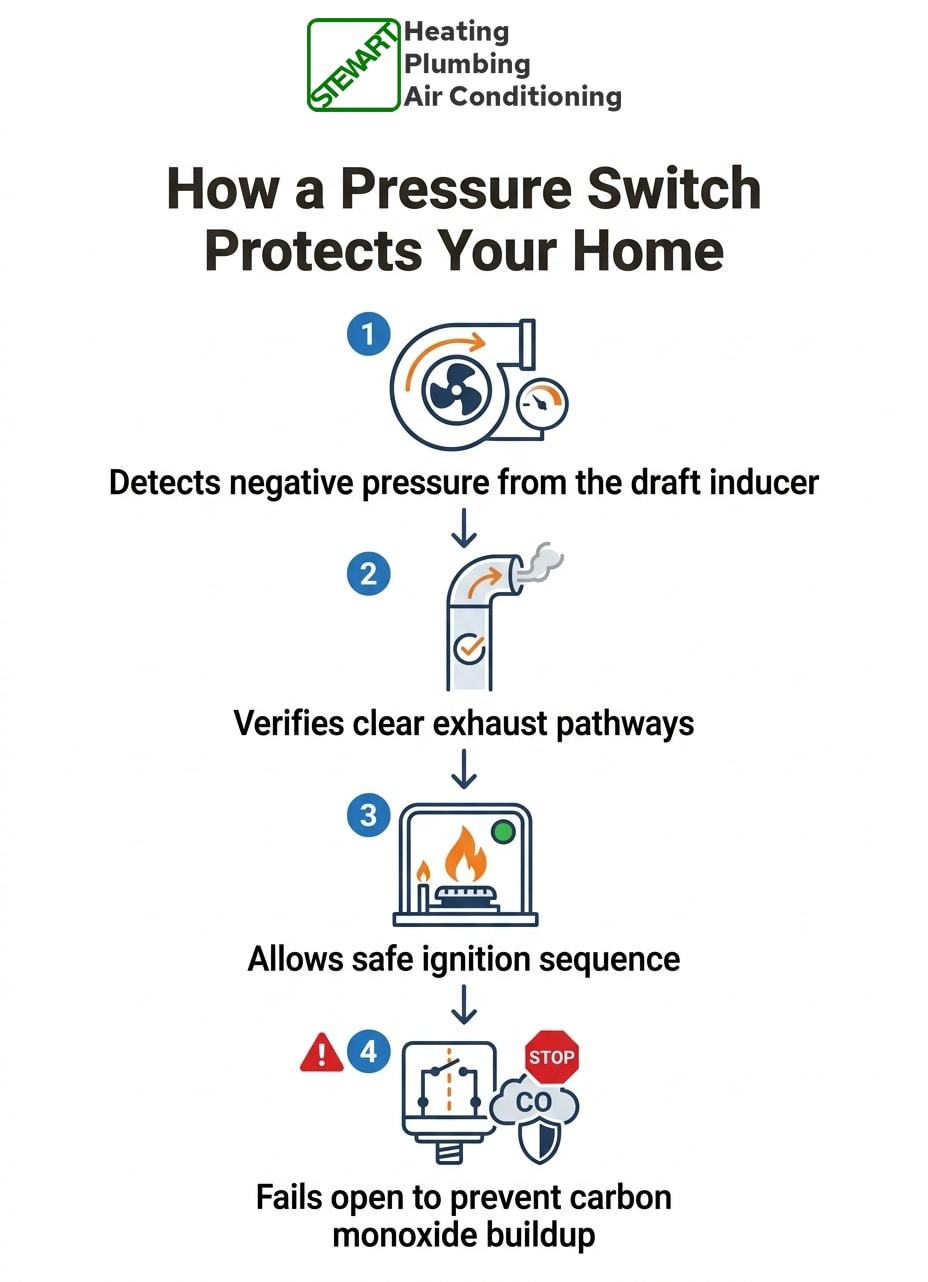
The pressure switch is a vital safety device designed to monitor the draft inducer motor. Before the gas valve is allowed to open and ignite the burners, the draft inducer motor turns on to create a negative pressure (a vacuum) inside the combustion chamber. This vacuum pulls the exhaust gases through the heat exchanger and pushes them up the flue pipe to the outdoors. The pressure switch is connected to this system via a small rubber tube. Its sole job is to detect that negative pressure.
Failing open means the electrical circuit inside the switch has been intentionally broken. In electrical terms, a "closed" circuit allows electricity to flow, while an "open" circuit stops it. If the pressure switch does not sense the correct amount of vacuum, the internal diaphragm will not close the electrical contacts. The circuit remains open, and the system's control board immediately halts the ignition sequence. This is why your system blows cold air: the blower is running, but the burners are locked out for safety.
• Proper Venting (Normal) — Pressure Switch Status: Circuit Closed — Resulting Action: Burners ignite, system produces heat.
• Blocked Venting (Unsafe) — Pressure Switch Status: Circuit Failed Open — Resulting Action: Ignition halted, blower circulates cold air.
• Inducer Motor Failure — Pressure Switch Status: Circuit Failed Open — Resulting Action: System locks out to prevent gas buildup.
• Moisture in Tubing — Pressure Switch Status: Circuit Failed Open — Resulting Action: False reading prevents safe ignition.
For homeowners in Pittsburgh CA and the surrounding areas, this mechanism is critical. It guarantees that if a bird builds a nest in your exhaust pipe over the summer, or if a motor fails, your system will not pump dangerous exhaust gases into your living space.
It is no coincidence that pressure switch errors frequently occur during the first chilly weeks of late fall. Months of summer dormancy leave combustion systems vulnerable to the first major temperature drop. When a heating system sits unused from April to October, several environmental factors begin to take a toll on its internal components.
In our region, overnight moisture and coastal influences in the East Bay increase condensation risks significantly during the off-season. The small, flexible tubing that connects the pressure switch to the draft inducer is particularly susceptible. As temperatures fluctuate between warm afternoons and cool nights, condensation can form and pool inside this tubing. Because the system isn't running to evaporate this moisture, a small water droplet can create a physical blockage in the tube. When you finally turn the system on in November, the pressure switch cannot sense the vacuum through the blocked tube, causing it to fail open.
Furthermore, dormant systems struggle to establish proper drafting when suddenly forced to work hard against cold incoming municipal water or chilly outdoor air. The exhaust flue itself becomes "cold-soaked." Cold air is dense and heavy, and it naturally sinks down the chimney or flue pipe. When the draft inducer motor kicks on, it has to work extra hard to push that heavy column of cold air up and out of the vent. If the motor is slightly weakened from sitting idle, or if the cold air block is too dense, the system may fail to generate enough negative pressure to close the switch on the first few tries.
This "first-start" hiccup is a known environmental reaction for homes in Pittsburgh CA and the broader East Bay. It is not necessarily a sign of a catastrophic failure, but rather a symptom of a system waking up from a long hibernation and struggling against the local climate conditions.
When troubleshooting combustion safety, it helps to understand exactly what physical issues trigger the pressure switch to remain open. While the symptom is always the same—a lack of heat—the underlying cause can vary based on the age of the equipment, maintenance history, and environmental exposure.
The most common and most dangerous reason a pressure switch fails open is a physical obstruction in the exhaust flue or intake pipe. Over the summer, birds, rodents, and insects frequently seek shelter inside exterior vent pipes. Leaves, twigs, and debris can also blow into these openings. When the heating season arrives, these blockages prevent the draft inducer from pulling enough air through the system. The pressure switch instantly detects this lack of airflow and stops the ignition sequence. This is exactly how the system prevents carbon monoxide from spilling backward into your home.
The draft inducer motor is responsible for creating the specific negative pressure the switch monitors. Over time, the bearings in this small motor can wear out, or the internal fan wheel can become coated in soot and dust. If the motor fails to spin at its required RPMs, it will not generate enough suction to close the pressure switch. You can sometimes hear this issue developing if the system makes a grinding, rattling, or whining noise right before it blows cold air.
As mentioned earlier, condensation is a major culprit during the November pre-winter temperature drops. High-efficiency condensing furnaces and modern water heaters produce a significant amount of water vapor during normal operation. If the internal drain lines become clogged with sediment or algae over the summer, water can back up into the pressure switch tubing or the inducer housing. Even a single drop of water in the vacuum tube will disrupt the pressure reading, causing the switch to remain open.
While less common than venting issues or moisture, the pressure switch itself can fail. The internal diaphragm can stiffen or rupture over years of use, or the electrical contacts can corrode. Diagnosing this requires specialized tools to measure the exact water column inches of vacuum being produced versus what the switch is rated for. If you are diagnosing a tripped pressure switch on a tankless water heater or a modern furnace, identifying a faulty switch is a precise process that goes beyond visual inspection.
If you search online for quick fixes regarding a system blowing cold air, you will inevitably encounter forum posts or videos suggesting that you can "jump" or bypass the pressure switch to force the system to run. This involves disconnecting the wires from the switch and connecting them directly together, tricking the control board into thinking the proper vacuum has been achieved.
Under no circumstances should you ever bypass a pressure switch or any other heating safety control.
Bypassing a safety switch treats the symptom (no heat) while entirely ignoring the highly dangerous root cause (poor venting or mechanical failure). If your pressure switch failed open because a bird's nest is blocking your exhaust flue, bypassing the switch will force the burners to ignite. Because the exhaust gases have nowhere to go, toxic carbon monoxide will rapidly spill out of the combustion chamber and directly into your home's air supply. Carbon monoxide is odorless, colorless, and deadly.
Standard safety guidelines from equipment manufacturers and the Department of Energy emphasize the extreme risk of tampering with gas appliance safety mechanisms. Any electrical or gas-related testing requires professional diagnostic tools, such as a digital manometer and a combustion analyzer. Stewart Heating, Plumbing and Air Conditioning has proudly served the East Bay since 1974, and our decades of experience have shown us firsthand that prioritizing safety over risky DIY shortcuts is the only way to protect your family. If your system is locking out, it is doing so to keep you safe. The correct course of action is to schedule a professional inspection to identify and resolve the true underlying hazard.
While you must never alter wiring or open the sealed combustion chamber of your heating equipment, there are several safe, basic troubleshooting steps you can perform before calling a professional. These steps address simple external factors that can sometimes mimic a system failure without violating any safety constraints.
• Check the exterior exhaust vents: Walk outside and locate the PVC or metal exhaust pipes exiting your home. Look for obvious, visible blockages like leaves, snow drifts, plastic bags, or debris resting against the opening. Do not reach deep into the pipes, but clear away any external obstructions.
• Verify thermostat settings: Ensure that your thermostat or temperature control is set correctly for the season. It should be switched to "Heat" and set to a temperature higher than the current room temperature. Sometimes, a bumped setting or a dying thermostat battery can cause erratic system behavior.
• Inspect the power switch and breaker: Ensure the dedicated power switch located near the unit is fully in the "On" position. Additionally, check your main electrical panel to verify that the circuit breaker hasn't tripped. A tripped breaker will prevent the inducer motor from running entirely.
• Check the air filter: While a dirty filter typically triggers a high-limit switch rather than a pressure switch, severe airflow restrictions can cause cascading system errors. Ensure your filter is clean and properly seated.
If you have performed these basic external checks and the system still refuses to produce heat, the issue lies within the internal combustion or venting components. Enrolling in a preventative maintenance plan is the best way to ensure these internal components are cleaned, tested, and verified long before the November pre-winter temperature drops arrive.
When your heating system detects a safety fault, it immediately shuts off the gas burners to prevent a dangerous situation, but it leaves the blower motor running to cool down the heat exchanger. This safety lockout is the primary reason your system is blowing cold air instead of heat. The control board will not allow ignition until the fault—such as a blocked vent or a failed pressure switch—is resolved. The cold air is a clear signal that the system is protecting your home from potential carbon monoxide exposure or overheating.
A pressure switch fails open when it cannot detect the necessary negative pressure (vacuum) required for safe combustion. The most common causes include physical blockages in the exhaust flue, such as bird nests or debris accumulated over the summer. Additionally, condensation trapped inside the small pressure switch tubing can block the vacuum signal. Finally, a failing draft inducer motor that cannot spin fast enough to create suction will also cause the switch to remain in the open, locked-out position.
No, it is absolutely never safe to bypass or "jump" a pressure switch. The switch is a critical safety device designed to prevent toxic exhaust gases from backing up into your living space. Bypassing it forces the system to burn gas even when the exhaust flue is completely blocked, which creates a severe and immediate risk of carbon monoxide poisoning. If the switch has tripped, it must be diagnosed and the root cause repaired by a licensed professional using proper testing equipment.
Fixing a pressure switch that is stuck open requires diagnosing the specific venting or mechanical issue causing the loss of vacuum, which is a job for a licensed professional. A technician will use a digital manometer to measure the exact draft pressure and inspect the flue, inducer motor, and tubing for blockages or moisture. If the switch itself is mechanically defective, the technician will replace it with an exact OEM part rated for the correct water column inches. Homeowners should limit their involvement to checking exterior vents for obvious debris.
A clogged air filter generally does not cause a pressure switch error; instead, it typically causes a high limit switch error. The pressure switch monitors the exhaust venting and combustion air, while the high limit switch monitors the temperature of the air circulating through your home. If your filter is clogged, the system overheats, tripping the limit switch. However, severe neglect of a system can lead to multiple simultaneous failures, so keeping a clean filter is always vital for overall system health and proper airflow.
Dealing with a heating system that blows cold air right as the late fall weather arrives is stressful, but it is reassuring to know that a failed open pressure switch is actively protecting your home from dangerous exhaust gases. Rather than viewing the lockout as a breakdown, view it as your system doing exactly what it was designed to do: prioritizing your family's safety over operation in unsafe conditions.
Because diagnosing combustion issues requires specialized tools and a deep understanding of gas appliances, professional diagnostics are the safest and most reliable way to resolve these cold air issues. Getting common homeowner questions answered by an expert ensures that your system is repaired correctly the first time. As you prepare for the colder months ahead, do not ignore warning signs or attempt risky workarounds. Contact a licensed professional for comprehensive water heater repair and replacement or furnace diagnostics to ensure your home remains warm, safe, and comfortable all winter long.

Very professional and complete. I would recommend Stewart to anyone. Highest quality of workmanship and clean installation.
Stewart Heating Plumbing Air Conditioning just did some work for us for the first time. They did an installation at my home and it turned out well. I thought the price was fair and I definitely would use them again. The technicians were very friendly and knowledgeable about their work. I highly recommend Stewart Heating Plumbing Air Conditioning and already told friends to use them.
We have been using Stewart Heating Plumbing Air Conditioning since 1995. They put the original heating and air unit in the house, and we have just stayed with them. They are dependable and honest people, and they have done a good job for us every time that we have used them!
They came and did an inspection and are coming tomorrow to do the repair.
They replaced a regulator the first time, and then the water heater vent had to be replaced. They did great work.
The gentleman that serviced us was helpful, insightful, and knew what he was talking about. Overall, it was a great experience.