

Recent Blogs
Stay updated with our latest blog posts.

Have you ever switched your thermostat to "heat" for the first time in autumn, only to be immediately greeted by a concerning odor coming from your vents? You are not alone. At Stewart Heating, Plumbing and Air Conditioning, our team fields countless calls every fall from residents worried about this exact issue. Leaning on local service expertise and area tips can help you navigate this unsettling moment without unnecessary panic. That strange, warm, dusty smell is one of the most common reasons homeowners call for heating service in the fall. When you wake up on that first chilly October morning and turn on the system, your initial reaction to a burning smell is likely alarm. However, understanding what happens inside your heating equipment after months of inactivity can help you determine whether you are experiencing a normal seasonal quirk or a genuine safety hazard.
To ensure your entire home is ready for the changing seasons, explore our Water Heaters solutions or Request Plumbing Service today.
To understand why your furnace smells like burning dust when turned on, you have to look at what happens inside the unit during its long dormant period. Throughout the spring and summer, your heating system sits completely idle. Even if you run your air conditioning, the heating components—specifically the heat exchanger and the burners—remain cold and inactive. During these months, the air circulating through your home carries microscopic debris.
The accumulation phase: Over time, a fine layer of household particles settles onto the internal components of your furnace. This debris typically consists of:
• Household dust: Microscopic dirt and soil particles tracked in from outside.
• Pet dander: Hair and skin cells from dogs, cats, and other indoor pets.
• Textile fibers: Tiny lint particles shed from carpets, clothing, and upholstery.
• Organic matter: Pollen, mold spores, and human skin cells that naturally float through the indoor air.
The ignition process: When the temperature finally drops and your thermostat signals the furnace to turn on, the burners ignite, and the heat exchanger rapidly warms up. These internal metal components can reach temperatures of several hundred degrees within minutes. As the metal heats up, the layer of settled dust and debris resting on its surface is instantly incinerated.
The distribution of the odor: Because the blower fan pushes air directly over this heated metal to warm your home, the smell of that incinerated dust is immediately carried through your ductwork and pushed out of your vents. This creates the distinct odor that alarms so many homeowners.
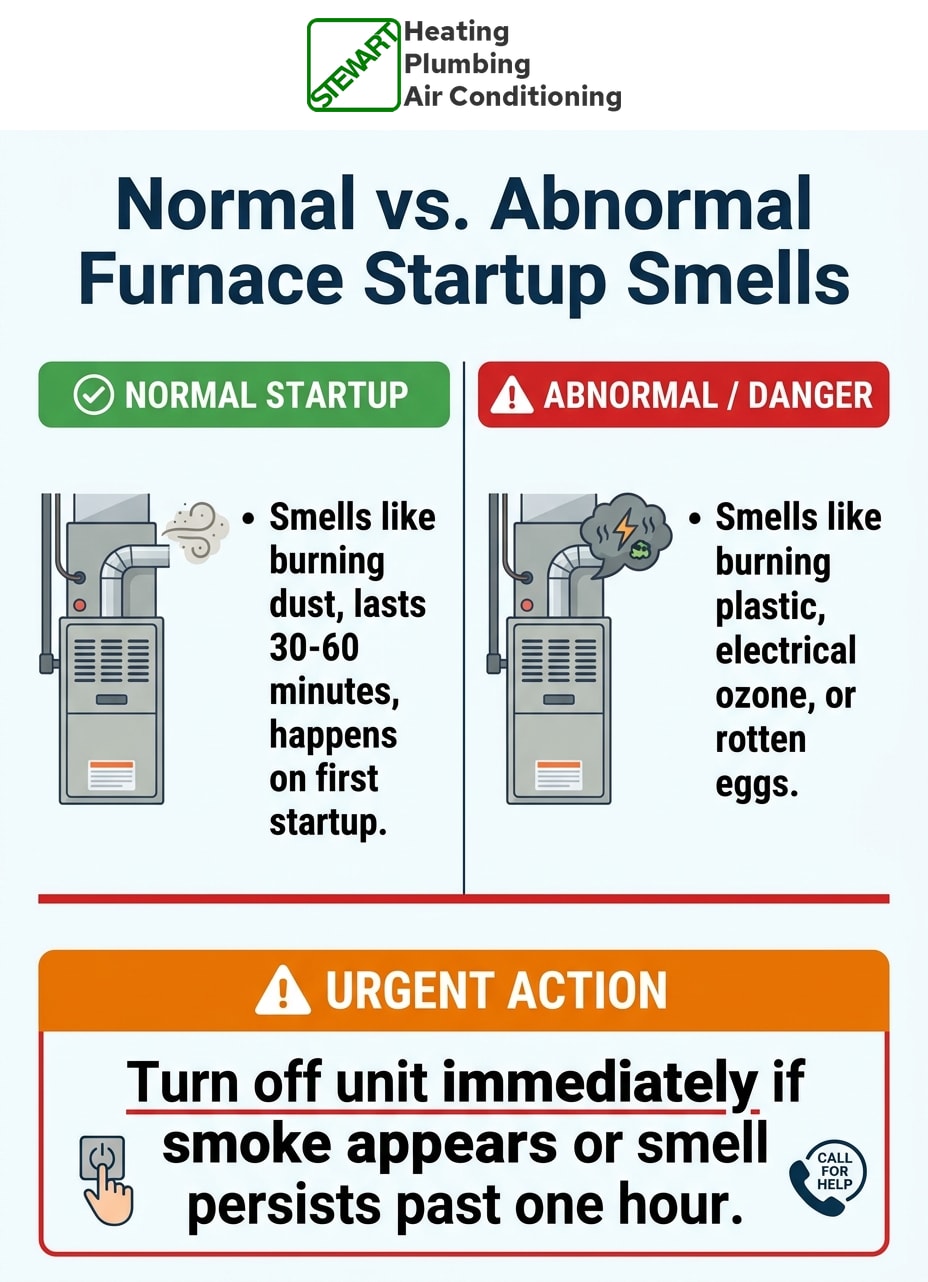
The short answer is that a brief, mild dust odor is a standard physical reaction. It is simply the system cleaning itself off through heat. In a healthy, well-maintained system, this normal burn-off typically dissipates within 30 to 60 minutes of continuous operation. Once the accumulated debris has burned away, the smell should vanish completely, leaving you with clean, warm air for the rest of the season.
The severity of this startup smell is heavily influenced by where you live. In our years of servicing homes throughout the Pittsburgh CA and East Bay area, we've found that our specific climate pattern plays a massive role in how much dust accumulates inside your HVAC system. Unlike regions with year-round variable weather where a heater might cycle on occasionally during a cool summer night, our local climate features long, hot, and highly dry summers.
In Contra Costa County, it is completely normal for a furnace to sit unused for five to six consecutive months. From May through early October, the system remains dormant. During this extended idle period, the dry summer conditions contribute to higher levels of airborne particulate matter. The lack of rain allows dust to easily blow around outside, and that dry, dusty air inevitably makes its way into your home and through your ductwork.
Because the air is so dry and the dormant period is so long, a much thicker layer of dust has the opportunity to settle on the heat exchanger compared to more humid or temperate climates. When the weather finally shifts and we experience that sudden transition to fall, thousands of local homeowners turn their systems on at the exact same time. This local climate reality causes a massive, localized spike in service calls every autumn as residents encounter strong startup odors.
While the heavy dust accumulation is a natural byproduct of our dry East Bay summers, it underscores the importance of pre-season maintenance. A system that has been sitting in a dusty environment for half a year needs a thorough check to ensure that the dust hasn't clogged critical sensors or compromised the burner assembly before the heavy winter usage begins.
Knowing the difference between a harmless seasonal quirk and a dangerous malfunction is the most important part of fall heating startup. Our technicians always advise customers that while burning dust is normal, other smells indicate severe mechanical or electrical failures that require immediate professional intervention.
Here is a breakdown of what different odors mean and how you should respond to them:
• Burning Dust — Characteristics: Smells like a warm vacuum cleaner; faint, dissipates in under an hour. — Potential Cause: Normal accumulation of household debris incinerating on the heat exchanger. — Required Action: Monitor the system. If it fades within 60 minutes, no action is needed.
• Burning Plastic — Characteristics: Sharp, acrid, chemical smell that irritates the nose and throat. — Potential Cause: Overheating electrical wires, melting wire casings, or a foreign plastic object in the ductwork. — Required Action: Turn off the unit immediately at the thermostat and call a professional.
• Electrical / Ozone — Characteristics: Smells like an overheated electrical motor or a distinct metallic tang. — Potential Cause: A failing blower motor, a seized bearing, or an electrical short circuit. — Required Action: Shut down the system right away to prevent a potential fire hazard.
• Rotten Eggs / Sulfur — Characteristics: A very distinct, foul odor resembling sulfur or garbage. — Potential Cause: A natural gas leak. Gas companies add this scent to make leaks detectable. — Required Action: Evacuate the home immediately, leave doors open, and call your gas provider.
• Exhaust / Metallic — Characteristics: Smells strongly of car exhaust or overheating metal. — Potential Cause: A cracked heat exchanger, which can leak deadly carbon monoxide into the home. — Required Action: Turn off the heater immediately and schedule a professional safety inspection.
While you can usually let a dusty smell run its course, certain symptoms mean you should not wait to see if the situation improves. You must turn your system off immediately if you observe any of the following red flags:
• The smell persists beyond one hour: If the odor does not fade after 60 minutes of continuous operation, it is no longer just surface dust. You likely have a dirty air filter, a blocked vent, or a mechanical issue causing the system to overheat.
• Smoke is visible: Normal dust burn-off does not produce visible smoke. If you see smoke coming from your vents or rising from the furnace cabinet itself, shut the system down instantly. This indicates an active electrical fire or severe mechanical friction.
• Carbon monoxide detectors trigger an alarm: Carbon monoxide is completely odorless and invisible. If your alarms sound while the heater is running, evacuate your family immediately. A cracked heat exchanger or a blocked flue pipe could be venting toxic gases directly into your living space.
While the furnace often demands the most attention during the first cold snap, it is not the only system in your home that reacts to dropping temperatures. The transition from a hot East Bay summer to a chilly fall stresses all of your home comfort systems. Taking a comprehensive approach to home maintenance ensures you aren't caught off guard by unexpected failures. If an inspection reveals it is time for an equipment upgrade, keep in mind that federal tax credits or utility incentive programs may apply to qualifying high-efficiency installations. We always advise checking with your utility provider or tax professional for current details.
When the ambient temperature drops, your water heating equipment has to work significantly harder. The groundwater entering your home is colder, meaning the system requires more energy and longer heating cycles to reach your desired temperature. This sudden strain can expose hidden weaknesses in older tanks or failing heating elements. To understand how to protect this vital equipment, reviewing a reliable Water Heater Repair Guide can help you spot early warning signs before you lose hot water completely.
By pairing your HVAC safety checks with overall Plumbing Services, you create a unified defense against winter weather. Cold nights can cause pipes to contract, exposing minor leaks that went unnoticed during the summer. Ensuring your plumbing is insulated and your fixtures are operating correctly is just as important as changing your furnace filter.
Many homeowners choose to schedule their seasonal maintenance for both systems at the same time. This approach offers several distinct advantages:
• Convenience and efficiency: Preparing the whole house at once means fewer service appointments to manage during your busy fall schedule.
• Preventing multiple emergencies: Proactively inspecting both your heating and plumbing systems helps you avoid making multiple emergency calls during the peak winter season, when service schedules are tightly booked.
• Total home safety: Ensuring both air and water heating systems operate safely gives you total confidence that your home can handle whatever weather the season brings.
To make this comprehensive preparation easier, you might consider taking advantage of a seasonal Plumbing Repair Special to ensure all pipes, drains, and fixtures are fully secured for the colder months ahead.
A normal dust burn-off smell should last between 30 and 60 minutes. Once the system reaches its full operating temperature, the accumulated debris on the heat exchanger will incinerate rapidly. If the odor continues past the one-hour mark, it usually indicates a dirty air filter restricting airflow or a more serious mechanical issue. Never ignore a burning smell that persists for hours or days.
It is generally safe to run the furnace if the smell is strictly burning dust and it fades quickly. However, it is not safe to continue operating the system if the smell resembles burning plastic, electrical ozone, or rotten eggs. If you experience these abnormal odors, or if you see any visible smoke, shut the system down at the thermostat immediately. Running a compromised heater can lead to fire hazards or dangerous carbon monoxide exposure.
A burning plastic smell almost always indicates an electrical failure or a foreign object in your ductwork. This odor occurs when wire casings melt due to overheating components, or when a failing motor begins to seize and generate excess friction. It can also happen if a child's toy or household item accidentally falls into a floor register. Because melting electrical components pose a severe fire risk, you must turn the unit off immediately and request a professional inspection.
You should worry if the smell is harsh, chemical, metallic, or if it triggers your carbon monoxide detectors. At Stewart Heating, Plumbing and Air Conditioning, a pattern we see often is homeowners ignoring a metallic exhaust smell, which is a primary indicator of a cracked heat exchanger. You should also be concerned if the standard dust smell returns every time the heater cycles on, rather than just during the initial fall startup.
You can and should replace your air filter yourself, but you should never attempt to clean the internal components of the furnace. Opening the sealed furnace cabinet to wipe down the burners or heat exchanger requires specialized knowledge of gas and electrical systems. Accidentally bumping a sensor, misaligning a burner, or damaging a wire can create severe safety hazards. Always leave internal cleaning and diagnostics to a licensed professional.
Yes, the initial startup can temporarily lower your indoor air quality. As the system pushes air through ductwork that has been dormant for months, it can dislodge settled dust, pollen, and pet dander, circulating it into your living spaces. You can mitigate this by installing a fresh, high-quality pleated air filter before you turn the system on. If you suffer from allergies or asthma, keeping the windows slightly open during that first hour of operation can help ventilate the airborne particles.
While a brief dust smell on that first chilly morning is usually a normal part of the season, true comfort comes from knowing your home is secure. Distinguishing between harmless dust burn-off and a dangerous mechanical issue can be difficult, and guessing is never worth the risk to your family's safety. Proactive safety checks are the most effective way to prevent reactive, stressful emergency winter repairs. If you are unsure about your system's performance, or if you want to ensure your entire home is ready for the cold, reach out to our team. Don't wait for a breakdown—Request Plumbing Service and secure your home for a safe, warm winter today.

Very professional and complete. I would recommend Stewart to anyone. Highest quality of workmanship and clean installation.
Stewart Heating Plumbing Air Conditioning just did some work for us for the first time. They did an installation at my home and it turned out well. I thought the price was fair and I definitely would use them again. The technicians were very friendly and knowledgeable about their work. I highly recommend Stewart Heating Plumbing Air Conditioning and already told friends to use them.
We have been using Stewart Heating Plumbing Air Conditioning since 1995. They put the original heating and air unit in the house, and we have just stayed with them. They are dependable and honest people, and they have done a good job for us every time that we have used them!
They came and did an inspection and are coming tomorrow to do the repair.
They replaced a regulator the first time, and then the water heater vent had to be replaced. They did great work.
The gentleman that serviced us was helpful, insightful, and knew what he was talking about. Overall, it was a great experience.