

Recent Blogs
Stay updated with our latest blog posts.

Is your heating system actually supposed to smell like that, or are you ignoring a genuine safety hazard? When you are looking for reliable home maintenance tips and troubleshooting, the first chilly night of the season always brings up urgent questions. Here at Stewart Heating, Plumbing and Air Conditioning, our team fields these exact calls every October. You turn on the thermostat after months of inactivity, and within minutes, a distinct burning odor fills the hallway. Most homeowners don't realize that while some smells are entirely harmless, others indicate that a critical safety mechanism—like a pressure switch—is actively trying to prevent a dangerous situation.
For comprehensive support, explore our Plumbing Services or schedule professional Water Heater Repair & Installation to keep your home safe this season.
During the typical October fall heating startup, combustion appliances like furnaces and power-vented water heaters are suddenly forced to work hard after a long, dormant summer. This abrupt transition forces you to make a quick decision: do you wait out the initial burning smell, or do you immediately shut off the system? If you hear unusual noises or notice the system repeatedly trying to start and then shutting down, you might be dealing with a pressure switch failure. This switch is a primary safety mechanism designed to trigger when your venting system is stressed or blocked. Understanding the difference between a harmless layer of burning dust and a genuine electrical or venting hazard is the first step in keeping your household safe.
When a technician tells you that your pressure switch has "failed open," it sounds like a broken part that needs a quick replacement. The short answer is that a switch failing open is actually a deliberate safety feature doing exactly what it was designed to do. Both modern furnaces and power-vented water heaters rely on this mechanism to ensure safe combustion.
Before your water heater or furnace is allowed to ignite its burners, the system must prove that exhaust gases will safely vent outside your home. This process begins with the draft inducer motor, which turns on to create a negative pressure (a vacuum) inside the exhaust venting. The pressure switch is connected to this system via a small rubber hose. When the inducer motor creates enough suction, the internal diaphragm of the pressure switch is pulled inward. This movement closes an electrical circuit, signaling to the control board that it is safe to open the gas valve and ignite the flame. If you want to dive deeper into the symptoms, you can read more about how a failing pressure switch mimics other heating issues.
The term "failed open" simply means the electrical circuit remains open—or incomplete. If the draft inducer motor fails to pull enough of a vacuum, the diaphragm inside the switch never moves. Because the circuit stays open, the control board actively locks out the ignition sequence. This deliberate lockout prevents the system from burning gas when the exhaust path is compromised. Without this mechanism, a blocked vent or a failing motor would cause severe carbon monoxide buildup inside your living space during that critical October fall heating startup.
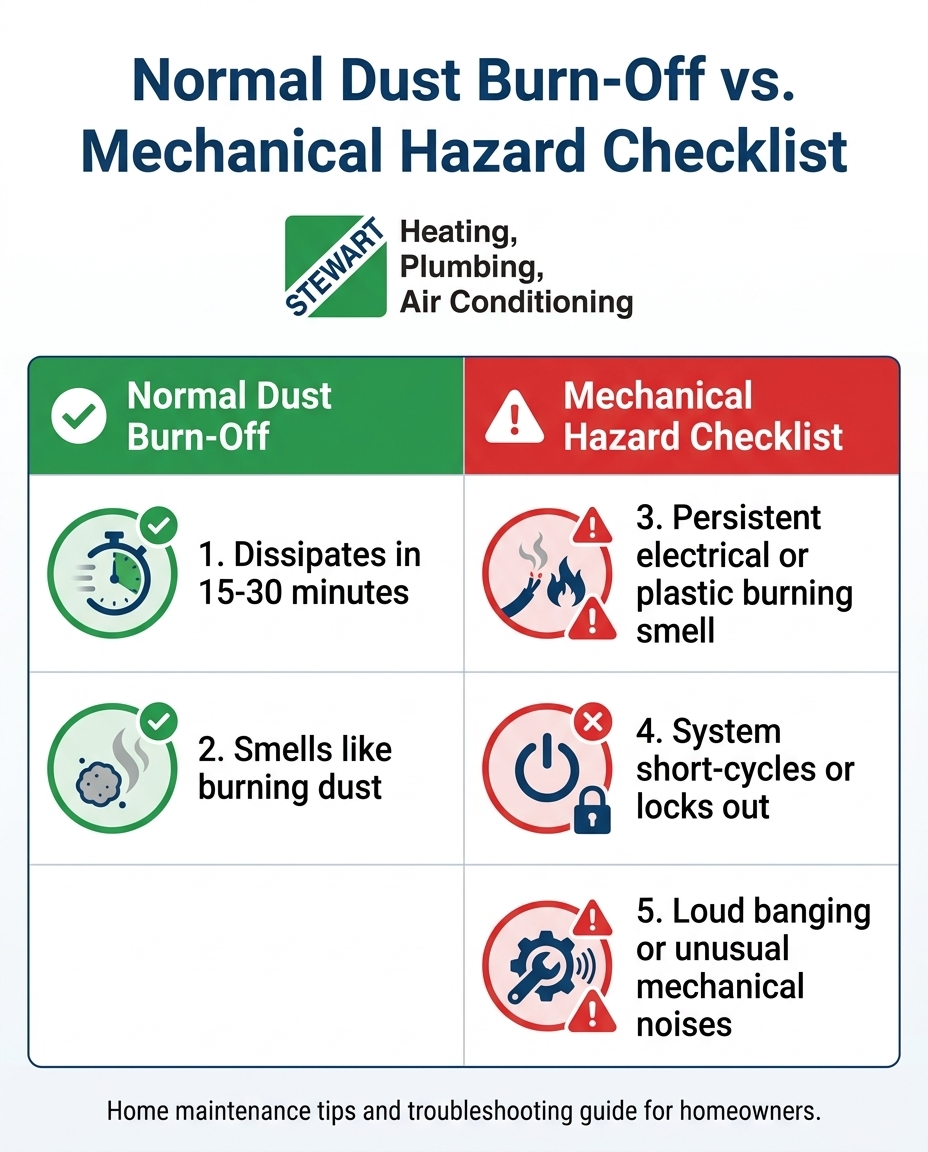
Distinguishing between normal seasonal odors and a mechanical lockout shouldn't require guesswork. When systems sit unused for months, dust naturally settles on the burners and heat exchangers. Burning off this dust creates a distinct odor, but it is entirely different from the symptoms of a mechanical failure or an electrical hazard.
• Odor Type — Normal Dust Burn-Off: Smells like toasted or burning dust; slightly earthy. — Mechanical or Safety Failure: Smells like melting plastic, ozone, or an electrical fire.
• Duration — Normal Dust Burn-Off: Dissipates completely within 15 to 30 minutes of operation. — Mechanical or Safety Failure: Persists indefinitely or worsens the longer the system runs.
• System Behavior — Normal Dust Burn-Off: Runs continuously and produces steady, even heat. — Mechanical or Safety Failure: Short-cycles, clicks loudly, or attempts to start and immediately shuts down.
• Audible Cues — Normal Dust Burn-Off: Standard blower or fan noise. — Mechanical or Safety Failure: Loud banging, grinding from the inducer motor, or repetitive clicking.
If your system exhibits the signs of a mechanical failure—such as short-cycling without producing heat—it is likely that a safety control like the pressure switch has intervened. In these cases, the safest immediate action is to turn the system off at the thermostat and shut off the dedicated gas valve until a professional can inspect the unit.
Why do these safety switches seem to fail exactly when you need your system the most? The transition into cooler weather introduces specific environmental and mechanical stresses. In our decades of providing HVAC and plumbing services across Contra Costa County, our team typically sees a few repeating patterns during fall startups.
1. Sudden Temperature Drops: Pittsburg's cooler fall and winter nights dramatically increase the workload on residential water heaters and furnaces. This sudden shift from a dormant summer state to heavy, continuous cycling makes mechanical components like pressure switches highly susceptible to wear and failure.
2. Blocked Exhaust Vents: Over the summer, birds, rodents, and insects often build nests inside inactive exhaust flues. Leaves and debris can also accumulate. When you start the system in October, the blocked vent prevents the draft inducer from creating the necessary vacuum, leaving the pressure switch open.
3. Seized Draft Inducer Motors: Mechanical parts that sit idle for months can seize up. If the bearings in the draft inducer motor rust or stiffen, the motor won't spin fast enough to generate the required suction. The switch recognizes the weak draft and prevents ignition.
4. Condensation and Cracked Hoses: The small rubber vacuum hose connecting the inducer to the switch can crack over time due to age and heat exposure. Additionally, heavy condensation can build up inside the hose or the switch body itself, physically blocking the internal diaphragm from moving.
If you search online for heating troubleshooting, you will inevitably find DIY tutorials suggesting you use a multimeter or a jumper wire to bypass a stubborn pressure switch. Do not attempt this under any circumstances. Bypassing combustion safety controls is a severe life-safety hazard.
According to Consumer Product Safety Commission (CPSC) guidelines on combustion appliance venting, operating a gas appliance without proper draft safeguards can lead to fatal carbon monoxide poisoning. The pressure switch is the only component standing between a blocked exhaust pipe and your living room. When the switch fails open, it is almost always a symptom of a larger venting or mechanical issue, not the root problem itself.
Jumping the switch forces the gas valve to open and the burners to ignite even when the exhaust gases have nowhere to go. This pushes toxic carbon monoxide directly back into your home. A professional from our team will never bypass a safety switch to force a system to run; instead, we diagnose the underlying draft issue that caused the switch to trip in the first place.
When a safety lockout occurs, restoring your system requires specialized tools and diagnostic protocols. As a family-owned business serving the Pittsburg, CA community since 1974, we understand that proper diagnosis is the key to long-term safety and reliability. Here is what our professional diagnostic visit entails:
1. Comprehensive Visual Inspection: The technician begins by inspecting the entire venting system, from the appliance all the way to the roof or sidewall termination, ensuring no debris or nests are blocking the exhaust path.
2. Electrical and Motor Testing: The draft inducer motor is tested to verify it is receiving the correct voltage and pulling the appropriate amperage. If the motor is struggling, it cannot create the required draft.
3. Vacuum Pressure Verification: Using a specialized manometer, the technician measures the exact negative pressure being generated by the system. This reading is compared against the specific rating of your pressure switch to determine if the switch itself has failed or if the draft is genuinely insufficient.
4. Safe Continuity Checks: The electrical continuity of the switch is tested safely while the system is unpowered. Once all mechanical and venting issues are resolved, the technician verifies safe combustion and proper drafting before leaving the home.
If you suspect your system is locked out due to a safety switch, it is time to Request Plumbing Service to get a definitive, safe resolution.
The best way to handle an October fall heating startup is to prepare for it before the temperatures drop. Proactive care transforms emergency diagnostic calls into predictable, manageable maintenance.
Pre-winter inspections are vital for catching wear and tear on safety switches, vacuum hoses, and inducer motors before the first chilly night. During a tune-up, technicians perform routine cleaning of the venting system, burners, and internal cabinets. This removes the dust that causes alarming smells and clears out minor obstructions before they trigger a hard lockout.
Beyond preventing sudden failures, proactive care significantly extends the overall lifespan of your water heater and heating equipment. Systems that run with clean burners and unobstructed venting don't have to work as hard, which reduces thermal stress on heat exchangers and electrical components. For homeowners who want to avoid unexpected fall startup failures entirely, enrolling in a Routine Maintenance Plan ensures these critical safety checks happen automatically every year.
An open pressure switch means the electrical circuit inside the switch is incomplete. This is a deliberate safety feature indicating that the system could not verify proper exhaust draft. When the switch remains open, the control board prevents the gas valve from opening, stopping the system from igniting unsafely.
Fixing a switch stuck open requires diagnosing the underlying draft issue rather than just replacing the switch. A licensed professional will check for blocked exhaust vents, test the draft inducer motor, and measure the vacuum pressure with a manometer. You should never attempt to bypass or force the switch closed yourself.
The pressure switch itself does not typically cause a burning smell unless its wiring has short-circuited. However, if the switch is repeatedly failing open and the system is short-cycling, the stressed inducer motor or overheating electrical components nearby can produce an electrical burning odor.
No, it is never safe to bypass a pressure switch. Bypassing this control removes the only safeguard preventing your system from running with a blocked exhaust vent. Doing so can force toxic carbon monoxide and combustion gases directly into your living space, creating a severe, life-threatening hazard.
It depends on the type of smell and how long it lasts. A dusty, earthy burning smell that dissipates within 15 to 30 minutes during the first fall startup is normal dust burn-off and is safe. However, if the smell resembles melting plastic or an electrical fire, or if it persists indefinitely, shut the system off immediately and call a professional.
During the initial October fall heating startup, a dormant system will typically produce a burning dust odor for about 15 to 30 minutes. Once the accumulated dust has burned off the heat exchangers and burners, the smell should completely disappear. If the odor lingers longer than an hour, it warrants a professional inspection.
Navigating the first chilly nights in Pittsburg, CA shouldn't leave you guessing about your family's safety. Since 1974, we've helped countless homeowners navigate these seasonal startups, and the main takeaway is simple: 15 to 30 minutes of a dusty burning smell is entirely normal, but persistent electrical odors, loud mechanical banging, or a system that locks out requires immediate attention. If our technicians discover a "pressure switch failed open" code, be reassured that your system's safety features are working exactly as intended to protect your home from combustion hazards. When you are unsure about your system's behavior, clear criteria and a professional inspection will give you the peace of mind you need to stay comfortable all season long.

Very professional and complete. I would recommend Stewart to anyone. Highest quality of workmanship and clean installation.
Stewart Heating Plumbing Air Conditioning just did some work for us for the first time. They did an installation at my home and it turned out well. I thought the price was fair and I definitely would use them again. The technicians were very friendly and knowledgeable about their work. I highly recommend Stewart Heating Plumbing Air Conditioning and already told friends to use them.
We have been using Stewart Heating Plumbing Air Conditioning since 1995. They put the original heating and air unit in the house, and we have just stayed with them. They are dependable and honest people, and they have done a good job for us every time that we have used them!
They came and did an inspection and are coming tomorrow to do the repair.
They replaced a regulator the first time, and then the water heater vent had to be replaced. They did great work.
The gentleman that serviced us was helpful, insightful, and knew what he was talking about. Overall, it was a great experience.