

Recent Blogs
Stay updated with our latest blog posts.

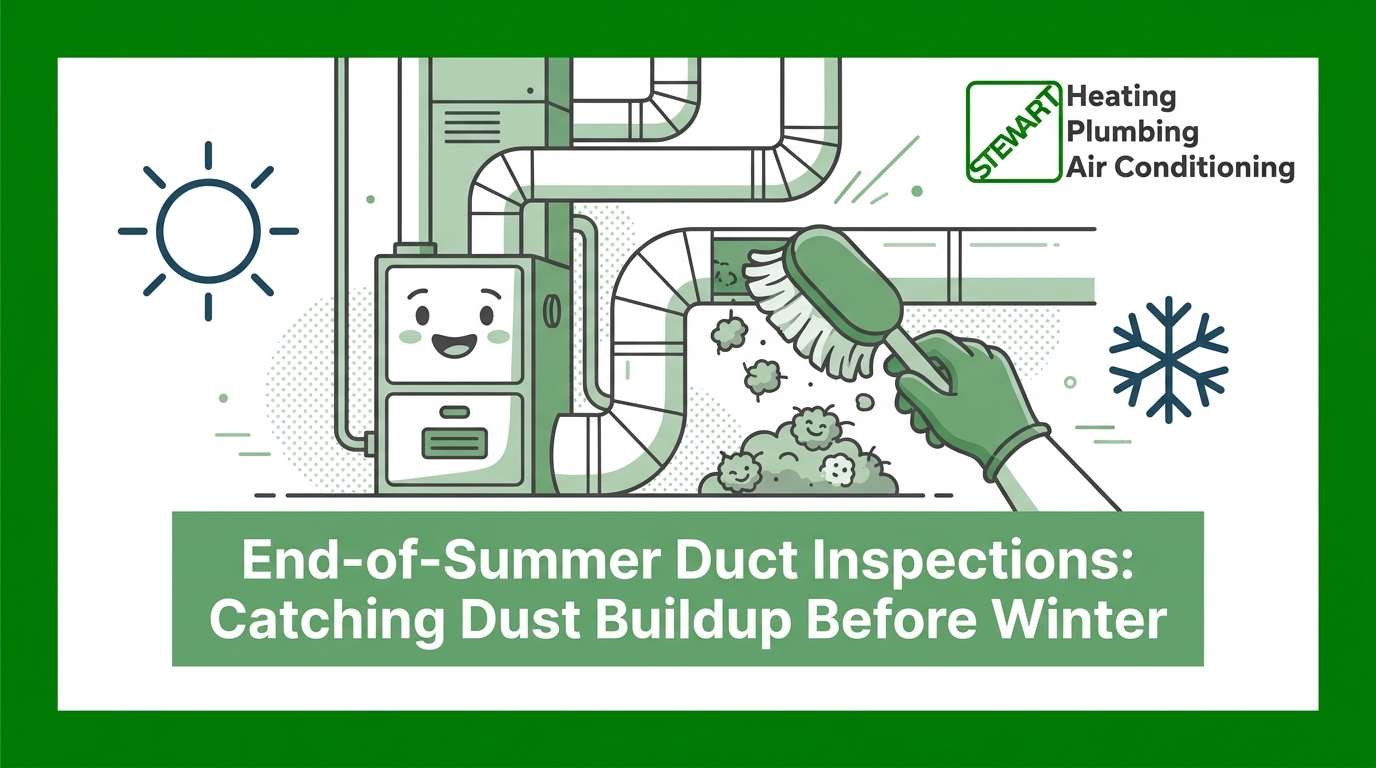
Here at Stewart Heating, Plumbing and Air Conditioning, we know August brings the back-to-school rush and the gradual wind-down of heavy air conditioning use. As the cooling season draws to a close, prioritizing end-of-summer duct inspections: catching dust buildup before winter is one of the most effective ways to protect your home's indoor air quality. Months of non-stop air conditioning usage cycle massive volumes of air through your home, inadvertently trapping airborne particulates inside the ductwork. As this accumulation sits dormant during the late-summer transition, our technicians often find it poses a significant risk to your air quality once the heating system is finally activated.
Addressing this hidden buildup proactively prevents the disruptive odors and poor air circulation our customers commonly experience during the first cold snap of the year. When you wait until the temperatures drop to address your HVAC system, you are often met with unpleasant surprises that could have been easily avoided. Securing professional indoor air quality solutions and a comprehensive duct leakage test and inspection now ensures a seamless, clean transition to fall.
Most homeowners don't realize that their ductwork acts like the respiratory system of the house. During the peak of summer, the blower motor pushes thousands of cubic feet of air through these metal and fiberglass channels every hour. While the air is moving, much of the dust stays suspended. However, as the system cycles off more frequently in the late-summer transition, that suspended particulate matter begins to settle along the interior walls of the ducts. In our experience, this dormant dust becomes a breeding ground for allergens, creating a dense layer of debris that waits in the dark until the furnace blower kicks on for the first time.
The Problem: Air conditioning systems rely on continuous, high-velocity airflow to maintain comfortable indoor temperatures. This mechanical process naturally draws in microscopic dust, pet dander, pollen, and other airborne contaminants from around the home. In our decades of serving Pittsburg and the surrounding areas, our team has seen how environmental factors amplify this intake. Specifically, Contra Costa County's hot, dry summer climate and late-summer winds significantly increase the volume of airborne dust and allergens entering the home, accelerating the rate of buildup inside the HVAC system.
The Cause: Even with high-quality, properly fitted air filters in place, a fraction of these microscopic particulates will always bypass the media or settle along the interior walls of the ductwork over months of continuous operation. The Environmental Protection Agency (EPA) notes that indoor air can be significantly more polluted than outdoor air—a problem that is severely exacerbated when your home's ductwork acts as a reservoir for summer dust. As air travels through bends, elbows, and long runs of ducting, the velocity of the airflow naturally drops, allowing heavier particles to fall out of suspension and cling to the duct surfaces.
The Solution: Understanding this mechanical accumulation is the first step in recognizing why late-summer intervention is critical. By addressing the buildup during the August / late-summer transition, we help you interrupt the cycle of contamination.
• Fine Dust & Soil — Common Source in Late Summer: Dry outdoor conditions and open windows — Impact on HVAC System: Coats blower motor blades, reducing airflow efficiency.
• Pet Dander — Common Source in Late Summer: Shedding pets spending more time indoors — Impact on HVAC System: Creates sticky buildup that traps other microscopic debris.
• Pollen & Spores — Common Source in Late Summer: Late-summer blooming plants and wind — Impact on HVAC System: Degrades indoor air quality and triggers allergy symptoms.
• Textile Fibers — Common Source in Late Summer: Carpets, furniture, and clothing wear — Impact on HVAC System: Clogs secondary filters and settles on the heat exchanger.
Every year, as the weather turns cold, our dispatchers at Stewart Heating, Plumbing and Air Conditioning see a massive spike in service calls because a homeowner's furnace smells like burning dust. This alarming odor is rarely a sign of a catastrophic failure, but rather a predictable mechanical reaction caused by neglected summer maintenance. When the furnace remains inactive all summer, dust, dander, and airborne debris settle directly onto the heat exchanger and the surrounding heating components.
Upon the first ignition of the season, these settled particulates are instantly subjected to extreme temperatures. The heat exchanger gets incredibly hot very quickly, causing the accumulated debris to literally burn off the metal surfaces. This process creates a distinct, acrid odor that permeates the home through the supply vents. While the smell is usually brief and dissipates after a few heating cycles, this burn-off process actively circulates charred microscopic particles into your living space, temporarily but significantly degrading your indoor air quality.
• Organic Matter: Pet dander, skin cells, and microscopic insect debris that bypassed the filter.
• Inorganic Dust: Fine soil and dirt particles pulled from the dry summer air.
• Household Fibers: Micro-plastics and cotton fibers from carpets and upholstery.
The technical reality: The burning dust smell is a symptom of a dirty system, not a broken one. However, subjecting your heat exchanger to a layer of insulating dust forces the metal to work harder to transfer heat into the air stream. Over multiple seasons, this added thermal stress can contribute to premature wear on the furnace components. A proactive inspection by our crew clears this debris before the ignition sequence ever begins.
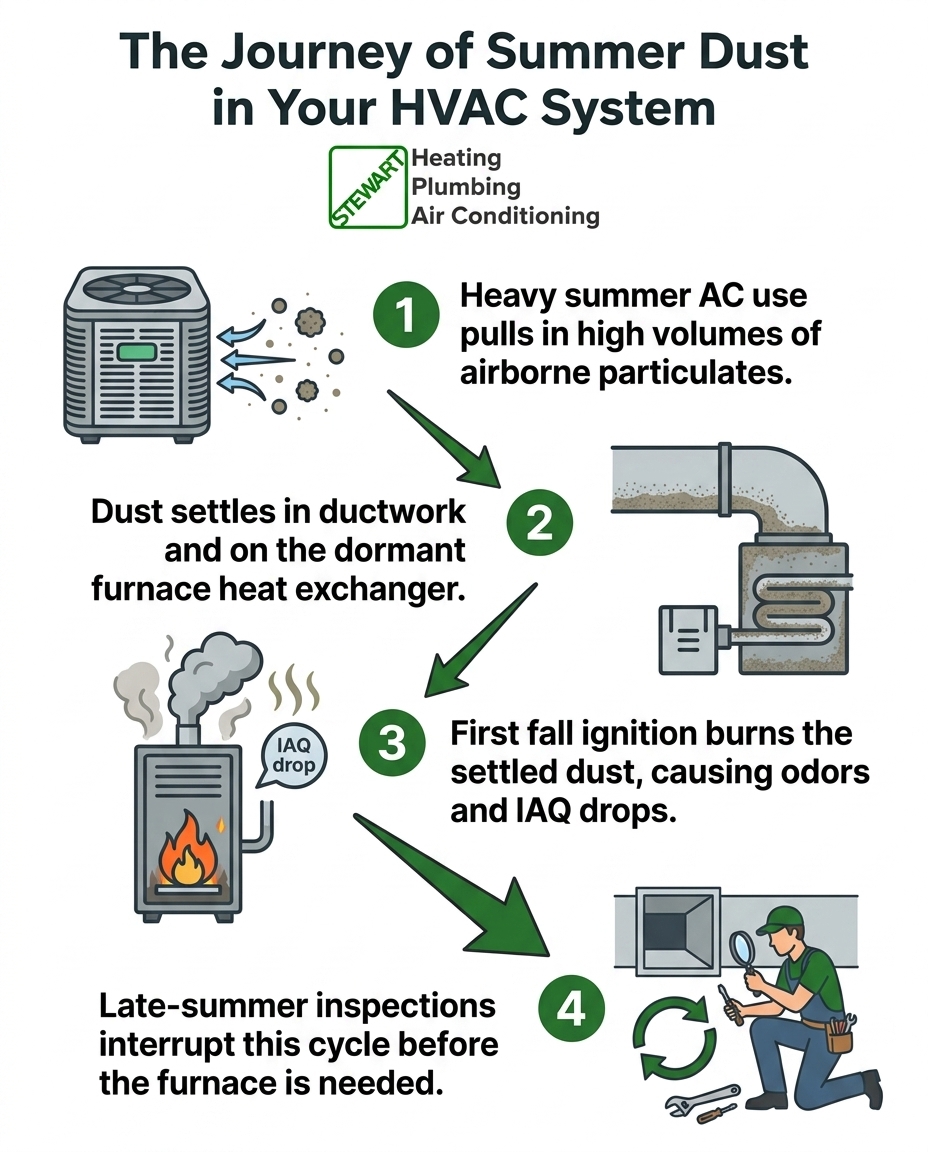
Timing is everything when it comes to home maintenance. Waiting until the first freezing night to turn on the heat guarantees that any accumulated summer dust will burn off and circulate through your home. Scheduling an assessment during the August / late-summer transition treats the ductwork as a strategic bridge between the cooling and heating seasons. Here is why our team recommends taking action now:
1. Beat the Emergency Rush: Once the first true cold snap hits, local HVAC schedules fill up instantly with emergency no-heat calls. Booking your inspection in late summer ensures you get priority scheduling at a time that is convenient for you.
2. Prevent the Burn-Off: By clearing the heat exchanger and surrounding ductwork before the furnace is activated, our technicians completely eliminate the disruptive burning dust odor.
3. Identify Summer Wear and Tear: Months of continuous air conditioning use can loosen duct joints, degrade weather stripping, and strain blower motors. Catching these issues now prevents them from compounding during winter.
4. Ensure Proper Airflow: A clean system moves air with less resistance. Verifying that your ducts are clear of obstructions ensures your heating system won't have to work overtime to reach the set temperature on the thermostat.
One pattern we see often is homeowners assuming that because the AC ran fine all summer, the heater will naturally perform perfectly in the winter. This overlooks the fact that the two systems share the same distribution network. If the ductwork is compromised, dirty, or leaking, it doesn't matter which piece of equipment is generating the conditioned air—the delivery will be flawed. Proactive timing provides peace of mind, ensuring the system is pristine before it is forced to switch operational modes.
A true professional duct assessment goes far beyond shining a flashlight into a floor register. Our technicians utilize specialized diagnostic tools, including negative pressure gauges and remote camera systems, to evaluate the volume of particulate buildup hidden deep within the duct runs. During the August / late-summer transition, this objective evaluation determines whether simple sealing, thorough cleaning, or minor repairs are required before winter sets in.
During a recent late-summer inspection of an investment property right here in Pittsburg, our thorough professional assessment uncovered hidden ductwork issues that the buyer would not have otherwise noticed. Our technician provided an honest evaluation, identified specific areas of concern, and supplied photographic evidence of the problems. This level of detail allowed the buyer to understand the true condition and longevity of the home's HVAC system before the heating season began.
• Particulate Volume: Measuring the amount of dust, debris, and potential mold growth resting in the main trunk lines and branch ducts.
• Seal Integrity: Identifying compromised seals, degraded mastic, or disconnected joints that cause conditioned air to escape.
• Unconditioned Air Intrusion: Locating leaks that may be actively pulling unconditioned, dusty air from hot attics or damp crawlspaces into the living areas.
• Airflow Restrictions: Finding crushed flexible ducts, closed dampers, or severe blockages that force the blower motor to work against high static pressure.
The diagnostic takeaway: Our professionals provide a clear, evidence-based prognosis of your ductwork's health. We highlight issues that directly impact your overall HVAC efficiency, ensuring that your system isn't wasting energy pushing heated air into the attic or drawing contaminated air out of the walls.
The Problem: Clean, sealed ducts are essential, but they are only half of the equation. The furnace itself must be ready to take over the workload. If the pathway for heated air is restricted by summer accumulation, or if the furnace components have been neglected, the system will struggle to maintain temperature. Often, a homeowner will call us noticing their furnace smells like burning dust and assume the unit is failing, when the real issue is a lack of transitional preparation.
The Cause: The transition from cooling to heating is a stressful event for mechanical equipment. The blower motor, which has been pushing cold, dense air for months, must now adapt to moving warm air. If sensors are coated in dust, or if the heat exchanger is insulated by debris, the system may short-cycle or fail to ignite properly.
The Solution: Proper heating system preparation involves verifying that the entire air distribution pathway is clear. A comprehensive tune-up by our experts during this transition phase allows us to explain necessary adjustments and prevent early-season breakdowns. Removing blockages reduces the strain on the blower motor, promoting even heating throughout the home.
The value of a transitional tune-up is clear when looking at routine maintenance outcomes. During a recent end-of-summer furnace tune-up, a local homeowner having their system serviced for the first time learned exactly how summer wear affects winter performance. Our technician took the time to explain all the work being performed and physically showed the homeowner specific damaged items that needed repair. Because the issues were caught early, the homeowner felt informed and confident that the system was ready to handle the upcoming winter workload safely.
Consistent, seasonal evaluations break the cycle of dust accumulation and burn-off, maintaining high indoor air quality year-round. Treating your HVAC system as a continuous, year-round comfort provider rather than two separate seasonal appliances is the key to longevity. By addressing the August / late-summer transition proactively, you protect both the equipment and the air your family breathes.
Enrolling in our preventative HVAC maintenance plan ensures that both the cooling and heating transitions are managed by our experts before minor wear turns into major failure. Routine maintenance plans typically include the precise cleaning and calibration required to keep the heat exchanger free of summer dust, preventing the burning odors entirely.
Properly maintaining your air filtration systems is essential for capturing allergens before they ever have the chance to reach the ductwork. Upgrading your filter media or installing dedicated air purifiers during this seasonal shift drastically reduces the particulate load on the system. For more detailed strategies on managing indoor allergens as the seasons change, preparing your home's air filtration for fall provides actionable insights for maintaining a healthy environment.
The local advantage: As a family-owned team trusted in Contra Costa County since 1974, Stewart Heating, Plumbing and Air Conditioning ensures thorough, precision maintenance that prevents seasonal surprises. Our decades of local experience mean that our technicians understand exactly how the dry regional climate impacts ductwork and filtration, allowing us to provide targeted, effective solutions that generic service checklists often miss.
The burning dust smell occurs because airborne particulates settle on the furnace heat exchanger during the dormant summer months. When the heating system is ignited for the first time in the fall, the sudden extreme heat burns off this accumulated layer of debris. It is a mechanical result of dust accumulation, not an inherent system flaw. Scheduling an end-of-summer inspection allows our technicians to clean the heat exchanger before this burn-off can happen.
The short answer is that the smell will usually dissipate on its own after a few heating cycles as the dust finishes burning off. However, the best way to get rid of it permanently is to prevent it by having the system professionally cleaned by our team before turning it on. If the smell persists for more than a few hours, or if it smells like electrical ozone or melting plastic rather than dusty burn-off, turn the system off immediately and call a professional.
Generally, the brief burning dust smell during the first cycle of the year is not dangerous, though it can temporarily degrade your indoor air quality and irritate those with respiratory sensitivities. The charred microscopic particles are circulated into your living space until the burn-off is complete. However, if the smell is accompanied by smoke, sets off alarms, or doesn't fade quickly, it could indicate a more serious safety hazard that requires immediate expert attention from our team.
Yes, having your ducts inspected and cleaned before winter is highly recommended. Heavy summer air conditioning usage pulls in high volumes of airborne debris, much of which settles in the ductwork as the season winds down. Cleaning the ducts removes this reservoir of allergens and dust, ensuring that your furnace blows clean, fresh air rather than circulating months of accumulated summer contamination.
Preparing your HVAC system involves a combination of clearing away summer wear and verifying heating functionality. Start by scheduling a professional tune-up and duct inspection with us in late summer to address any particulate buildup. You should also replace your air filters, clear any debris away from the outdoor AC condenser unit before it sits dormant, and have a technician test the furnace ignition and safety controls before the cold weather arrives.
Absolutely. Air conditioning systems require massive amounts of continuous airflow to cool a home, and this constant circulation naturally draws in microscopic dust, pet dander, and pollen. Even with high-quality filters in place, a fraction of these particulates will settle along the interior walls of the ductwork over months of continuous operation. In dry climates, this accumulation happens even faster, making late-summer inspections crucial for our local customers.
Understanding the mechanics of summer dust buildup empowers homeowners to act before the heating season begins. You don't have to accept poor indoor air quality or alarming burning odors as a normal part of the seasonal transition. By recognizing the impact of the August / late-summer transition on your ductwork, you can take proactive steps to protect your home's comfort and safety.
Scheduling an inspection with Stewart Heating, Plumbing and Air Conditioning now eliminates the stress of the first-cycle burning odor, verifies the integrity of your ductwork, and ensures optimal indoor air quality for the months ahead. Reach out to our local experts to transition your system safely and efficiently. A little preparation today guarantees a warm, clean, and comfortable home all winter long.

Very professional and complete. I would recommend Stewart to anyone. Highest quality of workmanship and clean installation.
Stewart Heating Plumbing Air Conditioning just did some work for us for the first time. They did an installation at my home and it turned out well. I thought the price was fair and I definitely would use them again. The technicians were very friendly and knowledgeable about their work. I highly recommend Stewart Heating Plumbing Air Conditioning and already told friends to use them.
We have been using Stewart Heating Plumbing Air Conditioning since 1995. They put the original heating and air unit in the house, and we have just stayed with them. They are dependable and honest people, and they have done a good job for us every time that we have used them!
They came and did an inspection and are coming tomorrow to do the repair.
They replaced a regulator the first time, and then the water heater vent had to be replaced. They did great work.
The gentleman that serviced us was helpful, insightful, and knew what he was talking about. Overall, it was a great experience.