

Recent Blogs
Stay updated with our latest blog posts.

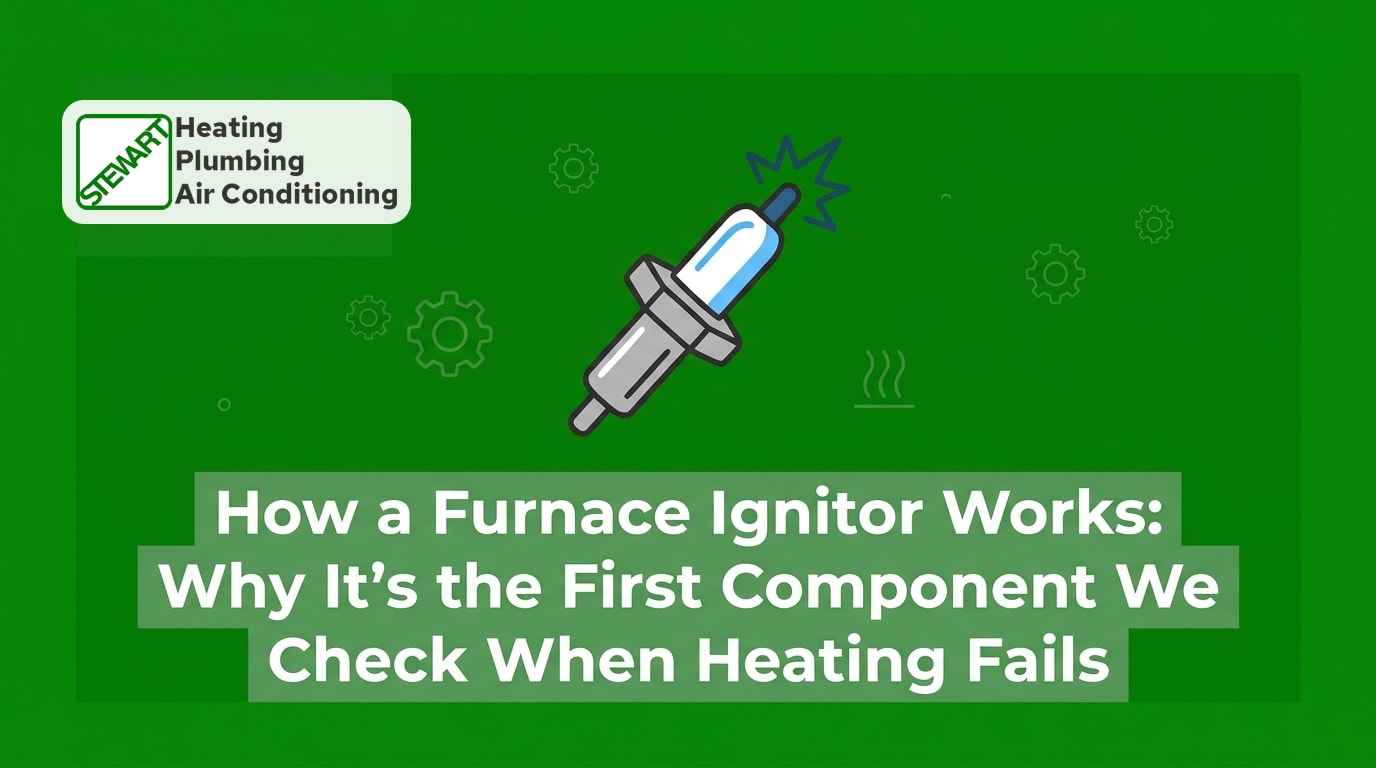
When the first cold nights of November arrive in the East Bay area, homeowners finally switch their thermostats from cooling to heating. After sitting dormant all summer, your system is suddenly called upon to warm the house. But instead of a comforting rush of warm air, you might be greeted by cold vents and a system that simply refuses to start. If you are currently researching how a furnace ignitor works, you are likely trying to figure out why your system is struggling to produce heat when you need it most.
Discovering a cold house can be incredibly frustrating, especially when temperatures drop rapidly. However, a failure to start does not automatically mean your entire heating system needs to be replaced. In many cases, the culprit is a small but highly critical component known as the furnace ignitor. Because this part undergoes extreme stress every time your system cycles on, it frequently causes start-up failures.
Understanding how this component operates helps you make informed decisions about your system's health and know exactly when to call for professional help. If you need immediate assistance with your system, our comprehensive heating services can help restore your comfort quickly.
To understand the mechanics of your heating system, it helps to look at the science behind the ignition process. For decades, older furnaces relied on a standing pilot light—a small, continuously burning blue flame that waited for the gas valve to open. While functional, pilot lights wasted energy by burning gas 24 hours a day, even when the furnace was not running. Today, modern systems use an electronic component called a hot surface ignitor (HSI).
The hot surface ignitor acts as the modern replacement for traditional standing pilot lights. It operates on a simple but powerful physical principle: electrical resistance. When your thermostat calls for heat, the furnace's control board sends an electrical current to the ignitor. The ignitor is made from a highly resistive material, typically silicon carbide or silicon nitride. Because this material resists the flow of electricity, the electrical energy is rapidly converted into intense heat.
These components must reach extreme temperatures to safely and instantly ignite the natural gas flowing into the burner assembly. A standard hot surface ignitor will heat up to between 1,800 and 2,500 degrees Fahrenheit in a matter of seconds. As it reaches these temperatures, it glows a bright, unmistakable orange or yellow. Once the gas valve opens and the gas touches this superheated surface, combustion occurs instantly. The resulting flame is then distributed across the burners, creating the heat that will eventually be transferred to the air circulating throughout your home.
• Energy Efficiency — Standing Pilot Light (Older Systems): Low (burns gas continuously) — Hot Surface Ignitor (Modern Systems): High (uses electricity only when starting)
• Reliability in Drafts — Standing Pilot Light (Older Systems): Poor (can be blown out by wind) — Hot Surface Ignitor (Modern Systems): Excellent (no flame to blow out prior to ignition)
• Operating Temperature — Standing Pilot Light (Older Systems): Standard blue gas flame (~3,500°F) — Hot Surface Ignitor (Modern Systems): Glowing element (1,800°F - 2,500°F)
• Lifespan — Standing Pilot Light (Older Systems): Often lasts the life of the furnace — Hot Surface Ignitor (Modern Systems): Typically 3 to 5 years (requires periodic replacement)
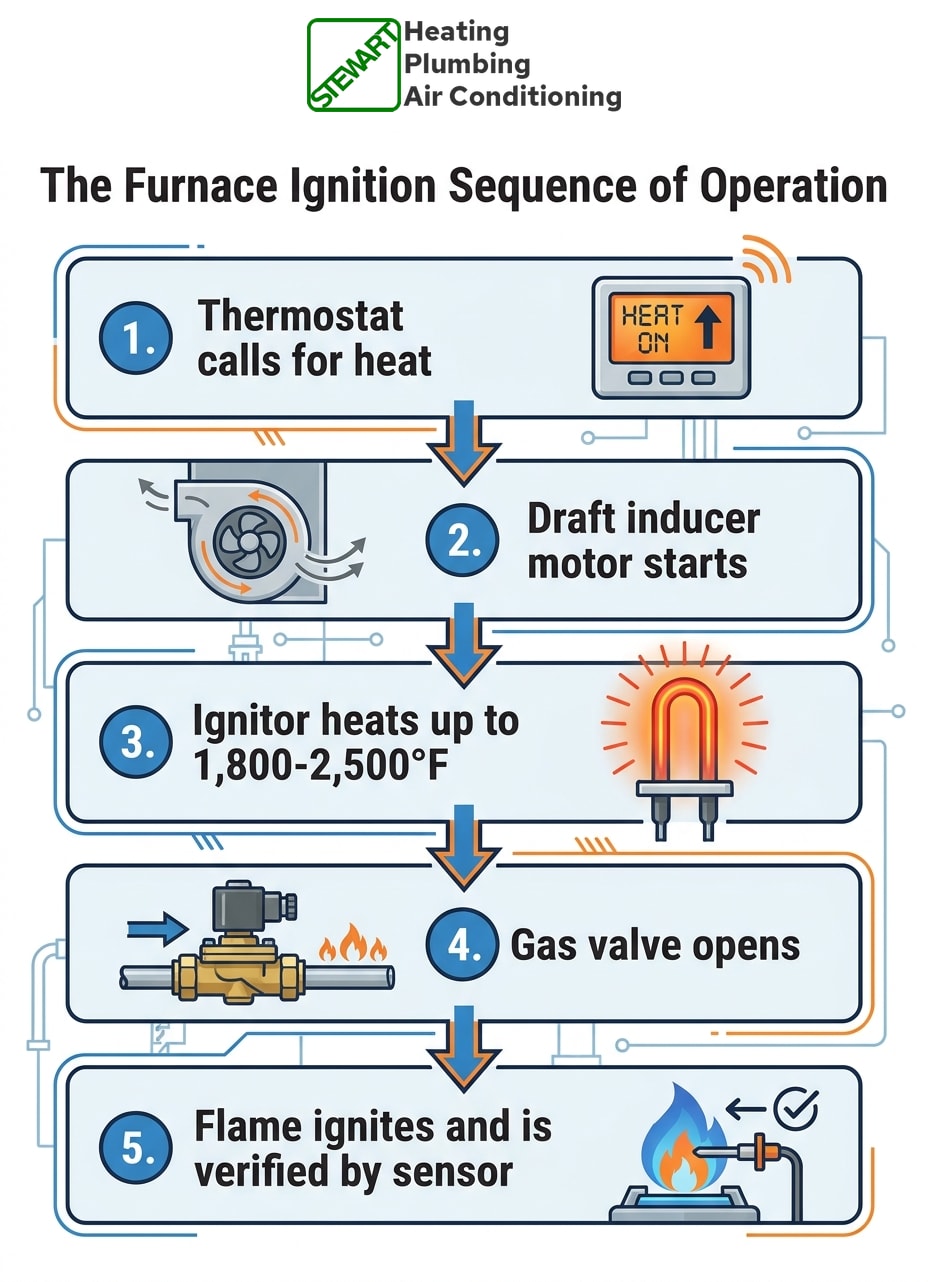
A modern gas furnace does not simply turn on all at once. It follows a strict, step-by-step automated process designed to ensure that every component is working safely before any gas is introduced into the combustion chamber. The ignitor plays a starring role in this sequence, but it relies on several preceding steps to function properly.
Here is exactly where the ignitor fits into the overall process:
1. The Call for Heat: The sequence begins when the temperature in your home drops below the thermostat setting. The thermostat sends a low-voltage signal to the furnace control board.
2. Clearing the Chamber: Before doing anything else, the control board activates the draft inducer motor. This small fan pulls air through the heat exchanger, clearing out any residual, unburned gases from previous cycles and ensuring proper ventilation through the flue.
3. Safety Verification: As the inducer motor runs, a pressure switch verifies that the draft is strong enough to safely vent exhaust outdoors. If the airflow is restricted (by a blocked flue or failing motor), the sequence halts immediately.
4. The Ignitor Warms Up: Once safety switches verify proper venting, the control board sends voltage to the hot surface ignitor. Over the next 10 to 30 seconds, the ignitor heats up, glowing bright orange or yellow as it prepares for combustion.
5. Gas Valve Activation: After the ignitor reaches the correct temperature, the control board opens the gas valve. The gas flows over the glowing ignitor and is instantly ignited.
6. Flame Verification: A separate component called a flame sensor confirms that a strong fire is present. Once confirmed, the main blower motor turns on to distribute warm air through your vents.
Understanding this flow helps clarify why a failure at step four stops the entire process. For a deeper dive into how these components communicate, you can read our guide on the modern gas furnace sequence of operation.
Modern furnaces are heavily engineered to prioritize safety over operation. Manufacturers know that introducing natural gas into a home carries inherent risks, so the system is designed to shut down entirely if anything seems amiss. When a furnace ignitor breaks, it triggers one of the most important safety mechanisms in your HVAC system.
If the control board sends voltage to the ignitor, but the ignitor is cracked or burnt out, it will fail to glow. However, the system's programming still tells the gas valve to open for a brief window—usually about three to seven seconds. During this tiny window, gas flows into the burner area.
Because the ignitor is broken, the gas does not light. This is where the flame sensor steps in. The flame sensor is a small metal rod positioned directly in the path of where the flame should be. It uses a process called flame rectification to detect the presence of fire. If the sensor does not detect a flame within that brief three-to-seven-second window, it sends an emergency halt signal to the control board.
The control board immediately shuts the gas valve to prevent unburned gas from accumulating inside the combustion chamber and leaking into your home. The furnace will usually wait a few minutes to let the inducer motor clear the unburned gas, and then it will try the entire sequence again.
After three or four failed attempts, the furnace goes into a state known as a hard lockout. During a hard lockout, the system disables the heating sequence entirely for safety. The blower motor may run constantly, blowing cold air through your vents, or the system may shut down completely. This lockout is a protective measure, ensuring your home remains safe until a professional can inspect the equipment.
When your heating system fails to start, it can be difficult to know exactly which component is to blame. However, a failing or broken ignitor produces a very specific set of symptoms. By paying attention to what your system is doing—and what it sounds like—you can often identify an ignition failure before a technician even arrives.
Here are the most common signs that your hot surface ignitor has failed:
• The "Click" but No Heat: The most common auditory clue is hearing the draft inducer motor start up, followed by a distinct click from the control board or gas valve, but then... silence. The furnace clicks but no ignition flame is produced, meaning the sequence has stalled.
• No Visible Glow: Most modern furnaces have a small sight glass or peephole on the front panel. If you look through this glass during the startup sequence and do not see a bright orange or yellow glow, the ignitor is not receiving power or has burnt out.
• Cold Air Blowing Constantly: When the system enters a safety lockout due to a failed ignition, the main blower motor often turns on by default to prevent the heat exchanger from overheating. This results in cold air blowing continuously from your vents.
• Short Cycling: You may notice the furnace trying to start, shutting down after a minute, and then trying again repeatedly. This frequent system cycling is a clear sign the control board is attempting to light the gas but failing.
If you are experiencing these symptoms, the safest and fastest route to restoring your comfort is to schedule furnace repair with a qualified technician.
Homeowners are often surprised to learn that a furnace ignitor is considered a wear-and-tear component. Unlike the heavy metal heat exchanger or the robust blower motor, the ignitor is relatively fragile and is not expected to last the entire lifespan of the furnace. On average, standard silicon carbide ignitors have an expected lifespan of roughly 3 to 5 years, depending on the frequency of heating cycles.
The primary reason an ignitor fails is thermal fatigue. Every time your thermostat calls for heat, the ignitor goes from room temperature to over 2,000 degrees Fahrenheit in a matter of seconds, and then cools back down once the burners are lit. This constant, extreme expansion and contraction eventually takes a toll on the ceramic-like material.
Particularly during colder Pittsburg winters, your system may cycle on and off dozens of times a day. This heavy cycling accelerates normal wear. Over time, the repeated thermal shock causes microscopic cracks to form in the silicon carbide. Eventually, one of these micro-cracks widens enough to break the electrical circuit, and the component simply stops working.
Beyond normal thermal fatigue, a few other factors can cause an ignitor to fail prematurely:
• Voltage Spikes: Electrical surges or underlying electrical issues within the HVAC system can send too much voltage to the ignitor, causing it to burn out instantly.
• Improper Handling: If the component was touched or bumped during previous maintenance, its structural integrity may have been compromised, drastically reducing its lifespan.
• Clogged Air Filters: Poor airflow causes the internal temperature of the furnace to rise. This excess ambient heat can degrade the ignitor faster than normal.
Because the causes can range from normal wear to underlying electrical faults, professional furnace repair in Pittsburg, CA is essential to ensure the root problem is addressed, rather than just swapping out a part.
When homeowners look up how a furnace ignitor works and realize it is a relatively small part, the temptation to attempt a DIY repair often follows. However, attempting to replace an ignitor yourself is highly discouraged and can lead to immediate part failure, safety hazards, and wasted money.
First and foremost, the materials used to make hot surface ignitors—particularly silicon carbide—are incredibly fragile. The element is brittle and can easily snap if it is bumped against the metal housing of the burner assembly during installation. It requires a delicate touch and an understanding of the specific spatial clearances inside the combustion chamber.
More importantly, touching the ignitor element with bare skin guarantees its premature failure. Human skin naturally produces oils. If a bare finger brushes against the silicon carbide element, it leaves behind a microscopic layer of oil. When the ignitor is later activated and heats up to 2,000 degrees, that spot of oil creates an insulating layer, causing a localized hot spot. The uneven heating causes the ceramic material to shatter almost instantly upon heating.
Furthermore, a broken ignitor is sometimes a symptom of a larger problem. A professional technician will use a multimeter to verify the incoming voltage. If the control board is sending the wrong voltage, a brand-new ignitor will burn out the moment it is turned on. At Stewart Heating, Plumbing and Air Conditioning, our diagnostic expertise—serving the community since 1974—ensures we test the entire electrical circuit. Accurate diagnosis prevents homeowners from wasting money on parts they don't actually need and ensures the system operates safely.
While all ignitors will eventually wear out naturally due to thermal fatigue, proactive care and regular system maintenance can significantly extend their operational life. The health of your ignitor is closely tied to the overall health of your HVAC system.
One of the most effective ways to protect your heating components is by changing your air filters regularly. A clogged air filter restricts airflow, forcing the system to work harder and run hotter. This can lead to short-cycling—where the furnace turns on and off rapidly. Because the ignitor suffers wear every time it heats up, short-cycling will burn out the component in a fraction of its normal lifespan.
Additionally, routine professional maintenance is critical. During an annual fall tune-up, a qualified technician will do more than just clean the system. They will use specialized tools to measure the electrical resistance of the ignitor. As an ignitor degrades, its electrical resistance changes. By measuring this, a technician can spot micro-cracks and predict a failure before it happens. Replacing a weakening component during routine maintenance prevents emergency no-heat situations on freezing winter nights. Enrolling in an HVAC maintenance plan is the best way to ensure these vital checks are performed every year.
Dealing with a heating system that refuses to start can be stressful, but understanding the mechanics behind the failure brings peace of mind. A failing furnace ignitor is a routine, straightforward fix for an experienced technician. It does not mean your furnace is permanently broken, nor does it typically require a full system replacement.
By recognizing the early symptoms—like a clicking sound with no resulting heat—you can save valuable time and restore your home's comfort much faster. Rather than guessing at the cause of your heating failure or risking damage through DIY attempts, rely on professional assessment. A trained expert will provide a clear, non-jargon explanation of the issue, safely replace the worn component, and ensure your furnace is ready to keep you warm all winter long.
How do I know if my furnace ignitor is bad?
The most obvious sign of a bad ignitor is a furnace that attempts to start but fails to produce warm air. You will typically hear the system click, but if you look through the sight glass, you will not see the bright orange glow of the ignitor heating up. The system will eventually go into a safety lockout and blow cold air.
Why does my furnace click but not ignite?
That clicking sound is usually the control board relay or the gas valve opening to release fuel into the burner. If the furnace clicks but does not ignite, it means the hot surface ignitor or spark ignitor has failed to create the heat necessary to light the gas. The flame sensor then detects the lack of fire and immediately shuts the gas valve for safety.
What causes a furnace ignitor to go bad?
The most common cause is normal thermal fatigue from expanding and contracting at extreme temperatures during every heating cycle. Over time, this causes micro-cracks in the fragile silicon carbide material. Voltage spikes, poor airflow causing excessive internal heat, or accidental touching with bare hands can also cause premature failure.
Can a furnace run without an ignitor?
No, a modern gas furnace cannot run without a functioning ignitor. The ignitor is the sole component responsible for safely lighting the natural gas. If it fails, the system's safety sensors will detect the unlit gas and completely lock down the furnace to prevent a hazardous gas leak in your home.
How long does a hot surface ignitor last?
A standard hot surface ignitor typically lasts between 3 to 5 years. Its lifespan heavily depends on how often your furnace cycles on and off; homes in colder climates that require more frequent heating will see their ignitors wear out faster than those in milder regions.
Is it safe to touch a furnace ignitor?
No, it is never safe to touch the heating element of a furnace ignitor with bare hands. The natural oils from your skin will transfer to the ceramic material, creating a localized hot spot that will cause the ignitor to shatter the next time it heats up to operating temperature.

Very professional and complete. I would recommend Stewart to anyone. Highest quality of workmanship and clean installation.
Stewart Heating Plumbing Air Conditioning just did some work for us for the first time. They did an installation at my home and it turned out well. I thought the price was fair and I definitely would use them again. The technicians were very friendly and knowledgeable about their work. I highly recommend Stewart Heating Plumbing Air Conditioning and already told friends to use them.
We have been using Stewart Heating Plumbing Air Conditioning since 1995. They put the original heating and air unit in the house, and we have just stayed with them. They are dependable and honest people, and they have done a good job for us every time that we have used them!
They came and did an inspection and are coming tomorrow to do the repair.
They replaced a regulator the first time, and then the water heater vent had to be replaced. They did great work.
The gentleman that serviced us was helpful, insightful, and knew what he was talking about. Overall, it was a great experience.