

Recent Blogs
Stay updated with our latest blog posts.

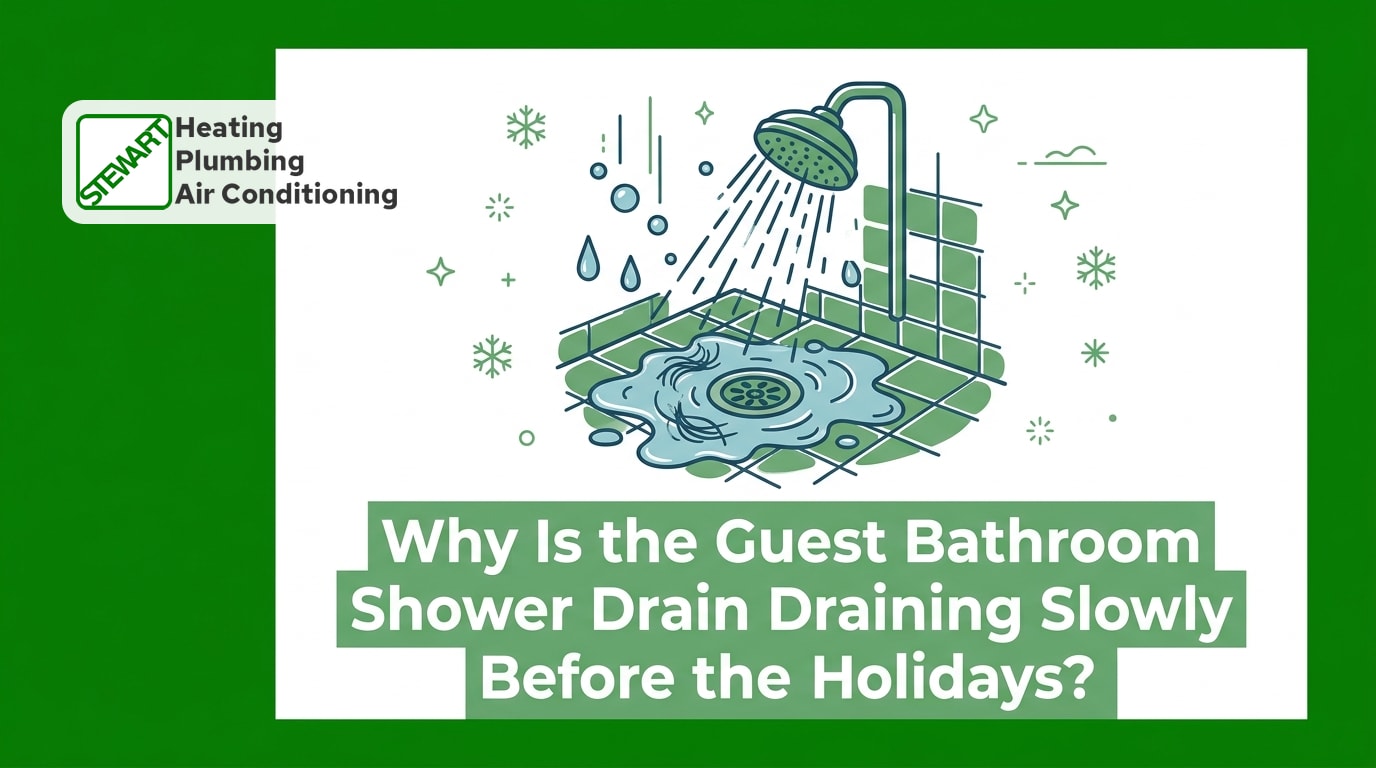
At Stewart Heating, Plumbing and Air Conditioning, we know that late November brings cooler weather to Contra Costa County, which means your arriving holiday guests are going to want longer, hotter showers. If you are noticing your guest bathroom shower drain draining slowly right as family is about to arrive, you are not alone. It is a highly stressful scenario we hear about from local homeowners every holiday season: you spend days preparing the house, washing the sheets, and stocking the guest bathroom, only to discover that the shower pan fills up with standing water after just a few minutes of use.
Before the holiday rush begins, ensuring your system is ready with professional plumbing services can save you from a major hosting headache.
The dormant plumbing phenomenon is a common pattern our plumbing team sees during Thanksgiving guest preparation. A guest bathroom often sits completely unused for months at a time. When a plumbing fixture is dormant, hidden issues begin to develop deep within the pipes. A shower that seemed to drain perfectly fine during a quick five-minute rinse in July can suddenly back up when subjected to the heavy, continuous flow of back-to-back holiday guest showers. Understanding whether this is a localized blockage or a deeper issue is the first step in protecting your home and ensuring your guests remain comfortable.
Most homeowners assume that if a bathroom is not being used, the plumbing remains in pristine condition. The reality is quite the opposite. Plumbing systems are designed for regular, active water flow. When water stops flowing through a drain for weeks or months, the environment inside the pipe changes drastically. Moisture evaporates, residual organic matter solidifies, and the overall capacity of the drain pipe begins to shrink. By the time November rolls around, that dormant pipe is completely unprepared for the sudden shock of daily use.
If you are searching for answers as to why a guest bathroom shower drain draining slowly happens seemingly out of nowhere, the answer our technicians usually find lies in the drying process. A lack of running water allows everyday shower remnants to transform from a soft sludge into a stubborn, solid blockage.
The primary causes of slow draining in rarely used showers include:
• Hardened soap scum: Traditional bar soaps and body washes contain animal fats and synthetic lipids. When left without regular water flow, these fats react with hard water minerals and dry out, forming a cement-like crust along the interior walls of the pipe.
• Dried and solidified hair clogs: Hair naturally sheds during showering and often gets caught in the drain trap. In an active shower, this hair remains wet and somewhat pliable. In a dormant shower, the hair dries out, tangles tightly, and binds with the hardened soap scum to form a dense plug.
• Biofilm crystallization: The natural bacteria and organic matter that line drain pipes (biofilm) will dry and crystallize when deprived of water, further narrowing the internal diameter of the pipe.
• Sudden water volume increases: A partially blocked pipe might still allow a trickle of water to pass through. However, when guests arrive, the sudden, high-volume flow overwhelms the narrowed pathway, causing water to immediately back up into the shower pan.
To understand why these clogs are so stubborn, it helps to visualize the inside of the pipe. In the many Pittsburgh, CA homes our team has serviced over the decades, we've noticed that in an actively used master bathroom, hot water constantly flushes the system, keeping soap residues relatively soft and moving them down the line. In a guest bathroom, the last shower taken months ago left behind a thin layer of soap and hair. Over time, all the moisture in that layer evaporated. What remains is not a soft clog that can be easily washed away, but a rigid obstruction securely adhered to the pipe walls. When water is finally reintroduced, it simply hits this hardened wall and pools backward.
The sheer volume of water produced by visiting guests is often vastly underestimated. According to the EPA's WaterSense data, an average showerhead uses approximately 2.1 gallons of water per minute. While that might not sound like much for a single, quick rinse, the math changes dramatically when you have a house full of holiday guests in Pittsburgh CA.
Consider a typical holiday morning: if three guests each take a 15-minute shower back-to-back, that single guest bathroom drain is suddenly forced to handle nearly 95 gallons of water in under an hour. This is an immense amount of pressure for a plumbing system that has been completely dormant.
If your drain is operating at only 20% capacity due to hardened soap scum and dried hair, it might successfully drain a quick two-minute test run while you are cleaning. But under the continuous strain of a 15-minute shower, that 20% capacity is quickly overwhelmed. The water pools rapidly, leaving your guests standing ankle-deep in soapy, unpleasant water. Scheduling a pre-Thanksgiving drain inspection ensures that your pipes are operating at full capacity before this heavy load hits.
When a drain functions normally, gravity and a clear pipe diameter allow water to flow away just as fast as the showerhead produces it. When the pipe is narrowed by dried debris, the flow rate is restricted. If the showerhead is pouring 2.1 gallons per minute, but the restricted drain can only process 1 gallon per minute, you are accumulating over a gallon of standing water in the shower pan every sixty seconds. Within ten minutes, the shower pan is on the verge of overflowing onto the bathroom floor, creating a slip hazard and potential water damage to your subflooring.

A slow drain is not the only issue that plagues dormant bathrooms during Thanksgiving guest preparation. Many homeowners also notice a distinct, unpleasant sewage odor wafting from the guest bathroom, especially when the shower is first turned on. This is directly related to the dormancy effect and the function of the plumbing P-trap.
The Problem: A foul, rotten-egg smell fills the bathroom, making the space unwelcoming for guests.
The Cause: Every drain in your home features a curved section of pipe called a P-trap. The P-trap is designed to hold a small amount of water at all times, creating a liquid seal that prevents hazardous sewer gases from rising out of the municipal sewer line and into your home. When a shower is not used for 2 to 4 weeks, that water barrier simply evaporates. Once the trap is dry, sewer gases have a direct, uninhibited pathway into your bathroom.
The Solution: The simplest preventative step we recommend is to walk through your home and run water in every unused sink, shower, and tub for about thirty seconds every couple of weeks. This replenishes the water seal in the P-trap.
During the cooler late fall and winter months, we turn on our indoor heating systems. Furnaces and heat pumps naturally lower the indoor humidity levels of a home, creating a drier indoor climate. This dry air accelerates the evaporation process in your unused plumbing fixtures. A P-trap that might take a month to dry out in the humid summer can evaporate in just a couple of weeks during the heating season, making odor issues much more prevalent right around the holidays.
When our customers discover a guest bathroom shower drain draining slowly, the critical decision point we help them navigate is determining the severity of the issue. Is this a simple hair clog right at the surface, or is it a symptom of a much deeper problem within your home's main sewer line or venting system? Sudden holiday usage has a way of exposing systemic issues that single, sporadic uses never reveal.
Here is how our plumbers tell the difference between a localized clog and a deeper system failure:
• Where water pools — Localized Shower Clog: Water backs up only in the shower pan itself. — Deeper Main Line / Vent Issue: Water backs up into the shower when the toilet is flushed or the sink runs.
• Audible signs — Localized Shower Clog: No unusual sounds, just silent, slow draining. — Deeper Main Line / Vent Issue: Gurgling or bubbling sounds coming from the toilet or sink when the shower is draining.
• Number of affected fixtures — Localized Shower Clog: Only the guest shower is draining slowly; all other drains work perfectly. — Deeper Main Line / Vent Issue: Multiple drains across the house are sluggish, or the washing machine causes the shower to back up.
• Odor presence — Localized Shower Clog: Smells like old soap or mildew directly at the drain cover. — Deeper Main Line / Vent Issue: Strong sewage odors permeating multiple rooms, even after P-traps are filled.
Your plumbing system relies on vent pipes that run through your roof. These vents allow air to enter the pipes, equalizing pressure so water can flow smoothly downhill. If a vent pipe is blocked by leaves, bird nests, or debris, the plumbing system essentially "chokes." During a quick, single shower, you might not notice poor venting. But when multiple guests are showering, flushing toilets, and running the bathroom sink simultaneously, a blocked vent will cause a vacuum effect, pulling water out of P-traps and causing widespread slow drainage.
If you live in Pittsburgh CA and are preparing for an influx of visitors, our team recommends a few safe, non-destructive steps you can take to assess and improve your guest bathroom's readiness. However, it is vital to avoid aggressive tactics that could permanently damage your pipes right before a major holiday.
Here is a checklist of safe actions you can take:
• Clear visible surface debris: Put on a pair of rubber gloves, remove the shower drain cover (usually held by a single screw or simply snapped into place), and manually pull out any visible hair or debris resting just below the surface.
• Use a simple plastic hair snare: A flexible, barbed plastic tool (often called a zip-it) can be gently inserted a few inches into the drain to hook and pull up shallow hair clogs. Do not force it if it meets heavy resistance.
• Flush with hot water: Once surface debris is cleared, pour a large pot of very hot (not boiling) water down the drain to help soften residual soap scum.
• Check for current plumbing specials: If the drain remains sluggish after surface cleaning, the blockage is deeper in the line and requires professional tools to clear safely.
It is tempting to pour a bottle of liquid drain cleaner down a slow shower drain, but in our decades of plumbing experience, this is one of the worst things you can do for dormant plumbing. Chemical cleaners rely on a highly caustic, exothermic (heat-producing) chemical reaction to burn through clogs. Because dormant clogs are hardened and securely attached to the pipe walls, the chemical often sits trapped against the pipe rather than washing away. This intense, localized heat can warp PVC pipes and cause severe corrosion in older metal pipes, turning a simple clog into a catastrophic pipe failure right as your guests arrive. Furthermore, deep snaking or disassembling pipes should always be avoided by homeowners, as improper technique risks permanent damage to the plumbing infrastructure.
Sudden volume from guests overwhelms a pipe that was already partially blocked by hardened soap scum and dried hair. When a shower sits unused, the residual moisture evaporates, causing everyday shower debris to solidify and narrow the pipe's interior diameter. A quick rinse might pass through, but the continuous heavy flow of a full shower quickly backs up against this hardened restriction.
No, continuous water flow over hardened clogs often compacts the blockage further rather than washing it away. Once a clog has dried and adhered to the pipe walls during a period of dormancy, standard water pressure is not enough to break it apart. Ignoring a slow drain usually leads to a complete blockage and eventual overflow.
Remove surface blockages safely, avoid chemical cleaners, and contact a professional if standing water persists to prevent overflow. You can manually remove hair trapped right at the drain cover, but if the water remains pooled, the obstruction is located deeper in the P-trap or the main branch line, requiring professional clearing tools to resolve safely.
The P-trap has likely dried out from lack of use, allowing sewer gases to escape into the bathroom. The P-trap requires a small amount of standing water to maintain a seal against the municipal sewer line. Running the shower for a minute or two will usually refill the trap and stop the odors, though lingering smells may indicate a venting issue.
Test all guest bathroom fixtures at least two weeks prior to arrival to allow time for professional clearing if needed. Run the shower at full pressure for at least ten minutes to simulate actual guest usage. If the water begins to pool or you hear gurgling from the nearby toilet, you have ample time to schedule a professional inspection without paying emergency holiday rates.
Discovering a slow drain during Thanksgiving guest preparation is frustrating, but it is a highly solvable problem that shouldn't ruin your holiday hosting experience. By understanding the dormancy effect and recognizing the signs of a struggling plumbing system, you can address the issue proactively. Serving our local community since 1974, the team at Stewart Heating, Plumbing and Air Conditioning knows that true peace of mind comes from knowing your home is fully prepared to handle the demands of visiting family.
Don't wait until your guests are standing in pooling water; request plumbing service today to ensure a smooth, stress-free holiday season.

Very professional and complete. I would recommend Stewart to anyone. Highest quality of workmanship and clean installation.
Stewart Heating Plumbing Air Conditioning just did some work for us for the first time. They did an installation at my home and it turned out well. I thought the price was fair and I definitely would use them again. The technicians were very friendly and knowledgeable about their work. I highly recommend Stewart Heating Plumbing Air Conditioning and already told friends to use them.
We have been using Stewart Heating Plumbing Air Conditioning since 1995. They put the original heating and air unit in the house, and we have just stayed with them. They are dependable and honest people, and they have done a good job for us every time that we have used them!
They came and did an inspection and are coming tomorrow to do the repair.
They replaced a regulator the first time, and then the water heater vent had to be replaced. They did great work.
The gentleman that serviced us was helpful, insightful, and knew what he was talking about. Overall, it was a great experience.