

Recent Blogs
Stay updated with our latest blog posts.

As late fall and pre-winter weather arrives here in Pittsburgh, CA, you may be wondering what is a blower door test and whether it can finally solve the mystery of your chilly living room. When November temperatures drop, our team at Stewart Heating, Plumbing and Air Conditioning frequently hears from homeowners frustrated by drafty rooms, uneven heating, and rising energy bills. You turn up the thermostat, but certain areas of your house still feel like an icebox.
Guessing where your home is leaking air usually leads to wasted money on ineffective weatherization tape or the wrong type of insulation. Instead of relying on trial and error, a diagnostic approach gives you concrete data. A blower door test acts as a science-backed roadmap, showing you exactly where your home's thermal envelope is failing. To take the guesswork out of your winter preparation, professional home energy audits are the most effective first step. When you schedule an energy audit, this specialized test provides the clarity you need to make smart, lasting improvements.
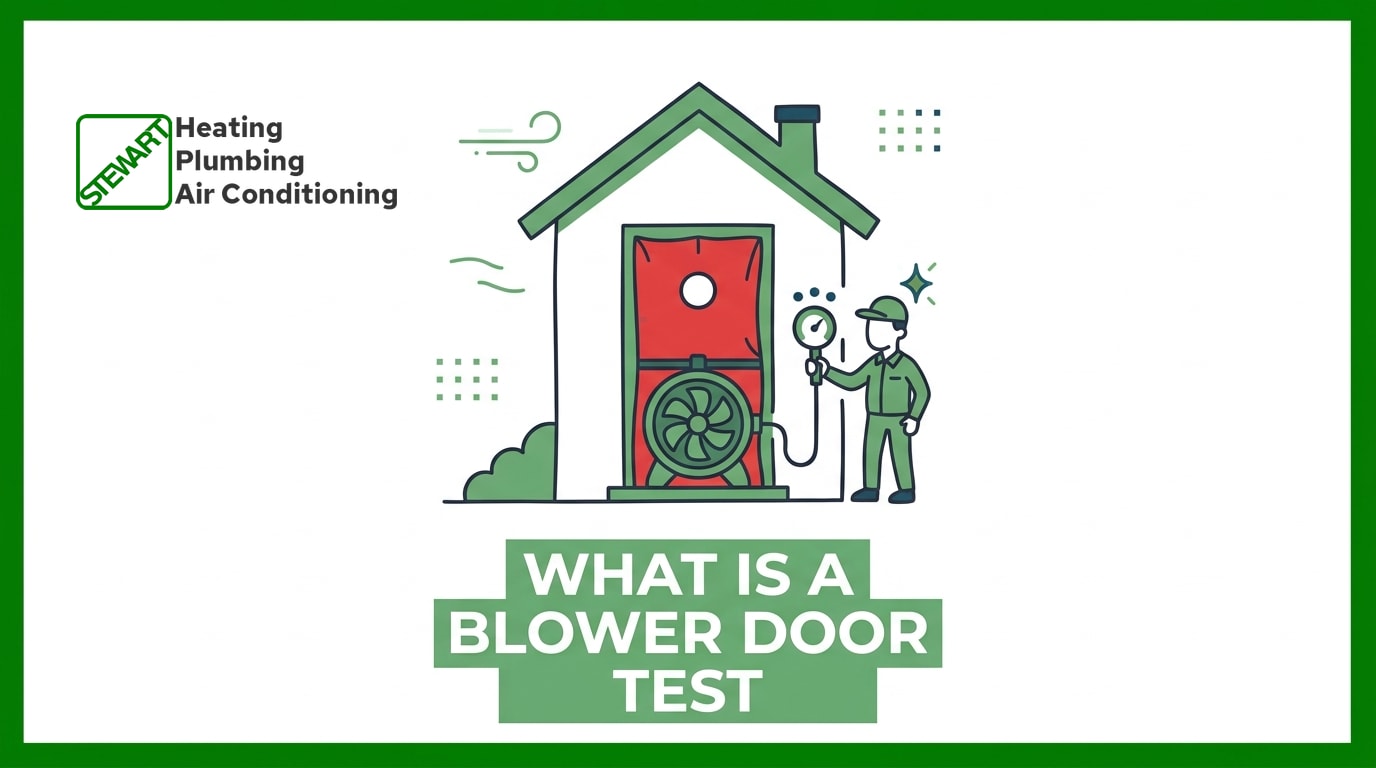
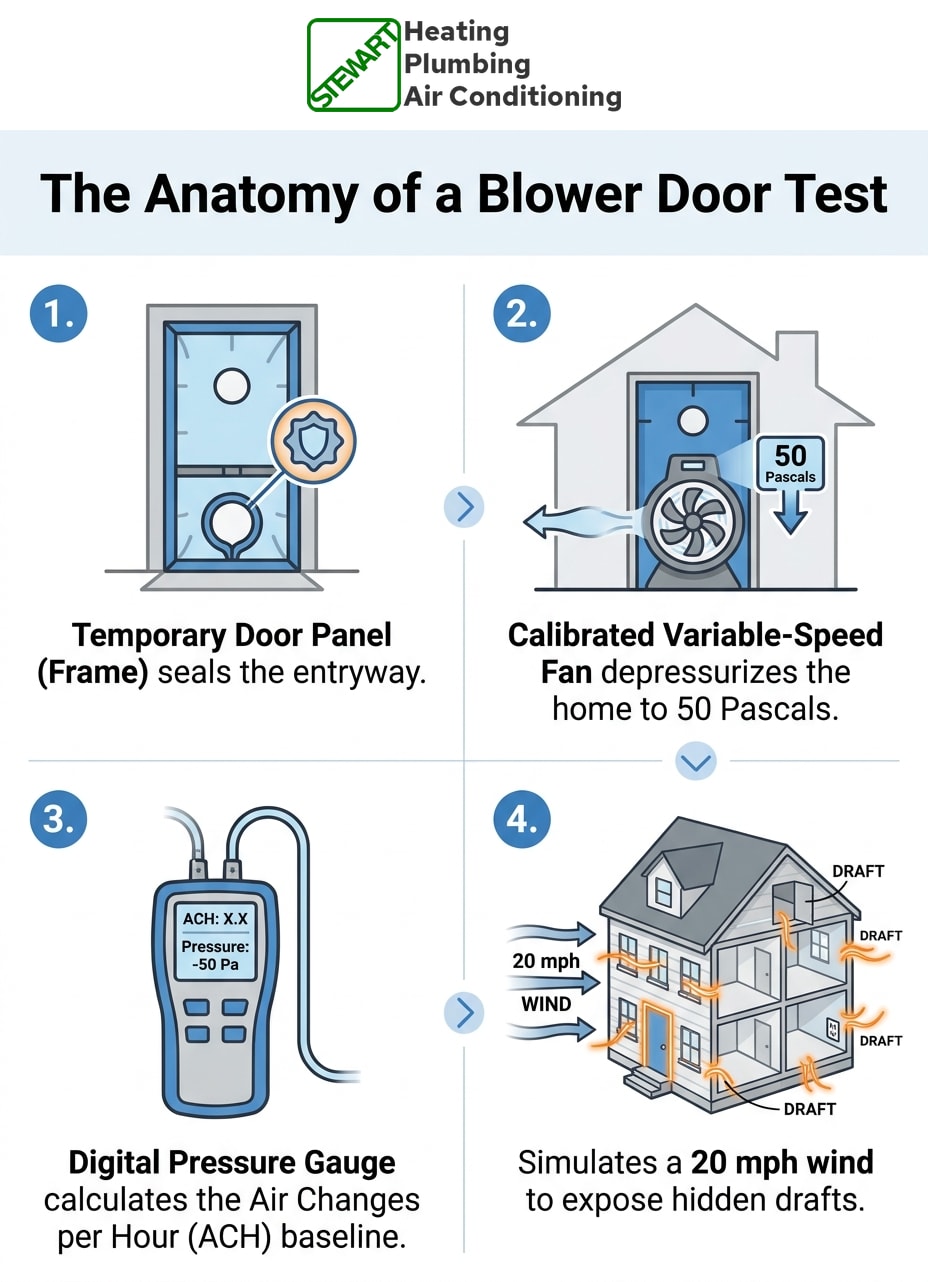
At its core, a blower door test is a specialized diagnostic procedure used to measure the airtightness of a building. Rather than just guessing where cold air might be sneaking in, technicians use calibrated instruments to quantify exactly how much air is entering or escaping your home. The equipment looks highly technical, but it breaks down into three primary components that work seamlessly together.
The three main components of a blower door test include:
• A temporary door panel (frame): This adjustable, airtight canvas curtain and metal frame fits snugly into one of your exterior door frames, sealing the entryway completely.
• A calibrated variable-speed fan: Mounted inside the temporary panel, this powerful fan is responsible for pulling air out of your house at a highly controlled rate.
• A digital pressure gauge (manometer): This sensitive device connects to the fan and measures the pressure differences between the inside of your home and the outdoors, calculating the exact rate of air leakage.
In our years of inspecting East Bay homes, we've found that without this specific combination of tools, finding air leaks relies entirely on human senses, which are incredibly unreliable. The digital pressure gauge communicates with the fan to maintain a steady, standardized pressure. This allows the technician to capture an accurate snapshot of your home's overall airtightness, giving you a clear starting point for any future weatherization projects.
To understand the value of the test, it helps to understand the straightforward science behind it. Before turning on the equipment, the technician must properly prepare your home's envelope. This involves closing all exterior doors and windows, opening all interior doors, and ensuring that any combustion appliances (like gas water heaters or furnaces) are temporarily turned off so they do not backdraft.
Once the house is prepped, the depressurization process begins. The calibrated fan kicks on and starts pulling air out of the house, exhausting it into the yard. As air leaves the building, the indoor air pressure drops. Because nature always seeks balance, the higher-pressure outdoor air immediately tries to force its way back inside through every unsealed crack, gap, and hidden hole in your home's structure.
A standard blower door test depressurizes the home to a specific metric: 50 Pascals (often written as ACH50). But what does that actually mean for your house?
• Natural Winter Weather — Wind Speed Equivalent: Variable (gusts and lulls) — Pressure Consistency: Changes constantly based on weather patterns — Leak Visibility: Hard to pinpoint; drafts come and go
• Depressurization Test — Wind Speed Equivalent: Simulated 20 mph wind — Pressure Consistency: Constant, steady 50 Pascals of pressure — Leak Visibility: Highly noticeable; air rushes in steadily
By bringing the house to exactly 50 Pascals of negative pressure, the fan effectively simulates a 20 mph wind blowing against all sides of your building simultaneously. Under these controlled conditions, outside air is forced through unsealed cracks at a steady, measurable rate, allowing the technician to locate even the smallest structural bypasses.
The most important piece of data you will receive from this diagnostic procedure is your Air Changes per Hour (ACH) baseline. This metric represents the number of times the total volume of air inside your house is completely replaced by outside air in a single hour under the test conditions.
As the fan runs and maintains the 50 Pascal pressure difference, the digital pressure gauge calculates the airflow required to keep the pressure steady. If your fan has to work incredibly hard to keep the house depressurized, it means a massive amount of outside air is leaking back in. A high ACH baseline indicates a "leaky" house, while a lower number indicates a tighter, more energy-efficient building envelope.
Establishing this Air Changes per Hour (ACH) baseline is a critical first step before moving into deeper insulation upgrades or buying a new heating system. We always tell our Pittsburgh customers: if you install an expensive, high-efficiency furnace in a house with a terrible ACH rating, you are essentially paying to heat the neighborhood. The warm air will simply escape through the leaks.
The EPA estimates that homeowners can save an average of 15% on heating and cooling costs simply by addressing the leaks identified during these diagnostics. By knowing your exact starting point, you can measure the success of your weatherization efforts. Once the air sealing is complete, a follow-up test should show a significantly lower ACH number, proving that your home is now holding onto the air you pay to condition.
While the digital gauge calculates the overall leakage rate, the depressurization process also serves a highly practical, physical purpose. As the home remains under negative pressure, technicians walk through the rooms to physically locate the source of the drafts. Because outside air is rushing in to replace the air being blown out the front door, you can actually feel the leaks with your bare hands.
This is especially critical in the East Bay area. During late fall, distinct coastal breezes actively push chilly air against your home's exterior. In our experience servicing local neighborhoods, the temperature differential between your warm living room and the cold November air outside exacerbates these wind-driven infiltrations. The blower door test replicates this exact coastal weather pattern, exposing vulnerabilities you might never notice on a calm day.
Common hidden leak locations uncovered during the test include:
• Baseboards and flooring transitions: Where the walls meet the foundation or subfloor.
• Attic hatches and pull-down stairs: A massive source of heat loss as warm air rises.
• Electrical outlets and light switches: Especially those located on exterior-facing walls.
• Recessed lighting fixtures: Which often penetrate directly into unconditioned attic spaces.
• Window and door frames: Where old caulking or weatherstripping has degraded.
It is also common for our technicians to discover that your ductwork is contributing to the pressure imbalance and air loss. If your ducts run through an unconditioned attic or crawl space, leaks in the metal can pull cold air into your living spaces. If the blower door test suggests duct issues, following up with a dedicated duct leakage test special can isolate and resolve those specific HVAC inefficiencies.
The accuracy of an ACH baseline relies entirely on the thoroughness and experience of the technician performing the test. Setting up the door frame, calibrating the gauge, and preparing the house might seem straightforward, but interpreting the data requires deep building science expertise.
There is a massive difference between a meticulous, precision-driven diagnostic and a rushed, generalized inspection. A hasty technician might fail to properly seal a fireplace damper or forget to open an interior basement door, completely skewing the final ACH reading. If the data is wrong, the resulting recommendations for your home will be wrong, too.
Choosing an established professional ensures the resulting data is reliable enough to base major home improvement decisions on. As a trusted, family-owned company serving the Pittsburgh community since 1974, our team at Stewart Heating, Plumbing and Air Conditioning understands that precision and thoroughness are non-negotiable. Our legacy is built on doing the job right the first time. Our experienced technicians know exactly how a home's envelope interacts with its HVAC system, ensuring that when we pinpoint a leak, we also understand how fixing it will impact your overall indoor air quality and comfort.
It is important to remember that a blower door test is not the end goal—it is the roadmap. The test itself does not fix your drafts; it provides the exact data needed to direct precise, highly effective repairs. Once the hidden leaks are mapped out and the ACH baseline is established, the real work of improving your home begins.
This diagnostic data directs targeted air sealing efforts using specialized caulking, expanding foam, and weatherstripping. It also highlights where insulation is failing in your attic, floors, and crawl spaces. By addressing the specific weaknesses found during the test, you stop wasting money on generalized fixes that don't solve the root problem. Making these data-backed home energy efficiency upgrades transforms a drafty, uncomfortable house into a tightly sealed, highly efficient environment.
Furthermore, taking a documented, professional approach to air sealing and insulation can often yield financial benefits beyond just lower monthly utility bills. Making verified improvements to your building's envelope can sometimes qualify homeowners for generic utility incentives or federal tax credits designed to promote energy conservation. If you are curious about offsetting the cost of these upgrades, learning how to apply for energy rebates in California is a great next step after your diagnostic testing is complete. (Always verify current programs and eligibility with your local utility provider or a qualified tax professional).
A standard blower door test typically takes 1 to 2 hours depending on the size, age, and complexity of the home. This timeframe includes the initial walkthrough, setting up the equipment, prepping the house, and the actual depressurization test. Once the fan is running, the technician will also spend time walking through the rooms to identify specific leaks.
By lowering the indoor air pressure, the test forces higher-pressure outside air to enter the home through unsealed cracks and gaps. Technicians can then physically feel the drafts rushing in around baseboards, windows, and attic hatches. In some cases, they may also use non-toxic smoke pencils to visually pinpoint the exact locations of subtle air movement.
Yes, running this diagnostic is highly recommended because it eliminates the costly guesswork of winterizing your home. It identifies exactly where a building is losing heat, allowing for targeted, cost-effective air sealing repairs. Catching and fixing these leaks before the cold weather sets in prevents heating bills from spiking unnecessarily.
No, this procedure requires specialized, calibrated equipment and professional building science training. Accurate interpretation of the ACH data must be done by a licensed professional to ensure the results are valid. Furthermore, improperly depressurizing a home can cause combustion appliances to backdraft dangerous gases, making professional oversight critical for safety.
No, the test is entirely non-destructive and safe for your property. The pressure changes created by the calibrated fan are mild—equivalent to a 20 mph wind—and safely simulate natural weather conditions. No walls are opened, and the temporary door frame uses padding to ensure your existing entryway remains completely unharmed.
Understanding what is a blower door test is the first step toward reclaiming your comfort this winter. A clear, step-by-step breakdown of your home's airtightness is the absolute best way to inform targeted, effective energy-efficiency upgrades. Identifying and sealing hidden leaks early prevents uneven heating, stops cold drafts in their tracks, and ensures your furnace isn't working overtime to heat the outdoors.
Take a proactive approach to your home's comfort this season. Stop guessing where the cold air is coming from, and let the data show you exactly how to fix it. If you are ready to establish your home's baseline and eliminate drafts, let our experienced team at Stewart Heating, Plumbing and Air Conditioning help. Schedule an energy audit today and get a clear, step-by-step breakdown of what happens during the test, how it identifies hidden leaks, and how it informs your next steps.

Very professional and complete. I would recommend Stewart to anyone. Highest quality of workmanship and clean installation.
Stewart Heating Plumbing Air Conditioning just did some work for us for the first time. They did an installation at my home and it turned out well. I thought the price was fair and I definitely would use them again. The technicians were very friendly and knowledgeable about their work. I highly recommend Stewart Heating Plumbing Air Conditioning and already told friends to use them.
We have been using Stewart Heating Plumbing Air Conditioning since 1995. They put the original heating and air unit in the house, and we have just stayed with them. They are dependable and honest people, and they have done a good job for us every time that we have used them!
They came and did an inspection and are coming tomorrow to do the repair.
They replaced a regulator the first time, and then the water heater vent had to be replaced. They did great work.
The gentleman that serviced us was helpful, insightful, and knew what he was talking about. Overall, it was a great experience.