

Recent Blogs
Stay updated with our latest blog posts.

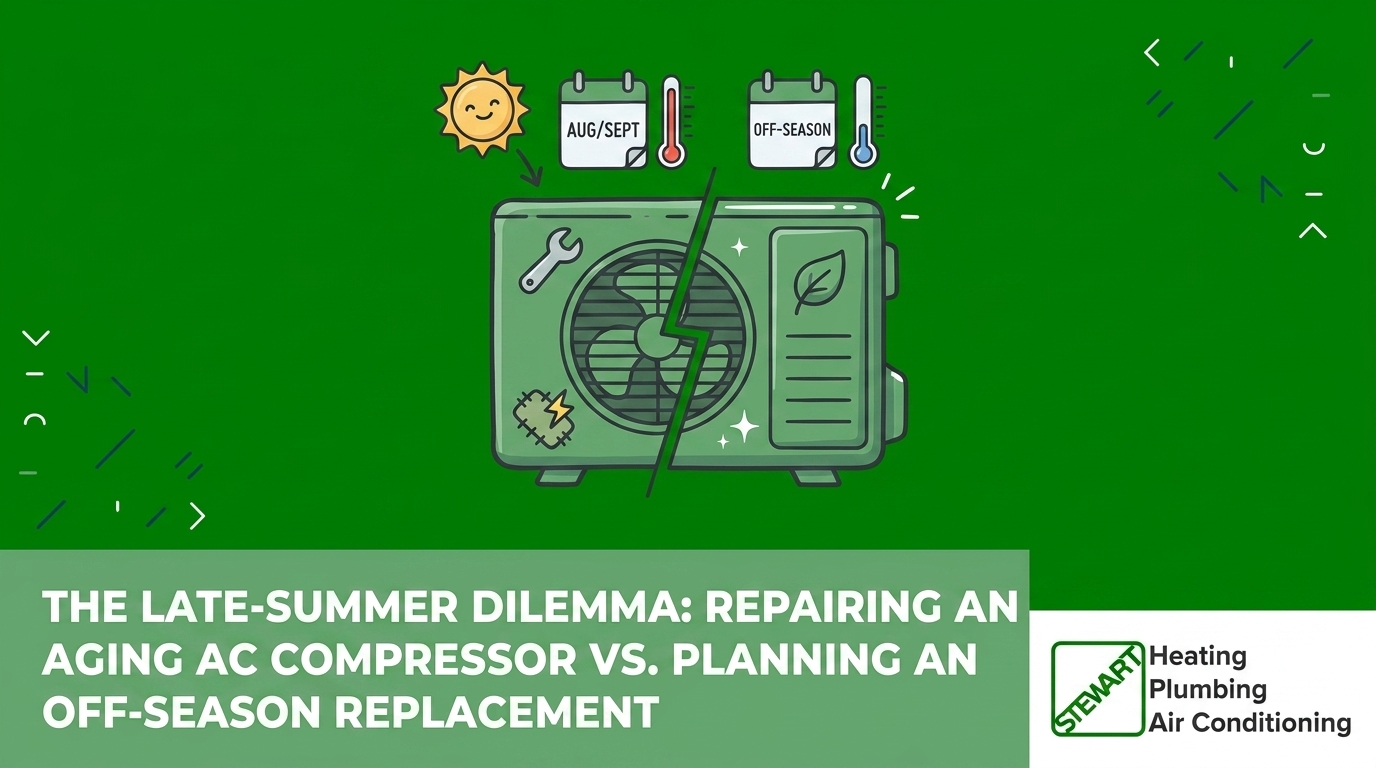
August end-of-season cooling demands are relentless, and if you are currently weighing the pros and cons of repairing an aging AC compressor vs planning an off-season replacement, you know exactly how stressful a struggling system can be. In our decades of serving local homeowners, we've seen firsthand that late summer is the worst possible time for your air conditioning to falter. After months of running continuously to combat the heat, older equipment reaches its absolute limit. The intense stress placed on aging components often culminates in a sudden, catastrophic breakdown exactly when you need your home to remain comfortable.
When you hear a strange grinding noise from your outdoor unit or notice the vents blowing warm air on a scorching afternoon, panic is a natural reaction. The immediate instinct is to find the fastest possible fix to restore comfort. However, rushing into a major repair on an older system can sometimes lead to more frustration down the line. You need a clear decision framework to determine if attempting a short-term patch makes sense, or if planning a strategic, full-system upgrade is the wiser investment.
To help you navigate this high-stakes decision, our team provides comprehensive air conditioning services designed to evaluate your equipment honestly and outline the best path forward for your home.
Extreme afternoon temperatures do more than just make your home uncomfortable; they maximize equipment runtime and place immense physical strain on every moving part inside your air conditioner. In areas like Pittsburg, CA, our team frequently sees intense afternoon heat spikes in late summer push aging and compromised compressors to their absolute breaking point. When a system is under maximum load, quick fixes often fail to address the root cause of the strain.
Prolonged runtime: When a failing compressor is simply patched or limped along, it must work twice as hard to achieve the same cooling output. This prolonged runtime forces the blower motor, capacitors, and contactors to operate outside their optimal design parameters.
Domino effect on aging parts: A pattern we see often in the field is that patching a failing compressor leads to secondary component failures in older systems. The compressor is the heart of the air conditioner. If it is drawing too much electrical current because it is failing mechanically, that excess electrical draw can fry surrounding components. You might pay for a temporary patch today, only to face another breakdown next week.
Total breakdown risks: The sheer discomfort of a total breakdown occurring during peak heat cannot be overstated. When a band-aid repair gives out during an August heatwave, your home's interior temperature can rise rapidly, posing a physical danger to vulnerable family members and pets.
Scheduling emergencies: Relying on a compromised system means living with the constant anxiety that it will fail completely. When that inevitable failure happens during a heat spike, you are forced into an emergency replacement scenario. If you want to avoid this panic and explore long-term solutions, reviewing a comprehensive guide on AC installation in Pittsburg can help you understand what a proper replacement entails.
To fully understand why repairing an older compressor might be a dead end financially and practically, you have to look at the refrigerant inside the system. The type of refrigerant your air conditioner uses plays a massive role in the viability of any major repair.
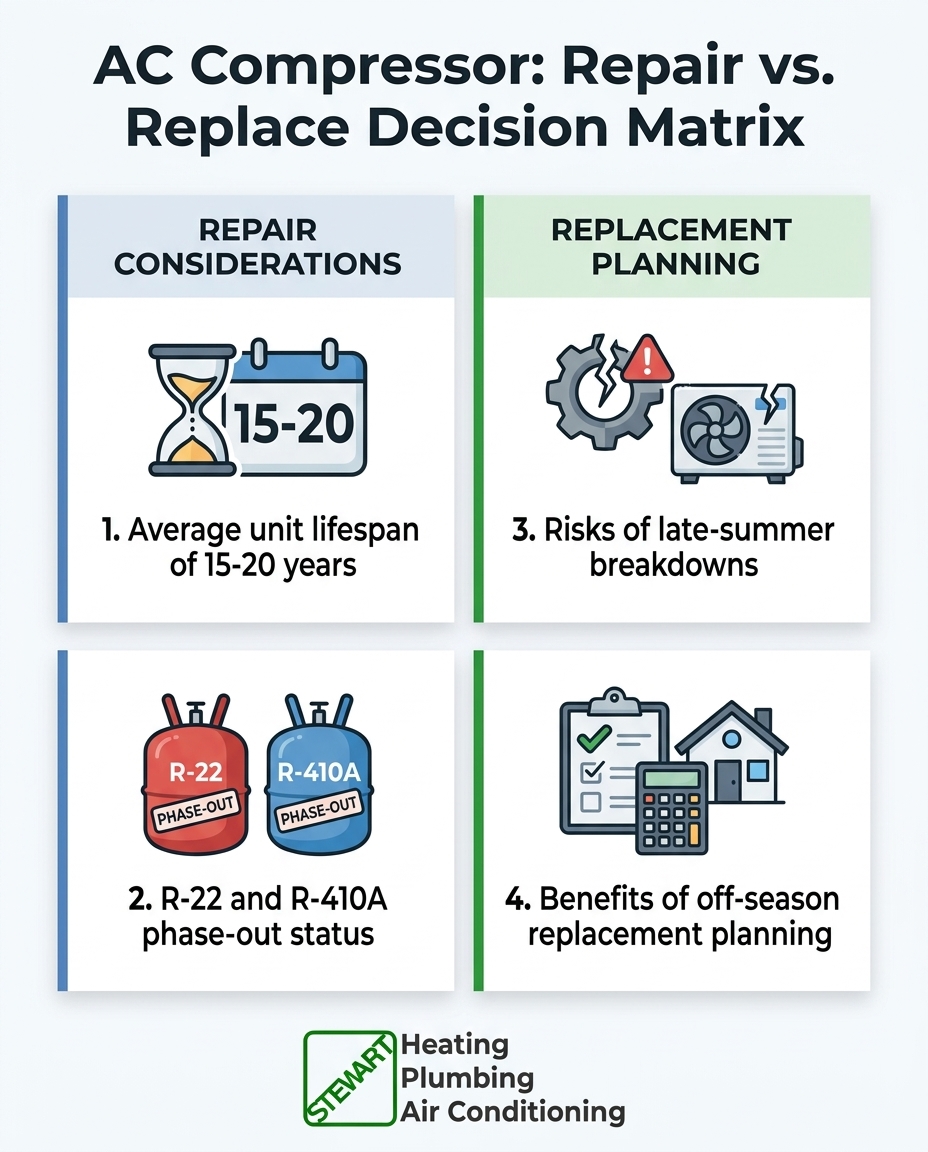
When our technicians are called out to service an air conditioner installed more than a decade ago, we frequently find it relies on R-22 refrigerant. The environmental regulations surrounding this chemical have drastically changed the HVAC landscape. The complete regulatory phase-out of R-22 refrigerant makes older systems nearly obsolete. Because it is no longer produced or imported in the United States, any repair that requires recharging the system—which is often necessary when replacing a compressor—becomes incredibly impractical. Sourcing reclaimed R-22 is difficult, making the process highly inefficient for an aging unit.
Even if your system uses the newer R-410A refrigerant, the industry is currently undergoing another major shift. The ongoing AIM Act phase-down of R-410A refrigerant is currently impacting repairability across the country. As production of R-410A decreases to make way for the next generation of environmentally friendly refrigerants, the logistics of maintaining older systems become more complex.
These regulations make recharging an old, repaired compressor highly impractical for the long term. When you replace a compressor, you are investing heavily in a system that relies on a phasing-out chemical. If another component springs a leak next summer, you will face the exact same hurdles all over again. For a deeper dive into how these industry shifts affect your choices, reading a detailed HVAC repair vs replace guide can provide valuable technical context.
If you are facing August end-of-season cooling challenges, your immediate goal is likely just getting through the next few weeks of hot weather. Giving your system a chance to survive until cooler weather arrives requires identifying the warning signs of imminent catastrophic failure versus a manageable, slow decline.
Here is what our licensed professionals at Stewart Heating and Air look for when assessing a struggling air conditioner:
• Hard starting and electrical strain: If the compressor shakes violently or dims the lights in your home when it kicks on, it is drawing massive amounts of amperage. This is a sign of imminent failure, not a slow decline.
• Grinding or shrieking noises: Mechanical grinding indicates internal components are tearing themselves apart. A system making these noises rarely survives a prolonged heatwave.
• Warm air from the vents: If the system runs constantly but only blows lukewarm air, the compressor is no longer pumping refrigerant effectively, or the system is severely low on charge.
• Frequent tripped breakers: A compressor that repeatedly trips your electrical breaker is a serious safety hazard and requires immediate professional intervention.
Weighing the risk of a sudden, complete breakdown against the potential benefits of waiting requires expert insight. The importance of professional diagnostics over guessing when dealing with high-voltage components cannot be overstated. Only a licensed technician can measure the electrical draw, test the capacitors, and evaluate the internal pressure of the system safely. Attempting to diagnose a failing compressor yourself is dangerous and can cause further damage to the equipment.
If a professional determines your system is safe to operate but severely compromised, you can make an informed choice. Regular check-ups through an ongoing HVAC maintenance plan can help monitor these aging systems, ensuring you know exactly when a unit crosses the line from "limping along" to "completely unsafe."
When you shift the focus from reacting to a mid-summer emergency to proactively planning an upgrade, the advantages become clear. Deciding to replace your unit on your own terms transforms a stressful emergency into a strategic home improvement project.
Better scheduling options: One of the biggest benefits of planning an off-season replacement is avoiding the emergency rush and scheduling delays typical of mid-summer replacements. In the middle of August, HVAC companies are swamped with emergency no-heat or no-cool calls. By planning your replacement for the cooler autumn or spring months, you have the flexibility to choose an installation date that fits your personal schedule perfectly.
Thorough system design: Taking the necessary time to properly size and select the ideal equipment for the home's specific needs is crucial. A rushed emergency installation often means replacing like-for-like without evaluating if the home's cooling load has changed. Off-season planning allows for proper load calculations, ductwork inspections, and a tailored system design.
High-efficiency performance: Modern air conditioners are vastly more efficient than systems built even a decade ago. For example, our team recently helped a local homeowner who reached out during the late-summer back-to-school transition when they needed a complete AC replacement. Our technicians completed the installation with high-efficiency equipment, leaving the customer with a reliable new unit and the confidence to recommend our team. This kind of upgrade drastically improves daily comfort in places like Pittsburg, CA.
Rebates and tax credits: Additionally, proactive planning allows you to research potential eligibility for generally applicable federal tax credits or utility incentive programs for high-efficiency upgrades. While specific program details vary, upgrading to a qualifying heat pump or high-tier AC system often opens the door to incentives that help offset the initial installation investment.
To finalize your decision-making process, it helps to view the options objectively. Below is a direct, easy-to-read comparison of what our team recommends you consider when choosing between a major component repair and a full system upgrade during the August end-of-season cooling period.
• Short-Term Reliability — Repairing the Aging Compressor: Provides a temporary patch; the old system remains vulnerable to secondary part failures. — Full System Replacement: Delivers immediate peace of mind with 100% new, factory-tested components.
• Energy Efficiency — Repairing the Aging Compressor: Retains the original, outdated efficiency rating (often SEER 10-13), keeping utility bills high. — Full System Replacement: Offers significant energy efficiency gains (SEER2 15+), reducing monthly operational load.
• Environmental Impact — Repairing the Aging Compressor: Often relies on phasing-out refrigerants like R-22 or early R-410A, which are heavily regulated. — Full System Replacement: Utilizes modern, environmentally compliant refrigerants designed for long-term sustainability.
• Warranty Coverage — Repairing the Aging Compressor: Only the new compressor is covered (if at all); the rest of the aging system remains unprotected. — Full System Replacement: Includes comprehensive manufacturer warranties covering all internal parts for up to 10 years.
• Future Breakdown Risk — Repairing the Aging Compressor: High likelihood of future repairs as blower motors and coils continue to age and fatigue. — Full System Replacement: Minimal risk; modern systems are engineered for long-term durability and consistent performance.
This side-by-side view highlights the core dilemma: short-term reliability of a patch versus the long-term peace of mind of a new system. While repairing the compressor might seem like the path of least resistance today, the warranty coverage differences and the likelihood of future repairs on an aging system often make replacement the smarter overall strategy.
When your air conditioner is struggling during a heatwave, you are in a vulnerable position. The danger of high-pressure sales tactics during a vulnerable heatwave breakdown is very real. Some contractors use the extreme weather to push homeowners into immediate, unresearched replacements. You deserve a comprehensive, transparent system evaluation that puts your needs first.
At Stewart Heating and Air, we have been serving the community since 1974. Our decades of local experience mean we are committed to providing honest, no-pressure advice on whether a repair makes sense or if replacement is the smarter investment. We believe in making an informed choice based on facts, system age, and local climate realities rather than fear.
Recently, during a fall inspection for a potential investment property in Pittsburg, CA, a customer asked our technicians to evaluate the aging heating and air conditioning units. We provided a knowledgeable and professional inspection, identifying specific concerns and giving an honest assessment of the equipment. We supplied photographic evidence of the problems and a realistic timeline for the unit's longevity. That is the exact level of transparency we bring to every service call. Whether your system needs a minor adjustment to survive the season or a complete overhaul, we give you the data you need to decide.
Navigating August end-of-season cooling issues doesn't have to be a nightmare. By understanding the risks of patching an old unit and recognizing the strategic advantages of upgrading, you can secure the peace of mind that comes with a reliable, efficient cooling system. We encourage proactive action before a total breakdown forces an emergency decision.
If you are ready to stop worrying about your failing compressor and want to explore your options for a modern, high-efficiency system, schedule an HVAC installation estimate today. Let us help you resolve the dilemma of repairing an aging AC compressor vs planning an off-season replacement with confidence and clarity.
Is it worth replacing a compressor on an old AC?
In our experience, the short answer is usually no, especially if the unit is over 10 to 15 years old. Replacing a compressor is a major, labor-intensive repair that often involves outdated refrigerants like R-22. Investing heavily in a single component does not reset the clock on the rest of the aging system, meaning other parts are likely to fail soon after.
Can a failing AC unit limp through the rest of summer?
It depends entirely on the nature of the failure and the results of a professional diagnostic check. If the system is simply low on efficiency but mechanically safe, it might survive the final weeks of heat. However, if the compressor is drawing excessive amperage or grinding, running it could cause a complete electrical failure or localized damage.
What are the benefits of an off-season AC replacement?
Planning an off-season replacement allows you to avoid the frantic emergency scheduling of peak summer. It gives you the time to properly research high-efficiency models, ensure accurate load sizing for your home, and explore potential tax credits or utility incentives. The process is significantly less stressful when your current comfort is not on the line.
How long does a replaced AC compressor last?
A newly replaced compressor can theoretically last 10 to 15 years, but its actual lifespan is heavily dependent on the condition of the surrounding system. If the indoor coil, blower motor, and ductwork are old or mismatched, the new compressor will endure excessive strain. This is why replacing the compressor alone on an old unit rarely yields long-term reliability.
Does replacing the compressor reset the overall lifespan of my air conditioner?
No, replacing the compressor only addresses one component of a complex system. The condenser coils, indoor evaporator coils, electrical contactors, and fan motors all retain their original age and wear. Upgrading the compressor is like putting a brand-new engine in a car with a rusting frame and failing transmission—the overall system remains compromised.

Very professional and complete. I would recommend Stewart to anyone. Highest quality of workmanship and clean installation.
Stewart Heating Plumbing Air Conditioning just did some work for us for the first time. They did an installation at my home and it turned out well. I thought the price was fair and I definitely would use them again. The technicians were very friendly and knowledgeable about their work. I highly recommend Stewart Heating Plumbing Air Conditioning and already told friends to use them.
We have been using Stewart Heating Plumbing Air Conditioning since 1995. They put the original heating and air unit in the house, and we have just stayed with them. They are dependable and honest people, and they have done a good job for us every time that we have used them!
They came and did an inspection and are coming tomorrow to do the repair.
They replaced a regulator the first time, and then the water heater vent had to be replaced. They did great work.
The gentleman that serviced us was helpful, insightful, and knew what he was talking about. Overall, it was a great experience.