

Recent Blogs
Stay updated with our latest blog posts.

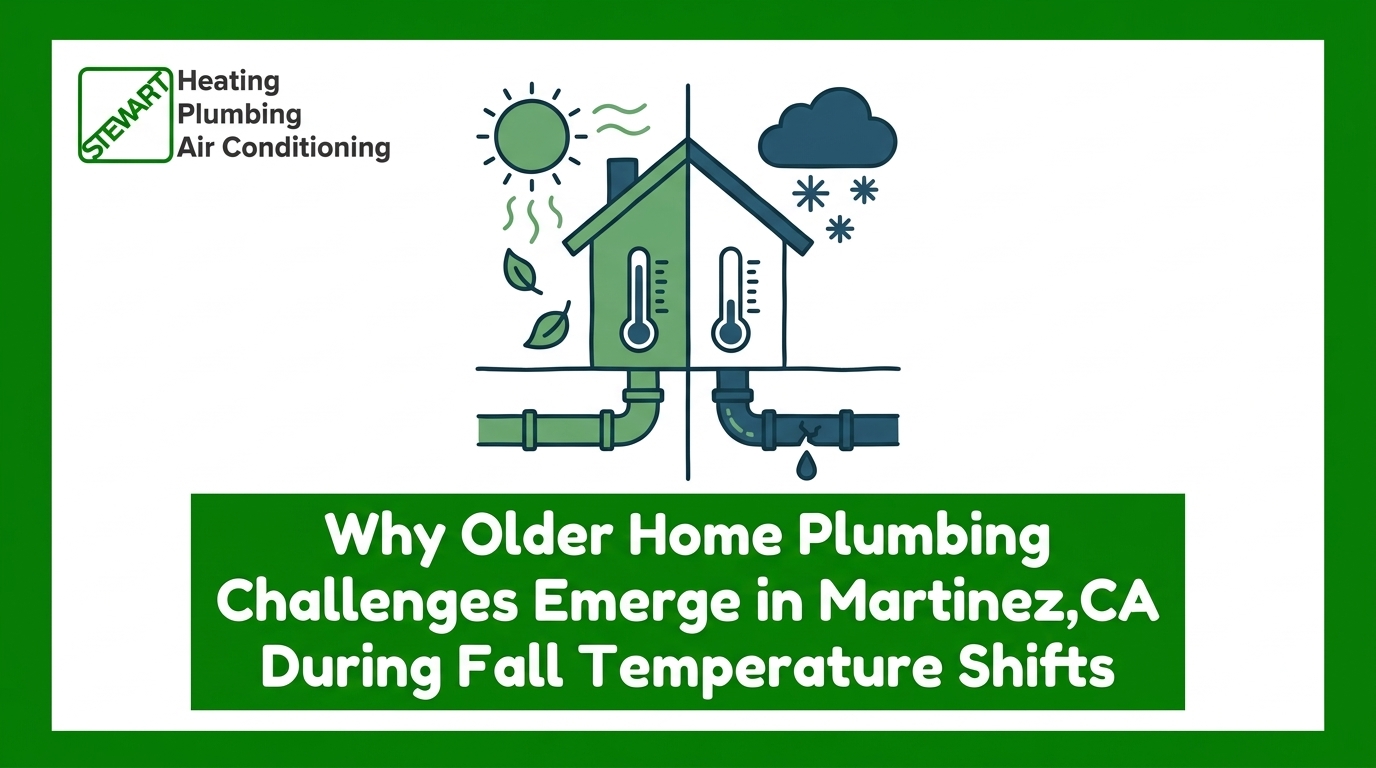
You turn on the faucet on a crisp morning, and the water pressure just isn't what it used to be, or perhaps you spot a new, unexplained damp patch near the baseboards. Dealing with older home plumbing challenges in Martinez during temperature shifts often means confronting issues that seem to appear out of nowhere as soon as the seasons change. Homeowners frequently worry about the extreme freezing temperatures of deep winter, but the daily weather swings of Early Fall (September) are actually a significant stressor for aging residential plumbing systems.
In the East Bay, this time of year is characterized by a specific diurnal temperature variation: hot, sunny afternoons followed by rapidly cooling nights. This constant yo-yo effect forces the building materials in your home to expand and contract on a daily basis. For a house built in the mid-20th century, this seasonal transition places immense physical stress on aging pipes, exposing hidden weaknesses that have been developing for decades. The decision you face is whether to keep patching minor, isolated drips as they appear, or to schedule a comprehensive evaluation to understand the true integrity of your water lines.
If you are tired of patching recurring leaks, scheduling comprehensive residential plumbing services is the most effective way to diagnose these seasonal vulnerabilities before they escalate into major water damage.
To understand why your pipes are suddenly acting up, it helps to look at the basic physics of thermal expansion and contraction. In simple terms, metal expands when it gets warm and shrinks when it gets cold. While these changes are microscopic, they are powerful. When a rigid metal pipe is subjected to continuous daily cycles—expanding in the afternoon heat and contracting in the evening cold—it experiences metal fatigue. Over time, the material loses its structural elasticity.
Uninsulated pipes in older homes are particularly vulnerable to these ambient temperature changes. Unlike modern, climate-controlled homes with heavily insulated crawlspaces and walls, older properties often have water lines running through unconditioned areas. These exposed pipes bear the full brunt of the shifting outdoor temperatures. The constant movement, even by fractions of a millimeter, creates a relentless mechanical stress on the entire plumbing network.
This thermal stress does not impact the entire pipe equally; it heavily targets the weakest points in the system. In metal plumbing, the weakest points are typically the threaded joints where two sections of pipe connect. When the pipe expands, it pushes into the joint; when it contracts, it pulls away. Doing this once or twice causes no harm, but repeating this cycle every day for decades creates cumulative wear.
• Mid-Afternoon — Ambient Condition: Peak East Bay heat — Physical Impact on Plumbing System: Metal expands, pushing against threaded joints and increasing internal pressure.
• Late Evening — Ambient Condition: Rapid temperature drop — Physical Impact on Plumbing System: Metal contracts, pulling away from fittings and stressing degraded seals.
• Early Morning — Ambient Condition: Coldest daily temperatures — Physical Impact on Plumbing System: Maximum contraction; weakened joints may allow small amounts of water to seep through.
Over decades of use, the threads inside these connections begin to wear down, rust, and lose their watertight seal. What starts as a microscopic gap eventually becomes a noticeable drip, usually revealing itself during the dramatic temperature shifts of the fall season.
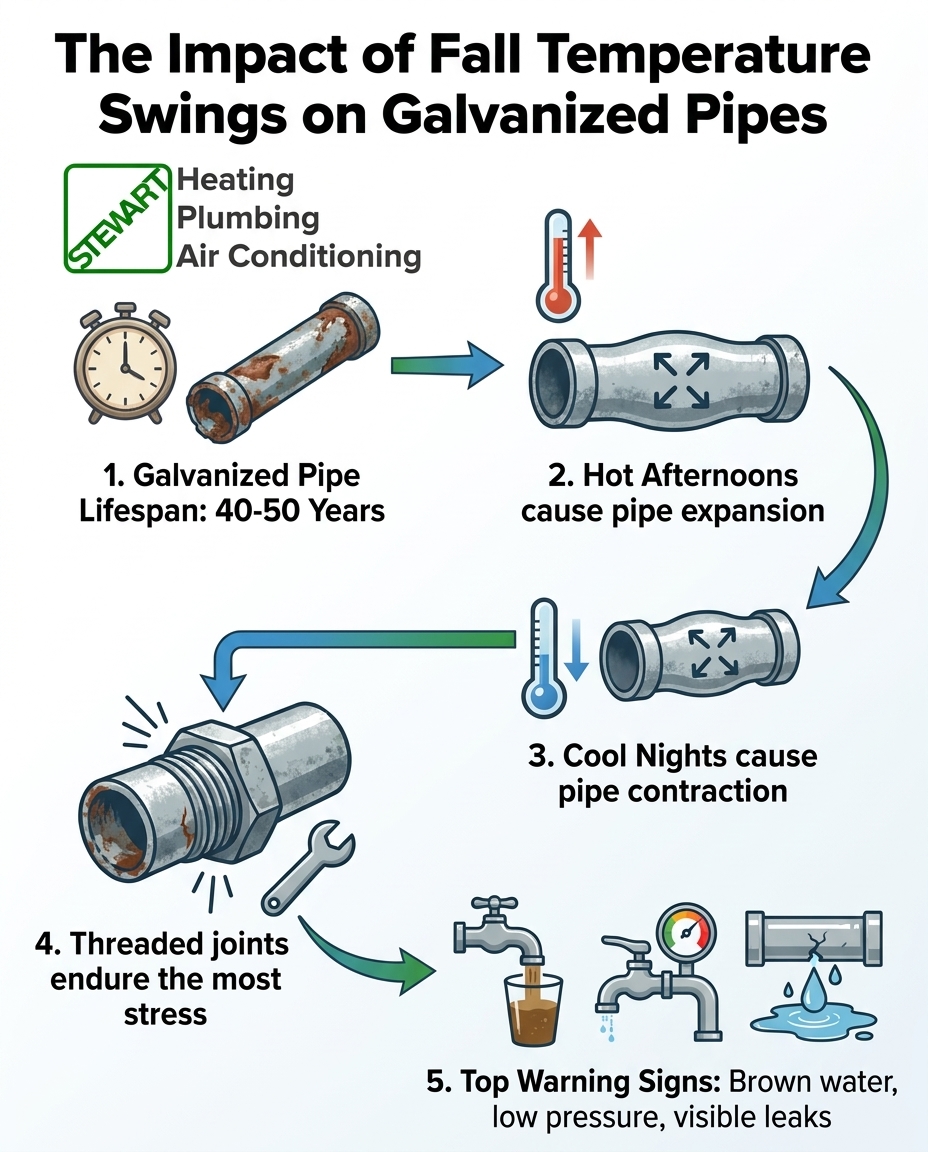
The architectural history of the local area plays a massive role in how homes handle seasonal weather changes. Historic Martinez properties built prior to the 1960s were largely constructed using galvanized steel pipes for their water supply lines. At the time, galvanized steel was the gold standard for residential plumbing. It was strong, rigid, and coated in a layer of zinc to prevent the underlying steel from rusting. However, time and chemistry have proven that this material has a finite operational life.
According to industry data and building standards, galvanized steel pipes have an average lifespan of 40 to 50 years. This means that if your home still has its original plumbing, those pipes are well past their intended operational life. The zinc coating has likely worn away long ago, leaving the raw steel exposed to water and oxygen. This leads to internal corrosion, where rust builds up on the inside walls of the pipe, restricting water flow and weakening the metal.
Because these historic systems are already structurally compromised by decades of internal rust, they are highly susceptible to the seasonal temperature stress of early fall. A brand-new pipe can easily handle thermal expansion; a 60-year-old, heavily corroded pipe cannot.
Having served local homeowners since 1974, our family-owned team understands the unique architectural quirks of these older properties. Upgrading or repairing plumbing in historic homes is not a standard job. Local building codes and historic preservation guidelines often require specialized knowledge. Plumbers must know how to navigate original lath and plaster walls, narrow crawlspaces, and outdated structural framing without causing unnecessary damage to the home's historic character.
As the weather shifts, your plumbing will often give you clear warning signs that it is struggling to handle the thermal expansion cycles. Knowing what to look for can help you catch a failing joint before it turns into a flooded basement. Here are the top symptoms homeowners should watch for:
• Sudden drops in water pressure: If your shower suddenly feels weak, it could indicate that internal rust flakes have broken loose due to pipe movement and are now clogging the line, or that a hidden leak is diverting water pressure away from the fixture.
• Brownish or discolored water: When taps are first turned on in the morning, you might notice a reddish-brown tint to the water. This signals that the internal rust inside the pipes has been disturbed by overnight contraction.
• Visible moisture or isolated leaks: Check your basements, crawlspaces, and utility closets. Small puddles, damp drywall, or water stains around exposed pipe joints are clear indicators of thermal stress failure.
• Slow-draining fixtures: While often associated with sewer line issues, restricted flow combined with other symptoms can point to severe internal pipe scaling.
• Appliance performance issues: Sediment buildup from degrading pipes does not just stay in the pipes; it flows into your connected appliances. This sediment can quickly ruin the internal components of washing machines, dishwashers, and water heating systems.
A typical pattern we see involves homeowners noticing unusual sediment issues alongside minor leaks. In one recent instance, a technician thoroughly reviewed a stressed residential system, explained the underlying issues caused by degrading galvanized pipes, and suggested efficiency measures. If left unchecked, this heavy sediment buildup can necessitate a complete water heater replacement due to irreversible tank damage.
When a leak appears during the fall transition, the immediate reaction is often to just patch the bad section of pipe. While this might stop the water temporarily, it is crucial to understand the limitations of patching isolated leaks on 50-plus-year-old galvanized systems. Because the entire plumbing network has experienced the same water chemistry, the same daily thermal expansion, and the same decades of use, one failing joint is rarely an isolated incident.
Usually, a leak in one location indicates that the rest of the system is under similar metallurgical stress. Patching a single joint on a brittle, rusted pipe can sometimes cause the adjacent joints to fail due to the vibration and pressure of the repair work itself. This is why a comprehensive professional plumbing assessment is so vital for older homes.
During a professional evaluation, a licensed plumber does more than just look at the puddle on the floor. They will test the overall water pressure, inspect the visible pipe runs in crawlspaces for signs of heavy corrosion, check the water quality for heavy iron content, and evaluate the flow rate at various fixtures. This thorough diagnostic process provides a clear picture of whether you can safely repair the leak or if it is time to plan for a full home repipe.
Often, homeowners delay addressing these warning signs until multiple systems are affected. For example, a technician recently arrived promptly to address overdue air conditioning and water heater work, scheduling necessary appointments to ensure all interconnected plumbing and HVAC issues were resolved professionally. Taking advantage of a plumbing repair special is a smart way to address immediate joint leaks affordably while planning for long-term, system-wide solutions.
Diagnosing the true extent of galvanized pipe degradation requires a licensed professional with the right diagnostic tools and experience. It is critical that homeowners avoid attempting DIY repairs on aging metal pipes. Never attempt to tighten an old, corroded threaded joint yourself with a pipe wrench. The weakened, rusted threads can easily snap under the torque, turning a minor drip into a catastrophic pipe failure that floods your home.
Addressing thermal stress in the early fall is not just about fixing today's leaks; it is about preventing tomorrow's emergencies. The daily temperature swings of September and October serve as an early warning system. If your pipes are struggling to handle a 30-degree temperature shift from afternoon to night, they are highly likely to fail when the sustained cold of winter sets in.
Taking proactive measures now can save your historic home from significant water damage later. One of the most effective steps is to properly insulate exposed pipes in unconditioned spaces, such as crawlspaces, basements, and exterior utility closets. High-quality foam pipe insulation helps buffer the metal against rapid ambient temperature changes, reducing the severity of thermal expansion and contraction.
Additionally, it is wise to have your system evaluated before the cold weather becomes permanent. Scheduling pre-winter plumbing inspections allows a professional to catch weakened joints, clear out sediment blockages, and ensure your water heater is operating efficiently before the heavy demands of winter arrive.
Sudden low pressure in the fall often happens when temperature-induced pipe shifts dislodge internal rust flakes inside aging galvanized pipes. As the metal expands and contracts, brittle corrosion breaks off the inner walls and flows through the water supply. These flakes then accumulate behind faucet aerators, showerheads, and valves, causing sudden blockages that drastically reduce your water pressure at the fixture.
Temperature changes cause the physical materials of your plumbing system to expand and contract. When water pipes get warm during hot afternoons, the metal expands slightly; when temperatures drop at night, the metal shrinks. This continuous thermal cycling places severe mechanical stress on rigid metal pipes, particularly at the threaded connections, which can eventually lead to metal fatigue and joint failure.
While sudden weather changes frequently trigger leaks, it is not a "normal" condition that you should ignore. A leak during a temperature shift is a clear sign of underlying material failure and advanced wear. It means the pipe or joint has lost its structural integrity and can no longer withstand standard environmental stress, requiring professional evaluation.
Galvanized steel pipes have an average lifespan of 40 to 50 years under normal conditions. However, local water chemistry, heavy sediment, and extreme daily temperature fluctuations can accelerate their degradation. If your home was built before the 1970s and still has its original plumbing, the pipes are likely past their intended lifespan and are highly susceptible to failure.
The best way to protect historic home plumbing is through proactive professional assessments and environmental management. Recommend steps include properly insulating exposed pipes in unconditioned spaces to minimize thermal shock, monitoring water pressure for sudden changes, and working with a licensed plumber to plan for phased repiping before catastrophic failures occur.
Ignoring the subtle warning signs of plumbing stress during the fall transition is a risk that homeowners in older properties cannot afford to take. Brown water, dropping pressure, and tiny joint drips are all signals that your galvanized pipes are struggling to cope with the changing weather. Addressing these seasonal stresses promptly ensures that a minor structural weakness does not turn into a major winter emergency.
If you live in a historic home and are noticing the effects of aging pipes, it is time to bring in a team that understands the specific challenges of your property's architecture. A thorough, professional assessment offers clarity, helping you make informed decisions about repairs versus replacement. Do not wait for a pipe to fail completely; request plumbing service today to secure your home's infrastructure and gain peace of mind before the winter freeze sets in.

Very professional and complete. I would recommend Stewart to anyone. Highest quality of workmanship and clean installation.
Stewart Heating Plumbing Air Conditioning just did some work for us for the first time. They did an installation at my home and it turned out well. I thought the price was fair and I definitely would use them again. The technicians were very friendly and knowledgeable about their work. I highly recommend Stewart Heating Plumbing Air Conditioning and already told friends to use them.
We have been using Stewart Heating Plumbing Air Conditioning since 1995. They put the original heating and air unit in the house, and we have just stayed with them. They are dependable and honest people, and they have done a good job for us every time that we have used them!
They came and did an inspection and are coming tomorrow to do the repair.
They replaced a regulator the first time, and then the water heater vent had to be replaced. They did great work.
The gentleman that serviced us was helpful, insightful, and knew what he was talking about. Overall, it was a great experience.