

Recent Blogs
Stay updated with our latest blog posts.

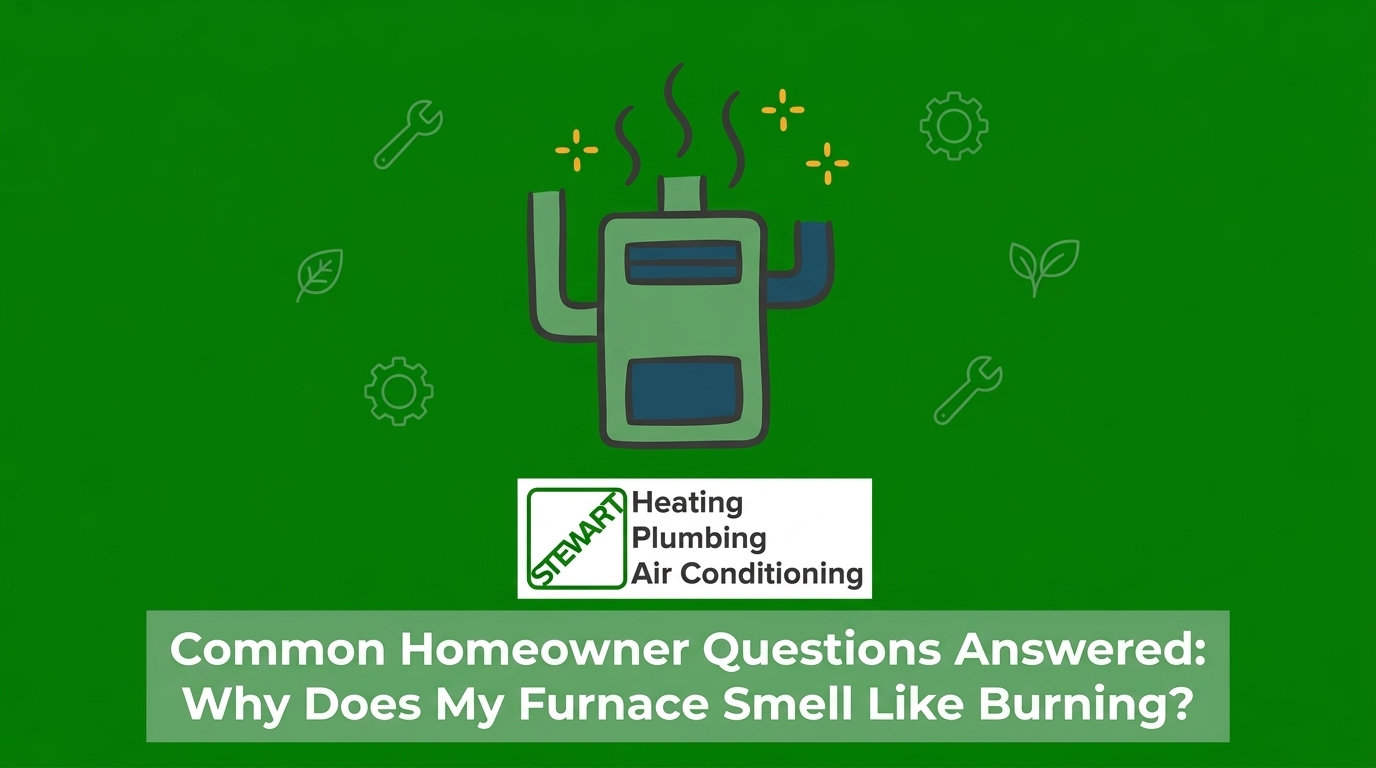
Have you ever switched your thermostat to 'heat' for the very first time in autumn, only to be immediately hit by an alarming burning smell spreading through the vents? You are not alone. Among the most common homeowner questions answered by our dispatchers at Stewart Heating, Plumbing and Air Conditioning, few cause as much instant, widespread panic as this specific seasonal odor. During those first cool October evenings, the sudden scent of something burning in the house triggers an immediate, understandable fear of a fire hazard. The instinct is to assume the worst, shut everything down, and worry about the safety of your family and your property.
While many residents spend this seasonal transition proactively scheduling our comprehensive plumbing services or looking into tankless water heater repair and replacement, a sudden heating emergency will always take immediate priority. Knowing exactly what is happening inside your utility closet is the key to protecting your home. Determining whether that burning smell is a normal part of the seasonal shift or a dangerous mechanical failure is critical for your safety and your peace of mind.
The short answer is that a temporary burning smell during the initial fall startup is incredibly common, and in most cases, it is completely harmless. To understand why this happens, you have to look at what your heating equipment has been doing for the past half-year: absolutely nothing. During the long, inactive months of spring and summer, your furnace sits idle. While the air conditioning runs, the heat exchanger itself remains cold, acting as a massive surface area where airborne particles naturally settle.
In our decades of experience maintaining HVAC systems across Pittsburg CA and the surrounding East Bay, our technicians frequently see how our exceptionally long, dry summers impact ductwork. A pattern we see often is that because windows are frequently left open and dry air circulates constantly, fine particulate matter—including pet dander, lint, pollen, and everyday household dust—accumulates heavily inside the system. Because of our regional climate, this dust settles directly onto the metal surfaces of the furnace's heat exchanger in much greater volumes than it might in a wetter, more humid environment.
When those first cool October 2026 evenings finally arrive and you activate the heating cycle, the burners ignite and the heat exchanger rapidly warms up to temperatures exceeding 140 degrees Fahrenheit. All of that accumulated dust and lint is instantly incinerated. This process is known as 'dust burn-off.' Because the blower fan activates at the exact same time, the smell of that incinerated dust is immediately pushed through the supply vents and distributed into every room of your house.
Our service team relies on a simple guideline we share with every customer: if the odor is simply seasonal dust burn-off, it will follow a very predictable pattern. The smell should resemble the scent of a warm vacuum cleaner or dry, heated dust. It should never smell like chemicals, melting plastic, or raw gas. Most importantly, normal dust burn-off is strictly temporary. Once the accumulated layer of dust is incinerated, the smell will peak and then steadily dissipate.
The standard timeframe: Normal seasonal burn-off should completely clear out of your home within 15 to 30 minutes of continuous operation. If the system has been running for an hour and the smell is just as strong, or if the smell returns every single time the heat cycles on days or weeks later, you are no longer dealing with harmless dust. At that point, the symptom points to an underlying mechanical issue that requires professional attention from our diagnostic team.
While dust burn-off is a harmless nuisance, other odors are massive red flags. Heating equipment is a leading cause of home fire deaths, underscoring exactly why you must take unusual smells seriously. We always remind our customers that distinguishing between safe seasonal dust and a dangerous electrical or mechanical failure is the most important diagnostic step a homeowner can take.
Here is exactly what our technicians recommend looking for when evaluating the odor coming from your vents during those first cool fall evenings:
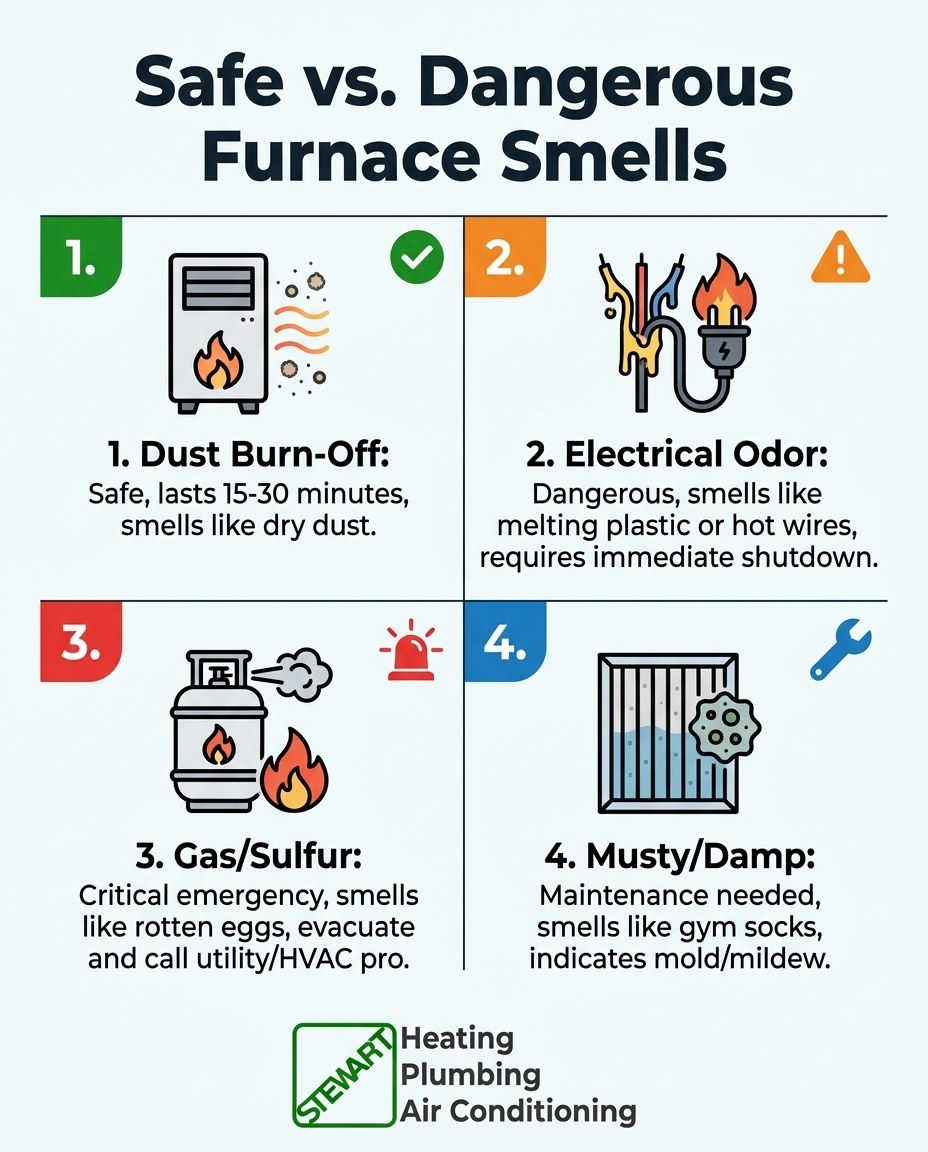
• Electrical Odors (Melting Plastic or Hot Wire): A smell resembling melting plastic, burning rubber, or hot electrical insulation is highly dangerous. This typically indicates a failing blower motor, a seized bearing, or frayed wiring that is actively shorting out. If the blower motor overheats, it can melt the protective casing around the electrical components, creating an immediate fire hazard.
• Gas or Sulfur Odors (Rotten Eggs): Natural gas is inherently odorless, but utility companies add a chemical called mercaptan to give it a distinct 'rotten egg' or sulfur smell. If you detect this scent near your furnace or coming from your vents, it is a massive red flag for a raw gas leak. This is a critical emergency that requires immediate evacuation.
• Musty or Damp Odors (Gym Socks): A persistent smell of dampness, dirty gym socks, or stale air points to moisture issues. This usually indicates that mold or mildew has formed on the evaporator coil, inside the drain pan, or within the ductwork itself. While not an immediate fire hazard, it severely degrades your indoor air quality and requires professional cleaning.
• Metallic or Chemical Odors (Formaldehyde): A sharp, biting chemical smell can sometimes indicate a cracked heat exchanger. This is incredibly dangerous, as a compromised heat exchanger can allow carbon monoxide—a deadly, odorless gas—to mix with the breathable air being pushed into your living spaces.
• Dry, dusty, warm vacuum cleaner — Likely Cause: Normal seasonal dust burn-off — Danger Level: Low (Safe) — Action Required: Wait 15-30 minutes for it to dissipate.
• Melting plastic, burning rubber, hot wires — Likely Cause: Overheating motor, electrical short — Danger Level: High (Fire Risk) — Action Required: Shut down system immediately at thermostat.
• Rotten eggs, strong sulfur, raw gas — Likely Cause: Natural gas leak — Danger Level: Critical (Explosion Risk) — Action Required: Evacuate home and call utility provider.
• Musty, damp, dirty gym socks — Likely Cause: Mold, mildew, or standing water — Danger Level: Moderate (Health Risk) — Action Required: Schedule professional system cleaning.
If the smell coming from your vents falls into the dangerous category—meaning it smells like electrical burning, raw gas, or persists long past the 30-minute mark—you must take swift action. Since 1974, our family-owned legacy at Stewart Heating, Plumbing and Air Conditioning has been built on providing honest, safety-first guidance to our neighbors in Pittsburg CA and the surrounding East Bay. We always prioritize the safety of your family and your property over a quick DIY fix.
If you suspect a hazardous condition, follow these exact steps to secure your home:
1. Turn off the heating system immediately at the thermostat. Do not wait to see if the smell gets worse. Go directly to your thermostat and switch the system from 'Heat' to 'Off'. This immediately stops the call for heat, shuts down the burners, and cuts power to the blower motor, halting the spread of the odor and preventing further overheating.
2. Ventilate the area safely. If the smell of melting plastic or burning rubber is strong, open your windows and exterior doors to air out the living space. However, if you smell rotten eggs (gas), do not turn on any electrical exhaust fans, as a spark could ignite the fumes.
3. Keep the furnace cabinet completely closed. Never attempt to open the furnace cabinet to inspect the heat exchanger, blower motor, or internal wiring yourself. Accessing the internal components of a gas-fired or high-voltage electrical appliance requires specialized diagnostic tools and a licensed professional. Opening the cabinet can expose you to live voltage, extreme heat, or raw gas.
4. Shut off the gas valve (if applicable). If you strongly suspect a gas leak due to a sulfur smell, locate the gas shutoff valve near the furnace and turn it perpendicular to the pipe to cut off the fuel supply. If you are unsure how to do this, evacuate the house immediately.
5. Call for emergency diagnostics. Once the system is safely powered down, contact our licensed technicians to perform a thorough safety inspection. Investing in routine plumbing and HVAC maintenance is the best way to catch these frayed wires, failing motors, and cracked heat exchangers before they turn into late-night emergencies.
When you detect a strange odor during those first cool October evenings, it is easy to assume the furnace is the sole culprit. However, modern home utility systems are deeply interconnected. Your heating equipment rarely operates in isolation; it usually shares a utility closet, basement corner, or garage space with other critical appliances. Understanding this interconnected environment is vital for accurate diagnostics, which is why we train our team to look at the big picture.
A furnace often sits directly next to the home's water heater. They frequently share ambient air for combustion, and in some older homes, they may even share exhaust flues or gas supply branches. What smells like a musty furnace issue might actually be a slow leak from an adjacent pipe that is soaking the drywall near the HVAC return drop. What smells like an electrical short in the heating system might actually be a failing component on a nearby appliance.
This is why having a trusted, cross-trained team like ours that can handle the entire utility space is so valuable. Just as complex heating diagnostics require precision and experience, addressing adjacent plumbing or water heating issues requires specialized knowledge. If an inspection reveals that the burning smell is actually coming from a failing pump or a compromised gas line on a nearby water heater, you need a contractor who can seamlessly pivot to address the real root cause.
By choosing a comprehensive local contractor, you ensure that any overlapping utility issues are handled safely and correctly the first time. Whether you need a full heating system safety check or need to request plumbing service to address a hidden leak near your ductwork, treating the home as an interconnected system guarantees better long-term reliability.
As homeowners across Pittsburg CA and the surrounding East Bay prepare for colder weather, our dispatchers field dozens of calls regarding utility concerns—from strange heating odors to troubleshooting a tankless water heater that won't ignite. To help you navigate the start of the heating season, here are direct answers from our experts to the most common questions we receive about furnace smells.
Yes, a brief burning smell is completely normal during the first startup of the season. Over the spring and summer months, dust, pet dander, and lint settle on the internal components of your furnace, particularly the heat exchanger. When you turn the heat on for the first time in autumn, these settled particles are instantly incinerated. This produces a dry, dusty burning odor that is pushed through your vents, but it is harmless and should dissipate quickly.
Normal seasonal dust burn-off should take no longer than 15 to 30 minutes to clear out. Once the system reaches its operating temperature, the thin layer of accumulated dust is burned away very rapidly. If you leave the system running and the smell persists for hours, or if the smell returns every time the heat cycles on throughout the week, you are no longer dealing with settled dust. Persistent odors indicate a mechanical problem that needs professional evaluation.
Yes, while rare, a poorly maintained furnace can absolutely catch on fire. Heating equipment remains one of the leading causes of residential fires. The primary culprits are usually severe electrical shorts, failing blower motors that overheat and melt their casings, or compromised gas lines. This is why our technicians urge you to never ignore smells of melting plastic, burning rubber, or raw gas. Regular professional inspections are designed specifically to identify and mitigate these fire risks before they escalate.
A bad or dangerous furnace typically smells like melting plastic, burning rubber, or rotten eggs. Unlike the dry, warm-dust smell of normal seasonal burn-off, hazardous odors are harsh and chemical. A melting plastic smell usually points to an overheating electrical component or a seized motor bearing. A rotten egg smell is the universal warning sign for a natural gas leak, which requires immediate evacuation and emergency service.
You should call a professional immediately if the smell is electrical, chemical, or persists past 30 minutes. Do not wait to see if a harsh, melting-plastic odor goes away on its own. Turn off the system at the thermostat to prevent further damage or fire risk, and contact a licensed technician. You should also call an expert if the system is making loud grinding or screeching noises alongside the burning odor, as this indicates a mechanical failure.
Not necessarily, but a sharp, chemical odor can be a warning sign of a compromised heat exchanger. Most burning smells are simply dust or failing electrical components. However, if the heat exchanger is cracked, it can alter the combustion process and emit strange, formaldehyde-like chemical odors. Because a cracked heat exchanger can leak deadly carbon monoxide into your home, any unusual chemical smell should be treated as an emergency and inspected by a professional with a combustion analyzer.
Navigating those first cool October evenings shouldn't be a source of stress. Knowing exactly what satisfies the safety requirements of your home—understanding that a 15-minute dusty smell is perfectly safe, while a lingering electrical or gas odor is a serious hazard—gives you the confidence to protect your property. You do not have to guess whether your system is safe to operate.
Instead of waiting for an alarming odor to turn into a midnight emergency, we highly recommend proactive care. A thorough professional pre-winter inspection ensures that your heat exchanger is intact, your electrical connections are secure, and your blower motor is operating smoothly. Plus, if it turns out your old system requires a replacement, upgrading to a high-efficiency heat pump or furnace may qualify you for generally applicable energy rebates or federal tax credits (always verify current programs with your utility provider or a tax professional). Secure your peace of mind before the deep winter freeze arrives; schedule a comprehensive fall safety check with our expert technicians today and enjoy a safe, comfortable season.

Very professional and complete. I would recommend Stewart to anyone. Highest quality of workmanship and clean installation.
Stewart Heating Plumbing Air Conditioning just did some work for us for the first time. They did an installation at my home and it turned out well. I thought the price was fair and I definitely would use them again. The technicians were very friendly and knowledgeable about their work. I highly recommend Stewart Heating Plumbing Air Conditioning and already told friends to use them.
We have been using Stewart Heating Plumbing Air Conditioning since 1995. They put the original heating and air unit in the house, and we have just stayed with them. They are dependable and honest people, and they have done a good job for us every time that we have used them!
They came and did an inspection and are coming tomorrow to do the repair.
They replaced a regulator the first time, and then the water heater vent had to be replaced. They did great work.
The gentleman that serviced us was helpful, insightful, and knew what he was talking about. Overall, it was a great experience.