

Recent Blogs
Stay updated with our latest blog posts.

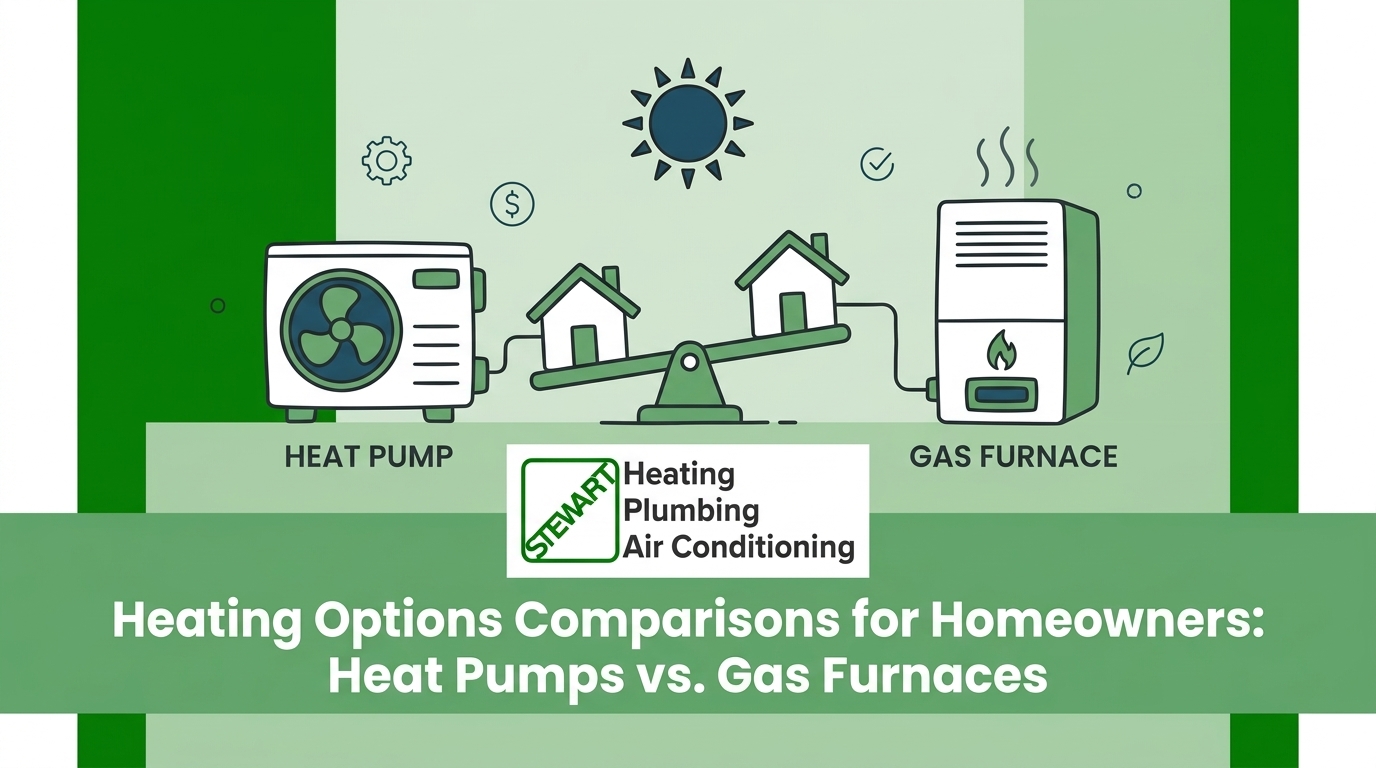
October brings that first real evening chill to the East Bay, making this the ideal time to explore heating options comparisons for homeowners who suspect their aging system will not survive another season. You step to the thermostat for your mid-fall heating startup, bump the temperature up a few degrees, and wait. Instead of a steady, quiet flow of warm air, you are met with lukewarm breezes, strange rattling noises, or a system that refuses to turn on at all. At Stewart Heating, Plumbing and Air Conditioning, we know this is the critical moment when a proactive replacement decision saves you from a mid-winter breakdown.
The urgency of autumn planning: Waiting until December to address a failing heater often means battling peak winter demand. When temperatures plummet, our local technicians are booked solid with emergency no-heat calls, and securing the exact equipment you want can be delayed by seasonal supply constraints. Making your choice now gives you the luxury of time to evaluate the two main contenders for modern home climate control: electric heat pumps and traditional gas furnaces.
Evaluating your property's infrastructure is the first step in this process. A new heating system does not operate in a vacuum; it interacts with your electrical panel, your ductwork, and your home's ventilation. Often, comprehensive home updates involve coordinating these HVAC upgrades alongside professional plumbing services to ensure all your utility systems are fully prepared for the colder months ahead. By tackling these evaluations during the early fall window, you position your household for uninterrupted comfort.
The problem: Many homeowners hesitate to switch to electric heating because they worry about high utility bills. This concern usually stems from experiences with older electric resistance heaters, which generated warmth by forcing electricity through metal coils—a highly inefficient and energy-heavy process.
The cause: Traditional heating methods, whether burning natural gas or using electric resistance, consume raw energy to create new heat. The laws of physics dictate that these systems can never be more than 100% efficient; in fact, most lose a percentage of their energy through exhaust or thermal bleed.
The solution: Modern electric heat pumps bypass this limitation entirely by moving existing heat rather than creating it from scratch. Using a specialized refrigerant cycle, a heat pump absorbs ambient thermal energy from the outdoor air, compresses it to raise the temperature, and transfers that warmth inside your home. Because moving heat requires significantly less energy than generating it, these systems can deliver up to 300% more energy than they consume.
The efficiency of a heat pump is heavily influenced by the outside environment. This is where the Pittsburgh, CA (East Bay climate) provides a massive advantage. Heat pumps are exceptionally efficient in environments where winter temperatures rarely drop below freezing. While it is a common myth that heat pumps struggle in the cold, our installation teams consistently see that our local winter lows—which typically hover in the 40s—are the absolute optimal environment for these systems to operate at peak performance.
In regions with harsh, sub-zero winters, heat pumps sometimes rely on backup auxiliary heating strips to bridge the gap when ambient heat is scarce. However, in our mild Mediterranean climate, those energy-intensive auxiliary strips are rarely, if ever, needed. The system can easily extract ample warmth from a 45-degree evening, maximizing your energy savings and providing a smooth, consistent blanket of warm air throughout your living spaces.
While heat pumps represent the cutting edge of energy transfer, traditional gas furnaces remain a highly effective and popular choice, particularly for homes with established infrastructure. High-efficiency gas furnaces have evolved significantly over the past few decades. Today's premium models typically max out at 90-98% AFUE (Annual Fuel Utilization Efficiency), meaning almost all the fuel burned is converted directly into usable heat for your home, with minimal waste escaping up the flue.
For homes with existing, well-maintained natural gas lines and proper exhaust flues, a furnace replacement is often a straightforward, familiar process. If your home has relied on gas heating for decades, the physical footprint, duct sizing, and utility connections are already optimized for a combustion system. Transitioning away from aging gas infrastructure in older neighborhoods requires careful planning, and sometimes, sticking with an upgraded, highly efficient gas unit makes the most logistical sense.
As a family-owned business serving the community since 1974, Stewart Heating, Plumbing and Air Conditioning has a deep historical perspective on how local home heating infrastructure has evolved. We have seen the transition from massive, inefficient gravity furnaces to the sleek, modulating systems available today. In older Pittsburgh, CA (East Bay climate) neighborhoods, a pattern we see often is that the existing architecture dictates the easiest path forward.
One distinct characteristic of a gas furnace is its rapid heat output. When a gas burner ignites, it produces highly intense, immediate heat that blasts through the ductwork. For homeowners who like to leave their thermostat very low during the day and demand a rapid temperature spike when they return home, a furnace delivers that aggressive heating power. However, it is worth noting that this level of intensity is often unnecessary for our mild local winters, where the gradual, steady warmth of a heat pump is more than sufficient to maintain absolute comfort.
When evaluating your options during a mid-fall heating startup, understanding the long-term financial landscape is just as critical as knowing the physical differences between the units. Operational costs vary based on your local utility rates, your home's insulation, and the specific efficiency ratings of the equipment you choose.
To make an informed comparison, you need to understand the distinct metrics used to grade these systems:
• AFUE (Annual Fuel Utilization Efficiency): Used for gas furnaces. A 95% AFUE rating means that 95% of the fuel is converted to heat, while 5% is lost as exhaust gases.
• HSPF (Heating Seasonal Performance Factor): Used to measure the heating efficiency of heat pumps. A higher HSPF rating indicates greater energy savings over the course of a heating season.
• SEER (Seasonal Energy Efficiency Ratio): Because heat pumps also provide air conditioning in the summer, they carry a SEER rating to measure their cooling efficiency.
Beyond the monthly utility bills, homeowners should factor in external financial incentives. Generic energy rebates, federal tax credits, and local utility incentive programs are frequently available for high-efficiency electric upgrades. Because these programs aim to reduce overall grid strain and lower carbon footprints, electric heat pumps often qualify for broader incentive categories than combustion equipment. We always advise our customers to consult with tax professionals or local utility providers to verify current generic rebate eligibility before making a final purchase.
Furthermore, upgrading to a high-efficiency heating system is the perfect time to evaluate other energy-heavy appliances in your home. For example, coordinating your HVAC upgrade with a tankless water heater repair and installation can dramatically improve your property's whole-home energy profile, compounding your monthly savings.
• Primary Energy Source — Electric Heat Pump: Electricity (transfers ambient heat) — Traditional Gas Furnace: Natural Gas (combusts fuel for heat)
• Efficiency Metric — Electric Heat Pump: HSPF (Heating) & SEER (Cooling) — Traditional Gas Furnace: AFUE (Heating only)
• Maximum Efficiency — Electric Heat Pump: Up to 300% (moves more energy than it uses) — Traditional Gas Furnace: Up to 98% (converts fuel directly)
• Incentive Availability — Electric Heat Pump: High (frequent generic tax credits & rebates) — Traditional Gas Furnace: Moderate (limited to highest-tier AFUE models)
• Climate Suitability — Electric Heat Pump: Optimal for mild East Bay winters — Traditional Gas Furnace: Capable of handling extreme sub-zero cold

The physical installation requirements for a heat pump versus a gas furnace differ dramatically, primarily when it comes to exhaust venting and electrical capacity. Understanding these infrastructure demands is crucial for a smooth installation process in the Pittsburgh, CA (East Bay climate).
Combustion Venting Requirements: High-efficiency gas furnaces (those rated 90% AFUE and above) utilize a secondary heat exchanger to extract every last bit of thermal energy from the combustion process. This process produces acidic condensation. As a result, these modern furnaces require specific PVC venting to safely exhaust combustion gases outside the home, rather than the traditional metal flues used by older, less efficient models. Ensuring proper ventilation is critical for safety and system performance. Our plumbing and HVAC specialists note that poor venting in a home can cause negative pressure issues across multiple utility systems, sometimes even pulling air through drainage traps and creating strange gurgling sounds in your plumbing vents.
Heat Pump Infrastructure: Because heat pumps do not burn fuel, they require absolutely no combustion venting. This simplifies the physical ducting and exhaust installation while entirely eliminating the risk of carbon monoxide leaks from the heating unit. However, the infrastructure demand shifts from gas lines to the electrical panel.
Switching from a gas furnace to a whole-home electric heat pump may require an electrical panel upgrade, depending on your home's current capacity. Older homes with 100-amp service panels often need to be upgraded to 200-amp service to safely handle the dedicated circuits required by the indoor air handler and the outdoor compressor. Your Stewart Heating, Plumbing and Air Conditioning installation technician will perform a detailed load calculation to ensure your home's electrical backbone can support the new equipment without tripping breakers.
No matter which system you choose during your mid-fall heating startup, ongoing professional maintenance is the only way to protect your investment and ensure it reaches its maximum lifespan. However, the specific maintenance requirements differ significantly between the two technologies.
Heat Pump Maintenance Protocols: Because heat pumps act as both your air conditioner in the summer and your heater in the winter, they run year-round. This continuous operation means they require bi-annual check-ups to stay in peak condition.
• Refrigerant charge verification: Ensuring the system has the exact amount of refrigerant needed to transfer heat efficiently.
• Coil cleaning: Both the indoor evaporator coil and the outdoor condenser coil must be kept free of dust and debris to allow proper airflow and thermal exchange.
• Defrost cycle testing: Verifying that the system's automated defrost controls are functioning to prevent ice buildup on the outdoor unit during chilly, damp mornings.
• Electrical component inspection: Tightening connections and testing capacitors that endure year-round use.
Gas Furnace Maintenance Protocols: Gas furnaces sit dormant for half the year. Their maintenance is heavily focused on combustion safety and preparing the unit to fire up cleanly after months of inactivity.
• Heat exchanger inspection: Checking for microscopic cracks that could allow combustion gases to mix with your breathing air.
• Burner assembly cleaning: Removing dust and soot to ensure a crisp, blue, efficient flame.
• Ignition system testing: Verifying that the hot surface ignitor or pilot mechanism lights the gas smoothly and safely.
• Flue and draft checks: Ensuring exhaust gases are venting cleanly out of the home without obstruction.
We strongly recommend scheduling these comprehensive inspections during the early autumn window before the heavy heating season begins. Maintaining your home utilities is also much easier when bundled; for instance, many of our clients find success by pairing their seasonal HVAC checks with a comprehensive water heater maintenance plan to cover all critical systems in one visit.
The short answer is that it depends entirely on your local climate and existing home infrastructure. In regions with mild winters, heat pumps are generally considered better due to their extraordinary energy efficiency and ability to provide both heating and cooling from a single unit. However, if your home already has robust gas infrastructure and you prefer rapid, intense heat delivery, a high-efficiency gas furnace remains an excellent, reliable choice.
Older heat pumps typically began losing efficiency when temperatures dropped below 35°F, but modern technology has changed the math. Today's advanced cold-climate heat pumps can operate efficiently in sub-zero temperatures. In the Pittsburgh, CA (East Bay climate), where winter lows rarely dip below the 40s, a heat pump will operate at peak efficiency year-round without ever reaching its operational threshold.
Replacing a gas furnace with a heat pump is a smart long-term investment if you want to reduce your carbon footprint and take advantage of generic energy rebates. You will need to factor in the potential cost of an electrical panel upgrade and capping your old gas lines. For homeowners looking to consolidate their heating and air conditioning into one highly efficient system, the transition is highly rewarding.
Yes, heat pumps are exceptionally effective in Northern California. The mild Mediterranean climate is the absolute perfect environment for heat pump technology. Because the system simply transfers ambient outdoor heat indoors, the lack of harsh freezing weather means the unit uses minimal electricity to keep your home perfectly comfortable.
An electric heat pump is widely considered the best heating system for mild winters. Because it doesn't have to fight against extreme sub-zero cold, it can deliver up to three units of heat for every one unit of electricity it consumes. This makes it far more cost-effective to operate during a mild winter than a combustion furnace.
As you navigate your mid-fall heating startup, the choice between a heat pump and a gas furnace ultimately comes down to aligning the right technology with your specific needs. Heat pumps offer unparalleled efficiency for the mild local winters of the East Bay, providing both eco-friendly heating and summer cooling in one unified package. Conversely, gas furnaces remain a viable, powerful option for older homes that already possess the necessary gas lines and venting infrastructure, delivering rapid warmth on demand.
The most important step is to avoid waiting until your current system completely fails on a cold December night. By weighing your options and scheduling a professional evaluation before temperatures drop, you gain control over the installation timeline and the equipment selection. If you are ready to explore your heating replacement options, or if you need to request plumbing service to ensure your entire home is winter-ready, taking action today guarantees peace of mind. A clear, climate-specific evaluation from our experienced team will explain exactly how these systems perform in your home, enabling a confident replacement decision that keeps your family comfortable all season long.

Very professional and complete. I would recommend Stewart to anyone. Highest quality of workmanship and clean installation.
Stewart Heating Plumbing Air Conditioning just did some work for us for the first time. They did an installation at my home and it turned out well. I thought the price was fair and I definitely would use them again. The technicians were very friendly and knowledgeable about their work. I highly recommend Stewart Heating Plumbing Air Conditioning and already told friends to use them.
We have been using Stewart Heating Plumbing Air Conditioning since 1995. They put the original heating and air unit in the house, and we have just stayed with them. They are dependable and honest people, and they have done a good job for us every time that we have used them!
They came and did an inspection and are coming tomorrow to do the repair.
They replaced a regulator the first time, and then the water heater vent had to be replaced. They did great work.
The gentleman that serviced us was helpful, insightful, and knew what he was talking about. Overall, it was a great experience.