

Recent Blogs
Stay updated with our latest blog posts.

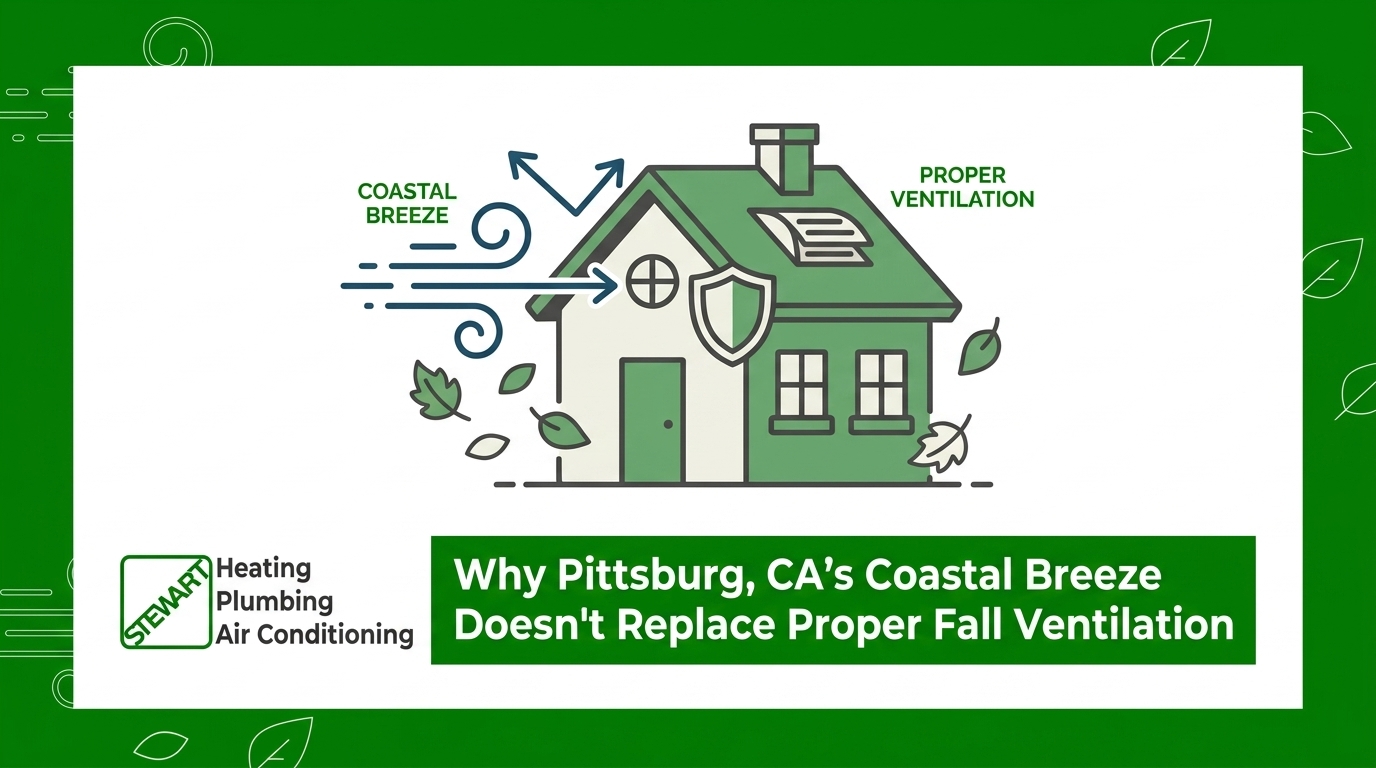
You finally turn off the air conditioner, crack the windows to enjoy the evening air, but instead of feeling refreshed, your house feels stuffy and your allergies flare up—this is exactly why Pittsburg's coastal breeze doesn't replace proper fall ventilation. The late summer and early fall evenings in the East Bay carry a distinct appeal. After a long, hot day, the natural instinct is to slide the glass doors open and let the cooler air flow through the living room. It feels like a relief. However, in our years of servicing local homes, we've found that this seasonal habit creates a significant, often ignored problem for your home's indoor air quality.
During the September transition to cooler nights, daytime heat still lingers, but evening temperatures drop sharply. This microclimate shift prompts homeowners to lock their windows before heading to bed, abruptly cutting off fresh air circulation. The sudden sealing of the home traps all the summer dust, pollen, and outdoor allergens that were just blown inside by the evening winds. Without a dedicated strategy to manage this air exchange, your living space becomes a sealed box of contaminated air. To maintain a truly healthy environment, our team at Stewart Heating, Plumbing and Air Conditioning recommends that relying on open windows must give way to integrating a mechanical HVAC system with dedicated air purification solutions.
Common signs your home is trapping stale air during the fall transition:
• Lingering odors: Cooking smells from dinner are still noticeable the next morning.
• Heavy, stagnant air: Walking into a room feels noticeably stuffier than stepping outside.
• Increased surface dust: You find yourself wiping down tables and shelves more frequently despite keeping doors closed overnight.
• Morning congestion: Waking up with a stuffy nose or scratchy throat, even if you don't typically suffer from severe seasonal allergies.
The famous Delta breeze is a defining feature of the Pittsburg / Delta region. As the interior valleys heat up, cool marine air is pulled from the coast, rushing through the Carquinez Strait and providing natural relief to East Bay homes. It is a powerful natural cooling mechanism. Unfortunately, our technicians frequently meet homeowners who mistakenly believe that because this air is cool, it is also clean. This misconception leads to an over-reliance on natural drafts for home ventilation.
Understanding how delta breezes affect your comfort requires looking at what the wind picks up along its journey. By the time those coastal winds reach Pittsburg, they have swept across miles of highways, industrial zones, and agricultural lands. They actively carry regional particulates, including fine dirt, vehicle exhaust particles, local pollen, and early fall ragweed. When you open your windows to cool the house, you are inviting these unfiltered contaminants directly into your living space. Natural drafts are entirely uncontrolled. You cannot dictate how much air comes in, nor can you filter what it brings with it, making open windows a serious liability for indoor air purity as the seasons change.
A drop in temperature does not equal an improvement in air quality. In fact, moving air can easily mask the presence of airborne pollutants. When a breeze is actively circulating through a room, the physical sensation of cool air moving across your skin feels refreshing. It tricks the senses into believing the environment is clean.
The reality we see in the field is quite different. The breeze is merely suspending particulates in the air. Once the wind dies down—or once you shut the windows for the night—those suspended particles settle into your carpets, upholstery, and ductwork. You have successfully cooled the house, but you have simultaneously filled it with microscopic debris that will remain trapped for weeks.
Decades ago, homes were built with a certain amount of natural leakage. Older, draftier construction allowed air to passively seep through gaps around doors, single-pane windows, and uninsulated attics. While this was terrible for energy efficiency and heating bills, it did provide a passive form of ventilation that constantly diluted indoor pollutants. Today, construction standards have drastically changed.
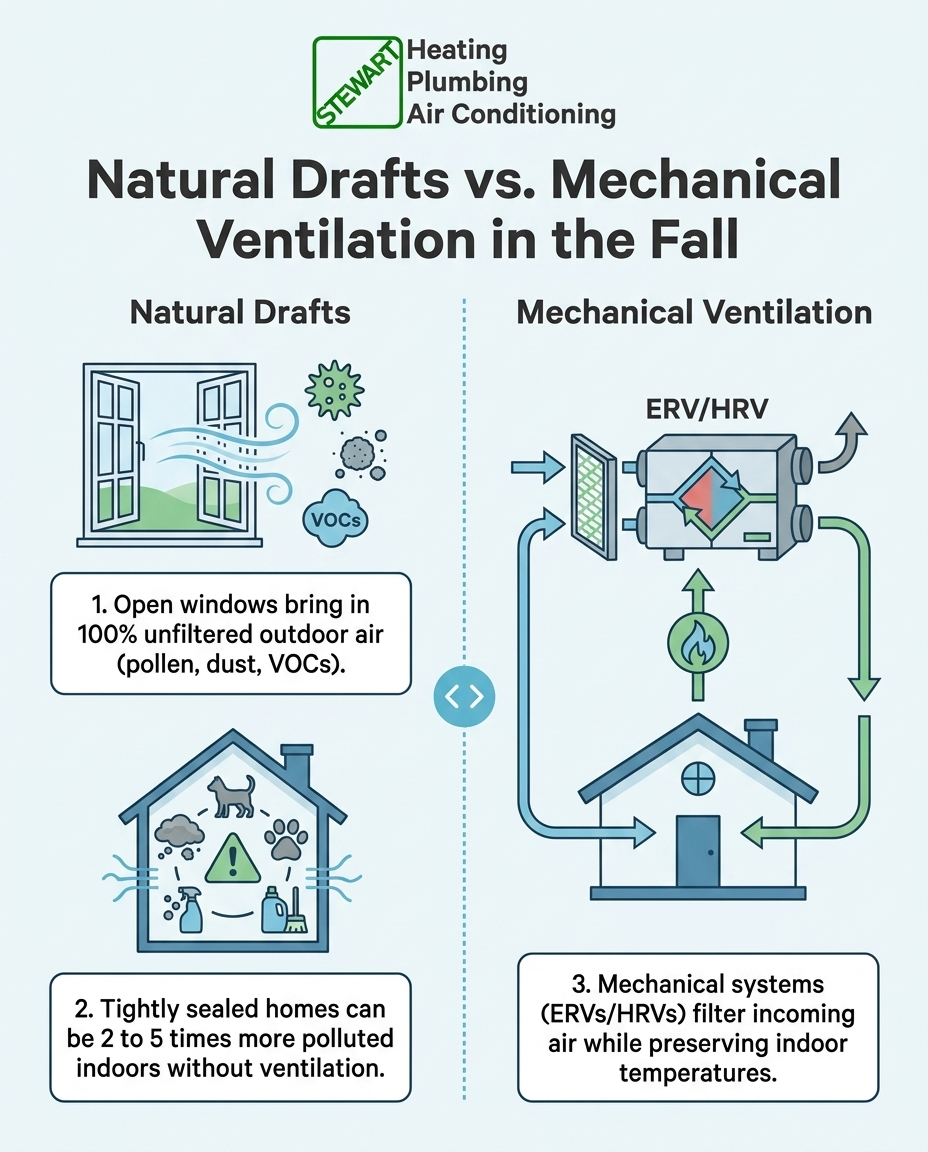
Modern energy-efficient upgrades—such as advanced weatherstripping, double-pane windows, spray foam insulation, and sealed ductwork—are designed to create an airtight envelope. This is excellent for reducing energy consumption and maintaining a consistent temperature. However, it completely eliminates natural air exchange. Environmental Protection Agency (EPA) data notes that indoor air can be two to five times more polluted than outdoor air when a home is tightly sealed without proper ventilation. When our team evaluates properties to achieve optimal residential indoor comfort, we find it now requires a delicate balance: you must maintain the energy-efficient seal while implementing a system for active, controlled air exchange.
When you stop opening your windows during the September transition to cooler nights, the airtight nature of modern homes becomes immediately apparent. Without fresh air entering, the concentrations of Volatile Organic Compounds (VOCs) from cleaning supplies and furniture off-gassing begin to spike. Cooking odors linger for days. Carbon dioxide (CO2) levels rise simply from the occupants breathing.
The mechanics of stale air buildup:
1. Source emission: Everyday activities (cooking, cleaning, showering) release moisture, odors, and chemicals into the air.
2. Lack of dilution: Because the windows are locked and the house is sealed against the cooler fall weather, these emissions have nowhere to go.
3. Saturation: The air becomes saturated with CO2 and VOCs, leading to the physical sensation of "stuffiness" and lethargy that homeowners frequently notice in late autumn.
Natural ventilation introduces a specific set of seasonal contaminants that wreak havoc once trapped inside. The Pittsburg / Delta region experiences a unique blend of coastal and agricultural fallout during the autumn months. Ragweed is a primary culprit, producing massive amounts of pollen that travel easily on the wind. Additionally, late summer and early fall agricultural harvesting in the nearby Central Valley kicks up fine dust that the Delta breeze carries directly toward the East Bay.
When windows are left open, these particulates drift inside and settle quickly. They embed themselves into carpets, rest on top of ceiling fan blades, and get drawn into the return vents of your HVAC system. The real problem begins when the weather turns cold enough to require heating. Once the furnace kicks on for the first time, the blower violently recirculates all of those settled allergens throughout the house. This recirculation effect is why many people experience a sudden spike in allergy symptoms right when the heating season begins.
Addressing this buildup requires professional intervention. Just last season, our team responded to a local homeowner who realized how severe this issue can get during an autumn maintenance visit. They needed assistance because their system efficiency had dropped significantly. Our technician evaluated the home, explained the underlying airflow issues caused by trapped particulates, and made professional recommendations for a completely new, advanced filter system alongside updated safety detectors. Upgrading to advanced filtration is the only way to actively capture and remove the specific contaminants left behind by natural breezes.
Relying on the weather for fresh air is inherently unpredictable. Mechanical ventilation provides a controlled, engineered solution to air exchange. Systems like Energy Recovery Ventilators (ERVs) and Heat Recovery Ventilators (HRVs) are designed to exhaust stale, polluted indoor air while simultaneously drawing in fresh outdoor air. Crucially, these systems filter the incoming air, stripping out the agricultural dust and pollen that natural breezes carry.
The greatest advantage of mechanical ventilation is energy recovery. During the cooler months, an ERV captures the heat from the stale indoor air before it is exhausted outside. It uses that captured heat to warm the incoming fresh air. This means you get the benefit of fresh outdoor air without losing the heat your furnace just worked hard to generate. It provides predictable, 24/7 air quality management regardless of what the weather is doing outside.
Comparing Ventilation Methods:
• Airflow Control — Natural Drafts (Open Windows): Unpredictable; depends entirely on wind and weather. — Mechanical Ventilation (ERVs/HRVs): Precise and controlled; operates 24/7 at set volumes.
• Filtration — Natural Drafts (Open Windows): None; brings in 100% of outdoor dust, pollen, and smog. — Mechanical Ventilation (ERVs/HRVs): High; incoming air passes through dedicated IAQ filters.
• Energy Efficiency — Natural Drafts (Open Windows): Poor; immediately loses indoor heating or cooling. — Mechanical Ventilation (ERVs/HRVs): Excellent; recovers heat and moisture to reduce HVAC strain.
• Security — Natural Drafts (Open Windows): Low; requires leaving ground-floor windows open. — Mechanical Ventilation (ERVs/HRVs): High; operates with all windows securely locked.
It is important to differentiate between standard HVAC filters and high-MERV indoor air quality filters. The basic 1-inch filter found in most returns is designed solely to protect the furnace blower motor from large debris like pet hair. It does virtually nothing to protect human health. Proper mechanical ventilation works in tandem with high-efficiency filtration to capture microscopic allergens, VOCs, and fine dust. When you invest in dedicated indoor air quality solutions, you are upgrading from equipment protection to health protection.
Before the deep cold sets in and your furnace is running constantly, early fall is the critical window to assess your home's ventilation setup. Taking action now prevents the discomfort of poor air quality during peak winter when opening a window is no longer an option. Having served the Pittsburg community since 1974, our team at Stewart Heating, Plumbing and Air Conditioning understands exactly how local home construction has evolved. Older delta homes and newly constructed subdivisions alike require specific strategies to handle this seasonal transition.
A comprehensive system evaluation is the most effective way to identify efficiency bottlenecks and air quality gaps. We regularly see this firsthand; recently, our technicians helped a local customer who scheduled an autumn assessment because their system was struggling to maintain comfort. We explained the underlying issues and suggested appropriate measures to optimize system efficiency, ensuring the home was ready for the heavy heating season.
Actionable steps to prepare your home for fall:
1. Assess your current filtration: Check the MERV rating on your existing filters. If you are using standard fiberglass filters, upgrade to a pleated filter that can capture finer particulates.
2. Evaluate your home's envelope: Inspect weatherstripping around doors and windows. If your home is highly sealed, recognize that mechanical ventilation is a requirement, not a luxury.
3. Consider an ERV installation: Consult with a professional about integrating an Energy Recovery Ventilator to provide filtered, pre-conditioned fresh air year-round.
4. Schedule professional maintenance: Establish a consistent HVAC maintenance plan to ensure blowers are clean, filters are fresh, and ventilation components are properly calibrated before the furnace takes on the heavy lifting of winter.
Why is my house so dusty in the fall?
Your house gets dusty in the fall because late summer breezes carry agricultural dust and pollen indoors through open windows. Once you shut the windows for cooler September nights, that dust is trapped inside. When you eventually turn on your heating system, the blower kicks up the settled dust and recirculates it through your living space.
Is it better to open windows or use a ventilation system?
Using a mechanical ventilation system is vastly superior to opening windows. While open windows provide a natural draft, they bring in 100% unfiltered air filled with allergens and pollutants. A mechanical system like an ERV filters the incoming fresh air while retaining your home's indoor temperature, offering controlled and clean air exchange.
How do you ventilate a tightly sealed house in the fall?
The most effective method to ventilate a tightly sealed house is by installing a whole-home mechanical ventilation system, such as an Energy Recovery Ventilator. This equipment actively exhausts stale indoor air and draws in fresh outdoor air. It ensures continuous air exchange without compromising the energy efficiency of your sealed windows and doors.
Why does my house get stuffy when I close the windows?
Your house gets stuffy because modern homes are built to be airtight for energy efficiency. When windows are closed, everyday activities generate VOCs, cooking odors, and carbon dioxide that have nowhere to escape. Without active mechanical ventilation, these indoor pollutants accumulate rapidly, creating a heavy, stale sensation.
Does the Delta breeze bring in dust and pollen?
Yes, the Delta breeze actively carries significant amounts of outdoor particulates. As the wind travels from the coast and through the valleys toward Pittsburg, it picks up regional agricultural dust, vehicle emissions, and seasonal pollen like ragweed. Relying on the breeze for cooling means you are directly introducing these irritants into your home.
Can a whole-home ventilation system help with fall allergies?
Absolutely. A whole-home ventilation system drastically reduces fall allergy symptoms by filtering out outdoor triggers before they enter your living space. By pairing controlled air exchange with high-MERV filtration, the system dilutes indoor allergens and prevents the recirculation of dust and pollen that typically causes seasonal flare-ups.
The transition from summer to fall shouldn't mean sacrificing the air you breathe. While the evening breezes feel refreshing, they cannot provide the consistent, filtered air exchange a tightly sealed Pittsburg home requires. By implementing a professional mechanical ventilation strategy with our team, you can enjoy a fresh, healthy indoor environment all season long, giving you the confidence that your home is fully prepared for the winter months ahead.

Very professional and complete. I would recommend Stewart to anyone. Highest quality of workmanship and clean installation.
Stewart Heating Plumbing Air Conditioning just did some work for us for the first time. They did an installation at my home and it turned out well. I thought the price was fair and I definitely would use them again. The technicians were very friendly and knowledgeable about their work. I highly recommend Stewart Heating Plumbing Air Conditioning and already told friends to use them.
We have been using Stewart Heating Plumbing Air Conditioning since 1995. They put the original heating and air unit in the house, and we have just stayed with them. They are dependable and honest people, and they have done a good job for us every time that we have used them!
They came and did an inspection and are coming tomorrow to do the repair.
They replaced a regulator the first time, and then the water heater vent had to be replaced. They did great work.
The gentleman that serviced us was helpful, insightful, and knew what he was talking about. Overall, it was a great experience.