

Recent Blogs
Stay updated with our latest blog posts.

September in the East Bay often brings a false sense of security, making preparing your exposed plumbing pipes for unpredictable fall weather feel less urgent than it truly is. When the days are warm, sunny, and comfortable, it is incredibly easy to delay your cold-weather property preparations. However, the transition between seasons is rarely a smooth, gradual decline in temperature. Instead, early fall is characterized by sudden, sharp drops that catch many homeowners entirely off guard.
If you discover existing vulnerabilities or damage during your early fall (September) prep before overnight temperature drops, partnering with expert plumbing services is the safest way to protect your home's infrastructure before a true freeze sets in.
The primary danger during this seasonal shift is a meteorological phenomenon known as radiational cooling. During the day, the ground and your home's exterior absorb heat from the sun. Under clear night skies—which are incredibly common in our region during autumn—that stored heat escapes rapidly back into the atmosphere. This rapid heat loss can cause localized temperatures around your home's foundation to plummet much faster than the general weather forecast might indicate.
The decision point for every proactive homeowner is simple: identifying exactly which exterior pipes are vulnerable and applying the correct insulation before that first unexpected cold snap hits. Understanding the physics behind freezing pipes highlights exactly why this preparation is so critical.
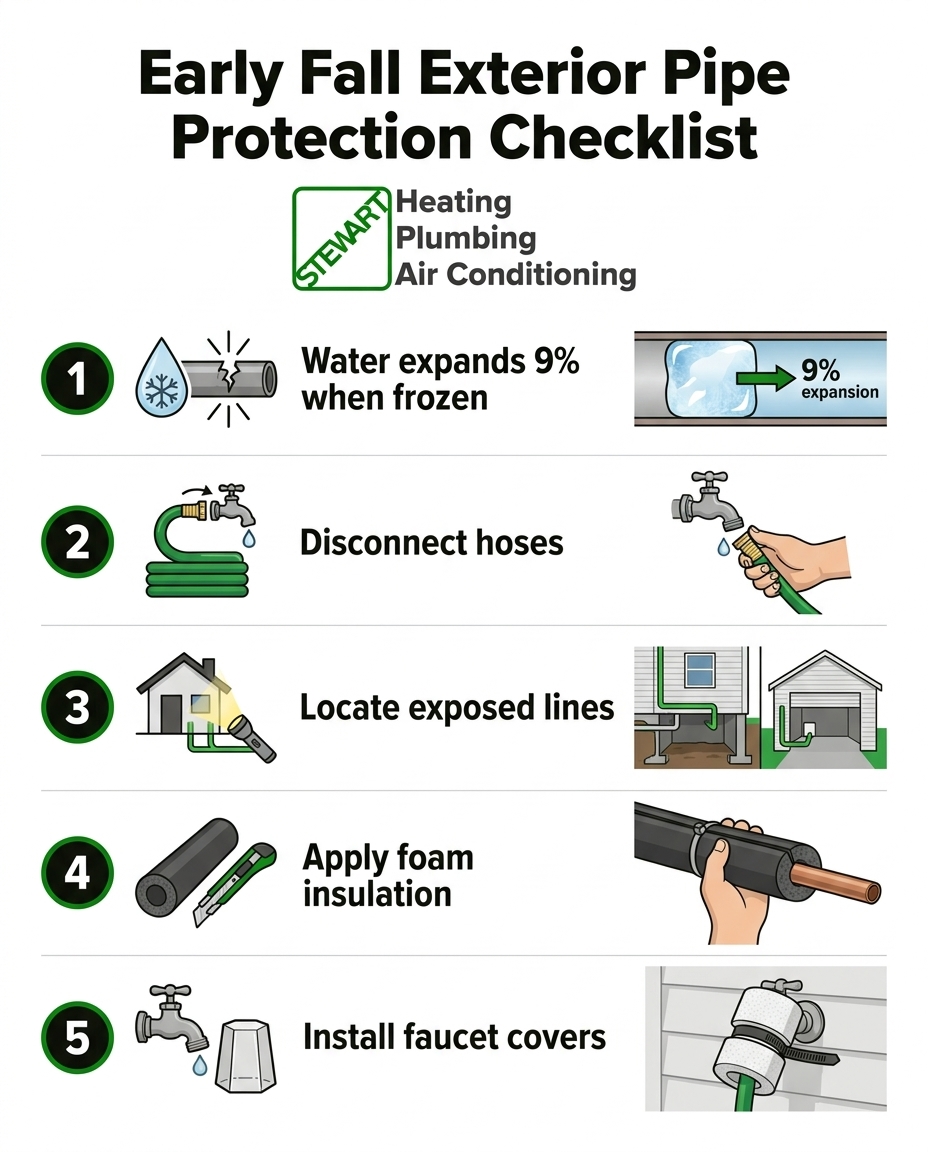
When water drops below freezing, it undergoes a unique physical change. Unlike most substances that shrink as they cool, water expands by approximately 9% when it turns into ice. This expansion does not simply push the water forward; it creates an immense, trapped pressure backward into the pipe system. A solid block of ice acts like a plug, and as more water freezes and expands behind it, the pressure builds to thousands of pounds per square inch. No residential plumbing material—whether it is copper, PVC, or PEX—can withstand that level of internal force indefinitely. Eventually, the pipe wall yields, leading to a catastrophic rupture.
When discussing weather patterns, it is vital to recognize that the broader regional forecast does not always reflect the reality in your specific backyard. The East Bay features a classic Mediterranean climate, meaning we enjoy long, warm, dry summers and relatively mild winters. However, this climate profile also means that warm, sunny days can abruptly transition into freezing, clear nights.
This localized variation is especially relevant for Pittsburgh, CA residential properties. Valley and inland areas experience drastically different overnight lows than coastal weather reports might predict. While a weather station near the water might register a safe 42 degrees, a property tucked into an inland valley could easily see ground-level temperatures dip below the freezing point.
Ambient air temperature is only one piece of the puzzle. Wind chill plays a massive role in how quickly exposed exterior plumbing reaches a critical failure point. While wind chill does not lower the actual temperature of the air, it strips away the thin layer of insulating warmth that naturally surrounds physical objects, including exposed pipes and hose bibs.
How environmental factors accelerate freezing:
• High wind exposure: Pipes located on the windward side of your home lose heat exponentially faster than those sheltered by fencing or landscaping.
• Clear night skies: Without cloud cover to trap daytime heat, surface temperatures on metal pipes can drop below the ambient air temperature.
• Shaded micro-zones: Areas of your property that receive zero direct sunlight during the shortened fall days start the night at a lower baseline temperature.
Because of these factors, frost can easily develop on exposed exterior surfaces even when ambient air temperatures are slightly above freezing. Treating exterior pipe protection as a proactive measure against these localized, unpredictable microclimate events is the best way to prevent emergency bursts.
Protecting your home begins with a thorough, systematic walk-through of your property. You cannot insulate what you do not know is there. Conducting this visual inspection during your early fall (September) prep before overnight temperature drops gives you ample time to address vulnerabilities.
Following a structured pre-winter plumbing inspection timeline ensures no fixture is left exposed to the elements.
Your Exterior Plumbing Inspection Checklist:
• Perimeter Hose Bibs: Walk the entire exterior foundation of your home. Locate every outdoor faucet, including those hidden behind mature bushes or stored patio furniture.
• Unheated Interior Spaces: Inspect areas that lack climate control, such as ventilated crawlspaces, unfinished basements, and attached garages. Pipes in these zones are highly susceptible to ambient temperature drops.
• Exposed Supply Lines: Look for primary water lines that run vertically up exterior walls or pass through uninsulated structural voids before entering the living space.
• Irrigation Connections: Check above-ground backflow preventers, sprinkler system connection points, and dedicated irrigation shut-off valves.
Even meticulous homeowners sometimes miss specific plumbing fixtures because they are integrated into secondary systems or hidden from daily view. Pay special attention to these high-risk zones:
• Pipes located near foundation vents: Cold drafts blowing directly through foundation vents can freeze adjacent crawlspace pipes, even if the rest of the space remains relatively warm.
• Outdoor kitchen lines: Exterior sinks, ice makers, and pool house supply lines are often forgotten until they burst and flood the patio.
• Exposed side-yard valves: Main shut-off valves or pressure regulators located on the side of the house often feature exposed brass or copper components that require heavy insulation.
One of the most critical steps in exterior pipe protection requires absolutely zero technical skill, yet failing to do it causes countless plumbing emergencies every year. Disconnecting your garden hoses is the foundation of fall plumbing prep for Pittsburgh, CA residential properties.
When a hose remains connected to an outdoor spigot, it prevents the fixture from draining properly. Even if you have turned the faucet off tightly, water remains trapped inside the hose and the body of the spigot. When the temperature drops, that trapped water freezes into a solid block of ice.
Because the ice has nowhere to expand outward into the hose, it forces immense pressure backward into the home's interior pipes. This is how a frozen outdoor faucet causes a pipe to burst inside your living room wall.
1. Shut off the water flow: Ensure the exterior faucet is turned off completely and is not dripping.
2. Disconnect the fitting: Unscrew the hose from the spigot. If it is stuck due to mineral buildup, use a pair of adjustable pliers to gently break the seal.
3. Drain the line completely: Walk the entire length of the hose, elevating it as you go, to force all remaining water out of the open end using gravity.
4. Coil and store safely: Coil the empty hose loosely to prevent kinks and store it in a protected, climate-stable area like a garage or weather-proof shed.
Positioning this simple task as an automatic addition to your standard yard cleanup routine guarantees it is completed long before the frost arrives.
Once you have disconnected your hoses and identified your vulnerable lines, the next step is applying the right physical barriers. The goal of DIY pipe insulation is to slow the transfer of heat away from the pipe, keeping the water inside above the freezing point during overnight temperature dips.
Steps for Safe, Effective DIY Pipe Insulation:
• Locate all exposed exterior supply lines and hose bibs: Ensure the pipes are entirely dry and free of dirt or debris before applying any materials.
• Measure and cut foam pipe insulation sleeves: Use closed-cell polyethylene foam tubes (commonly called "pool noodles" for pipes) to fit snugly around exposed straight sections of pipe. The foam should wrap entirely around the diameter without stretching.
• Secure the foam tubing firmly: Use weather-resistant tape, zip ties, or the foam sleeve's built-in adhesive strips to seal the slit along the length of the tube. Ensure there are no gaps where cold air can penetrate.
• Install insulated outdoor faucet covers: Place hard plastic or thick styrofoam dome covers tightly over all disconnected hose bibs. Pull the internal tension string tight so the edges of the cover sit flush against the exterior siding, creating an airtight seal.
When shopping for supplies during your early fall (September) prep before overnight temperature drops, stick to materials designed specifically for residential homeowner use. Closed-cell foam tubes are inexpensive, easy to cut with standard scissors, and highly effective for straight pipe runs. Hard-shell faucet covers offer superior protection against wind chill compared to soft cloth bags, as they create a dead-air space around the brass fixture that acts as a powerful insulating buffer.
Shifting your mindset from reactive winter emergency response to proactive seasonal transition makes maintaining your home significantly less stressful. Rather than scrambling in the dark on the first freezing night of the year, integrate your pipe protection tasks into your standard autumn yard work.
Group your plumbing insulation tasks with other seasonal activities like clearing gutters, raking leaves, and pruning back summer growth. When you are already walking the perimeter of your house with a rake and yard bags, it takes only a few extra minutes to snap a foam cover onto an exposed hose bib.
Acting early also ensures that essential materials are actually available. Hardware stores frequently sell out of faucet covers and foam tubing the afternoon before a forecasted freeze. By completing your early fall (September) prep before overnight temperature drops become a regular occurrence, you guarantee you have the exact sizes and materials your home requires.
While you are clearing debris away from your foundation, take the time to conduct routine visual inspections of your plumbing fixtures. Look for slow drips, persistent moisture around the base of a spigot, or signs of corrosion on the metal. Catching a small drip in September is a minor annoyance; letting that same drip freeze, expand, and shatter the valve in December is a major disaster. Incorporating these checks into a broader preventative maintenance plan keeps your entire property functioning smoothly year-round.
While installing foam sleeves and hard plastic covers is perfectly safe for the average homeowner, there are strict boundaries between basic DIY insulation and tasks that require a licensed professional. Attempting complex plumbing modifications without the proper training often leads to severe water damage and code violations.
You should call an expert if you encounter hard-to-reach crawlspace pipes that require extensive maneuvering, or if you discover aging, corroded valves that feel brittle to the touch. Never attempt to install frost-free hose bibs or alter primary water supply lines on your own. Frost-free bibs require precise downward pitching to drain correctly; if installed at the wrong angle by an amateur, they will hold water and burst just like a standard faucet.
DIY Safety vs. Professional Expertise:
• Disconnecting hoses — Safe for Homeowners?: Yes — Why?: Requires no tools; eliminates the primary cause of wall bursts.
• Installing foam sleeves — Safe for Homeowners?: Yes — Why?: Non-invasive; materials are easily cut and secured by hand.
• Replacing a leaking spigot — Safe for Homeowners?: No — Why?: Requires soldering or specialized crimping tools; high risk of internal leaks.
• Installing frost-free valves — Safe for Homeowners?: No — Why?: Requires precise structural pitching and professional wall penetration.
A professional assessment can also identify hidden vulnerabilities inside exterior walls that a standard visual inspection might miss. With a trusted history of serving Contra Costa County since 1974, we have seen decades of preventable early-season pipe bursts across Pittsburgh, CA residential properties. Addressing these complex issues long before a deep freeze occurs is always the most cost-effective strategy. If you spot advanced wear and tear, utilizing plumbing repair specials can help mitigate the cost of essential upgrades.
The peace of mind gained by completing proactive exterior pipe insulation is invaluable. Knowing that your home is fortified against unexpected temperature swings allows you to enjoy the changing seasons without anxiety.
We encourage you to finalize your property walk-through this week, completing your early fall (September) prep before overnight temperature drops put your system at risk. If you discover damaged exterior fixtures, stubborn leaks, or severely corroded valves during your inspection, do not wait for the weather to turn. Reach out to the experts and request plumbing service today to ensure your property remains safe, dry, and fully protected all winter long.
At what temperature do exposed pipes freeze?
Exposed pipes typically begin to freeze when ambient temperatures drop to 20°F or lower for several consecutive hours. However, wind chill, clear night skies, and specific microclimates can cause exposed exterior plumbing to freeze even when the general weather report indicates temperatures slightly above freezing.
Should I cover outside faucets in the fall?
Yes, early fall is the ideal time to cover your outside faucets. Installing covers in September or October ensures your plumbing is protected before the first unexpected overnight freeze hits, preventing the mad dash to the hardware store when a cold snap is suddenly forecasted.
How do you protect exposed exterior pipes from freezing?
The most effective method is a combination of draining lines and adding physical insulation. Disconnect and store all garden hoses, then wrap exposed straight pipes in closed-cell foam tubing and secure hard plastic dome covers over every exterior hose bib.
What is the best insulation for exterior plumbing?
For DIY homeowner applications, closed-cell polyethylene foam sleeves are the best choice for straight pipe runs because they resist moisture and are easy to install. For hose bibs, hard plastic or thick styrofoam dome covers with internal tension ties provide the best defense against cold drafts.
Why do pipes often burst during early fall cold snaps?
Pipes burst in the fall because homeowners are frequently caught off guard by rapid radiational cooling under clear night skies. The sudden drop freezes trapped water, which expands by 9% and forces immense pressure backward into the plumbing system until the pipe wall ruptures.

Very professional and complete. I would recommend Stewart to anyone. Highest quality of workmanship and clean installation.
Stewart Heating Plumbing Air Conditioning just did some work for us for the first time. They did an installation at my home and it turned out well. I thought the price was fair and I definitely would use them again. The technicians were very friendly and knowledgeable about their work. I highly recommend Stewart Heating Plumbing Air Conditioning and already told friends to use them.
We have been using Stewart Heating Plumbing Air Conditioning since 1995. They put the original heating and air unit in the house, and we have just stayed with them. They are dependable and honest people, and they have done a good job for us every time that we have used them!
They came and did an inspection and are coming tomorrow to do the repair.
They replaced a regulator the first time, and then the water heater vent had to be replaced. They did great work.
The gentleman that serviced us was helpful, insightful, and knew what he was talking about. Overall, it was a great experience.