

Recent Blogs
Stay updated with our latest blog posts.

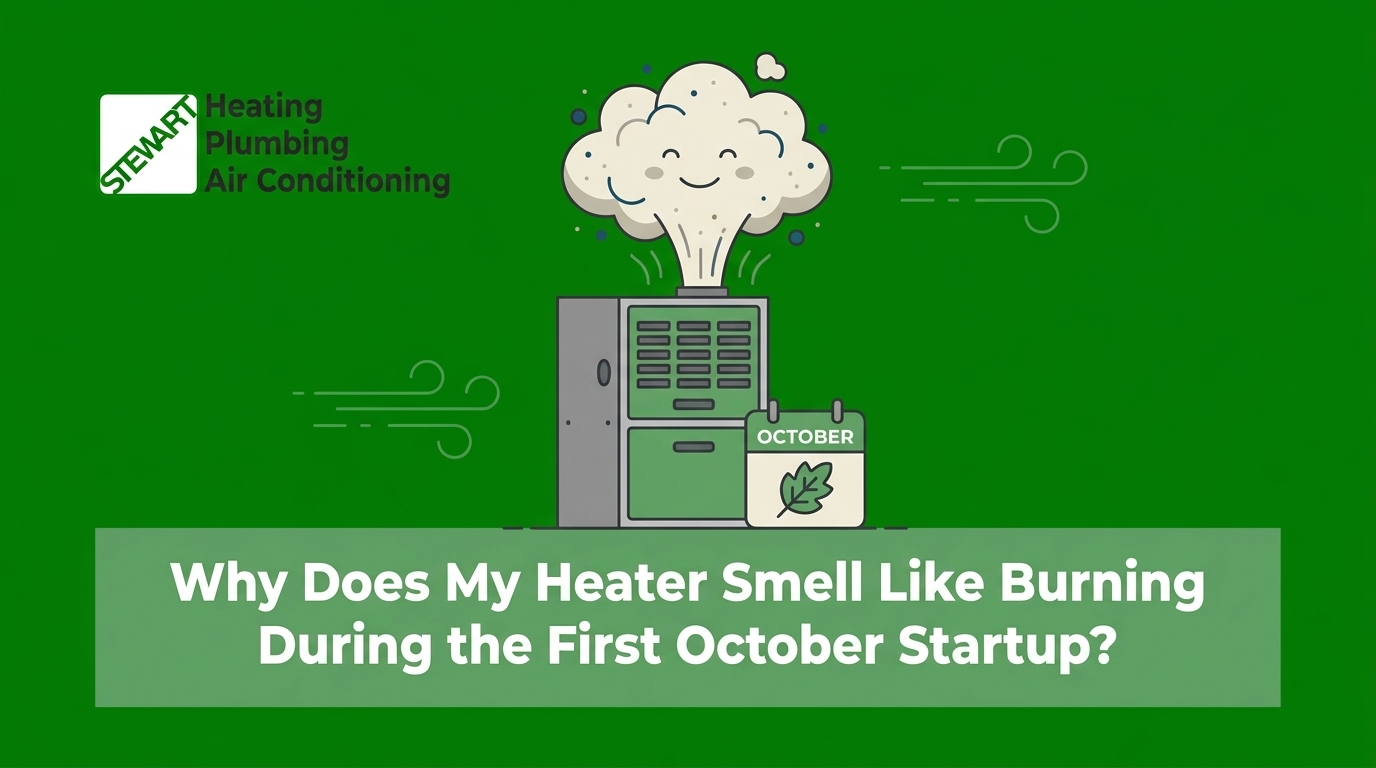
Why does my heater smell like burning dust when I first turn it on? If you are asking this question, you are likely experiencing the sudden panic that countless homeowners face during their September or early fall first heating cycle. You walk over to the thermostat, switch the system from cooling to heating, and listen as the furnace fires up for the first time in months. Within minutes, a distinct, alarming odor fills the hallways and living rooms. Your immediate thought is usually to wonder if your heating system is failing, or worse, if your house is in danger.
The short answer is that in the vast majority of cases, this smell is a completely normal physical reaction to your heating equipment sitting idle over the summer. When a furnace is not actively generating heat, its internal components become a resting place for everyday household debris. However, knowing that a dusty smell is normal does not mean you should ignore every odor your heating system produces. Learning to distinguish between a harmless, temporary dust burn-off and a true mechanical or electrical emergency is essential for keeping your home safe.
To keep your system running safely and eliminate the guesswork, explore our professional heating services and consider an annual heating maintenance plan.
To understand why your furnace creates this specific odor, it helps to look at the mechanics of your HVAC system during its dormant months. Throughout the long, dry Contra Costa County summers, a significant amount of airborne particulate matter circulates through your ductwork. Even if you are running your air conditioner daily, your furnace's specific heating components—like the heat exchanger and the burner assembly—remain entirely inactive.
When a furnace sits idle, it effectively turns into a trap for settling debris. If you run your HVAC fan continuously to circulate air during the summer, even more air passes over these dormant heating components, depositing microscopic layers of debris. Systems that stay completely dormant still accumulate dust naturally as air naturally moves through the home's ventilation network.
The layer of debris that settles on your furnace's internal components is made up of several common household particulates. Depending on your home environment, this layer typically includes:
• Human skin cells: The primary component of ordinary household dust.
• Pet dander and hair: Microscopic flakes of skin and fur shed by cats and dogs.
• Cooking residue: Airborne oils and microscopic food particles that travel through the air.
• Outdoor dry dust: Dirt, pollen, and dry soil tracked in from outside or blown through open windows.
When the thermostat finally calls for heat in the early fall, the combustion process begins. The burners ignite, and the heat exchanger rapidly climbs to temperatures exceeding 140 degrees Fahrenheit. The following sequence occurs:
1. The sudden, intense heat transfers directly to the accumulated layer of dust on the metal surfaces.
2. The airborne particulates instantly incinerate upon contact with the hot metal.
3. The blower motor pushes air over the heat exchanger to warm your home, simultaneously carrying the smell of the incinerated dust through your ductwork and out of your supply vents.
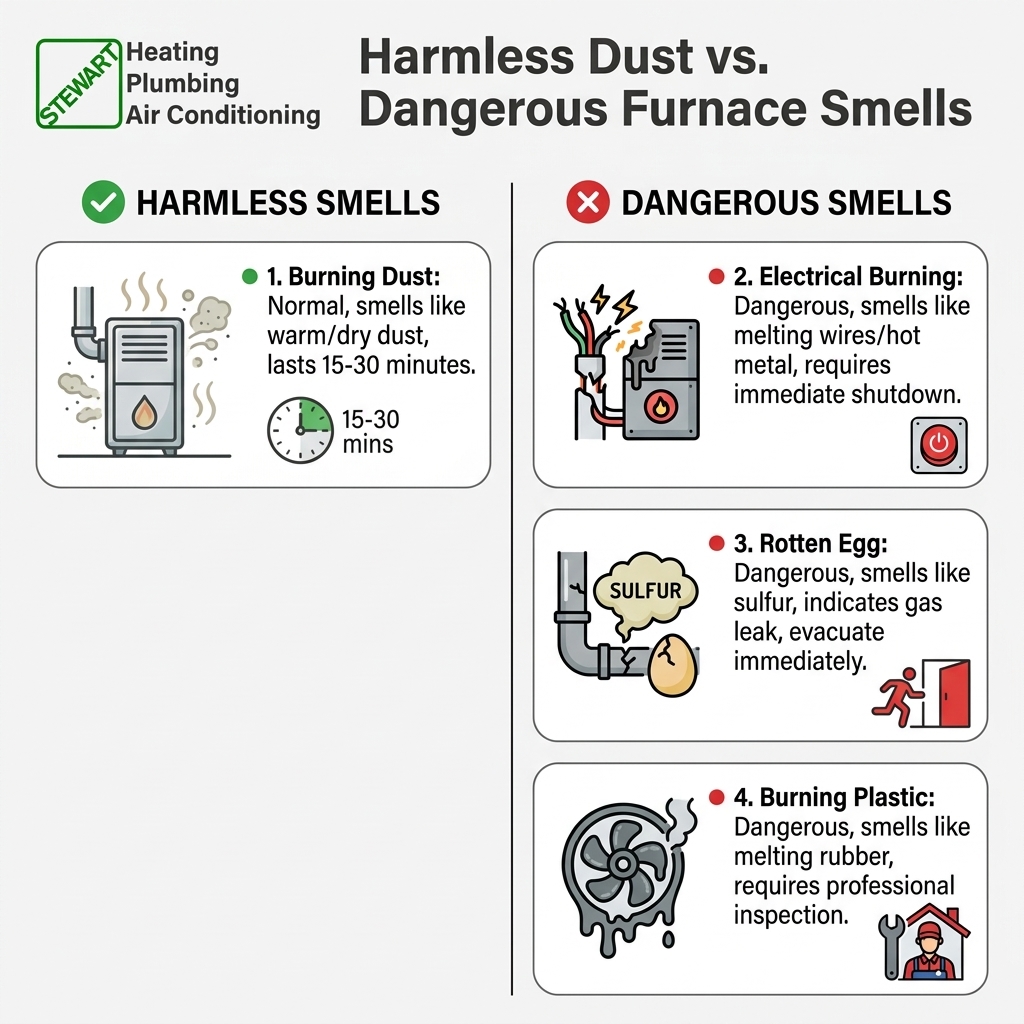
While the smell of burning dust is normal, it is only normal for a very specific window of time. A standard dust burn-off should completely dissipate within 15 to 30 minutes of the first heating cycle. Because the layer of dust on the heat exchanger is incredibly thin, it incinerates rapidly. Once that initial layer is gone, the source of the odor is eliminated.
When you turn your heater on for the first time, you should monitor the smell closely rather than turning on the system and leaving the house unattended. You need to be present to ensure the smell begins to fade rather than grow stronger. If the weather permits, you can temporarily open a few windows to help ventilate the home and clear the odor faster while the initial cycle runs.
• 0 - 15 Minutes — What to Expect: Strong, distinct smell of warm, dry dust coming from all supply vents. — Recommended Action: Keep the system running. Monitor the odor closely. Open windows if desired.
• 15 - 30 Minutes — What to Expect: The smell should begin to fade noticeably as the dust finishes burning off. — Recommended Action: Continue monitoring. The air should start smelling neutral again.
• 30 - 60 Minutes — What to Expect: The smell should be completely gone, leaving only warm air. — Recommended Action: If the smell persists, prepare to shut the system down.
• 60+ Minutes — What to Expect: Persistent burning odor that does not fade or grows sharper. — Recommended Action: Turn the system off at the thermostat and call a professional.
If the smell persists beyond one hour, or if it returns every time the furnace cycles on over the next few days, it is no longer a normal dust burn-off. Persistent odors indicate a mechanical issue that requires professional attention.
While a dusty odor is harmless, other smells are distinct warning signs of critical failures. For homeowners in Pittsburgh, CA area homes, knowing when to immediately power down the system can prevent severe property damage or health hazards. You should never attempt to open the furnace cabinet or perform DIY repairs on electrical or gas components. If you detect any of the following odors, turn the system off at the thermostat immediately.
An electrical burning smell is sharp, metallic, and often resembles the scent of melting wire insulation or an overheating appliance motor. This is drastically different from the dry, earthy smell of burning dust. An electrical odor usually indicates a failing blower motor, frayed internal wiring, a seized bearing causing friction, or a failing capacitor. If your furnace smells like hot metal or ozone, shut it down immediately to prevent a potential fire hazard and schedule a professional inspection.
A smell resembling rotten eggs or sulfur is the most dangerous odor your heating system can produce. Natural gas is naturally odorless, so utility companies add a chemical called mercaptan to give it this distinct, foul scent. If you smell rotten eggs when your furnace kicks on, it is the undeniable indicator of a natural gas leak. Do not turn on lights, do not use your phone inside the house, and do not attempt to find the leak. Evacuate the home immediately and contact your utility company or emergency services from a safe distance.
If the air coming from your vents smells like a melting plastic toy or a scorching rubber belt, there is likely a foreign object inside the system or a failing internal component. Often, small children may drop plastic toys or wrappers down a floor register during the summer. When the heat turns on, the hot air begins to melt the plastic inside the ductwork. Alternatively, older furnaces that still utilize belt-driven blowers may produce a burning rubber smell if the belt is slipping or degrading. This requires a professional to safely locate and remove the hazard.
The severity of the burning dust smell you experience in the fall is directly tied to the overall indoor air quality of your home during the summer. Homes with higher levels of pet dander, poor ventilation, or significant summer dust accumulation will naturally experience a much stronger burning smell when the heat kicks on. If your indoor air is saturated with particulates, a larger volume of debris will settle on the heat exchanger.
One of the most effective ways to minimize this early-fall odor is to change your HVAC filter before turning the heat on for the first time. A clean, high-quality filter catches airborne debris before it can enter the furnace cabinet and settle on the heating components. If you leave a dirty summer filter in place, the blower motor will struggle to pull air through it, forcing the system to work harder and potentially pulling dust past the filter edges.
A common pattern we see in local homes is that recurring heating problems are often tied to neglected air quality. For instance, when a homeowner experiences recurring heating issues caused by poor airflow and accumulated debris, a technician thoroughly explaining the repair process often leads them to sign up for a routine maintenance contract. By investing in comprehensive indoor air quality solutions, you can reduce dust circulation year-round, which keeps your ductwork cleaner and significantly minimizes the fall burn-off effect.
The most reliable way to prevent the burning dust smell entirely is through proactive, professional maintenance. Serving local homeowners since 1974, we have guided the community through this exact early-fall transition for over 50 years. We know that a system that is cleaned before it is turned on will not produce alarming odors.
During a professional fall tune-up, a technician carefully cleans the heat exchanger and burner assembly, physically removing the accumulated summer dust before it ever has a chance to burn. This proactive cleaning eliminates the source of the odor. Furthermore, a comprehensive tune-up includes critical safety checks. The technician will measure electrical voltage, inspect wiring for signs of wear, and test the gas valve for leaks, ensuring that no dangerous electrical or rotten egg smells will surprise you later in the season.
Routine maintenance visits also provide an excellent opportunity to upgrade your home's overall safety. A typical pattern we see during these service calls is homeowners requesting recommendations for holistic home protection. Technicians routinely provide knowledgeable advice on installing new high-efficiency filter systems, updating fire alarms, and placing carbon monoxide detectors in optimal locations. Scheduling this maintenance provides total peace of mind for the entire winter season.
While a brief dusty smell is normal, recurring mechanical odors often indicate an aging, failing system that requires replacement rather than a simple repair. The lifespan of a typical residential furnace is roughly 15 to 20 years. As the system approaches the end of its life, components like the blower motor begin to draw excessive electricity, overheat, and produce persistent electrical burning smells. If your furnace constantly smells like hot metal or burning rubber, and it is over 15 years old, investing in continuous repairs is rarely cost-effective.
Upgrading to a modern, high-efficiency heating system improves your home's safety, enhances daily comfort, and drastically improves indoor air quality. Modern systems feature sealed combustion chambers and advanced filtration capabilities that prevent dust from accumulating on internal components in the first place.
When considering an upgrade, it is worth noting that energy-efficient modernization is heavily incentivized. Homeowners can often take advantage of programs like PG&E energy rebates or generic federal tax credits when upgrading to qualifying equipment. While you should always verify current program details with your utility provider or a tax professional, these incentives make replacing an old, smelly, and potentially unsafe furnace much more accessible.
The normal burning dust smell should last between 15 and 30 minutes during the very first heating cycle of the season. As the thin layer of summer dust burns off the heat exchanger, the odor will steadily fade. If the smell persists for more than an hour, it is no longer a normal burn-off and requires professional attention.
It is safe to leave the heater on only if the smell is clearly the dry, earthy scent of burning dust and it is fading within the first 30 minutes. You should monitor the system closely during this time. If the smell resembles melting plastic, hot electrical wires, or rotten eggs, it is not safe to leave the heater on and you must shut it down immediately.
Your house smells like it is burning because dust, pet dander, and airborne debris have settled on your furnace's heat exchanger during the idle summer months. When the furnace ignites for the first time in the fall, the heat exchanger gets extremely hot and instantly incinerates this debris, sending a temporary burning odor through your ductwork.
A bad or dangerous furnace smell typically resembles sharp, unnatural odors rather than simple dust. Warning signs include the smell of melting wire insulation (indicating electrical failure), scorching rubber (indicating a failing blower belt), or rotten eggs and sulfur (indicating a highly dangerous natural gas leak).
Yes, you can prevent the burning smell by scheduling a professional heating tune-up before you turn the system on for the first time in the fall. A technician will clean the heat exchanger and burners, removing the accumulated dust so there is nothing left to burn when the system ignites.
Yes, opening a few windows temporarily is a great way to help ventilate your home and clear the harmless dust odor faster. Leave the windows open for the first 15 to 20 minutes of the heating cycle to allow fresh air to circulate, then close them once the smell has dissipated to keep the heat inside.
Experiencing a burning smell when you turn on your heater for the first time can be startling, but understanding the mechanics behind it provides immediate peace of mind. Remember that a brief, 15-to-30-minute burning dust smell is a normal result of summer debris burning off the heat exchanger. However, persistent odors, electrical smells, or the scent of rotten eggs are never normal and require immediate shutdown.
To ensure your home remains safe and comfortable all winter long, you should never leave your system's health to chance. Prioritize your peace of mind by scheduling a pre-season inspection or a comprehensive tune-up. If you have any lingering concerns about strange odors coming from your vents, contact a local heating expert today to secure a safe, odor-free heating season.

Very professional and complete. I would recommend Stewart to anyone. Highest quality of workmanship and clean installation.
Stewart Heating Plumbing Air Conditioning just did some work for us for the first time. They did an installation at my home and it turned out well. I thought the price was fair and I definitely would use them again. The technicians were very friendly and knowledgeable about their work. I highly recommend Stewart Heating Plumbing Air Conditioning and already told friends to use them.
We have been using Stewart Heating Plumbing Air Conditioning since 1995. They put the original heating and air unit in the house, and we have just stayed with them. They are dependable and honest people, and they have done a good job for us every time that we have used them!
They came and did an inspection and are coming tomorrow to do the repair.
They replaced a regulator the first time, and then the water heater vent had to be replaced. They did great work.
The gentleman that serviced us was helpful, insightful, and knew what he was talking about. Overall, it was a great experience.