

Recent Blogs
Stay updated with our latest blog posts.

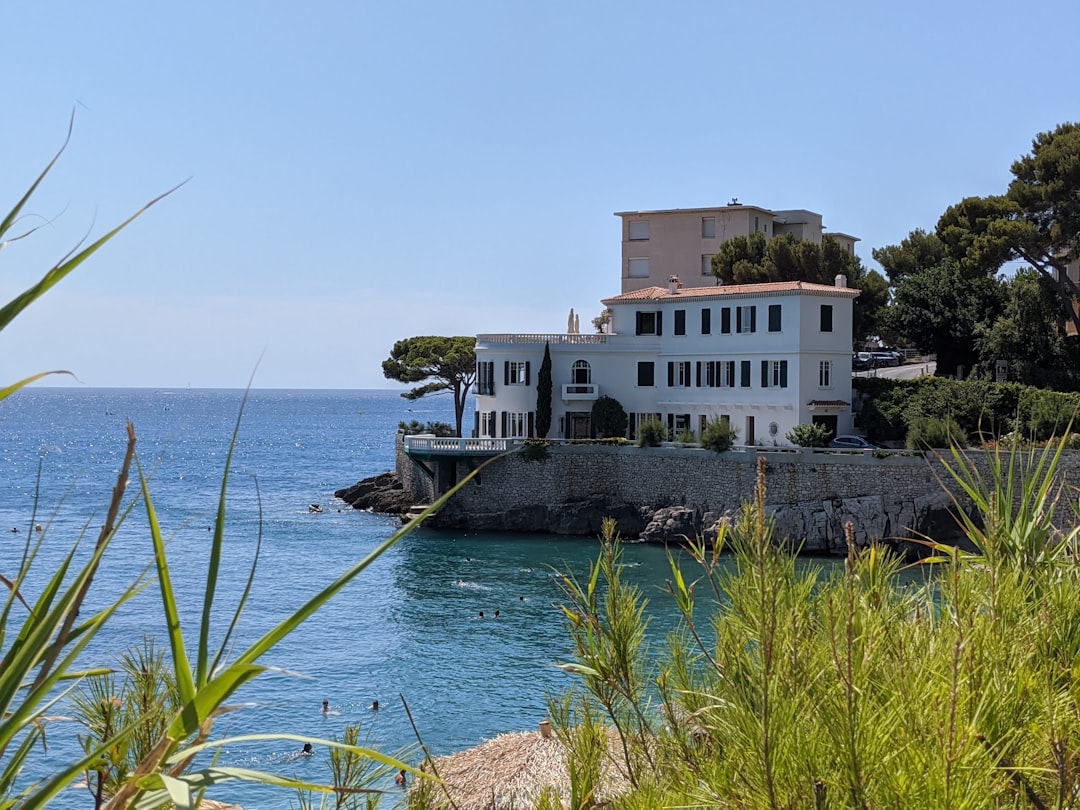
How Mediterranean mild affects filter replacement frequency is a question that hits close to home for property owners across Contra Costa County, CA — from Pittsburg and Antioch to Concord and Walnut Creek. The same mild, sunny climate that makes this region so livable also creates a set of quiet, ongoing stresses on your HVAC filters and water filtration systems that most homeowners never see coming until something breaks down.
Here is a quick look at how Mediterranean climate conditions affect your filter replacement schedule:
The Mediterranean Sea has been warming at a documented rate of 0.041 °C per year since 1982 — a trend that is reshaping humidity patterns, intensifying pollen seasons, and pushing more particulate matter into the air we breathe indoors. Here in Northern California's Mediterranean-style climate, those same dynamics play out locally. Warmer, drier summers and mild, wetter winters create conditions where filters work harder in ways that standard replacement schedules simply do not account for.
If your filters are running on a generic "change every three months" schedule, there is a good chance your indoor air quality is suffering — and your system is working harder than it should.
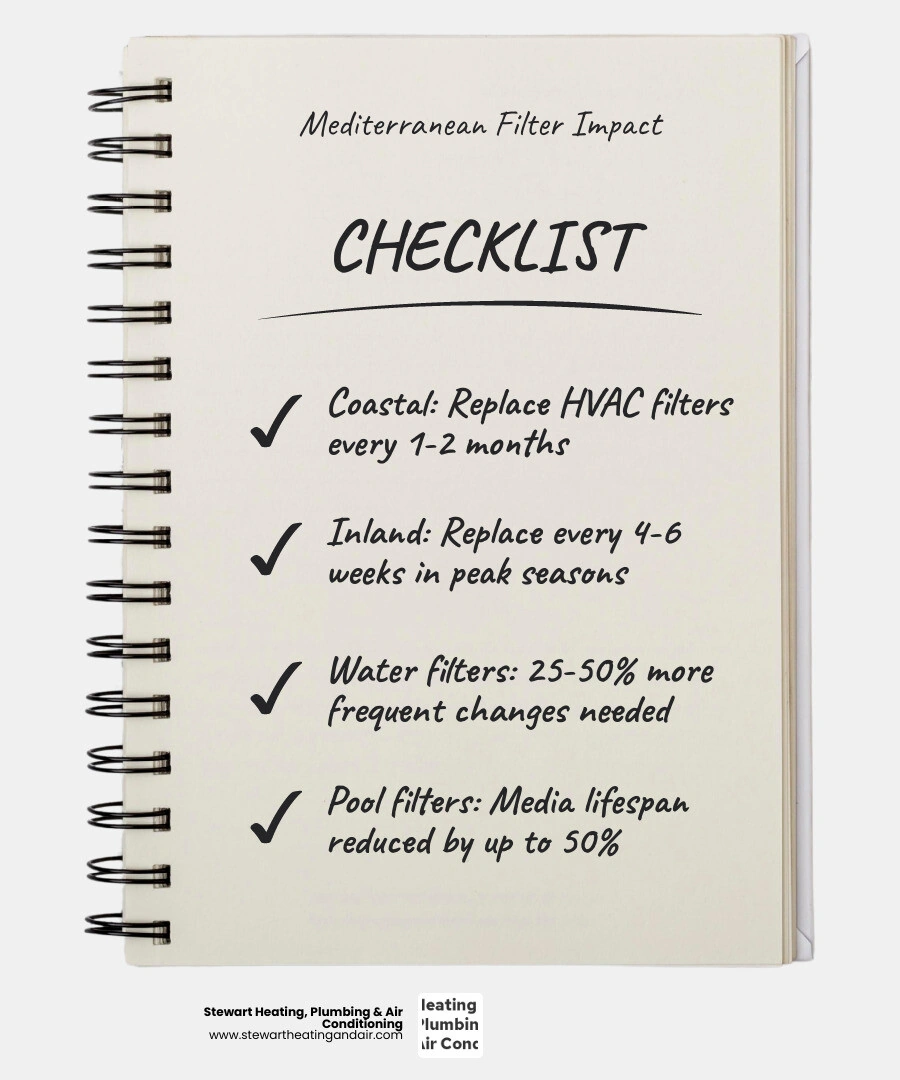
Basic how mediterranean mild affects filter replacement frequency terms:
To truly understand how our local climate impacts your home's air and water quality, we have to look at the broader science of Mediterranean environmental shifts.

Recent oceanographic studies show that the Mediterranean Sea has experienced a mean sea surface temperature (SST) warming trend of 0.041 ± 0.006 °C per year from 1982 to 2018. To put that in perspective, this warming rate is roughly 3.7 times higher than the global ocean warming trend of 0.011 °C per year observed between 1980 and 2005.
While this data describes the European Mediterranean basin, it serves as a critical warning for all Mediterranean-style climates, including our own corner of Contra Costa County. When sea and air temperatures rise at these accelerated rates, they fundamentally alter the hydrological and atmospheric cycles.
For HVAC systems, warmer regional temperatures directly translate to:
By keeping an eye on these regional climate shifts, it becomes clear that relying on generic manufacturer recommendations can leave your home vulnerable. Learn more about the basic rules of thumb in our guide on how often should you change your hvac air filter.
The warming trend in Mediterranean climates is not distributed evenly throughout the year. Data shows a significant seasonal SST amplitude shift, with a summer increase of 0.016 ± 0.002 °C per year and a winter decrease of −0.012 ± 0.001 °C per year.
This widening temperature gap has a profound effect on local weather patterns. It leads to shrinking transitional seasons (spring and autumn) and prolonged, intense summer and winter periods. For homes in Contra Costa County, these sharp seasonal swings put unique physical stress on filter materials:
To combat these extreme seasonal swings, many homeowners are upgrading to highly adaptable systems. If you are wondering how to keep your home comfortable year-round, find out are heat pumps ideal for mediterranean climates to see how these systems pair with advanced filtration.
Just as temperature trends vary by season, they also vary widely by geography. In the Mediterranean Sea, there is a stark spatial gradient: the eastern Levantine–Aegean basin is warming at a rate of 0.048 ± 0.006 °C per year, while the western basin warms at a slower rate of 0.036 ± 0.006 °C per year.
This spatial variation mirrors the microclimates we experience right here in Contra Costa County. The weather in coastal-influenced areas like Richmond or Martinez is heavily modulated by cool, damp marine air. Meanwhile, inland communities like Concord, Antioch, and Pittsburg experience much hotter, drier, and dustier conditions.
Because of these distinct microclimates, a single filter replacement schedule does not work for everyone:
Tailoring your maintenance to your specific neighborhood is essential. For those living in the heart of the valley, check out our customized air filter replacement Concord CA tips to optimize your home's system.
To understand where our climate is heading, scientists look at major oceanographic drivers. Historically, Mediterranean temperatures closely followed the Atlantic Multidecadal Oscillation (AMO) from 1854 until 2007. However, after 2007, Mediterranean SST decoupled from the AMO, continuing to rise sharply even when the Atlantic cycle cooled.
This decoupling indicates that we have entered a period of sustained, non-cyclical warming. By analyzing 165-year reconstructions using HadISST and ERSST data, we can establish a clear baseline of historical conditions versus the accelerated warming regimes we face today in June 2026.
For homeowners, this means that historical maintenance schedules are officially obsolete. We can no longer assume that a filter will last as long as it did a decade ago. Long-term projections indicate that as regional warming continues to accelerate, the average lifespan of residential HVAC and water filters will decrease by an estimated 15% to 25% over the next decade. Proactive, sensor-based monitoring and shorter maintenance intervals are becoming the new standard for preserving indoor air quality and system efficiency.
One of the most disruptive consequences of this long-term warming trend is the increasing frequency and severity of marine heatwaves, such as the historic events recorded in 2003 and 2015.
These heatwaves trigger ecological chain reactions that directly impact indoor environments:
When environmental factors collide during peak heat seasons, having the right filtration strategy is your first line of defense. If you are experiencing sudden drops in airflow or dusty rooms, discover the best air filter replacement Pittsburg CA options to restore your system's breathing room.
Local oceanographic features, such as marine gyres and coastal upwelling zones, play a massive role in shaping local micro-environments. Upwelling brings cold, nutrient-rich water to the surface, which interacts with the warm air to create dense, salt-laden coastal fog.
In our local service areas, the wind patterns off the San Francisco Bay and the Sacramento-San Joaquin River Delta act much like these marine features. They carry moisture, salt, and fine delta silt inland, creating a highly corrosive and damp micro-environment.
When this damp, salty air enters your HVAC system:
Understanding these coastal dynamics is key to choosing the right filter materials. For residents living near the water, our air filter replacement Antioch CA guide provides excellent localized advice on managing these humid conditions.
Living in a Mediterranean climate means dealing with unique environmental challenges, such as seasonal Saharan dust storms (which can deposit up to 50 grams of particulate per square meter) and heavy, year-round pollen loads. Managing these elements requires selecting the right filtration media for your home's specific needs.
| Filter Type | Particle Capture Rating | Average Lifespan in Mediterranean Climate | Best Suited For | Key Vulnerabilities |
|---|---|---|---|---|
| Standard Silica Sand (Pool/Water) | Down to 20–40 microns | 2–3 years (due to hard water calcification) | Budget-conscious sediment filtration | Channeling, calcification, high water use during backwashing |
| Activated Glass Media | Down to 3–5 microns | 10+ years (highly resistant to calcification) | High-efficiency water filtration, rental properties | Higher initial setup effort |
| Cartridge Filters (Water) | Down to 1–5 microns | 1–2 months (depending on sediment load) | Precise sediment capture, drought-prone areas | Requires regular manual replacement, cannot be backwashed |
| MERV 8 HVAC Filter | Down to 3–10 microns | 2 months | Basic dust and lint capture | Allows fine pollen and mold spores to pass through |
| MERV 13 HVAC Filter | Down to 0.3–1.0 microns | 1 month (during peak pollen/dust seasons) | Advanced indoor air quality, allergen control | Restricts airflow faster as it loads up with fine dust |
Beyond selecting the right media, household dynamics also play a major role in filter life. If you share your home with furry friends, the combination of pet dander and seasonal pollen can clog filters twice as fast. Learn how to manage this in our guide on how pets affect how often you change your filter.
In coastal-influenced communities like Pleasant Hill, Martinez, and parts of Walnut Creek, the primary threats to your HVAC system are salt air and persistent humidity.
Because salt air accelerates metal corrosion and dampness causes filters to bind, standard maintenance routines are rarely enough. We recommend the following best practices for coastal-influenced homes:
To keep your system running smoothly in these humid pockets, explore our specialized services for air filter replacement Pleasant Hill CA.
Further inland, in cities like Pittsburg, Concord, and Antioch, the environmental challenges shift from moisture to dust, wind-blown soil, and intense seasonal pollen.
During dry summer spells, agricultural dust and pollen accumulate rapidly on HVAC filters. To protect your indoor air quality and prevent system strain, we highly recommend upgrading to MERV 13 filters. These high-efficiency filters are designed to capture microscopic allergens, but because they trap such fine particles, they must be changed more frequently during peak seasons.
For tailored local support and professional filter replacement services, check out our dedicated pages for your neighborhood:
As sea surface temperatures rise, the warmer air holds more moisture, leading to higher indoor humidity. This extra moisture dampens air filters, making it easier for captured mold spores and organic dust to grow. Additionally, warmer temperatures increase the concentration of airborne organic aerosols, which clog filters faster than dry, inert dust.
Coastal areas experience high humidity and salt-laden air. The salt accelerates the corrosion of sensitive HVAC components, while the moisture binds dust particles together on the filter surface. This creates a dense, restrictive crust that reduces airflow, requiring filters to be changed every 1 to 2 months to prevent system strain.
For HVAC systems, a MERV 13 pleated filter is highly recommended because it can capture fine microscopic particles, including pollen and wind-blown dust, without restricting airflow when clean. For water and pool systems, upgraded glass media is the best choice because it filters down to 3 microns and resists the calcification caused by our region's hard water.
Understanding how mediterranean mild affects filter replacement frequency is the key to keeping your home comfortable, healthy, and energy-efficient. While the mild Contra Costa County climate feels incredibly forgiving, the combination of rising regional temperatures, seasonal pollen surges, delta humidity, and hard water means your air and water filters are working overtime behind the scenes.
At Stewart Heating, Plumbing & Air Conditioning, we have spent years helping homeowners across Pittsburg, Concord, Antioch, and the surrounding areas navigate these exact environmental challenges. We pride ourselves on doing things right the first time, ensuring your home's systems are perfectly tuned to our unique local microclimates.
Don't wait for your system to struggle during the next warm spell. Let our family protect yours. If you are ready to experience the difference that clean, professionally managed indoor air can make, visit our indoor air quality solutions page today to schedule your next service or filter upgrade!

Very professional and complete. I would recommend Stewart to anyone. Highest quality of workmanship and clean installation.
Stewart Heating Plumbing Air Conditioning just did some work for us for the first time. They did an installation at my home and it turned out well. I thought the price was fair and I definitely would use them again. The technicians were very friendly and knowledgeable about their work. I highly recommend Stewart Heating Plumbing Air Conditioning and already told friends to use them.
We have been using Stewart Heating Plumbing Air Conditioning since 1995. They put the original heating and air unit in the house, and we have just stayed with them. They are dependable and honest people, and they have done a good job for us every time that we have used them!
They came and did an inspection and are coming tomorrow to do the repair.
They replaced a regulator the first time, and then the water heater vent had to be replaced. They did great work.
The gentleman that serviced us was helpful, insightful, and knew what he was talking about. Overall, it was a great experience.