

Recent Blogs
Stay updated with our latest blog posts.

How temperature swings affect your comfort systems is one of the most misunderstood causes of HVAC wear, high energy bills, and unexpected breakdowns — and if you live in Contra Costa County, it is a problem you likely face year-round.
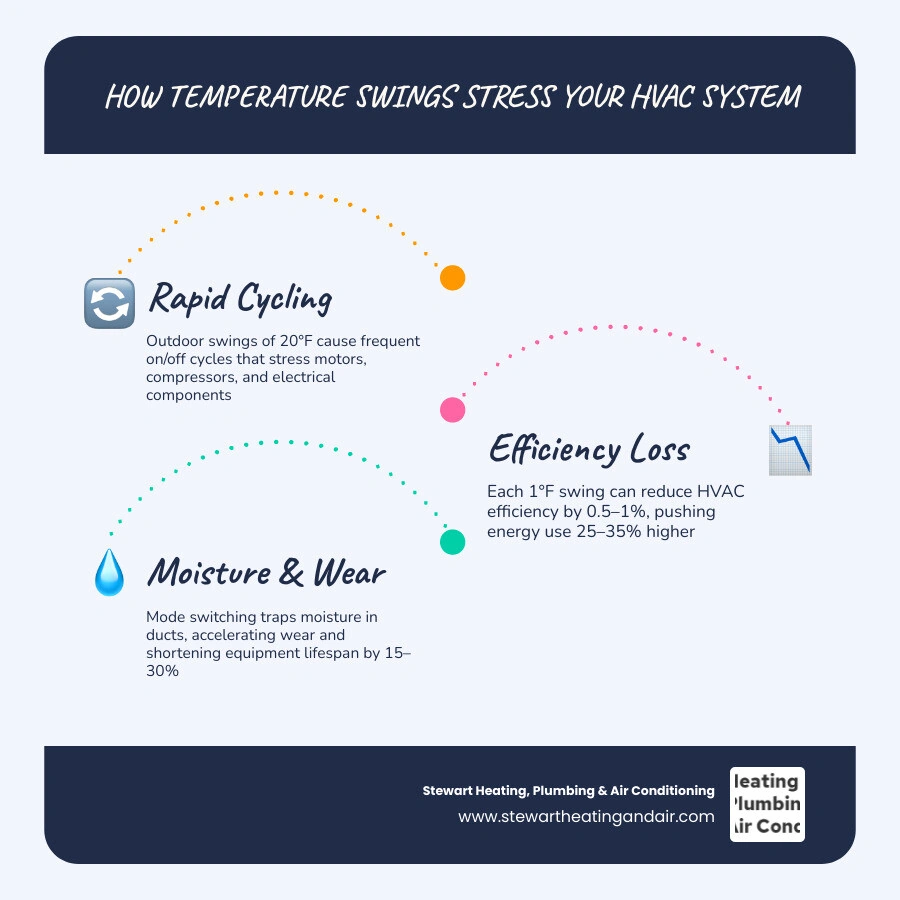
Here is a quick summary of what happens when outdoor temperatures fluctuate rapidly:
Most homeowners assume their HVAC equipment only takes a beating during extreme heat waves or hard freezes. The truth is, the back-and-forth — a chilly morning that turns into a warm afternoon, then drops again by evening — puts more repeated stress on your equipment than a long stretch of steady cold or heat ever would.
Think of it like stop-and-go traffic versus a long highway drive. Your system works hardest at startup and shutdown. The more it cycles, the faster it wears out.
In the sections below, we cover exactly what is happening inside your equipment during those swings, what warning signs to watch for, and what you can do to protect your investment.
Relevant articles related to how temperature swings affect your comfort systems:
To understand how temperature swings affect your comfort systems, we have to look at the physical properties of the materials inside your heater and air conditioner. Your comfort systems are primarily constructed of metals — copper refrigerant lines, aluminum condenser fins, and steel heat exchangers.
Metal is highly sensitive to temperature. When it gets hot, it expands; when it gets cold, it contracts. In a stable climate, this expansion and contraction happen gradually, over the course of distinct seasons. However, when we experience "weather whiplash" — where a cold morning rapidly gives way to a hot afternoon — these metals are forced to expand and contract rapidly and repeatedly.
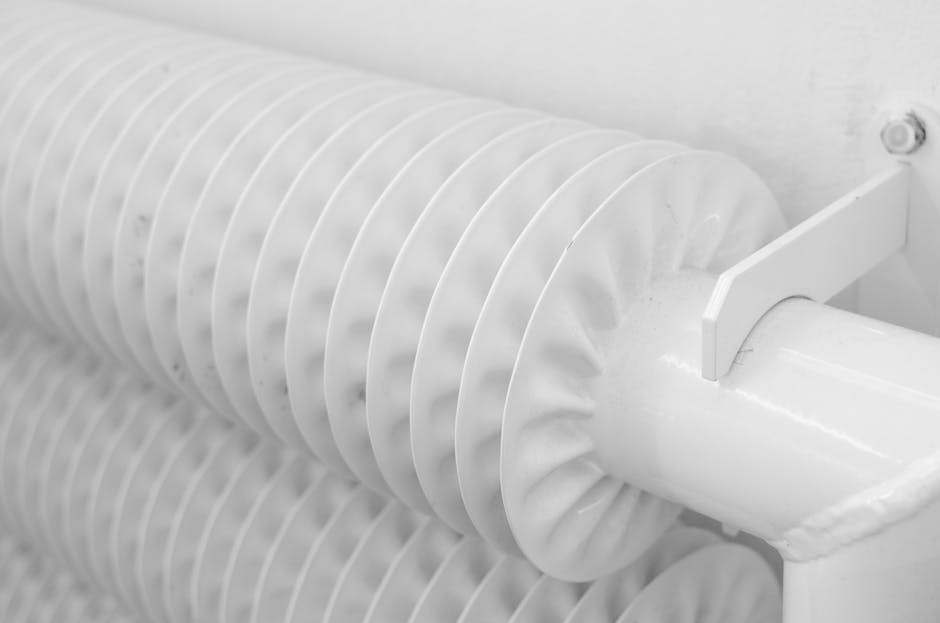
This rapid movement causes a phenomenon known as thermal fatigue. Just like bending a paperclip back and forth will eventually cause it to snap, the constant expansion and contraction of your HVAC system’s metal components can lead to structural failures. The most dangerous area for this to occur is in your furnace's heat exchanger. Small cracks can develop over time due to this thermal fatigue, which not only ruins the system's efficiency but also poses a serious safety risk by allowing carbon monoxide to leak into your home.
Additionally, temperature swings disrupt the pressure balance of the refrigerant inside your air conditioner or heat pump. Refrigerant relies on precise pressure levels to absorb and release heat. When outdoor temperatures fluctuate wildly, the system must constantly adjust its internal pressures. This places immense physical strain on the compressor — the "heart" of your air conditioning system. When refrigerant pressures are unstable, the compressor has to work much harder to pump the liquid and gas through the lines, leading to accelerated mechanical wear.
When the outdoor temperature hovers right around your thermostat’s set point, your system will also begin to "short cycle." This means it turns on, runs for a few minutes, turns off, and then turns back on shortly after. This prevents the system from ever reaching its optimal operating efficiency and subjects every mechanical part to constant, exhausting start-stop stress. To learn more about this process, read our guide on How Seasonal Temperature Swings Affect Your System.
The electrical and mechanical parts of your HVAC system are designed to handle regular use, but frequent cycling caused by temperature swings pushes them to their limits. The single most taxing moment in any motor’s life is the startup phase. It requires a massive surge of electrical current to get a heavy blower motor or compressor spinning from a dead stop.
When your system is forced to cycle on and off repeatedly during a volatile day, your electrical components bear the brunt of the damage:
This operational stress is particularly pronounced in our local area. If you want to understand how our unique regional weather patterns compound these issues, take a look at How Contra Costa County Climate Affects Your HVAC and Plumbing.
In many parts of Contra Costa County, a single spring or autumn day can require both heating in the morning and cooling in the afternoon. While modern heat pumps and dual-fuel systems are built to handle both jobs, switching back and forth between heating and cooling modes on the same day introduces unique moisture risks.
When your air conditioner runs, the indoor evaporator coil becomes very cold and pulls moisture out of the air. This moisture condenses on the coil and drips into a condensate pan to drain away safely. However, if you switch your system over to heating mode shortly after running the AC, that residual moisture on the damp coils is suddenly subjected to warmth.
This warm, wet environment inside your dark ductwork is the perfect breeding ground for bacteria and mold. This often results in a musty, dirty-sock-like odor blowing through your vents — a real industry phenomenon appropriately named "Dirty Sock Syndrome." Beyond the unpleasant smell, this moisture buildup can lead to mold growth inside your ductwork, which severely degrades your indoor air quality.
Furthermore, rapid mode switching places heavy physical strain on the reversing valve in a heat pump. The reversing valve is the mechanical component that changes the flow of refrigerant to switch the system from heating to cooling. Forcing this valve to slide back and forth under high pressure can cause it to stick or fail prematurely.
Our local microclimates play a huge role in how much moisture and temperature variation your system has to manage. For a deeper dive into how our local winds and geography play into your indoor comfort, check out How Delta Breezes and Microclimates Affect Your Comfort.
It is a common belief that running your system continuously during a steady hot day is the most expensive way to operate your HVAC. In reality, temperature volatility is much harder on your wallet. When the outdoor temperature fluctuates rapidly, your system is prevented from running in its highly efficient "steady state."
To illustrate this, let's look at how daily temperature variations directly impact your system's efficiency and energy consumption:
| Daily Temperature Swing | Energy Consumption Increase | HVAC Efficiency Loss | Estimated Lifespan Reduction |
|---|---|---|---|
| Stable (Less than 5°F swing) | 0% (Baseline) | 0% (Optimal) | None (Normal wear) |
| Moderate (10°F daily swing) | 12% – 18% increase | 5% – 10% drop | 1 to 2 years |
| Severe (20°F daily swing) | 25% – 35% increase | 10% – 20% drop | 3 to 5 years |
| Extreme (30°F+ daily swing) | 40% – 50% increase | 15% – 30% drop | Up to 5+ years |
According to standards set by the American Society of Heating, Refrigerating and Air-Conditioning Engineers (ASHRAE), an HVAC system's efficiency drops by approximately 0.5% to 1% for every single degree of outdoor temperature swing. This means that during a standard 20-degree daily swing, your system is operating far below its rated efficiency.
These efficiency losses translate directly into higher utility bills. When a system is constantly starting and stopping, it consumes peak electrical power during every startup cycle without providing any sustained heating or cooling. For more information on how our local East Bay weather directly drives up operational costs, see our comprehensive guide on the East Bay Climate HVAC Plumbing Complete.
The financial impact of how temperature swings affect your comfort systems is particularly severe for homes with older, single-stage HVAC systems. A single-stage system only has two modes: 100% capacity "on" or completely "off."
When the outdoor temperature fluctuates slightly, a single-stage system turns on at full blast, quickly overshoots the thermostat setting, and shuts off. This constant cycling results in massive energy waste because the system never runs long enough to reach its peak operating efficiency. It is the equivalent of driving your car in stop-and-go city traffic; your fuel economy plummets compared to cruising at a steady speed on the highway.
Furthermore, temperature swings lead to significant standby losses. When your system is cycling off and on, the ductwork and the air inside it warm up or cool down to match the surrounding attic or crawl space temperatures. Every time the system turns back on, it has to waste energy re-conditioning the air inside the ducts before any comfortable air actually reaches your living spaces.
While your HVAC system does the heavy lifting, your home’s envelope — its insulation and ductwork — acts as the protective shield. If that shield is weak, the impact of outdoor temperature swings is amplified dramatically.
Think of your home's insulation as a thermal barrier. When insulation is thin, degraded, or missing, outdoor temperature changes pass directly into your living spaces. On a day with rapid temperature swings, a poorly insulated home will experience rapid indoor temperature shifts. This forces your thermostat to constantly call for heating or cooling, triggering the destructive short-cycling loop we discussed earlier.
Ductwork represents another major vulnerability. Most residential duct systems run through unconditioned spaces like attics or crawl spaces. These areas experience even more extreme temperature swings than the outdoors. An attic can easily reach 130°F on a warm afternoon and drop to 50°F at night.
If your ducts have even minor leaks, the consequences are severe:
Regular maintenance is the key to identifying these hidden issues before they cause a total system breakdown. If you live in our service area, you can find localized tips and checklists in our HVAC Maintenance Pittsburg CA Guide.
Your comfort systems will usually tell you when they are struggling to keep up with weather whiplash. Recognizing these warning signs early can save you from an expensive emergency repair when you need your system the most.
Keep an eye out for these common warning signs that your system is feeling the strain of temperature fluctuations:
The best proactive defense against these issues is a comprehensive professional tune-up. Scheduling service before the peak of the heating or cooling seasons ensures that minor electrical and mechanical issues are addressed before they turn into system failures. To prepare your heating system for seasonal transitions, consider scheduling an Annual Furnace Tune Up.
If you want to permanently reduce the stress that temperature swings place on your home and budget, several modern technology upgrades can help:
For homeowners in our region, heat pumps are an exceptionally smart choice. You can read more about their performance in our local climate in our article, Are Heat Pumps Ideal for Mediterranean Climates. If you want to explore how these systems can lower your monthly operating costs, check out the Heat Pump Benefits for Bay Area Homeowners.
If your current system is more than 10 to 12 years old and struggles every time the weather changes, replacement is often the most financially sound path forward. Learn why upgrading your system makes sense by reading Why HVAC Replacement Is a Smart Investment and see how it can pay off long-term in How a New HVAC System Increases Home Value.
To help you better navigate weather volatility, we have compiled answers to some of the most common questions homeowners ask about managing temperature changes.
Yes, it is safe, but only if done correctly. Modern digital thermostats have a built-in compressor short-cycle delay (usually about 5 minutes). This safety feature prevents the compressor from restarting immediately after shutting down, allowing the internal refrigerant pressures to equalize safely.
If you have an older manual thermostat, you must manually wait at least 5 to 10 minutes after turning off the heat before switching to air conditioning. Additionally, we recommend running your system's fan on the "On" setting (rather than "Auto") for about 10 to 15 minutes after switching modes. This helps dry out any residual condensation on your indoor coils, preventing mold growth and musty odors.
A daily temperature swing of 20°F or more can increase your heating and cooling energy consumption by 25% to 35%. This is because the system is forced out of its efficient steady-state operation and must cycle on and off frequently.
The startup phase of an HVAC system draws the maximum amount of electrical current. When your system cycles repeatedly throughout the day to chase a fluctuating outdoor temperature, it consumes far more power than it would running at a steady, continuous rate on a hot or cold day.
Temperature swings act as a diagnostic spotlight for sizing issues:
To determine the exact size your home needs, a professional technician must perform a Manual J load calculation. This calculation takes into account your home's total square footage, insulation levels, window placement, and local climate patterns.
Understanding how temperature swings affect your comfort systems is the first step toward protecting your home, your equipment, and your wallet. Unpredictable weather shifts do not have to result in high utility bills and unexpected system breakdowns.
At Stewart Heating, Plumbing & Air Conditioning, we have spent decades helping homeowners throughout Contra Costa County navigate our unique local microclimates. Whether you reside in Pittsburg, Antioch, Concord, Brentwood, Walnut Creek, or Pleasant Hill, our family-owned team is committed to doing every job right the first time. We focus on delivering high-quality, licensed expertise and reliable solutions tailored to your home's specific needs.
If your comfort system is struggling with local weather whiplash, do not wait for a total breakdown to occur. Contact us today to schedule a professional evaluation or system tune-up, and ensure your home remains a sanctuary of consistent comfort all year long. Learn more about our complete solutions for residential indoor comfort in Contra Costa County.

Very professional and complete. I would recommend Stewart to anyone. Highest quality of workmanship and clean installation.
Stewart Heating Plumbing Air Conditioning just did some work for us for the first time. They did an installation at my home and it turned out well. I thought the price was fair and I definitely would use them again. The technicians were very friendly and knowledgeable about their work. I highly recommend Stewart Heating Plumbing Air Conditioning and already told friends to use them.
We have been using Stewart Heating Plumbing Air Conditioning since 1995. They put the original heating and air unit in the house, and we have just stayed with them. They are dependable and honest people, and they have done a good job for us every time that we have used them!
They came and did an inspection and are coming tomorrow to do the repair.
They replaced a regulator the first time, and then the water heater vent had to be replaced. They did great work.
The gentleman that serviced us was helpful, insightful, and knew what he was talking about. Overall, it was a great experience.