

Recent Blogs
Stay updated with our latest blog posts.

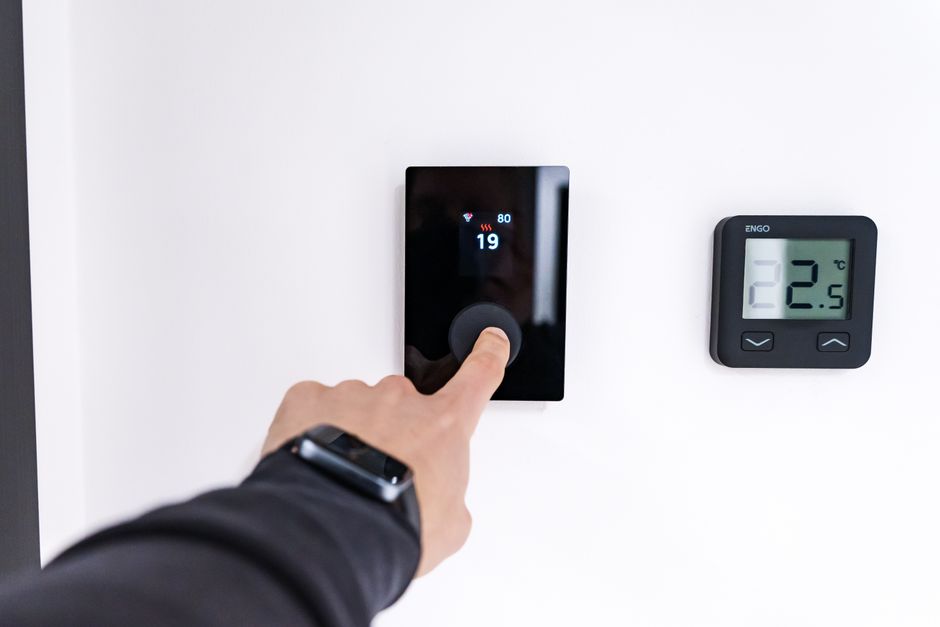
Understanding how seasonal temperature swings affect your system — both your home's HVAC equipment and your body — is one of the most overlooked parts of keeping a house comfortable and efficient year-round. In Contra Costa County, where spring and fall can bring cold mornings followed by warm afternoons within the same day, these swings put real, measurable stress on your heating and cooling equipment, your energy bills, and your health.
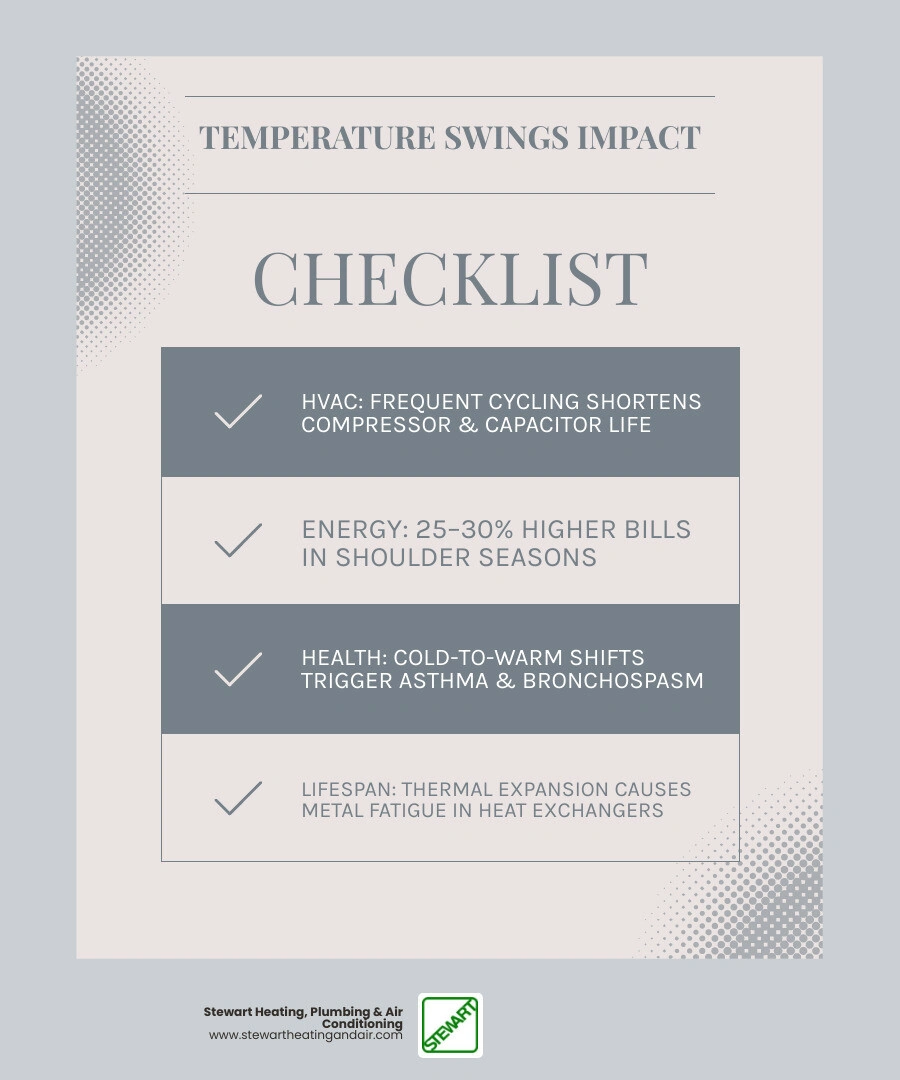
How seasonal temperature swings affect your HVAC system and health — quick summary:
| What's Affected | What Happens |
|---|---|
| HVAC equipment | Frequent on/off cycling wears out compressors, capacitors, and reversing valves faster |
| Energy costs | Transitional seasons can increase energy use by 25–30% |
| Respiratory health | Cold-to-warm air transitions trigger bronchospasm and asthma flare-ups |
| Cardiovascular system | Rapid temperature changes stress the heart and blood pressure regulation |
| System lifespan | Repeated thermal expansion and contraction causes metal fatigue in heat exchangers and ductwork |
| Vulnerable residents | Older adults, children, and low-income households face the highest risk |
Research spanning four decades found that large daily temperature swings were linked to approximately 2.5% of deaths between 1972 and 2013 — a striking reminder that it isn't just extreme heat or cold that matters. The swings themselves carry risk. And as climate patterns continue shifting, those swings are projected to widen further, making preparation more important than ever for homeowners here in Contra Costa County.
This guide breaks down exactly what's happening to your equipment and your health when temperatures yo-yo, and what you can do about it before a breakdown forces your hand.
A daily temperature swing, also called a diurnal range, is the difference between the day's high and low. A seasonal swing describes the broader shift as weather moves from winter to spring or summer to fall.
In Contra Costa County, these changes show up most clearly during the shoulder seasons - spring and fall. We may start the morning reaching for a jacket in Concord, Walnut Creek, Pittsburg, or Brentwood, then feel tempted to turn on the AC by late afternoon. That is not your imagination, and it is not your thermostat being dramatic.
Several factors drive these swings:
These microclimate differences matter in our service area. Inland Contra Costa communities often feel larger day-to-night changes than locations with stronger marine influence. That is one reason local system setup and maintenance should be tailored to local conditions, not generic advice.
If you want a more local look at weather patterns and home system performance, our guide on Contra Costa County climate and your HVAC and plumbing goes deeper.
Spring and fall are the classic "heater at breakfast, cooler by lunch" seasons. During these periods, your system may need to respond to:
This creates frequent cycling. Instead of running in a steady, efficient pattern, the system starts, stops, and sometimes switches modes more often. That stop-and-go behavior is harder on equipment than many people realize.
The biggest swings tend to happen where the air is drier, skies are clearer, and marine influence is weaker. That is why desert and inland valley climates often see sharper temperature changes than coastal zones.
At the neighborhood level, tree cover, shade, paving, and building density also matter. Research has found that exposure to daily temperature swings is not evenly distributed. Race and income can affect who experiences the most volatile local temperatures, often because lower-canopy neighborhoods heat up and cool down differently than leafier ones.
When people hear "weather-related health risk," they usually think of heat waves or freezing nights. But daily temperature variation itself can also affect the body.
Large temperature swings have been associated with more asthma flare-ups, more respiratory and cardiovascular hospitalizations, and a measurable increase in mortality risk. Again, one long-term analysis found that about 2.5% of deaths from 1972 to 2013 could be attributed to large day-to-day temperature swings.
For everyday households, the effects can include:
A common trigger is rapid indoor-outdoor transition. Walking from chilly morning air into a heated home, then back outside into a sunny warm afternoon, can be enough to bother the lungs and sinuses.
Our bodies already run on natural temperature rhythms. Core temperature usually changes a bit over the course of the day, and sleep quality depends partly on healthy temperature regulation. Add big outdoor swings, dry air, and changing indoor conditions, and the body has more work to do.
Cold air can tighten airway muscles. Dry air can reduce moisture in the nose and throat, making it easier for irritation and infections to take hold. Barometric pressure shifts may contribute to headaches, sinus discomfort, and balance issues in some people. For others, the result is simple but annoying: fatigue, poor sleep, and the feeling that the weather is personally picking on them.
Some groups face a higher burden than others, including:
Research also shows that exposure is often most unequal by race and ethnicity, followed by income. In one Rhode Island example, Hispanic and Black populations experienced average daily swings 5.4 F higher than white populations during May. While that study was not local to Contra Costa County, the broader lesson applies: neighborhood conditions shape exposure.
This is where the mechanical side of the story gets expensive in wear, even if we are not talking dollars here. HVAC systems generally prefer steady operation. Wild temperature changes force them into repeated starts, stops, and adjustments.
That leads to:
During transitional seasons, temperature variability can drive energy use up by around 25% to 30%. Commercial buildings can feel this even more sharply, especially where large open spaces or high ceilings make temperature balancing harder.
| Operating Pattern | Typical Effect on HVAC |
|---|---|
| Steady weather | Longer, smoother cycles and better efficiency |
| Swing-season weather | More starts and stops, more mode changes, and higher wear |
| Frequent manual thermostat changes | Extra cycling and less predictable comfort |
| Poor insulation during swings | Longer runtimes and bigger indoor temperature drift |
A few parts take the brunt of the abuse:
Mode switching is not inherently bad. Modern systems are designed to heat and cool. The problem is rapid, repeated switching without enough time for pressures to stabilize or for the system to complete a healthy cycle.
This is especially hard on:
Moisture can also play a role. In spring, cooling coils may get damp, then warm up again, which can contribute to odor issues and inefficiency if maintenance has been skipped. That is one reason we recommend preparing each side of the system before its heavy-use season. For more on that, see Getting Your Cooling System Ready for Warm Weather and our guide to an Annual Furnace Tune-Up.
The goal is not to stop the weather from changing. If we could do that, we would probably start with spring pollen. The real goal is to make your building and HVAC system less reactive.
Start with the basics:
Smart thermostats can help a lot during shoulder seasons when used correctly.
Best practices include:
A wider gap between heating and cooling setpoints can reduce unnecessary cycling. Adaptive recovery features can also help the system reach comfort more gently instead of sprinting every time the schedule changes.
Professional maintenance catches the hidden problems that temperature swings expose first:
Just as important is the building envelope. Good insulation and air sealing act like a buffer between your indoor comfort and whatever the weather is doing outside. In homes and light commercial spaces across Pittsburg, Concord, Antioch, Walnut Creek, and surrounding areas, these upgrades often make the HVAC system's job much easier.
Helpful local resources include our articles on Seasonal Tune-Up in Concord, CA, HVAC Maintenance in Pittsburg, CA, and AC Maintenance Tips for Lafayette, CA.
Heat pumps are excellent for Bay Area conditions, but swingy weather can still challenge them.
A few smart habits help:
If you are considering one or already have one, our articles on Heat Pump Benefits for Bay Area Homeowners and Heat Pump Maintenance in Concord are good next reads.
Temperature swings are not just a seasonal nuisance. They are part of a bigger climate trend.
Research suggests daily temperature swings shrank from the 1950s into the 1980s, then began widening again after the 1990s. Under a high-emissions scenario, average swings could increase by as much as 2.9 F by the end of the century.
That matters for homes, buildings, and public health because wider swings mean:
Climate change does not only mean hotter average temperatures. It can also mean greater variability, sharper transitions, and more frequent periods where hot days and cool nights sit side by side.
Local land use matters too. Tree canopy, pavement, roofing materials, and building density all influence how much heat neighborhoods absorb and release.
At the home level:
At the community level:
Not automatically. The real issue is frequent switching without enough control logic or buffer between setpoints. Systems need time for pressure balance and proper cycle completion. Smart thermostats with built-in delays and sensible deadbands help prevent unnecessary stress.
A range of 30% to 50% is generally the sweet spot. Below that, air can feel overly dry and irritate the skin, throat, and airways. Too high, and you increase the risk of condensation, musty odors, and mold growth.
The safest approach is pre-season service: once before the cooling season and once before the heating season. That way, your system is ready before the first hot spell or cold snap tests the parts that have been sitting idle.
Seasonal temperature swings are more than a comfort issue. They affect your lungs, your sleep, your energy use, and the lifespan of the equipment working behind the scenes every day. Understanding how seasonal temperature swings affect your system helps you make smarter decisions before a minor issue turns into a shutdown at exactly the wrong time.
For homes and businesses across Pittsburg, Concord, Walnut Creek, Antioch, Brentwood, Lafayette, Danville, Orinda, Martinez, Oakley, Alamo, Pleasant Hill, and the rest of Contra Costa County, we recommend a simple strategy: maintain the equipment, tighten the building envelope, use thermostat settings that reduce unnecessary cycling, and plan ahead for spring and fall.
At Stewart Heating, Plumbing & Air Conditioning, we focus on doing the job right the first time so our customers get healthier indoor air, more reliable comfort, and fewer surprises when the weather shifts. If you want help preparing your system for the next round of temperature swings, explore our heating services in Contra Costa County.

Very professional and complete. I would recommend Stewart to anyone. Highest quality of workmanship and clean installation.
Stewart Heating Plumbing Air Conditioning just did some work for us for the first time. They did an installation at my home and it turned out well. I thought the price was fair and I definitely would use them again. The technicians were very friendly and knowledgeable about their work. I highly recommend Stewart Heating Plumbing Air Conditioning and already told friends to use them.
We have been using Stewart Heating Plumbing Air Conditioning since 1995. They put the original heating and air unit in the house, and we have just stayed with them. They are dependable and honest people, and they have done a good job for us every time that we have used them!
They came and did an inspection and are coming tomorrow to do the repair.
They replaced a regulator the first time, and then the water heater vent had to be replaced. They did great work.
The gentleman that serviced us was helpful, insightful, and knew what he was talking about. Overall, it was a great experience.