

Recent Blogs
Stay updated with our latest blog posts.

Plumbing tips for homeowners can save you thousands of dollars and a lot of stress. Most people only think about their pipes when something goes wrong — but by then, the damage is often already done.
Here are the most important plumbing maintenance steps every homeowner should know:
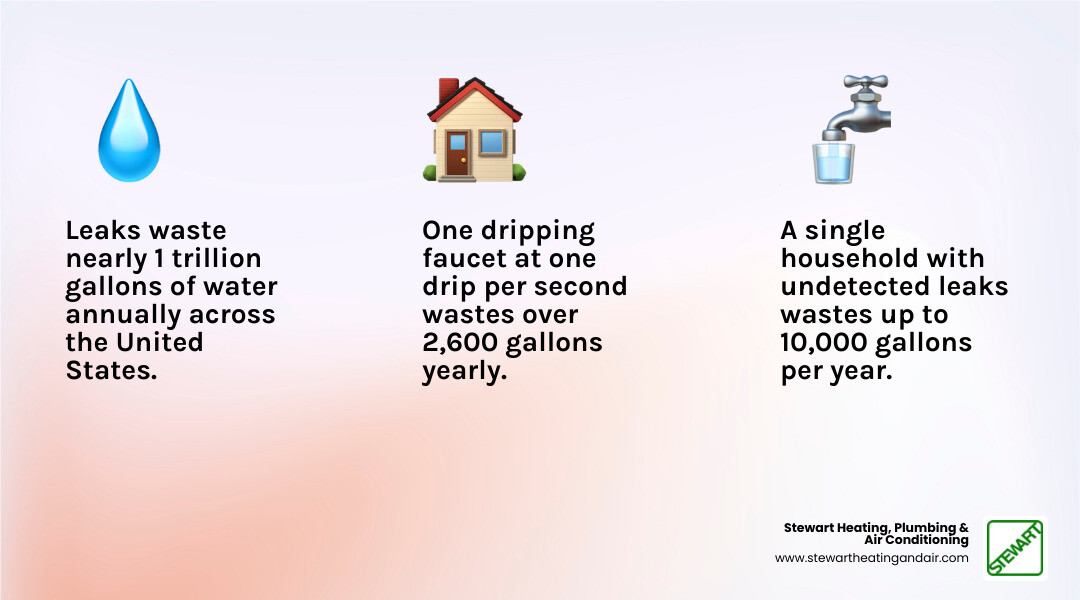
The numbers tell the story clearly. Leaks alone account for nearly 1 trillion gallons of wasted water every year across the United States. A single household with undetected leaks can waste close to 10,000 gallons annually. And one dripping faucet — just one drip per second — wastes more than 2,600 gallons per year.
Beyond the water waste, reactive plumbing repairs are expensive. Preventive maintenance costs a fraction of what you'd pay for an emergency. The difference between catching a small leak and ignoring it could be the difference between a quick fix and a flooded home.
The good news? Most routine plumbing maintenance is straightforward. With the right knowledge, you can catch problems early, extend the life of your system, and avoid the kind of surprises that ruin a weekend — or worse.
Detecting a leak early is like finding a needle in a haystack before the needle starts poking holes in your wallet. In Contra Costa County, where we value every drop of water, being proactive isn't just good for the environment; it’s essential for your home’s structural integrity.
One of the most effective plumbing tips for homeowners is the "Water Meter Test." It’s simple: ensure no water is being used inside or outside your home (turn off the dishwasher, laundry, and irrigation). Locate your water meter—usually in a concrete box near the street—and watch the leak indicator dial. If it’s moving, even slightly, you have a leak. If you don’t see immediate movement, note the reading and check back in two hours. If the number has changed, you have a slow, hidden leak that needs attention.
Visual inspections are your next line of defense. We recommend doing a "cabinet crawl" once a month. Grab a flashlight and look under your sinks in the kitchen and bathrooms. Check for dampness, warped wood, or that tell-tale musty smell. Even a small damp spot on a baseboard can indicate a pinhole leak behind the wall. If you spot something suspicious, it might be time to take advantage of a Plumbing Repair Special to get it fixed before it turns into a mold nightmare.
Toilets are the "silent ninjas" of water waste. A leaking toilet can waste up to 200 gallons of water per day without making a single sound. To catch these stealthy leaks, use the food coloring test. Drop about half a dozen drops of food coloring (dark blue or red works best) into the toilet tank. Don't flush! Wait about 15 to 20 minutes. If the color starts seeping into the bowl, your flapper valve isn't sealing properly.
Replacing a flapper is a common DIY task, but if the leak persists, the issue might be the flush valve or even the wax ring at the base. If you notice water pooling around the bottom of the toilet, that wax ring has failed, and if left alone, it will rot your subfloor. For residents needing a Plumber in Concord CA, addressing these small leaks early prevents a full bathroom floor replacement later.
Keep an eagle eye on your utility bills. In April 2026, we’ve seen water rates remain a significant part of household budgets. If your bill jumps unexpectedly and your habits haven't changed, you almost certainly have a leak.
Beyond the bills, look for physical signs of waste. A dripping faucet might seem like a minor annoyance, but as we noted, it can waste over 2,600 gallons a year. Often, this is caused by a simple worn-out washer or O-ring. If you’re struggling to find the source of a high bill in your Walnut Creek home, reaching out to a Plumber in Walnut Creek CA can help you perform a comprehensive leak audit of your property.
In a plumbing emergency, time is your greatest enemy. If a pipe bursts, you don't want to be searching for the "off" switch while your living room becomes an indoor swimming pool. Emergency preparedness starts with knowing your valves.
Every homeowner should know the location of two types of valves:
If you haven't located these yet, do it today. If you need help identifying your system's layout, our team providing Plumbing Services in Contra Costa County can walk you through it during a routine visit.
Knowing where the valves are is only half the battle; they actually have to work. Over time, mineral buildup can cause these valves to "seize" or get stuck. We recommend "exercising" your valves once or twice a year. Simply turn them off and back on again to ensure they move freely.
Remember: Righty-Tighty, Lefty-Loosey. Turn the valve clockwise to shut it off. If a valve feels brittle or refuses to budge, do not force it! Forcing a stuck valve can cause it to snap, leading to an immediate flood. If you encounter a stubborn valve in Pleasant Hill, it’s safer to call a Plumber in Pleasant Hill CA to replace it with a modern, reliable ball valve.
Water pressure is like blood pressure for your home. If it’s too low, your showers are disappointing and your dishwasher won't clean properly. If it’s too high, it puts immense stress on your pipes, joints, and appliances, leading to premature leaks and bursts.
Most residential plumbing is designed to handle 40–60 PSI (pounds per square inch). If your pressure is regularly above 80 PSI, you are in the "danger zone." You can test this yourself with a simple pressure gauge from a hardware store that hooks onto an outside hose bib. If your pressure is too high, you likely need a Pressure Reducing Valve (PRV) installed or your existing one replaced.
If you have low pressure at just one faucet, it’s usually just a clogged aerator. Unscrew the tip of the faucet, soak the little mesh screen in vinegar to dissolve mineral deposits, and screw it back on. If the low pressure is house-wide, Schedule a Second Opinion Plumbing visit to check for pipe corrosion or main line issues.
Your water heater is likely the second-largest energy consumer in your home. It’s also one of the most neglected appliances. Most water heaters have a lifespan of 8 to 12 years, but with proper care, you can push that toward the higher end. Joining a Plumbing Maintenance Program in Contra Costa County is the easiest way to ensure these tasks aren't forgotten.
There are three critical tasks for water heater longevity:
For those in the Concord area, professional Plumbing in Concord CA ensures these technical checks are done safely, especially with gas-powered units.
While our California winters are milder than some, we still see freezing nights that can wreak havoc on plumbing. Frozen pipes expand and burst, leading to catastrophic water damage when they thaw.
To prevent this:
Check our Plumbing Specials for seasonal deals on winterization services to keep your home protected.
When a drain slows down, many homeowners reach for a bottle of liquid "drain cleaner." Stop! Those chemicals are extremely caustic. They generate heat that can soften PVC pipes and corrode older metal ones. Plus, they are terrible for the environment and your skin.
Instead, go natural. A mixture of one cup of baking soda followed by one cup of white vinegar creates a foaming action that can break up grease and soap scum. Let it sit for 15 minutes, then flush with boiling water. For hair clogs in showers, a simple plastic "zip" tool or a bent wire hanger can often pull the clog out manually without any chemicals at all. For more persistent issues, professional Plumbing services use mechanical snakes or hydro-jetting that clean pipes without damaging them.
We love a good DIY project as much as anyone, but plumbing is an area where a small mistake can lead to a very large bill. One of the most common mistakes we see is over-tightening. It’s tempting to think that "tighter is better" to prevent leaks, but over-tightening a nut or fixture can crack the porcelain of a toilet or strip the threads on a pipe, leading to an immediate failure.
Another pitfall is using the wrong materials. Mixing different types of metal (like copper and galvanized steel) without a proper dielectric union will cause "galvanic corrosion," where the pipes literally eat each other through a chemical reaction. If you find yourself in over your head, it’s always better to Request Plumbing Service than to risk a "Sunday afternoon disaster."
Some things simply cannot wait until Monday morning. You should call a professional immediately if you experience:
Your drains are not trash cans. To keep your pipes flowing, never dispose of:
We recommend a three-tiered approach:
Insulating your water heater with an approved "insulation blanket" can reduce standby heat loss by 25% to 45%. Additionally, simply turning the temperature down to 120°F is often enough for most households and prevents scalding while saving energy. Finally, keeping the tank free of sediment through annual flushing ensures the heating elements work at peak efficiency.
Maintaining your home’s plumbing doesn’t have to be an overwhelming chore. By following these plumbing tips for homeowners, you’re taking control of your home’s health and protecting your investment. Whether it’s a simple food coloring test in your toilet or a seasonal pipe insulation project, these small steps lead to big savings.
At Stewart Heating, Plumbing & Air Conditioning, we’ve built our reputation in Pittsburg, CA, and throughout Contra Costa County by doing projects right the first time. We believe in quality, customer satisfaction, and the power of preventive care. If you discover an issue during your home inspection or simply want the peace of mind that comes with a professional tune-up, our team is here to help. From Concord to Walnut Creek, we are your local experts in keeping the water flowing where it should. For expert assistance with any of your home's needs, don't hesitate to reach out for professional Plumbing services today.

Very professional and complete. I would recommend Stewart to anyone. Highest quality of workmanship and clean installation.
Stewart Heating Plumbing Air Conditioning just did some work for us for the first time. They did an installation at my home and it turned out well. I thought the price was fair and I definitely would use them again. The technicians were very friendly and knowledgeable about their work. I highly recommend Stewart Heating Plumbing Air Conditioning and already told friends to use them.
We have been using Stewart Heating Plumbing Air Conditioning since 1995. They put the original heating and air unit in the house, and we have just stayed with them. They are dependable and honest people, and they have done a good job for us every time that we have used them!
They came and did an inspection and are coming tomorrow to do the repair.
They replaced a regulator the first time, and then the water heater vent had to be replaced. They did great work.
The gentleman that serviced us was helpful, insightful, and knew what he was talking about. Overall, it was a great experience.