

Recent Blogs
Stay updated with our latest blog posts.

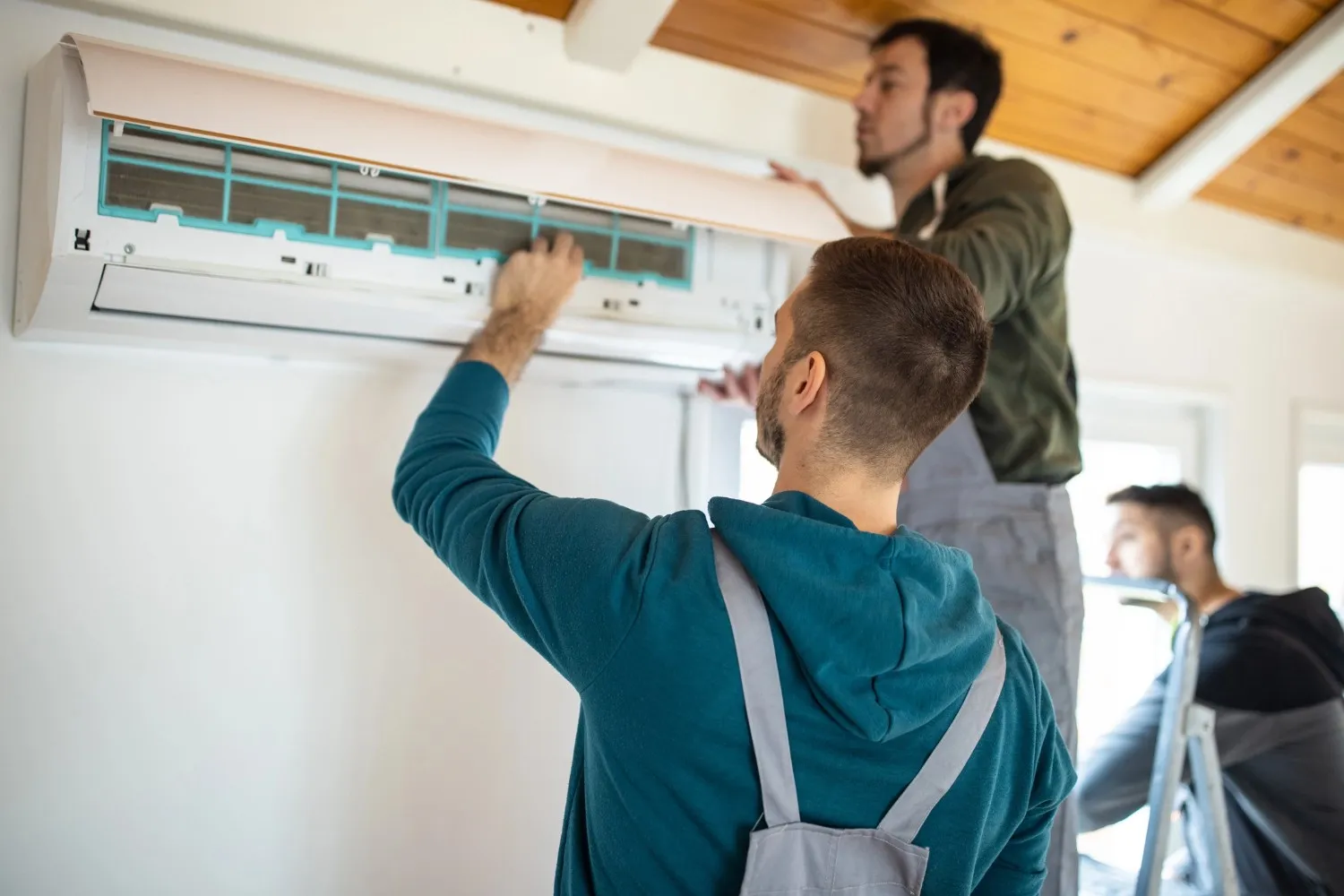
What does an hvac maintenance visit include is something every homeowner in Contra Costa County should understand before their next service appointment. A professional visit covers far more than a quick look around — it's a thorough, system-wide inspection designed to keep your equipment running safely and efficiently all year long.
Here's what a standard HVAC maintenance visit typically covers:
Most homeowners don't think about their HVAC system until something goes wrong — and by then, a small issue has often become a costly repair. Just like a car needs regular oil changes to stay reliable, your heating and cooling system needs consistent professional attention to perform at its best. Neglected systems can lose efficiency every year, work harder than they should, and fail earlier than expected.
At Stewart Heating, Plumbing & Air Conditioning, we serve homeowners throughout Pittsburg, Antioch, Brentwood, Walnut Creek, and the greater Contra Costa County area — and we see what skipped maintenance costs families over time.
Related content about what does an hvac maintenance visit include:
When a professional technician arrives at your home for a seasonal check-up, they follow a rigorous, multi-point checklist. A comprehensive inspection ensures that every mechanical, electrical, and physical component of your heating and cooling system is analyzed under load. We don't just look at the equipment; we test how it behaves during a live run cycle.
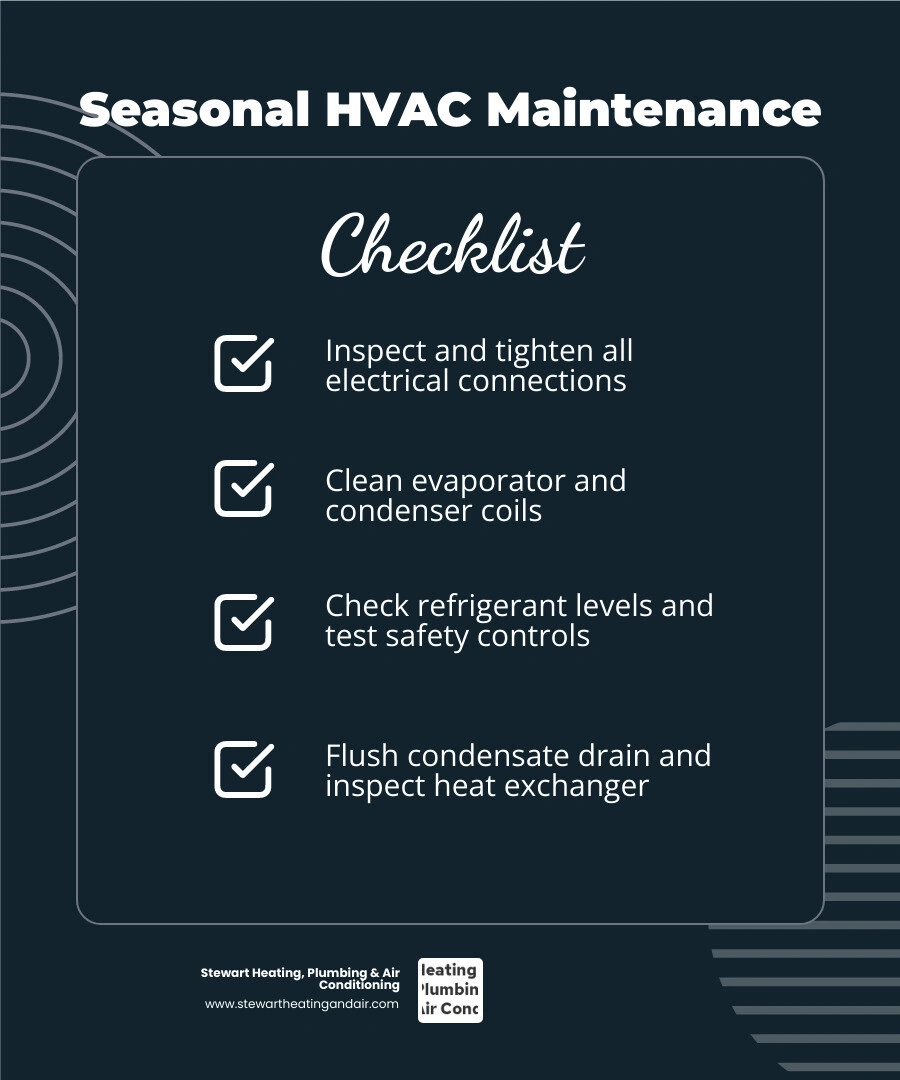
The process begins with evaluating the electrical connections throughout the unit. Over time, the natural vibrations of your system can cause electrical terminals to loosen. A technician will tighten all wiring harnesses, inspect contacts for signs of pitting or corrosion, and measure the voltage and current on the motors. Operating with loose connections or incorrect voltage can quickly burn out expensive motors and compressors.
Thermostat calibration is another critical phase of the visit. Your thermostat is the brain of your home comfort system. If it is miscalibrated by even a few degrees, your system will run longer than necessary, driving up your energy bills and placing unnecessary wear on the internal components. We verify that the thermostat reads the room temperature accurately and responds properly to start and stop signals.
Finally, checking safety controls is non-negotiable. Modern HVAC systems are built with numerous limit switches, pressure sensors, and automatic shutoff valves designed to prevent catastrophic failures, fires, or gas leaks. Testing these controls ensures that if an unsafe condition ever occurs—such as a blocked flue pipe or an overheating heat exchanger—the system will safely shut itself down immediately. For a deeper look into seasonal checklists, explore our Annual HVAC Maintenance Guide 2026.
Preparing your air conditioner for the warm summer months in East County requires targeted, cooling-specific procedures. The primary goal of air conditioning maintenance is ensuring efficient heat transfer. This starts with inspecting and cleaning the condenser coils (located in the outdoor unit) and the evaporator coils (located inside your home).
As air passes through your system, dust, pollen, and pet dander can settle on these coils. A layer of grime acts as an insulating blanket, forcing the compressor to work up to 30% harder to cool your home. During a professional visit, we wash the outdoor condenser coils with a gentle water stream and inspect the indoor evaporator coils for dirt and biological growth. Proper cleaning here is also essential for your health; you can read about How Proper HVAC Maintenance Prevents Mold Growth to see how clean coils protect your indoor air quality.
Next, we evaluate refrigerant levels. Refrigerant is the medium that absorbs heat from your indoor air and releases it outside. If your system is undercharged or overcharged by even a small percentage, its cooling capacity drops significantly, and energy consumption climbs. If we find low levels, we perform leak detection rather than simply topping it off, as operating a system with a refrigerant leak will eventually destroy the compressor.
We also perform capacitor testing. Capacitors are small, cylindrical devices that store electrical energy to give your motors the extra torque they need to start up and run. They are the single most common failure point in air conditioning systems, especially during hot summer spells in Martinez and Concord. By measuring their electrical capacitance, we can identify a weakening capacitor and replace it before it leaves you without cooling on a triple-digit day. If you live in the Martinez area, you can learn more about our local services on our HVAC Maintenance Martinez CA page.
As the autumn air cools down in Contra Costa County, the focus of our maintenance visits shifts to safety and heating reliability. Heating tune-ups are heavily centered around combustion safety, particularly for gas furnaces.
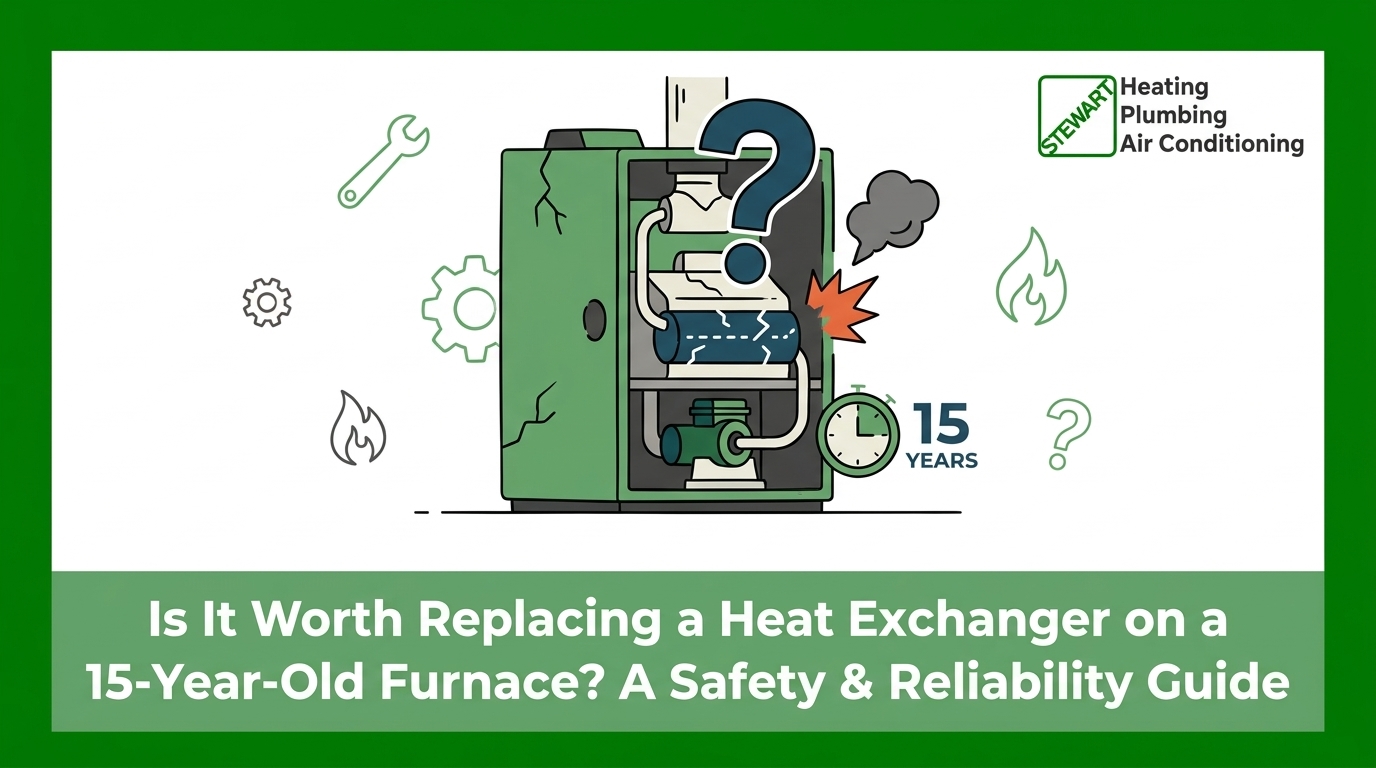
The most critical safety task during a heating visit is the heat exchanger inspection. The heat exchanger is a metal chamber where combustion gases are burned to create heat. The air circulating through your home passes over the outside of this metal chamber, warming up before entering your living spaces. If the heat exchanger develops even a hairline crack, deadly combustion gases—including carbon monoxide—can leak directly into your home's breathing air. We use specialized cameras to inspect every inch of the heat exchanger for cracks, rust, or structural weaknesses.
Along with a physical inspection, we perform carbon monoxide testing near the furnace and throughout the surrounding area to ensure your indoor air remains safe. We also clean and adjust the burner assembly. Over the year, dust and carbon deposits can build up on the burners, leading to incomplete combustion, soot accumulation, and poor heating efficiency. We ensure the burners light smoothly and produce a clean, steady blue flame.
Lastly, we verify the gas pressure and test the ignition system. Incorrect gas pressure can cause your furnace to "overfire" (running too hot and damaging components) or "underfire" (failing to heat your home properly). We measure the gas pressure with a digital manometer and adjust it to meet the manufacturer's exact specifications, while also cleaning the flame sensor to prevent sudden system shutoffs. For residents in the Oakley area, you can find localized information on our HVAC Maintenance Oakley CA page.
Even the most efficient heating and cooling units cannot perform properly if the air they produce cannot circulate freely. That is why a thorough maintenance visit must include an assessment of your home's ductwork and overall airflow.
During our visit, we measure the system's static pressure. Think of static pressure like blood pressure for your HVAC system; it represents the resistance the blower motor must overcome to push air through your ducts. High static pressure indicates that your system is working too hard, which can lead to premature blower motor failure, cracked heat exchangers, and uneven temperatures across different rooms.
We also perform a visual inspection of your visible ductwork to spot duct leaks, disconnected joints, or crushed duct sections. In a typical home, up to 20% to 30% of conditioned air is lost through leaks in the ductwork before it ever reaches your living spaces. Sealing these leaks is one of the most effective ways to lower your monthly utility bills. Finally, we check for airflow restrictions caused by dirty air filters, blocked return grilles, or closed supply registers, ensuring your system can breathe freely.
While professional maintenance is essential for the complex mechanical and electrical components of your system, there are several simple tasks that homeowners can—and should—perform between scheduled visits to keep their systems running smoothly.
The most important DIY task is regular filter replacement. Your air filter should be inspected monthly and replaced every 1 to 3 months, depending on the type of filter you use, whether you have pets, and if anyone in your household suffers from allergies. A heavily clogged air filter restricts airflow, forcing your blower motor to run hotter and longer, which can drop your system's overall efficiency by up to 15% and even cause your cooling coils to freeze over.
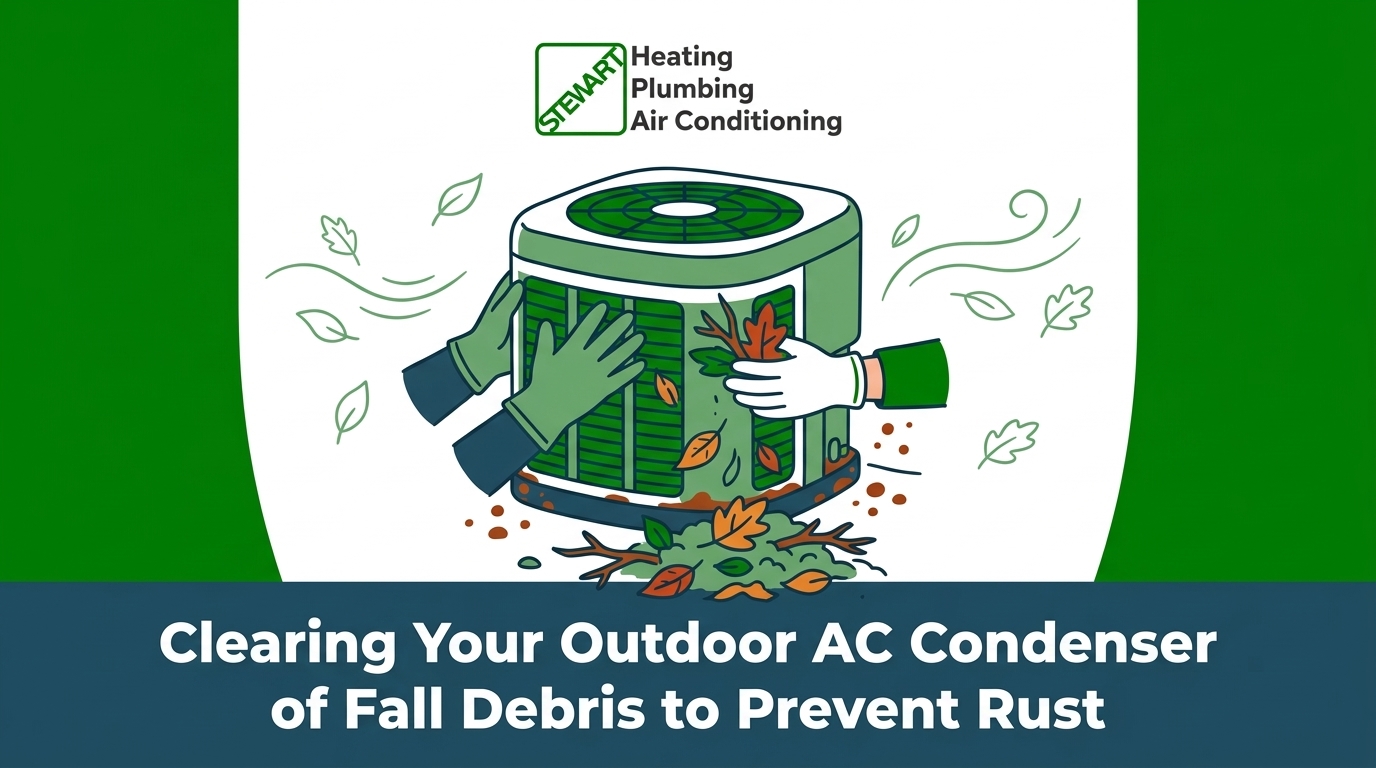
Another simple task is maintaining outdoor unit clearance. Keep the area around your outdoor condenser unit clear of leaves, weeds, grass clippings, and debris. Trim back any bushes, shrubs, or trees to maintain at least a two-foot clearance on all sides of the unit. This ensures that the outdoor coil can release heat into the surrounding air without restriction. Additionally, you can gently dust or vacuum your indoor supply and return vents to prevent dust buildup from circulating back through the system.
However, any tasks involving high-voltage electrical connections, refrigerant handling, gas line adjustments, or combustion analysis must be left to licensed professionals. Working with these elements without proper training and specialized tools poses significant safety hazards, including electrical shock, gas leaks, and carbon monoxide poisoning. Furthermore, under federal law, only EPA-certified technicians are legally allowed to handle, test, or charge refrigerants.
The table below outlines the clear division of labor between what you can safely handle yourself and what requires our professional expertise:
| Maintenance Task | Homeowner DIY | Professional Technician | Why It Matters |
|---|---|---|---|
| Air Filter Replacement | Yes | Yes | Prevents airflow restrictions and protects indoor air quality. |
| Outdoor Unit Clearance | Yes | No | Maintains proper heat rejection and prevents compressor strain. |
| Vent Dusting | Yes | No | Reduces dust accumulation in the living space. |
| Coil Cleaning | No | Yes | Requires specialized chemical cleaners and precise, low-pressure washing. |
| Electrical Testing | No | Yes | Involves high voltage; requires testing capacitors and measuring amperage. |
| Refrigerant Handling | No | Yes | Requires EPA Section 608 certification and specialized gauges. |
| Combustion Safety Testing | No | Yes | Requires carbon monoxide analyzers to ensure safe gas furnace operation. |
Investing in an ongoing HVAC maintenance plan offers exceptional long-term value for homeowners in Contra Costa County. Rather than treating your heating and cooling system with a "fix-it-when-it-breaks" mentality, a proactive maintenance agreement provides peace of mind and keeps your home consistently comfortable.
First and foremost, regular care significantly extends your system's lifespan. A well-maintained air conditioner or furnace can easily last 15 to 20 years, whereas a neglected system often begins to fail prematurely around the 10-year mark. By catching small issues—like a worn belt, a weakening capacitor, or a small refrigerant leak—before they escalate, you avoid the heavy financial burden of an early system replacement.
The monthly energy savings are another immediate benefit. When your coils are clean, your motors are lubricated, and your electrical connections are tight, your system operates at peak efficiency. This means it uses less electricity and gas to keep your home at your desired temperature, which directly translates to lower utility bills. In fact, regular maintenance can improve your system's efficiency by up to 15%.
Additionally, keeping up with professional maintenance is often a requirement to maintain your manufacturer's warranty. Most major HVAC brands explicitly state in their warranty terms that the equipment must be professionally serviced every year. If a major component fails and you cannot provide documented proof of annual maintenance, the manufacturer may deny your warranty claim, leaving you responsible for the cost of replacement parts.
Finally, routine visits are your best defense against unexpected breakdowns during peak summer heatwaves or winter cold snaps. To explore the value of these plans in more detail, read our article on Is an HVAC Maintenance Plan Worth It. You can also learn How to Prevent HVAC Emergencies with Maintenance and see how we deliver reliable Preventive HVAC Service Antioch CA.
We receive many questions from homeowners about what to expect during their maintenance appointments. Below, we have answered some of the most common inquiries to help you understand the process and maximize the value of your next service visit.
We recommend scheduling professional preventative maintenance twice a year: once in the spring to prepare your cooling system for the hot summer months, and once in the autumn to prepare your heating system for the winter.
If you have a heat pump system that handles both heating and cooling year-round, it still requires two service visits per year to inspect the reversing valve, defrost cycles, and electrical components before each major seasonal shift. Consistent, bi-annual care ensures your system is never caught off guard by extreme temperatures. For a complete breakdown of scheduling frequencies, check out our HVAC Service Frequency Complete Guide.
A thorough, professional HVAC maintenance visit typically takes between 60 to 90 minutes (1 to 1.5 hours) per system. If your home has multiple heating and cooling units (such as a zoned system or an upstairs and downstairs split system), the appointment can take up to 2 to 3 hours.
During this time, our technician is actively cleaning, testing, measuring electrical draw, checking safety switches, and documenting performance metrics. We take our time because we believe in doing the job right the first time, ensuring no hidden issues are overlooked.
Unfortunately, not all service visits are created equal. If a technician is in and out of your home in under 20 minutes, they likely only performed a superficial "clipboard inspection" rather than a true maintenance service.
Other red flags include:
A professional HVAC maintenance visit is one of the most effective investments you can make in your home's comfort, safety, and long-term energy efficiency. From checking critical electrical connections and cleaning coils to running life-saving combustion safety tests on your furnace, these visits ensure your system is fully prepared to handle whatever weather Contra Costa County throws our way.
At Stewart Heating, Plumbing & Air Conditioning, we have built our reputation on quality, customer satisfaction, and a commitment to getting projects done right the first time. Our team of experienced, licensed technicians takes pride in delivering thorough, honest maintenance services to families throughout Pittsburg, Antioch, Concord, Brentwood, Walnut Creek, and the surrounding areas.
Don't wait for a system breakdown on the hottest day of the year to think about your air conditioner. Protect your investment, lower your energy bills, and enjoy true peace of mind by scheduling your seasonal tune-up today.
Learn more about how we can keep your home comfortable year-round by visiting our Stewart Heating, Plumbing & Air Conditioning Maintenance Agreement page.

Very professional and complete. I would recommend Stewart to anyone. Highest quality of workmanship and clean installation.
Stewart Heating Plumbing Air Conditioning just did some work for us for the first time. They did an installation at my home and it turned out well. I thought the price was fair and I definitely would use them again. The technicians were very friendly and knowledgeable about their work. I highly recommend Stewart Heating Plumbing Air Conditioning and already told friends to use them.
We have been using Stewart Heating Plumbing Air Conditioning since 1995. They put the original heating and air unit in the house, and we have just stayed with them. They are dependable and honest people, and they have done a good job for us every time that we have used them!
They came and did an inspection and are coming tomorrow to do the repair.
They replaced a regulator the first time, and then the water heater vent had to be replaced. They did great work.
The gentleman that serviced us was helpful, insightful, and knew what he was talking about. Overall, it was a great experience.