

Recent Blogs
Stay updated with our latest blog posts.


The signs your air filter needs changing are often easier to spot than most homeowners realize — but only if you know what to look for. A clogged filter quietly drives up your energy bills, strains your HVAC system, and degrades the air your family breathes every day. According to the U.S. Department of Energy, a dirty filter can increase your system's energy consumption by 5% to 15%, and indoor air can be two to five times more polluted than outdoor air when filters go unchanged.
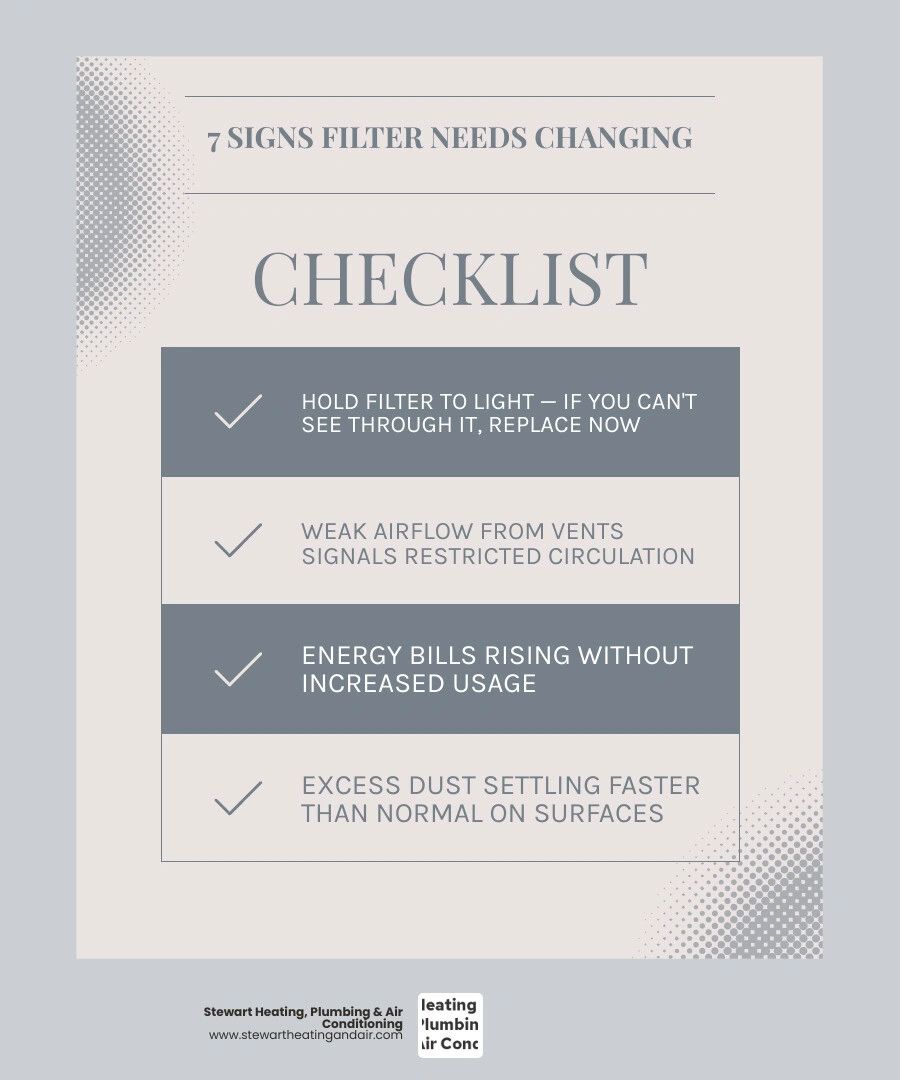
Here are the most common warning signs to watch for:
Most manufacturers recommend replacing standard air filters at least every 90 days — sooner if you have pets, live in a dusty area, or run your system heavily during summer and winter.
If you're a homeowner in Pittsburg, CA or anywhere across Contra Costa County, staying on top of filter changes is one of the simplest ways to avoid costly HVAC repairs and keep your system running efficiently year-round.
To keep your home and your vehicles running smoothly, it helps to understand that not all air filters are created equal. While they all serve the same basic purpose—trapping airborne particles before they can do harm—they operate in very different environments.
Your home heating and cooling system relies on an HVAC filter to protect the sensitive internal components, such as the blower motor and evaporator coils, from dust buildup. As a massive bonus, these filters also clean the air circulating through your living spaces.
HVAC filters are rated using the MERV (Minimum Efficiency Reporting Value) scale, which ranges from 1 to 16 for standard residential systems.
Understanding how these ratings affect your home comfort is a great first step. To learn more about selecting the right replacement schedule for your specific household setup, check out our guide on How Often Should You Change Your HVAC Air Filter.
If you own a car, you also have to manage two entirely separate filters under the hood and behind the dash:
When your home's HVAC filter becomes overloaded with dust, hair, and debris, it starts to push back against your comfort and your wallet. If you pay close attention to your home, you will easily spot these seven common warning signs.
The most obvious sign is visual. If you pull your filter out of its slot and it is covered in a thick, gray felt-like layer of dust, it is past its prime. Furthermore, if you notice dark rings of dust forming around your ceiling or wall registers, or if you find yourself having to dust your furniture every two days instead of once a week, your filter has likely reached its maximum capacity and is allowing dust to bypass the system.
When you place your hand over a supply register while the AC or furnace is running, does the air feel like a gentle whisper instead of a steady breeze? A clogged filter acts like a solid wall, heavily restricting the amount of air the blower fan can push through your ductwork. This can leave rooms furthest from the HVAC unit feeling warm in the summer and chilly in the winter.
When airflow is restricted, your system has to work twice as hard and run much longer to reach the temperature set on your thermostat. If you notice your utility bills creeping up in June 2026 compared to the same period in previous years—without an extreme change in outdoor weather—a choked air filter is the most likely culprit.
Have you started hearing a high-pitched whistling noise, a low hum, or a persistent rattling coming from your return vents? When the blower fan struggles to pull air through a heavily clogged filter, it creates high static pressure. This pressure forces air through tiny gaps around the filter frame or inside the ductwork, resulting in strange whistling sounds that sound like air escaping a balloon.
A healthy HVAC system runs in steady, predictable cycles. If you notice your heating or cooling system turning on, running for only two or three minutes, shutting off, and then turning back on a few minutes later, it is "short cycling." A dirty filter restricts the cool air passing over your furnace's heat exchanger or your AC's evaporator coil, causing safety sensors to shut the system down rapidly to prevent catastrophic overheating or freezing.
During the hot summer months in Contra Costa County, your air conditioner relies on warm indoor air passing over the cold evaporator coils to absorb heat. If a dirty filter blocks that warm air, the refrigerant inside the coils gets too cold, causing the moisture condensing on the outside of the coils to turn to ice. If you see ice forming on the refrigerant lines outside your unit or water pooling around your indoor system as ice melts, turn off your system immediately and inspect your filter.
Your home is supposed to be a safe haven. However, when your filter is full, it can no longer trap new airborne particles. Instead, every time your system kicks on, allergens like dust mites, pet dander, mold spores, and pollen bypass the filter and recirculate through your home. If your family members are experiencing sudden sneezing fits, itchy eyes, dry throats, or increased asthma symptoms indoors, your filter needs urgent attention.
If you are noticing these issues in your home and want to ensure your indoor air quality is thoroughly evaluated, our team offers specialized solutions. You can learn more about our local services by visiting our page on IAQ Air Filter Replacement Concord CA.
Ignoring the signs your air filter needs changing doesn't just make your home dusty—it actively damages your HVAC equipment and drains your bank account.
When a filter is completely packed with debris, the blower motor must consume significantly more electricity to pull air through the system. This extra effort can increase your system's energy consumption by 5% to 15%, which translates directly to higher monthly utility bills. Over time, this constant strain overheats the motor, leading to premature component failure and expensive repairs.
In heating systems, restricted airflow can cause the heat exchanger to overheat. When a heat exchanger repeatedly gets too hot, the metal expands and contracts excessively, which can eventually lead to cracks. A cracked heat exchanger is a severe safety hazard, as it can allow deadly carbon monoxide gas to leak into your home’s breathing air.
To help visualize the difference, here is a quick breakdown of how a clean filter compares to a dirty one:
| Performance Metric | Clean Air Filter Impact | Dirty / Clogged Air Filter Impact |
|---|---|---|
| HVAC Energy Consumption | Runs at peak efficiency; keeps bills low | Increases energy usage by 5% to 15% |
| Blower Motor Lifespan | Minimal strain; operates within normal limits | Overheats and risks premature burnout |
| Indoor Air Quality (IAQ) | Successfully captures dust, pollen, and dander | Recirculates allergens; air is 2-5x more polluted |
| System Cycle Length | Normal, steady heating and cooling cycles | Causes short cycling or frozen AC coils |
| Vehicle Engine Power | Optimizes fuel combustion and horsepower | Can reduce engine horsepower by up to 11% |
| Vehicle Fuel Economy | Maintains steady, rated MPG | Leads to poor fuel economy and rough idling |
Keeping these differences in mind can save you from unexpected system breakdowns when you need your comfort system the most. For families living in neighboring areas experiencing dusty summer winds, you can explore targeted solutions on our IAQ Air Filter Replacement Antioch CA service page.
You don't have to wait for your HVAC system to start making strange noises or driving up your bills to take action. Inspecting your filter at home is incredibly simple and takes less than five minutes.
If you want to check how much dust is circulating through your home due to an underperforming filter, try the white sheet test. Tape a clean, white bedsheet or a piece of white cloth about six inches away from one of your highly active supply vents. Run your system for an hour. If the sheet begins to show gray or dark soot-like spots, your filter is either completely full or is fitting poorly, allowing dust to bypass the edges.
While the standard rule of thumb is to change your filter every 90 days, local conditions in our East Bay communities often require more frequent changes.
For more practical strategies on maintaining your home's filters under local conditions, take a look at our Air Filter Replacement Concord CA Tips.
Yes, a severely clogged engine air filter can absolutely trigger your car's check engine light.
Your vehicle uses a Mass Air Flow (MAF) sensor to measure the exact amount of air entering the engine so it can mix it with the perfect amount of fuel. When the air filter is choked with dirt, the engine cannot get enough oxygen. To compensate, the vehicle's computer may create a "rich" fuel mixture (too much fuel and not enough air). This incomplete combustion can foul your spark plugs, cause the engine to misfire, reduce your horsepower by up to 11%, and ultimately trigger a diagnostic trouble code that illuminates the check engine light.
If you have furry family members, the signs your air filter needs changing will appear much faster. You will likely notice:
In pet-friendly homes, we highly recommend performing a visual inspection every 30 days and replacing standard pleated filters every 45 to 60 days to keep indoor air pollution at bay. For professional help selecting high-capacity filters designed for pet owners, check out our options for the Best Air Filter Replacement Pittsburg CA.
The most reliable indicators that your home comfort system is struggling with a bad filter include:
If you are experiencing these symptoms in your home, you can find expert local support by reading about our IAQ Air Filter Replacement Pittsburg CA services.
Taking care of your home's air filter is one of the easiest, most cost-effective ways to protect your heating and cooling equipment, lower your monthly energy bills, and keep your family breathing clean, healthy air. By keeping an eye out for the common signs your air filter needs changing—such as dusty vents, weak airflow, rising utility bills, and unusual noises—you can catch small issues before they turn into major system breakdowns.
At Stewart Heating, Plumbing & Air Conditioning, we have spent years helping homeowners throughout Pittsburg, CA, and the wider Contra Costa County area keep their homes comfortable and efficient. We pride ourselves on doing every job right the first time and focusing entirely on your satisfaction.
If you need help resolving persistent airflow issues, improving your indoor air quality, or scheduling a comprehensive seasonal HVAC tune-up, our friendly, experienced team is always here to help. Contact us today or visit our Stewart Heating & Air IAQ Services page to schedule your home air quality assessment!

Very professional and complete. I would recommend Stewart to anyone. Highest quality of workmanship and clean installation.
Stewart Heating Plumbing Air Conditioning just did some work for us for the first time. They did an installation at my home and it turned out well. I thought the price was fair and I definitely would use them again. The technicians were very friendly and knowledgeable about their work. I highly recommend Stewart Heating Plumbing Air Conditioning and already told friends to use them.
We have been using Stewart Heating Plumbing Air Conditioning since 1995. They put the original heating and air unit in the house, and we have just stayed with them. They are dependable and honest people, and they have done a good job for us every time that we have used them!
They came and did an inspection and are coming tomorrow to do the repair.
They replaced a regulator the first time, and then the water heater vent had to be replaced. They did great work.
The gentleman that serviced us was helpful, insightful, and knew what he was talking about. Overall, it was a great experience.