

Recent Blogs
Stay updated with our latest blog posts.

Are you wondering why your house suddenly smells like a dusty campfire the moment you adjust your thermostat for the cooler weather? When researching home maintenance tips and troubleshooting, few things cause as much immediate panic as a sharp, burning odor pouring out of your air vents. At Stewart Heating, Plumbing and Air Conditioning, our technicians field dozens of frantic calls every October from homeowners experiencing this exact stressful scenario. The sudden smell of burning debris can make you question whether you should grab a fire extinguisher or simply wait it out.
Here is the short answer: a temporary burning dust smell is a completely normal mechanical process for a heating system that has been dormant for months. As your equipment sits idle over the summer, airborne particles settle on the internal components. When the heat finally kicks on, those particles incinerate. However, while a brief dusty odor is harmless, our team warns that other specific smells can indicate severe mechanical or electrical failures that require immediate shutdown.
Understanding the difference between a harmless seasonal quirk and a dangerous system failure empowers you to make safe, confident decisions for your home. Proactive care is the best way to prevent surprises. Just as you routinely check your Water Heaters before the winter freeze, keeping an eye on your heating equipment is vital. Knowing exactly when to Request Plumbing Service or call an HVAC professional ensures your home remains safe, comfortable, and fully operational throughout the colder months.
To understand why your heating system produces odors, you have to look at what happens inside the cabinet during the long, hot summer. Heating and cooling systems share ductwork, but the actual heating components sit completely idle during the cooling months. This extended period of inactivity turns your furnace or air handler into a collection zone for household debris.
In our decades of performing fall maintenance across the East Bay and Pittsburg, CA area, we've found that our mild but damp Octobers mean systems often sit idle for extended periods. This specific climate maximizes dust accumulation right up until the first chilly night forces a startup. The moisture in the air can even cause dust to cling more stubbornly to metallic surfaces, making the eventual burn-off slightly more noticeable.
While your air conditioner runs all summer, the airflow typically bypasses the primary heating elements. Without the extreme temperatures needed to burn off debris, particles simply settle and accumulate. This isn't just plain dirt; household dust is a complex mixture of microscopic materials.
• Pet dander and hair: Microscopic skin flakes and hair from dogs and cats easily slip past standard air filters and bake onto metal components.
• Fabric fibers: Lint from carpets, clothing, and upholstery constantly circulates through your ductwork.
• Cooking oils: Aerosolized grease from your kitchen travels through the air return and coats the internal HVAC components, acting as an adhesive for other debris.
• Dead skin cells: The bulk of everyday household dust consists of human skin cells, which incinerate quickly when exposed to high heat.
The combustion process: When you finally trigger a mid-fall / October heating startup, the system's internal temperature spikes dramatically within seconds. The settled layer of dust, dander, and fibers is immediately exposed to open flames or glowing electric coils. What you are smelling is the rapid incineration of this surface-level debris. It is a controlled, microscopic burn-off confined entirely to the metallic surfaces of your equipment, not the system itself catching fire.
Distinguishing between a temporary nuisance and a serious hazard comes down to timing. A normal burn-off follows a very predictable timeline, and understanding this window prevents unnecessary panic.
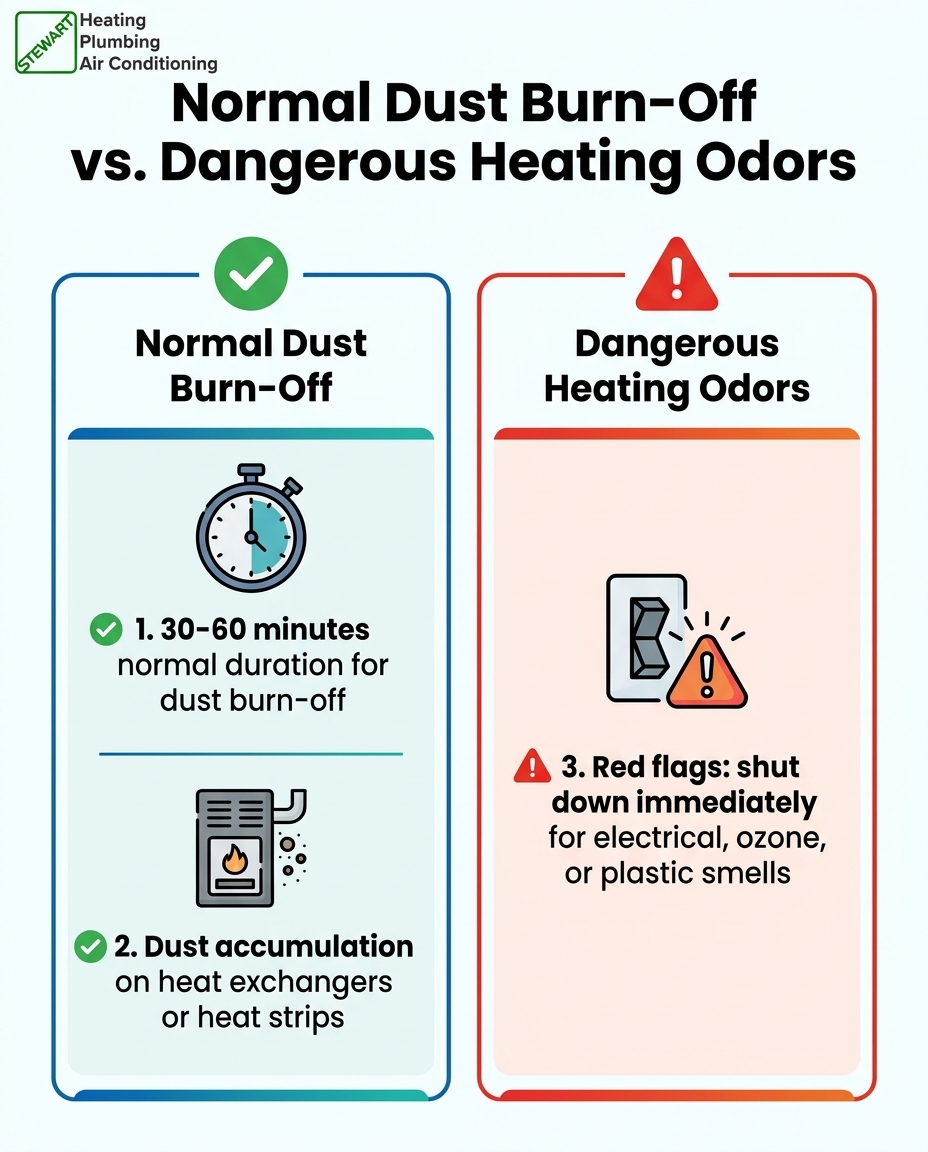
Our technicians typically advise customers that the smell duration dissipates within 30-60 minutes for normal dust burn-off. The odor should be strongest during the first five minutes of operation and steadily decrease in intensity as the system continues to run. If you are experiencing this standard dusty smell, follow a specific protocol to clear the air efficiently.
1. Do not short-cycle the system: Many homeowners panic and turn the thermostat off after five minutes. This is a mistake. Shutting the system down prematurely simply pauses the incineration process. When you turn it back on, the smell will return. You must let the system complete a full heating cycle to burn off the debris entirely.
2. Open windows for cross-ventilation: If the weather permits, open a few windows on opposite sides of your home to create a cross-breeze. This flushes the incinerated particulate matter out of your living space much faster than relying on your HVAC filter alone.
3. Turn on ceiling fans: Keep the air moving. Stagnant air allows the burnt dust smell to linger in fabrics and upholstery long after the furnace has stopped producing the odor.
4. Monitor the smell's characteristics: Pay close attention to the nature of the odor. It should strictly smell like dry, burning dust—similar to the smell of a space heater being turned on after storage.
5. Watch the clock: Note the exact time the system turned on. If the smell persists at the same intensity beyond the one-hour mark, or if it suddenly changes to a chemical or plastic odor, the standard burn-off phase has ended, and a mechanical problem has likely begun.
The exact source of the burning odor depends entirely on the type of heating equipment installed in your home. While a mid-fall / October heating startup will cause a smell in almost any system, the physical location of the dust burn-off varies wildly between gas furnaces and electric heat pumps.
• Gas Furnace — Source of the Odor: Metallic Heat Exchanger — How the Burn-Off Happens: Open burners heat the large metal clam-shell or tubular heat exchanger, incinerating dust resting on its exterior surface. — Typical Timing: Immediately upon the very first startup of the fall season.
• Heat Pump — Source of the Odor: Auxiliary Heat Strips — How the Burn-Off Happens: Electric resistance coils (similar to a toaster) heat up to supplement the primary refrigerant heating process. — Typical Timing: Often delayed until the first freezing night when auxiliary heat is finally required.
In a traditional gas furnace, the heat exchanger is a massive, winding piece of metal that separates the toxic combustion gases from the breathable air circulating through your home. Because it is so large, it provides a massive surface area for dust to collect over the summer. When the gas burners ignite, the metal heats up rapidly, and the entire surface area burns off its dust coating at once. This creates a highly concentrated odor that pushes through your vents forcefully during the first cycle.
Heat pumps operate differently. For most of the mild fall season, a heat pump simply reverses the flow of refrigerant to pull ambient heat from the outside air into your home. This process does not get hot enough to burn off dust. However, when the outside temperature drops sharply, the system activates its "auxiliary" or "emergency" heat strips to keep up with the demand. These strips are essentially giant toaster coils hidden inside your ductwork. A pattern we see often in our service calls is heat pump owners being completely caught off guard by a sudden burning smell weeks after the heating season has already begun, simply because those auxiliary strips finally engaged.
Troubleshooting these different systems requires a logical approach, much like dealing with other complex home appliances. For example, Troubleshooting a Tankless Water Heater That Won't Ignite requires understanding the sequence of operations. The same applies to your HVAC system—knowing whether you are smelling a gas heat exchanger or an electric heat strip helps normalize the diagnostic process and highlights when a professional is needed.
While a dusty smell duration typically dissipates within 30-60 minutes for normal dust burn-off, certain odors are never normal. If you detect any of the following smells, you must bypass the waiting period entirely. These odors indicate severe, potentially dangerous mechanical or electrical failures that require immediate intervention.
• Electrical or "Fishy" Smells: A strong, acrid odor that smells vaguely like fish or urine is the hallmark of melting wire insulation or overheating electrical components. This often means a relay switch is failing, a circuit board is shorting out, or the blower motor is drawing too much amperage.
• Ozone or Sparking Odors: If the air smells like a severe thunderstorm or a strong chlorine-like chemical, your system is likely producing electrical arcing. This is a severe fire hazard caused by failing capacitors or exposed wiring touching the metal cabinet.
• Melting Plastic: A distinct burning plastic smell usually indicates that a foreign object—like a child's toy, a piece of construction debris, or a loose zip tie—has fallen down the register and is resting directly on a heating element. It can also indicate that the plastic housing around a system component is melting due to severe overheating.
• Burning Rubber: This odor is almost exclusively tied to the blower motor. It typically means the rubber drive belt (in older belt-driven systems) is slipping and burning against the pulley, or the rubber mounts isolating the motor are melting due to extreme friction and bearing failure.
The immediate action plan: If you detect any of these critical warning signs, do not wait for the smell to clear. First, turn the thermostat to the "Off" position. Next, locate your home's main electrical panel and flip the breaker dedicated to the furnace or air handler to ensure all power is severed. Never attempt to open the sealed furnace cabinet or diagnose electrical components yourself; this work requires a licensed professional to prevent injury or further property damage.
As a trusted family-owned business serving the area since 1974, our team at Stewart Heating has seen first-hand what happens when these warning signs are ignored, and we always prioritize your home's security over a quick fix. If you suspect an electrical issue, leave the system off and contact a professional. Whether you need complex HVAC diagnostics or extensive Plumbing Services, relying on verified experts ensures your home remains a safe environment.
Yes, it is entirely normal if the odor specifically smells like burning dust. This is the direct result of summer dust accumulation being incinerated off the internal heating components. During the months your system sat idle, pet dander, lint, and airborne particles settled onto the heat exchanger. The moment a mid-fall / October heating startup occurs, those particles are exposed to extreme heat and burn away rapidly. As long as the smell resembles dry dust and not chemicals or plastic, it is a standard part of seasonal maintenance.
A normal dust burn-off typically lasts between 30 to 60 minutes. The odor will be most intense during the first ten minutes of operation and should steadily fade as the system completes its cycle. Continuous operation actually helps clear the smell faster than turning the system on and off repeatedly. If you short-cycle the furnace, you only prolong the inevitable burn-off process. If the smell remains strong after an hour of continuous running, shut the system down and request a professional inspection.
Standard household dust resting on a heat exchanger will not ignite your home. The dust burns off at a microscopic level, creating an odor but no actual flames outside the combustion chamber. However, severe blockages caused by deeply neglected maintenance can lead to dangerous overheating. If a system is completely choked by debris, the internal safety switches may trip to prevent a fire. This is why keeping the cabinet clean and maintaining clear airflow is so important for seasonal safety.
A heat pump burning smell is usually caused by the auxiliary heat strips activating for the very first time. Unlike a gas furnace that uses flames, a heat pump uses electric resistance coils that act exactly like a large space heater or a toaster. Because a heat pump primarily uses refrigerant to warm the home during mild weather, these emergency strips may not turn on until the first true freeze of the year. When they finally activate, they burn off months of accumulated dust all at once, causing a sudden and unexpected odor.
Yes, a severely restricted air filter will absolutely make the burning smell worse and last longer. Restricted airflow forces the entire heating system to run hotter than its design parameters allow, which bakes the dust more aggressively. Furthermore, a dirty filter fails to trap incoming debris, introducing even more lint and dander into the heating cabinet to be incinerated. We always recommend replacing your filter before the first startup as the easiest way to minimize the intensity and duration of the initial fall burn-off.
Transitioning into the colder months shouldn't be a source of anxiety. Recognizing that a brief, 30 to 60-minute dust smell is a completely normal part of the fall transition allows you to operate your system with confidence. The smell duration typically dissipates within 30-60 minutes for normal dust burn-off, leaving you with clean, warm air for the rest of the season. However, you must remain vigilant. Any odors resembling electrical shorts, melting plastic, or burning rubber require immediate professional intervention to protect your home from serious hazards.
The best way to eliminate startup odors and ensure your system operates safely is through proactive preparation. Don't wait for the deepest winter cold to test your equipment's reliability. Having a licensed technician clean the cabinet, inspect the electrical connections, and verify the integrity of the heat exchanger guarantees peace of mind. To keep your system running flawlessly year after year, consider enrolling in a comprehensive Maintenance Plan today.

Very professional and complete. I would recommend Stewart to anyone. Highest quality of workmanship and clean installation.
Stewart Heating Plumbing Air Conditioning just did some work for us for the first time. They did an installation at my home and it turned out well. I thought the price was fair and I definitely would use them again. The technicians were very friendly and knowledgeable about their work. I highly recommend Stewart Heating Plumbing Air Conditioning and already told friends to use them.
We have been using Stewart Heating Plumbing Air Conditioning since 1995. They put the original heating and air unit in the house, and we have just stayed with them. They are dependable and honest people, and they have done a good job for us every time that we have used them!
They came and did an inspection and are coming tomorrow to do the repair.
They replaced a regulator the first time, and then the water heater vent had to be replaced. They did great work.
The gentleman that serviced us was helpful, insightful, and knew what he was talking about. Overall, it was a great experience.