

Recent Blogs
Stay updated with our latest blog posts.

If you are searching for home maintenance tips and troubleshooting advice because your furnace is emitting a strange, acrid smell or cycling off before the house gets warm, you are not alone. At Stewart Heating, Plumbing and Air Conditioning, our team frequently fields calls during that initial October pre-winter heating startup, which often brings unexpected sensory feedback as a system that has sat dormant all summer suddenly roars back to life. You might notice unusual odors, hear unexpected rattling, or observe cycling patterns that leave you wondering if the equipment is safe to operate.
The core decision point for any homeowner during the shoulder season is recognizing which of these symptoms are harmless quirks of a system waking up, and which are mechanical red flags requiring a licensed professional. In our experience, ignoring a genuine warning sign in mid-fall almost always guarantees a complete winter breakdown when temperatures drop and HVAC technicians are booked out for days. To get your system ready for the cold, learning about professional HVAC services and securing an HVAC maintenance plan is the most reliable path forward.
The Problem: After months of inactivity during the summer cooling season, your furnace or heat pump is not in the same condition it was when you last turned it off. Dust has settled across the heat exchanger, ignition components have sat dormant, and moving parts have lost their residual lubrication. When the thermostat finally calls for heat, the system undergoes a sudden, high-stress mechanical transition.
The Cause: Our technicians often explain that the sequence of operations for a gas furnace is highly specific and relies on a chain of safety checks. First, the thermostat sends a signal to the control board. The draft inducer motor kicks on to clear residual gases from the heat exchanger. Next, a pressure switch verifies adequate airflow before the igniter begins to glow. Only then does the gas valve open, allowing the burners to ignite. Finally, a flame sensor confirms ignition before the main blower motor activates to distribute warm air. If any of these dormant components fail to respond within milliseconds, the system will shut itself down as a safety precaution.
The Solution: Understanding this sequence highlights why the initial October startup is the ultimate stress test for aging or unmaintained heating equipment. Minor airflow restrictions—such as a partially clogged filter or blocked return vent—can cascade into larger efficiency problems during this shoulder season. A system that struggles through its sequence of operations in mild weather will inevitably fail under the continuous strain of deep winter. Recognizing the complexity of this process is the first step toward proactive home care.
One of the most common reasons homeowners seek out troubleshooting advice in the fall is the sudden onset of strange smells and sounds. Differentiating between harmless startup behaviors and serious mechanical red flags is vital for home safety.
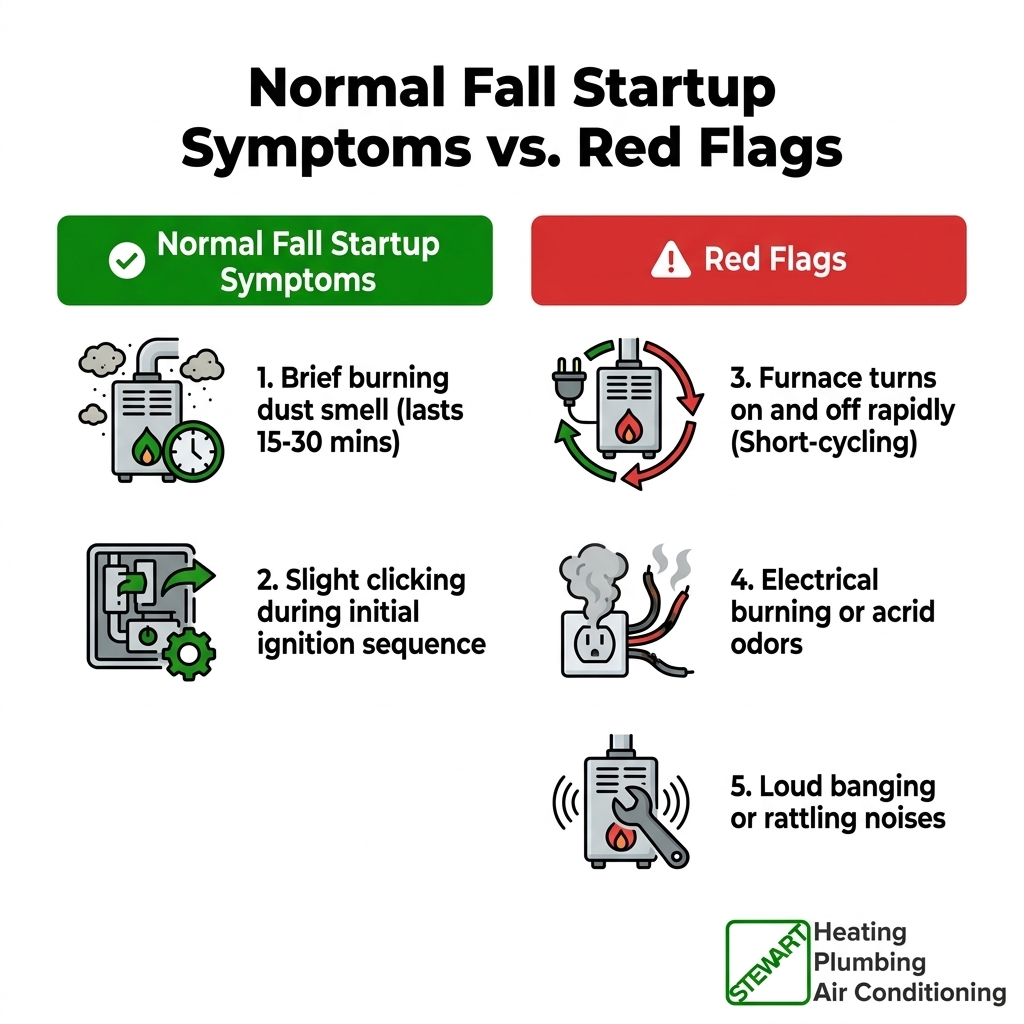
The classic "burning dust" smell is a hallmark of the October pre-winter heating startup. Over the summer, household dust settles on the furnace's internal components, particularly the heat exchanger. When the burners ignite for the first time, this dust burns off, creating a distinct odor that travels through the ductwork. This smell is typically harmless and should dissipate entirely within 15 to 30 minutes of operation.
Conversely, dangerous warning signs dictate an immediate system shutdown. If you detect an electrical burning smell, an odor resembling melting plastic, or a persistent acrid scent that does not fade, shut off the thermostat immediately. Auditory warning signs are equally important; loud banging, metallic rattling, or prolonged clicking during the ignition sequence indicate failing components or delayed gas ignition, which requires immediate professional intervention. Just last week, a local homeowner called our dispatch team to request a system review after noticing unusual system behaviors. Our technician thoroughly evaluated the equipment, explained the underlying efficiency issues, and suggested specific measures to improve performance safely.
There is a strict boundary between safe, homeowner-level troubleshooting and tasks that require a licensed professional. Changing a clogged air filter is a safe, essential DIY task that resolves many basic airflow issues and prevents the system from overheating. However, opening the burner compartment, attempting to clean delicate ignition sensors, or adjusting gas valves without proper licensing and training is incredibly dangerous.
• Brief burning smell (15-30 mins) — Likely Cause: Dust burning off heat exchanger — Action Required: Monitor; usually harmless
• Persistent electrical smell — Likely Cause: Failing blower motor or wiring — Action Required: Shut off system; call a professional
• Rapid clicking with no heat — Likely Cause: Igniter failure or gas valve issue — Action Required: Call a professional for diagnostics
• Weak airflow from vents — Likely Cause: Clogged air filter — Action Required: Replace filter (DIY safe)
Short-cycling occurs when a heating system turns on, runs for a brief period, and then shuts off rapidly without completing a full heating cycle. This is a major red flag during fall startups and places immense mechanical stress on your entire HVAC infrastructure.
The mechanical toll of short-cycling cascades through the system in several distinct ways:
1. Ignition Sequence Strain: Every time the furnace starts, the igniter and gas valve must operate. Rapid cycling forces these components to engage dozens of times an hour, drastically reducing their operational lifespan.
2. Blower Motor Fatigue: The blower motor draws the most electrical current during its initial startup phase. Constant stopping and starting overheats the motor windings and leads to premature failure.
3. Heat Exchanger Thermal Stress: The heat exchanger expands as it warms up and contracts as it cools. Short-cycling forces rapid, unnatural temperature fluctuations that can cause the metal to crack, potentially releasing hazardous gases into the home.
4. Fuel Waste and Efficiency Loss: A furnace operates most efficiently when it runs in long, steady cycles. Short bursts consume excess energy without effectively raising the indoor temperature.
Common causes of short-cycling range from simple thermostat miscalibrations to dangerous overheating limits tripping due to severe airflow restrictions. Ignoring short-cycling during the October pre-winter heating startup guarantees a complete system failure during peak winter demand. The constant wear and tear will eventually cause a critical component to give out entirely.
In our decades of experience serving Pittsburgh CA, we've seen firsthand how the unique transition from hot summer spikes to unpredictable, mild fall weather demands professional calibration. These unique humidity and temperature swings create specific challenges for residential heating systems.
During the shoulder season, weather patterns require HVAC systems to adapt rapidly to changing thermal loads. A home might need air conditioning during a warm afternoon and active heating by midnight. This frequent cycling during mild but fluctuating temperatures actually stresses the system differently than a deep winter freeze. When temperatures are extremely cold, a furnace runs in long, steady cycles. In mild fall weather, the system is more prone to turning on and off frequently to maintain a delicate balance.
Professional calibration ensures the system responds accurately to the thermostat, preventing unnecessary wear and tear. Our technicians will verify that the thermostat's anticipator settings are correct, ensuring the furnace runs just long enough to satisfy the temperature demand without overshooting. Proactive pre-winter calibration acts as a defense against the unpredictability of the coming months, ensuring your equipment operates smoothly regardless of how erratic the weather becomes.
A professional HVAC maintenance plan is far more than a quick visual inspection; it is a rigorous, multi-point diagnostic process designed to resolve startup issues before they escalate. Understanding what happens during these visits highlights the immense value they provide.
A comprehensive preventative strategy typically includes the following critical steps:
• Testing Safety Controls: Technicians intentionally trip high-limit switches and rollout sensors to ensure the furnace will automatically shut down in an emergency.
• Cleaning Burners and Sensors: Soot and oxidation are removed from the flame sensor and burners to ensure a steady, clean burn and prevent ignition lockouts.
• Measuring Electrical Draw: Technicians use a multimeter to check the amp draw on the blower motor and draft inducer, identifying components that are working too hard and nearing failure.
• Inspecting the Heat Exchanger: A visual and sometimes camera-assisted inspection checks for hairline cracks that could compromise indoor air quality.
By identifying and replacing failing components early, our technicians prevent the exact short-cycling events that destroy equipment. For example, during a recent furnace tune-up, one of our Stewart Heating technicians walked a first-time customer through everything being done, pointed out items that were beginning to show wear, and even advised on proper detector and filter placement. Having a documented service history for the equipment aids immensely in future diagnostics, allowing technicians to track performance degradation over time. You can explore maintenance agreement details to see exactly how these multi-point inspections protect your home.
The benefits of regular HVAC maintenance extend far beyond immediate comfort; they are deeply tied to long-term financial savings and home safety. According to the Department of Energy, proper and regular HVAC maintenance can reduce energy consumption by 10 to 20 percent. A clean, well-calibrated system simply requires less fuel and electricity to heat your home.
Safety is an even more pressing imperative. The National Fire Protection Association (NFPA) consistently cites heating equipment as a leading cause of home fires. A professional pre-winter inspection ensures that gas connections are tight, electrical terminals are secure, and safety mechanisms are fully operational.
Furthermore, comprehensive maintenance addresses the entire system, ensuring that both heating and cooling components remain efficient year-round—which includes tasks like preventing a clogged AC drain before it causes water damage during the transition between seasons. Regular tune-ups extend the overall lifespan of the equipment, maximizing your initial investment. For instance, one of our loyal customers who has relied on Stewart Heating, Plumbing and Air Conditioning for 33 years was dealing with recurring HVAC issues. After our technician clearly explained the root problem and the mechanical fix required, the homeowner confidently signed up for a regular maintenance contract to prevent future disruptions and protect their system's longevity.
There is a vast difference between a reactive repair call and a proactive maintenance agreement. A transactional tune-up often involves a generic fall checklist, whereas a dedicated maintenance agreement functions as a long-term safety partnership.
As a family-owned business serving the Pittsburgh CA community since 1974, we believe in building trusted partnerships rather than transient contractor relationships. Priority scheduling and comprehensive care provide incredible peace of mind during extreme weather events. When a mid-winter freeze hits and local technicians are overwhelmed with emergency calls, our maintenance plan members receive priority service, ensuring their families are never left in the cold.
Having a trusted local expert who understands the specific history and quirks of your home's HVAC system streamlines diagnostics and prevents unnecessary part replacements. Furthermore, proactive maintenance often qualifies homeowners for seasonal specials, extended warranties, or generally applicable energy rebates and utility incentive programs (we always advise readers to verify current programs with their utility or a tax professional). Taking advantage of heating and cooling specials paired with a maintenance plan ensures your system operates at peak performance year after year.
Navigating the October pre-winter heating startup does not have to be a source of anxiety. By understanding the critical difference between normal startup quirks—like the brief scent of burning dust—and genuine mechanical threats like short-cycling, you can make informed decisions about your home's comfort.
Addressing minor airflow restrictions, dormant ignition components, and calibration issues in October prevents major emergencies in December. We strongly encourage readers to explore professional preventative options to ensure their home remains safe, efficient, and comfortable all season long. Securing a comprehensive HVAC maintenance plan is the most effective way to protect your investment and secure true peace of mind before the harsh winter weather arrives.
Why does my heater smell like burning dust when I turn it on?
This odor is caused by the burn-off of settled dust that has accumulated on the furnace's heat exchanger during the summer months. It is a completely normal part of the initial fall startup and should dissipate within 15 to 30 minutes. If the smell persists for hours or resembles electrical burning, shut the system down and contact a professional immediately.
Why is my furnace short cycling in the fall?
Short-cycling typically occurs when a safety sensor, such as the high-limit switch, detects an overheating condition and forces the system to shut down prematurely. This is often caused by severe airflow restrictions, such as a heavily clogged air filter, or a malfunctioning flame sensor. Because short-cycling causes immense mechanical wear and tear, it requires prompt professional diagnostics to resolve.
What is included in an HVAC maintenance plan?
A comprehensive maintenance plan includes a rigorous multi-point inspection of both heating and cooling components. Technicians will clean burners, test safety controls, measure electrical amp draws, inspect the heat exchanger for cracks, and calibrate the thermostat. These plans also typically offer priority scheduling and specialized discounts on future repairs.
How do I troubleshoot my furnace before calling a professional?
The safest initial troubleshooting step is to check and replace your HVAC air filter, as a clogged filter causes the majority of basic airflow and overheating issues. You should also verify that your thermostat is set to "heat" and has fresh batteries, and ensure that all return and supply vents in the home are fully open and unobstructed. Any troubleshooting that requires opening the equipment cabinet must be left to a licensed professional.
Is an HVAC maintenance plan worth the investment?
Yes, routine maintenance is highly cost-effective because it significantly reduces the likelihood of catastrophic winter breakdowns. According to the Department of Energy, well-maintained systems use 10 to 20 percent less energy, lowering your monthly utility bills. Additionally, regular care extends the overall lifespan of the equipment, delaying the need for a costly full-system replacement.
How often should a heating system be inspected before winter?
Your heating system should receive a professional inspection and tune-up at least once a year, ideally in the early to mid-fall before temperatures drop significantly. This annual schedule ensures that dormant components are cleaned and safety mechanisms are tested prior to the heavy workload of the winter season. Consistent yearly inspections are the best defense against unexpected mid-season failures.

Very professional and complete. I would recommend Stewart to anyone. Highest quality of workmanship and clean installation.
Stewart Heating Plumbing Air Conditioning just did some work for us for the first time. They did an installation at my home and it turned out well. I thought the price was fair and I definitely would use them again. The technicians were very friendly and knowledgeable about their work. I highly recommend Stewart Heating Plumbing Air Conditioning and already told friends to use them.
We have been using Stewart Heating Plumbing Air Conditioning since 1995. They put the original heating and air unit in the house, and we have just stayed with them. They are dependable and honest people, and they have done a good job for us every time that we have used them!
They came and did an inspection and are coming tomorrow to do the repair.
They replaced a regulator the first time, and then the water heater vent had to be replaced. They did great work.
The gentleman that serviced us was helpful, insightful, and knew what he was talking about. Overall, it was a great experience.