

Recent Blogs
Stay updated with our latest blog posts.

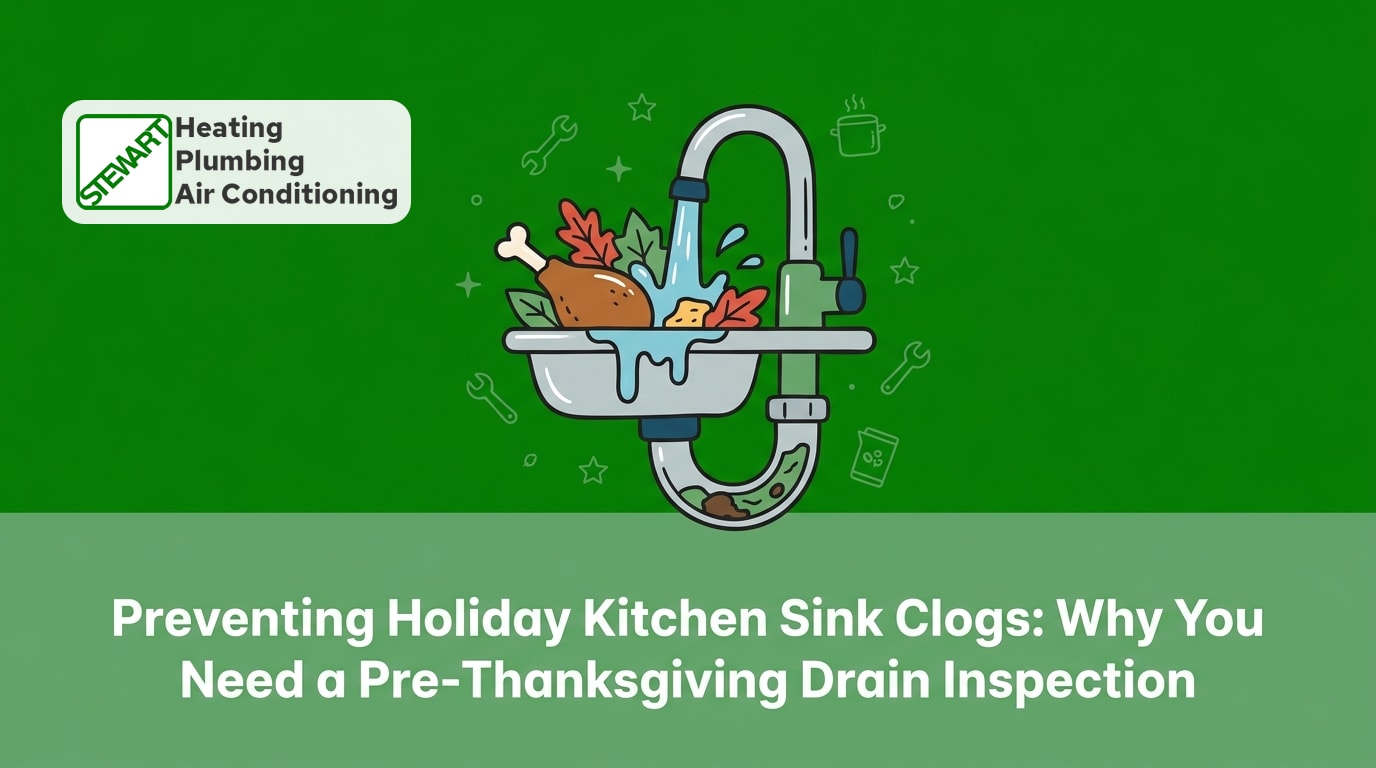
Thanksgiving is just around the corner, and while you are finalizing your menu and preparing the guest room, your pipes are about to face their toughest test of the year. Preventing holiday kitchen sink clogs is the secret to a stress-free gathering. A sink that drains just a little bit slowly right now might seem like a minor annoyance during your normal daily routine. However, when you introduce peak holiday usage—washing endless prep bowls, rinsing heavy pots, and running the dishwasher back-to-back—that sluggish drain can quickly escalate into a complete, messy blockage.
If you want to protect your holiday gathering, scheduling comprehensive residential plumbing services now is far better than scrambling to request plumbing service on a holiday weekend.
The proactive approach: Most homeowners wait until a sink completely backs up to call a professional. This reactive mindset often leads to panic when a kitchen is suddenly rendered unusable just hours before the turkey goes in the oven. By late fall, your plumbing system has already processed months of daily wear and tear. A proactive inspection clears out the hidden buildup that is waiting to turn into a solid obstruction.
When you host family and friends for Thanksgiving, the sheer volume of water, food scraps, and soap moving through your system multiplies exponentially. A drain line that is currently operating at only 60 percent capacity due to minor grease buildup will immediately fail when asked to handle 200 percent of its normal load. Making the decision to clear those lines before the heavy cooking begins ensures your kitchen remains fully functional, allowing you to focus on your guests rather than a plunger.
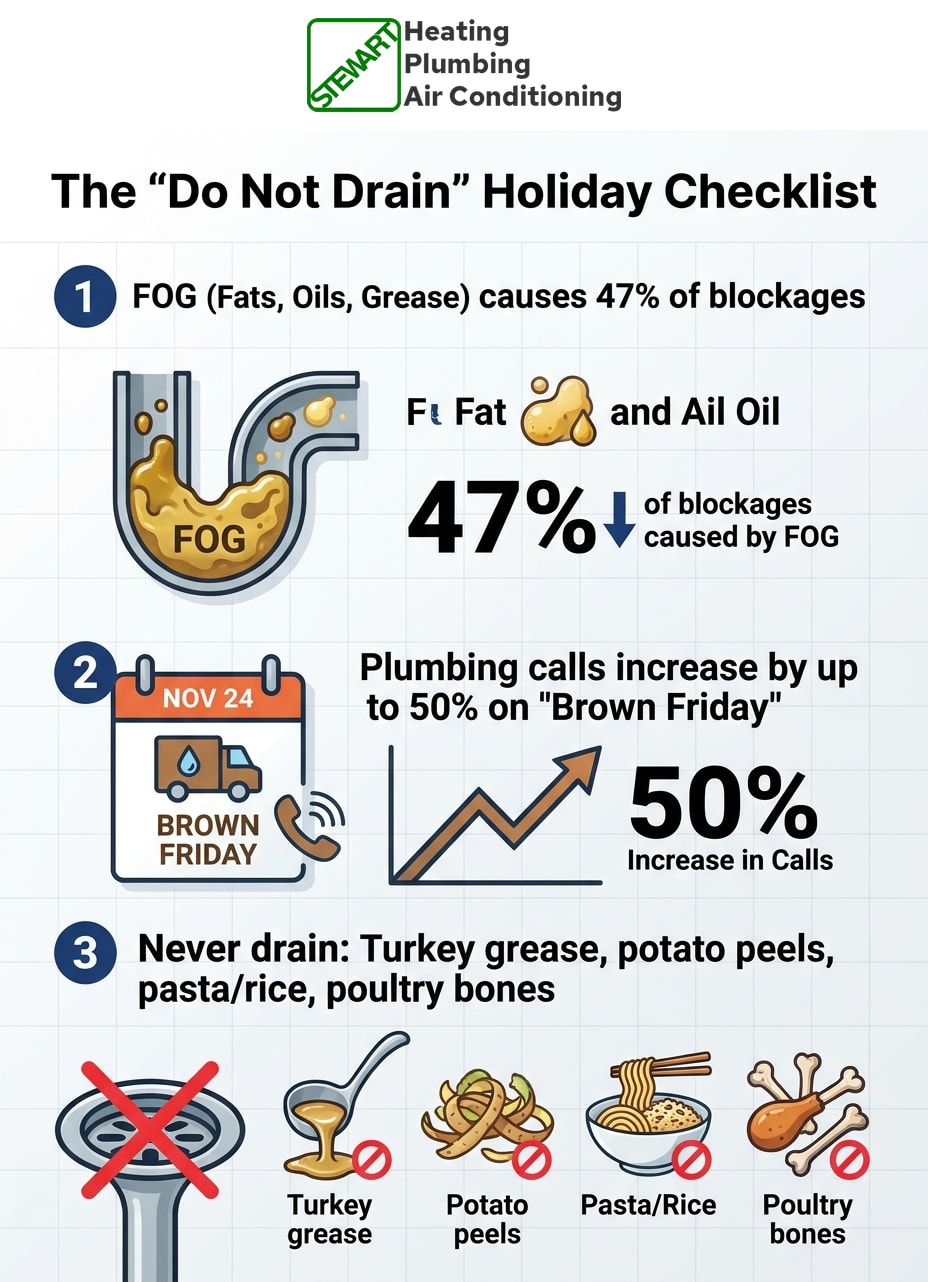
If you have ever experienced a plumbing disaster during a holiday, you are certainly not alone. In the plumbing industry, the day after Thanksgiving is widely known as "Brown Friday." It is historically the single busiest day of the year for residential plumbers across the country. During this late fall weekend, plumbing dispatch calls can increase by up to 50 percent as homeowners wake up to flooded kitchens, backed-up sewer lines, and broken garbage disposals.
This massive spike in service requests does not happen by accident. It is the direct result of residential plumbing systems being pushed far beyond their standard capacity. When houseguests arrive, overall water usage skyrockets. Extra showers, continuous toilet flushing, and endless loads of laundry put immense pressure on your home's main sewer line. But the kitchen sink bears the brunt of the holiday burden.
Consider the difference in how your kitchen operates during a normal week versus the Thanksgiving holiday:
• Dishwashing — Standard Daily Usage: 1-2 loads per day, standard rinsing — Thanksgiving Holiday Usage: 3-5 loads per day, heavy grease and baked-on food
• Food Preparation — Standard Daily Usage: Light vegetable rinsing, minimal scraps — Thanksgiving Holiday Usage: Heavy peeling, carving, and continuous disposal use
• Water Volume — Standard Daily Usage: Intermittent flow throughout the day — Thanksgiving Holiday Usage: Sustained, high-volume flow for hours on end
• System Stress — Standard Daily Usage: Low to moderate — Thanksgiving Holiday Usage: Extreme peak load
This sudden influx of heavy cooking and constant dishwashing overwhelms drainage systems that are already partially compromised. A typical pattern we see is a homeowner who noticed a slightly slow drain in October, ignored it, and then experienced a total line failure on Thanksgiving evening when the system simply could not drain fast enough to keep up with the demand.
Understanding exactly what causes these sudden blockages is your first line of defense. The garbage disposal is not a magical trash can—it is merely a motorized shredder designed to handle very small, residual food particles. When larger or problematic materials enter the drain, they bypass the disposal blades and settle in the P-trap or deeper within the branch lines.
To keep your drains flowing freely this late fall, here is a definitive checklist of items that must never go down your kitchen sink:
• Turkey drippings and cooking oils: Liquid fats that solidify as they cool.
• Potato and carrot peels: Fibrous skins that turn into a thick paste.
• Celery and onion skins: Stringy materials that wrap around disposal blades.
• Pasta, rice, and bread: Starches that expand massively when exposed to water.
• Poultry bones and eggshells: Hard materials that grind into a dense, sand-like sludge.
• Coffee grounds: Dense particles that clump together and settle in the bottom of pipes.
Fats, Oils, and Grease—commonly referred to as FOG—are the absolute worst offenders for residential plumbing. In fact, environmental data shows that FOG causes approximately 47 percent of all residential and municipal sewer blockages. When you pour hot turkey grease or bacon fat down the drain, it is in a liquid state. However, the moment that hot grease hits the cold pipes beneath your home, it rapidly cools and solidifies.
This creates a sticky, waxy coating along the interior walls of your plumbing. Over time, this layer catches other debris, narrowing the pipe's diameter until water can no longer pass through. Running hot water while pouring grease does not solve the problem; it merely pushes the grease slightly further down the line before it inevitably hardens. The only proper disposal method is pouring hot grease into a heat-safe jar, letting it cool and solidify, and throwing it in the household trash.
Thanksgiving side dishes are heavily reliant on potatoes, carrots, and celery. When you peel these vegetables directly into the sink, you are introducing highly fibrous materials into the system. These skins are thin enough to slip past the garbage disposal blades without being properly shredded. Once inside the pipes, they clump together, creating a net that catches everything else flowing past.
Expanding foods like pasta and rice pose an immediate physical threat. These starches continue to absorb water long after they are cooked. If a handful of leftover rice gets washed down the drain, it will sit in the P-trap, absorb surrounding water, and swell into an impenetrable, glue-like paste that completely blocks the pipe.
If you live in an established neighborhood in Pittsburgh CA, your home likely features a mix of historic or mid-century architecture. While these homes possess incredible character, they also house aging plumbing infrastructure. Older cast iron or galvanized steel pipes are particularly vulnerable to sudden holiday failures because of how they degrade over decades of use.
Unlike modern PVC piping, which remains smooth on the inside, older metal pipes develop internal corrosion and scale buildup. This rough, uneven interior surface acts like sandpaper, snagging small food particles, lint, and grease as they flow by. A pipe that was originally three inches in diameter might only have an inch of clearance left due to years of mineral deposits and settling.
While the mild autumn weather outside in Pittsburgh CA means you don't have to worry about frozen pipes bursting, the sudden internal stress of holiday usage is more than enough to cause severe backups. The contrast is stark: the weather outside is calm and cool, but inside your pipes, the system is facing maximum capacity stress. When you suddenly introduce a heavy volume of water and Thanksgiving food scraps into an aging, narrowed pipe, the water has nowhere to go but backward.
The necessity of proactive care: Older plumbing systems require gentle, proactive maintenance rather than harsh reactive treatments. Waiting for a complete blockage puts unnecessary pressure on fragile pipe joints, increasing the risk of a hidden leak developing inside your walls or beneath your foundation.
Your plumbing system will usually give you subtle warnings before it fails completely. Recognizing these early indicators is crucial for getting ahead of a Thanksgiving Day disaster. If you notice any of these symptoms in late fall, your lines are likely partially obstructed and need professional attention before the holiday rush.
• Water pooling around the drain: This is the most common early red flag. If water takes longer than a few seconds to swirl down the drain, or if a small puddle forms while you are washing your hands, the line is already narrowing.
• Persistent, foul odors: A kitchen sink that smells like rotting food or sewage, even after you have run the disposal and cleaned the basin, indicates that organic matter is trapped and decaying deep within the pipe.
• Strange gurgling noises: If you hear bubbling or strange gurgling sounds in your plumbing vents or drain, it means air is trapped behind a developing clog. As water struggles to push past the obstruction, it forces air bubbles back up through the water seal.
• Water backing up into the opposite basin: If you have a double-bowl sink and running the garbage disposal causes dirty water to shoot up into the other side, you have a blockage in the main branch line connecting the two drains.
• Frequent need for plunging: If you find yourself reaching for the plunger every few weeks just to keep the water moving, you are only temporarily shifting the clog, not removing it.
When faced with a slow drain right before guests arrive, it is tempting to look for a quick, do-it-yourself fix. However, attempting to clear a stubborn blockage without professional tools often turns a minor inconvenience into a major plumbing emergency.
The problem with chemical cleaners: The most common mistake homeowners make is pouring harsh liquid drain cleaners down the sink. These chemicals rely on extreme heat and corrosive reactions to burn through organic matter. In older Pittsburgh CA homes, this intense chemical heat can warp PVC pipes, eat through the protective coating of older metal pipes, and degrade the rubber seals at the pipe joints. Furthermore, if the chemical fails to clear the clog, you are now left with a sink full of highly toxic, caustic water that poses a severe safety hazard to anyone trying to fix it.
The danger of DIY snaking: We strongly warn against attempting DIY deep line snaking or augering. Operating a motorized drain snake requires specialized training and a licensed professional. Pushing a metal cable blindly into an aging pipe can easily puncture the pipe wall, crack a fragile joint, or cause the cable to bind and snap inside the line, requiring thousands of dollars in excavation and replacement.
The smart solution: The cost-benefit analysis is clear. The massive stress, potential property damage, and embarrassment of a DIY disaster far outweigh the simplicity of utilizing available plumbing repair specials for a professional inspection. Stewart Heating and Air Conditioning has been rescuing Thanksgiving dinners and serving the community since 1974, providing reliable, family-owned expertise. A professional clearing uses safe, effective methods to completely remove the obstruction, providing the only guaranteed way to protect your holiday gathering from a plumbing failure.
Why does my kitchen sink drain slowly when cooking for large groups?
Your sink drains slowly during heavy cooking because the sheer volume of water and food debris overwhelms the pipe's capacity. When you cook for large groups, more fats, starches, and fibrous materials enter the drain in a short period. If your pipes already have minor scale or grease buildup on the walls, this sudden influx creates a bottleneck, causing water to back up into the basin.
How do I prep my kitchen plumbing for Thanksgiving?
The most effective way to prep your kitchen plumbing is to schedule a professional drain inspection and clearing before the holiday week arrives. In the meantime, you can maintain clear lines by strictly enforcing a "no grease, no peels, no starches" rule for your garbage disposal. Use sink strainers to catch large food particles, and run plenty of cold water when operating the disposal to help flush minor debris through the system.
How do you keep your kitchen sink from clogging during the holidays?
Keeping your sink clear requires strict discipline regarding what goes down the drain. Scrape all plates directly into the trash can before rinsing them in the sink. Never pour cooking oils or meat drippings down the drain, and avoid putting expanding foods like rice or pasta into the garbage disposal. Educating your houseguests on these rules can also prevent accidental blockages.
What is the most common cause of kitchen sink clogs?
The most common cause of kitchen sink clogs is the accumulation of Fats, Oils, and Grease (FOG). When liquid grease is poured down the drain, it cools and solidifies against the cold pipe walls. This creates a sticky trap that catches other food particles, eventually narrowing the pipe until it is completely blocked.
Can I pour turkey grease down the drain if I run hot water?
No, you should never pour turkey grease down the drain, even with hot water running. The hot water only keeps the grease liquid for a few extra seconds, pushing it slightly deeper into your plumbing system before it inevitably cools, hardens, and creates a massive blockage deep within your walls or yard.
Is it safe to use chemical drain cleaners before guests arrive?
It is never safe to use chemical drain cleaners, especially right before hosting guests. These harsh chemicals can severely damage older pipes, degrade rubber seals, and create dangerous fumes. If the chemical fails to clear the clog, you will be left with a sink full of toxic, corrosive water that creates a hazardous environment in your kitchen.
Don't let a slow drain turn into a Thanksgiving Day disaster. Schedule your professional drain clearing before the heavy cooking begins, ensuring your kitchen remains fully functional and your holiday gathering stays perfectly on track.

Very professional and complete. I would recommend Stewart to anyone. Highest quality of workmanship and clean installation.
Stewart Heating Plumbing Air Conditioning just did some work for us for the first time. They did an installation at my home and it turned out well. I thought the price was fair and I definitely would use them again. The technicians were very friendly and knowledgeable about their work. I highly recommend Stewart Heating Plumbing Air Conditioning and already told friends to use them.
We have been using Stewart Heating Plumbing Air Conditioning since 1995. They put the original heating and air unit in the house, and we have just stayed with them. They are dependable and honest people, and they have done a good job for us every time that we have used them!
They came and did an inspection and are coming tomorrow to do the repair.
They replaced a regulator the first time, and then the water heater vent had to be replaced. They did great work.
The gentleman that serviced us was helpful, insightful, and knew what he was talking about. Overall, it was a great experience.