

Recent Blogs
Stay updated with our latest blog posts.

That sudden burning odor coming from your vents is a classic challenge when you are looking for home maintenance tips and troubleshooting during the first cold snap of the year. Here in Pittsburgh, CA, you turn on your heater after months of inactivity, expecting a wave of cozy warmth, but instead, an alarming, dusty smell spreads through your living room. This is a very typical scenario for homeowners during a mid-fall heating startup in October. The immediate question you face is whether this smell is a normal, harmless part of the system waking up, or an early warning sign of a serious mechanical failure.
Understanding how your heating equipment actually operates is the first step to diagnosing these seasonal issues safely. Before a modern heater ever produces a single degree of warmth, it runs through a strict, automated safety checklist. If you are looking to better understand your HVAC systems, knowing exactly what happens inside that metal cabinet is essential. By learning the sequence of operation, you can easily separate harmless seasonal dust burn-off from actual hazards that require a professional technician.
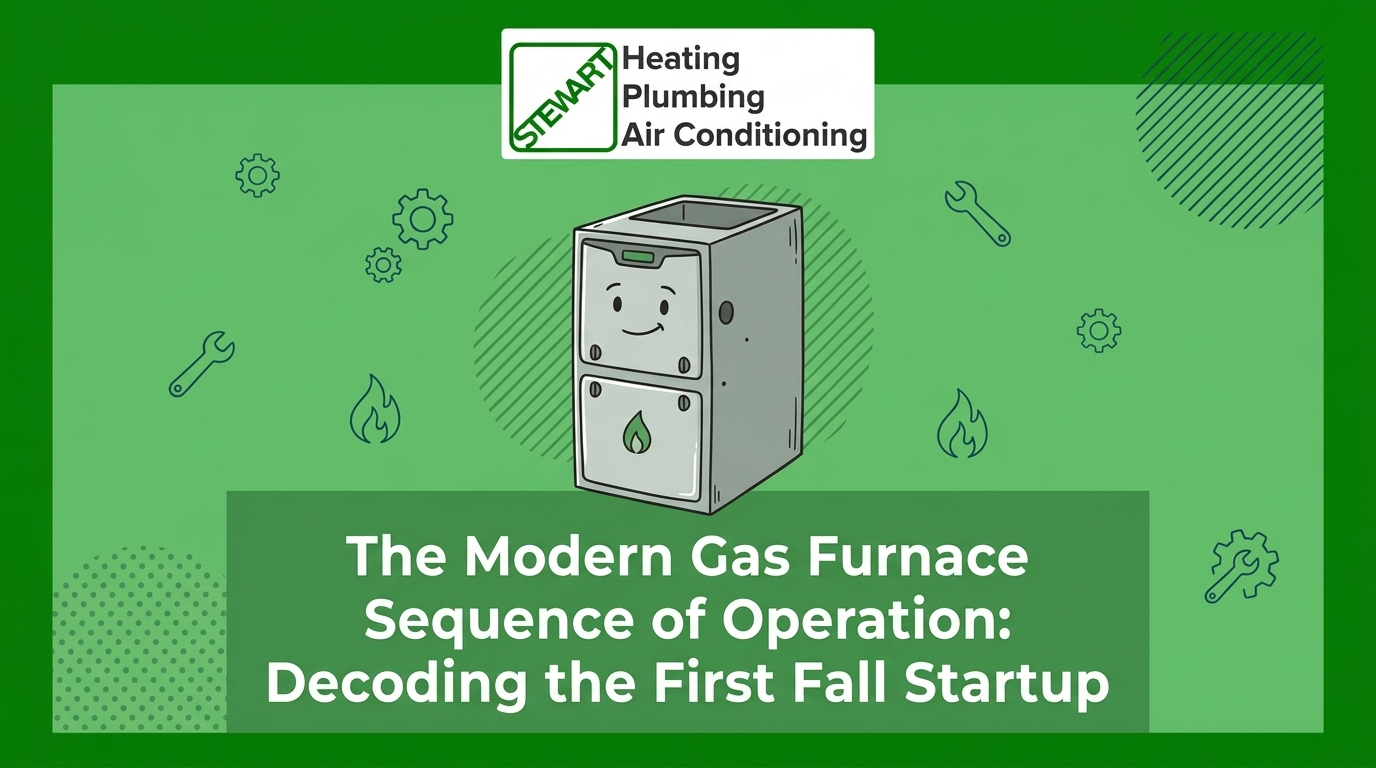
Modern furnaces do not simply turn on and flood your home with fire. Instead, they follow a rigorous, step-by-step sequence of operation designed to protect your home. This sequence is an automated safety checklist. If any single component fails to report back correctly, the entire system halts immediately to prevent gas leaks, electrical shorts, or carbon monoxide exposure. Here is exactly what happens during the first 30 to 60 minutes of operation when your heater wakes up.
The entire process begins quietly on your wall. When the indoor temperature drops below your set preference, the thermostat detects the chill and sends a low-voltage (usually 24-volt) electrical signal to the furnace control board. This signal acts as the official "call for heat." If your system is unresponsive at this stage, looking into thermostat upgrades or simply checking the batteries is often the first troubleshooting step.
Once the control board receives the signal, the first mechanical sound you hear is not the main fan, but a smaller motor humming to life. This is the draft inducer motor. Its job is to pull air through the heat exchanger and push it out the flue pipe. This clears out any residual, stagnant gases from previous cycles and establishes a safe, steady draft for the upcoming combustion process.
As the inducer motor spins, it creates negative pressure. A small, sensitive device called the pressure switch monitors this airflow. The switch must physically close to prove to the control board that the inducer is moving enough air to safely vent hazardous exhaust fumes outdoors. If a bird has nested in your flue pipe over the summer, the pressure switch detects the blockage and halts the sequence immediately.
Once safe airflow is confirmed, the control board sends voltage to the ignitor. In most modern systems, this is a hot surface ignitor, which is a small ceramic element that glows bright orange-red as it heats up. In other models, you might hear a rapid clicking sound, which indicates a direct spark ignitor firing. This component prepares the ignition source before any fuel is introduced.
With the ignitor glowing hot or sparking rapidly, the control board finally opens the gas valve. You can often hear a faint "click" followed by a soft "whoosh" as fuel flows across the ignitor and catches fire. The burners light up in sequence, sending flames directly into the heat exchanger tubes.
The system does not just assume the fire is burning safely. A small metal rod called a flame sensor sits in the path of the burner flames. The fire generates a tiny electrical current (measured in microamps) that travels through the sensor back to the control board. If the sensor does not detect a strong, steady flame within a few seconds, it immediately snaps the gas valve shut to prevent unburned fuel from pooling in your home.
The final step is the one you actually feel. After the burners have run for a short period, the heat exchanger becomes hot. The main blower motor then engages, pulling cold air from your home, pushing it over the hot metal of the heat exchanger, and distributing the newly warmed air through your ductwork. This blower delay prevents the system from blasting you with cold air before the unit has properly warmed up.
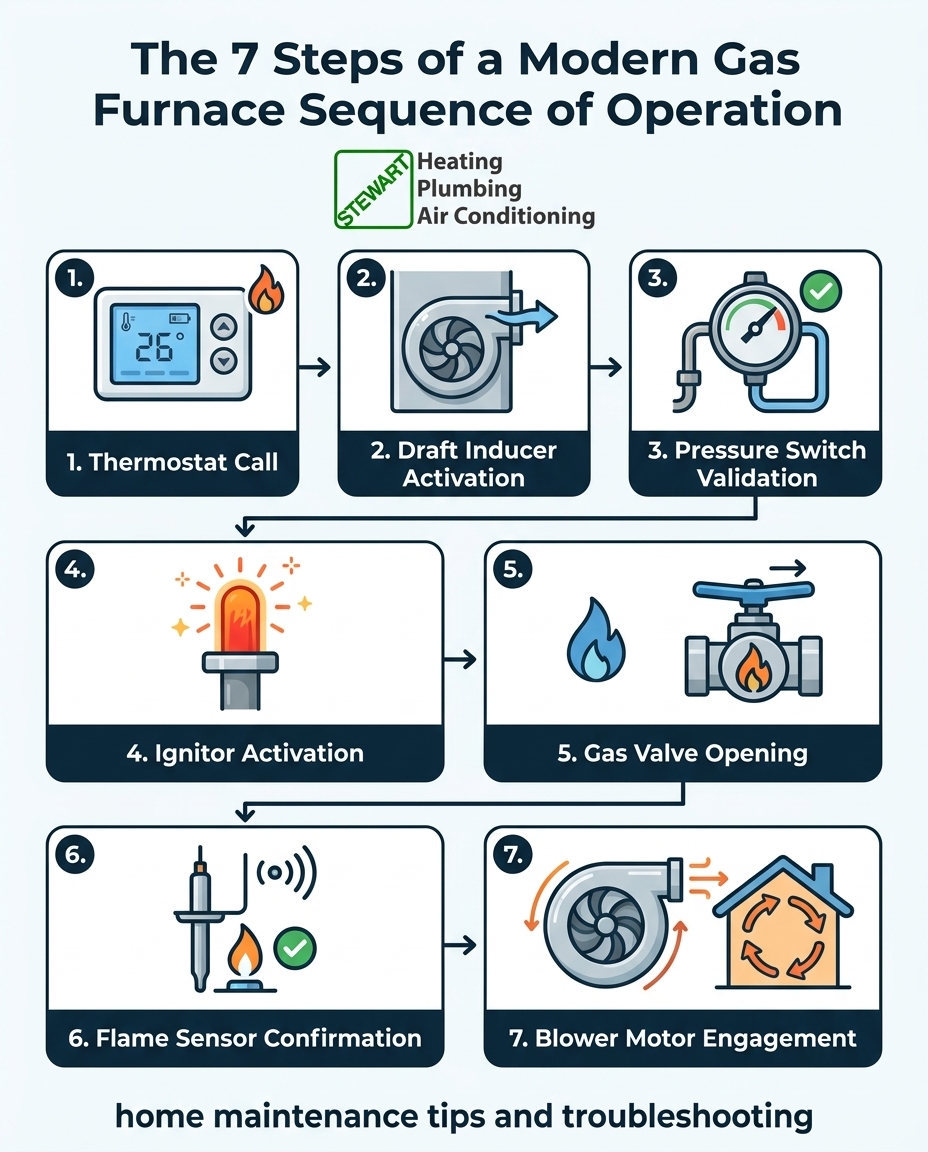
The complex 7-step sequence outlined above is a relatively modern invention. Older heating systems operated on much simpler, heavily mechanical principles. Understanding the difference between these generations of equipment helps explain why modern diagnostics are so heavily reliant on electrical safety checks rather than just looking at a flame.
Vintage furnaces primarily relied on a standing pilot light—a small, constant flame that burned 24 hours a day, 365 days a year. When the thermostat called for heat, the gas valve simply opened, and the existing pilot lit the main burners. The only major safety device was a basic thermocouple, which would shut off the gas if the pilot flame blew out. While simple, these older units wasted a significant amount of energy keeping that pilot lit all summer long.
Today's high-efficiency systems use electronic ignition. They only consume fuel when actively heating your home, relying on the sequence of operation to ensure absolute safety before combustion. Since Stewart Heating, Plumbing and Air Conditioning was founded in 1974, our technicians have seen this evolution firsthand, gaining deep, hands-on experience servicing both vintage pilot-light heaters and today's modern high-efficiency gas furnaces in our community. Upgrading to these modern, efficient systems may even qualify you for generic local utility incentive programs or federal tax credits, though we always advise readers to verify current programs with their utility provider or a tax professional. If you are dealing with older equipment, our team knows that understanding the nuances of troubleshooting a furnace pilot light that keeps going out is quite different from reading the LED fault codes on a modern control board.
• Ignition Method — Vintage Heaters: Constant standing pilot light — Modern High-Efficiency Systems: Electronic hot surface or spark ignitor
• Safety Mechanisms — Vintage Heaters: Basic thermocouple — Modern High-Efficiency Systems: Pressure switches, flame sensors, limit switches
• Diagnostic Approach — Vintage Heaters: Visual inspection of the pilot flame — Modern High-Efficiency Systems: Reading LED fault codes on the control board
Connecting the sequence of operation back to that alarming startup smell provides immediate clarity. The problem begins with the long off-season. In our decades of serving the East Bay, we've noticed that idle furnaces gather significant dust over the long, dry summer, making the October startup smell particularly pronounced when the sequence finally runs.
The Cause: During the summer, microscopic dust, pet dander, and airborne particles settle on the cold metal surface of the heat exchanger and the burner assembly. When you finally trigger a thermostat call in the fall, the sequence of operation proceeds normally. Steps 1 through 6 happen inside the cabinet without you smelling a thing. However, at Step 7, the main blower motor engages. It pushes a massive volume of air over a heat exchanger that is now hundreds of degrees. The settled dust instantly incinerates, and the blower pushes that smoky, dusty odor directly into your living room.
The Solution: In most cases, our technicians tell homeowners that the solution is simply patience. The normal dust burn-off smell typically dissipates within the first 30 to 60 minutes of operation. Opening a few windows during that first cycle is usually enough to clear the air. However, there is a strict line between normal dust burn-off and a mechanical emergency. You should worry—and shut the system down immediately—if you detect any of the following abnormal odors:
• Electrical burning: A sharp, acrid smell similar to melting plastic or burning wire insulation indicates an electrical short or a failing motor.
• Persistent gas odors: A faint whiff of gas right at ignition can sometimes happen, but a strong, lingering smell of rotten eggs means a dangerous gas leak.
• Metallic or metallic-friction smells: An odor resembling an overheating car engine often points to a seized blower motor bearing.
Sometimes, the sequence of operation starts but fails to finish. This is known as a sequence stall. When this happens, the system is doing exactly what it was designed to do: halting operation because a safety parameter was not met. A stalled sequence is a vital safety mechanism doing its job, not merely a nuisance to be bypassed.
You can usually hear a stall happening. You might hear the inducer motor running endlessly without the burners ever lighting. You might hear a repetitive clicking sound, followed by silence. Or, the system might light for three seconds and immediately shut off. Just last winter, our team helped a local homeowner who had a new heater installed and needed clear instructions on its operation; our technician walked them through the sequence step-by-step, ensuring they understood exactly what a healthy cycle sounds like versus a stalled one.
If your system stalls, there are a few safe, non-DIY troubleshooting steps you can take before calling a professional:
• Verify thermostat settings: Ensure the unit is set to "Heat" and the fan is set to "Auto." A thermostat accidentally left on "Cool" will never initiate the heating sequence.
• Check the electrical breaker: A tripped breaker will prevent the control board from receiving power. Reset it once; if it trips again, stop and call a professional.
• Replace dirty air filters: A severely clogged filter restricts airflow, which can cause the system to overheat and trip a high-limit safety switch, halting the sequence.
A strict warning regarding safety: You should never attempt to open the furnace cabinet to clean internal components, bypass safety switches, or manually light an electronic ignition system. Diagnosing pressure switches, cleaning flame sensors, and testing gas valves requires specialized tools and a professional license. Bypassing a safety switch to force a stall to resolve can result in catastrophic damage, fire, or carbon monoxide poisoning.
The best way to ensure your heating sequence runs flawlessly on the first cold night is to have it professionally tested before you actually need it. Sudden temperature drops on East Bay fall evenings trigger immediate thermostat calls, making a reliable, pre-tested sequence essential for your comfort and safety.
During a professional tune-up, our technicians proactively test every single step of the sequence. We measure the microamps of the flame sensor to ensure it won't falsely shut down the gas valve. We inspect the heat exchanger for hairline cracks that could disrupt the pressure switch or leak exhaust gases. We also clean the burners and inducer ports to ensure smooth ignition. During a recent first-time furnace tune-up in autumn, our team performed a thorough inspection for a local homeowner, showed them some damaged internal items that were stalling the sequence, and advised them on proper filter storage to prevent future airflow restrictions.
Catching minor sequence delays during a mid-fall heating startup in October prevents total breakdowns on freezing nights in January. Investing in routine furnace maintenance gives you the peace of mind that comes from knowing your system's automated safety checklist is functioning exactly as the manufacturer intended.
Understanding the modern gas furnace sequence of operation transforms a mysterious metal box into a logical, predictable machine. When you know that the blower motor engages last, it makes perfect sense why that harmless burning dust smell only hits your living room after the system has been running for a few minutes. Remember that normal burn-off odors should completely clear out within the first 30 to 60 minutes of operation.
If your system stalls, makes unusual noises, or emits smells that resemble melting plastic or raw gas, do not attempt to force it to run. Trust the safety mechanisms that are built into the sequence. When in doubt, reaching out for professional heating services ensures that your home stays warm, safe, and comfortable all winter long.
What is the normal sequence of operation for a gas furnace?
The normal sequence is a strict, seven-step automated safety checklist. It begins with a thermostat call, followed by the draft inducer turning on, the pressure switch validating airflow, the ignitor warming up, the gas valve opening, the flame sensor confirming the fire, and finally, the blower motor pushing warm air into your home.
Why does my furnace smell when it first turns on?
Your furnace smells during the first startup because dust settles on the heat exchanger over the long summer. When the burners ignite and the blower motor engages, this settled dust is safely incinerated. The resulting odor is pushed through your vents, but it typically dissipates within an hour.
What happens if a furnace fails its sequence of operation?
If a furnace fails its sequence of operation, the control board halts the process immediately to protect your home. This usually results in a sequence stall, where the system might click, hum, or briefly ignite before shutting down entirely. This is a safety feature preventing issues like gas leaks or carbon monoxide buildup.
How long does a furnace take to ignite after the thermostat clicks?
A furnace usually takes about 30 to 60 seconds to ignite after the initial thermostat click. This brief delay allows the draft inducer motor to clear out old gases and the ignitor to reach the proper temperature before the gas valve opens.
Is it safe to bypass a furnace pressure switch or flame sensor?
No, it is never safe to bypass a furnace pressure switch or flame sensor. These components are critical safety monitors designed to prevent fires, explosions, and carbon monoxide leaks. Bypassing them removes your system's ability to detect life-threatening malfunctions.

Very professional and complete. I would recommend Stewart to anyone. Highest quality of workmanship and clean installation.
Stewart Heating Plumbing Air Conditioning just did some work for us for the first time. They did an installation at my home and it turned out well. I thought the price was fair and I definitely would use them again. The technicians were very friendly and knowledgeable about their work. I highly recommend Stewart Heating Plumbing Air Conditioning and already told friends to use them.
We have been using Stewart Heating Plumbing Air Conditioning since 1995. They put the original heating and air unit in the house, and we have just stayed with them. They are dependable and honest people, and they have done a good job for us every time that we have used them!
They came and did an inspection and are coming tomorrow to do the repair.
They replaced a regulator the first time, and then the water heater vent had to be replaced. They did great work.
The gentleman that serviced us was helpful, insightful, and knew what he was talking about. Overall, it was a great experience.