

Recent Blogs
Stay updated with our latest blog posts.

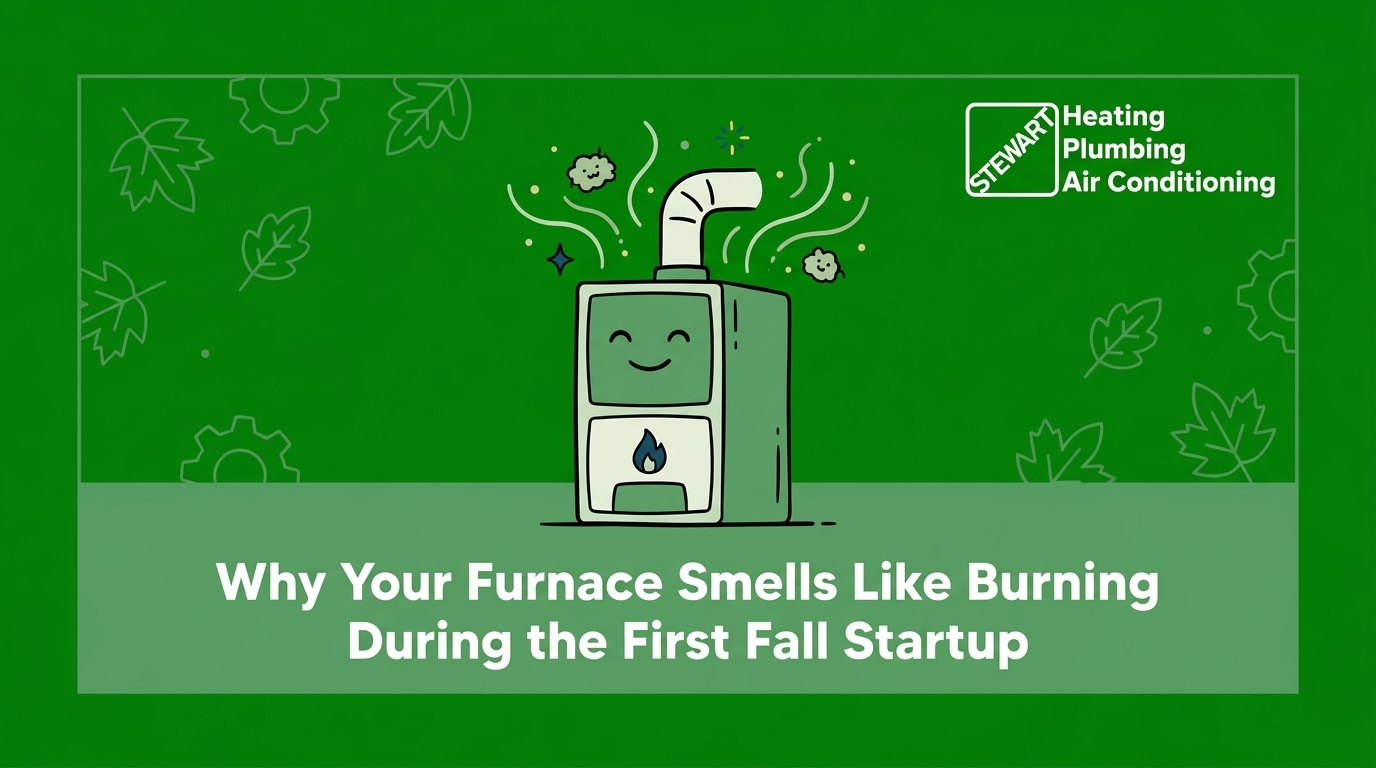
Are you staring at your thermostat right now, wondering if it is safe to keep the heat running? One of the most common homeowner questions answered during a mid-fall heating startup is why the furnace suddenly smells like it is on fire. You woke up to a chilly morning, bumped up the thermostat for the first time in months, and within minutes, a sharp, smoky odor filled the hallway. Before you panic and reach for the fire extinguisher, take a deep breath. That burning smell is often a harmless side effect of the changing seasons, but knowing exactly when to worry is critical for your family's safety.
While preparing your home for winter might eventually involve professional plumbing services or even tankless water heater repair and replacement, your immediate focus right now must be ensuring your HVAC system is operating safely.
When a heating system is turned on after months of inactivity, the right next step is to observe the situation calmly. The sudden odor of smoke triggers a primal alarm in all of us, especially when it comes through the vents into every room of the house. However, a primary cause of this scent is simply harmless dust burn-off. Your furnace is a high-temperature appliance, and the components inside get incredibly hot to warm the air circulating through your home. Distinguishing between this routine burn-off and a hazardous electrical or mechanical failure is the key to protecting your property.
Our goal is to provide a neutral, expert perspective to prevent unnecessary panic. By understanding the physical mechanics of your heating system, you can make an informed decision about whether to let the cycle finish or shut the system down immediately. Safety always comes first, but a bit of technical knowledge goes a long way in keeping your mid-fall heating startup stress-free.
To understand why your heater smells like a dusty campfire, you have to look at what happens to the equipment during the spring and summer. For roughly six to eight months of the year, your furnace sits completely idle. Even if you use your air conditioner regularly, the heating components—specifically the heat exchanger or the electric heating elements—remain dormant and cold. During this long period of inactivity, the system becomes a settling ground for household particulates.
During the long, dry summer months in Pittsburgh CA and across Contra Costa County, airborne dust levels naturally rise. This dry climate means thicker dust accumulation on your HVAC components by the time fall arrives. Every time your blower motor pushes air through the house for cooling, trace amounts of skin cells, pet dander, lint, and microscopic dirt bypass the air filter and settle directly onto the cold metal surfaces of the furnace.
Because the heat exchanger is a large piece of metal with plenty of surface area, it collects a surprisingly thick layer of this organic material. When you initiate that very first mid-fall heating startup, the thermostat signals the furnace burners to ignite. Within seconds, the heat exchanger rapidly climbs to operating temperatures that can exceed 140 degrees Fahrenheit.
As the metal heats up, that accumulated layer of summer dust has nowhere to go. It rapidly carbonizes—or burns off—right there on the surface of the heat exchanger. The blower fan then takes the air passing over this hot metal and pushes it directly into your living room, bedroom, and hallways. This physical process of carbonization is exactly what creates that distinct, smoky, burning dust smell.
The quick fix: Understanding this process is the best way to reassure yourself. This specific type of smell is a standard, expected part of seasonal transitions. The dust is burning away safely inside a controlled environment designed to handle extreme heat. Once the layer of particulates has fully carbonized and blown away, the smell will vanish, leaving you with clean, warm air for the rest of the winter season.
While burning dust is normal, it should not last indefinitely. Providing a clear, definitive timeline helps you assess if the situation is resolving normally or if it is escalating into a problem that requires professional intervention. The duration of the smell is your best diagnostic tool during a mid-fall heating startup.
Under normal circumstances, harmless dust burn-off should dissipate within 15 to 30 minutes of the first heating cycle. The heat exchanger gets hot enough to incinerate the thin layer of dust very quickly. By the time the furnace completes its first or second full heating cycle, the air coming from your vents should smell completely neutral.
To help clear the initial odor and make your home more comfortable during this brief window, we advise homeowners to take a few proactive steps:
• Open a window: Create a cross-breeze in the main living areas to vent the smoky air outside.
• Turn on ceiling fans: Keep the air moving to prevent the smell from lingering in stagnant corners of the house.
• Run exhaust fans: Turn on the kitchen and bathroom exhaust fans for 10 minutes to help pull the odor out of the home.
If the smell persists beyond the first hour of continuous operation, or if it returns on subsequent days every time the heat kicks on, it is no longer normal seasonal burn-off. At this point, you must consider other environmental factors that might be slightly prolonging the smell or indicating a deeper issue.
• A severely dirty air filter: If your filter is clogged with months of debris, it can restrict airflow, causing the system to run hotter than normal and continuously bake trapped dust.
• Debris in the ductwork: Sometimes, larger debris or excessive pet hair accumulates just inside the vent registers, causing a lingering smell that takes longer to clear.
• Oversized homes with long duct runs: In larger houses, it simply takes longer for the initial blast of odorous air to fully cycle out of the extensive ductwork system.
Even with these factors, a dust smell should never last for days. If you are ever in doubt after the first hour, the safest route is to turn the system off and seek expert guidance.
Equipping yourself with precise descriptions of dangerous odors is vital so you can identify a genuine mechanical or electrical hazard. Not all burning smells are created equal. While dust smells like a vacuum cleaner running hot, other odors indicate that crucial components inside your furnace are actively failing or melting. These specific odors are never part of a normal startup and require immediate intervention.
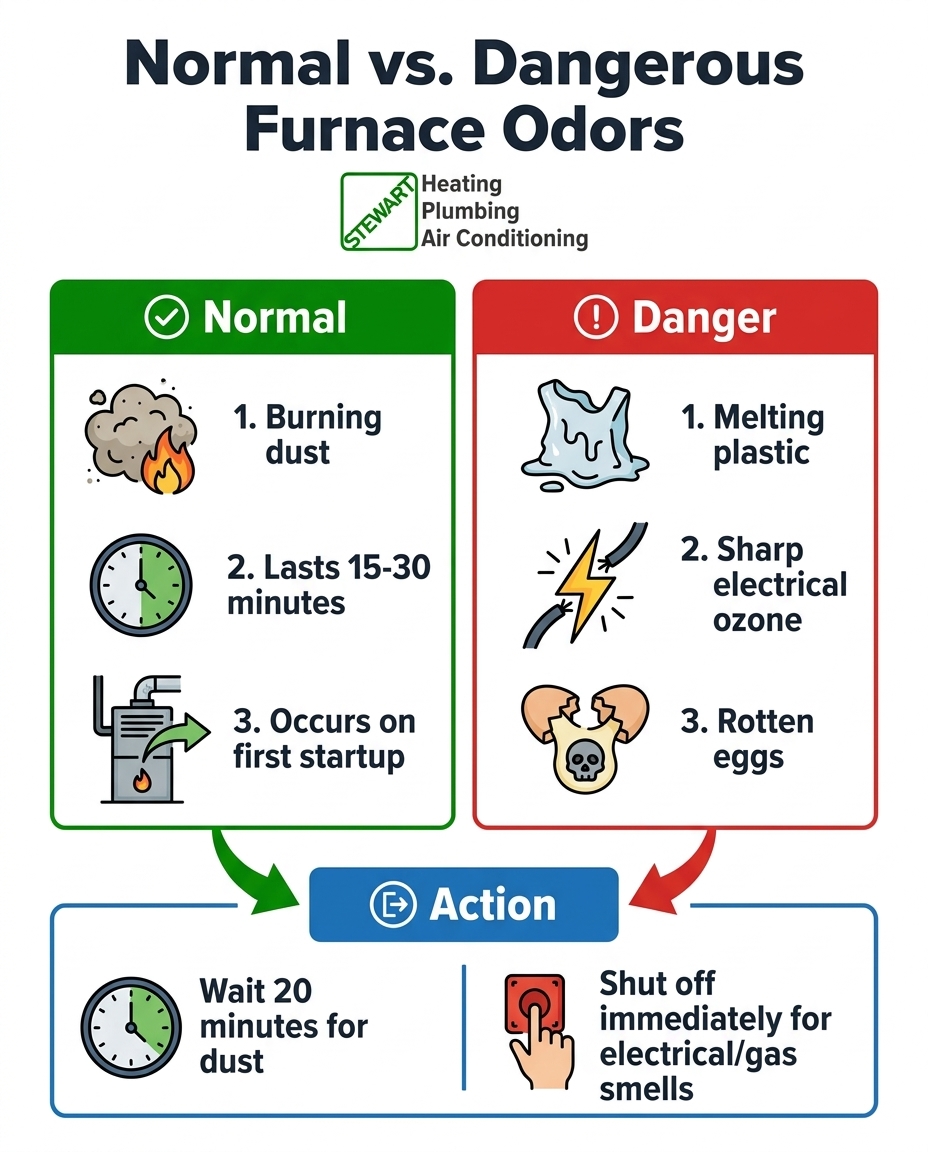
• Burning Dust or Hair — Likely Cause: Normal accumulation of summer particulates on the heat exchanger. — Danger Level: Low (Normal for first use) — Required Action: Monitor for 15-30 minutes. Open windows to ventilate.
• Melting Plastic or Rubber — Likely Cause: Overheating electrical wires, a failing capacitor, or a worn-out fan belt. — Danger Level: High (Fire Hazard) — Required Action: Shut off system immediately at the thermostat and breaker.
• Sharp Metallic or Ozone — Likely Cause: An overheating blower motor or a severe electrical short circuit. — Danger Level: High (Equipment Failure) — Required Action: Shut off system immediately. Do not attempt to restart.
• Rotten Eggs or Sulfur — Likely Cause: A severe natural gas leak near the furnace burners or gas valve. — Danger Level: Extreme (Explosion Hazard) — Required Action: Evacuate the home immediately and call the gas company.
If you detect the distinct smell of melting plastic, you are likely dealing with overheating electrical wires or a failing capacitor. The metallic or ozone-like smell—often described as the scent of a running power drill—is strongly associated with an overheating blower motor that is drawing too much amperage. Worst of all, the smell of rotten eggs indicates a severe gas leak. Natural gas is odorless, but utility companies add a chemical called mercaptan to give it that sulfur smell specifically so you can detect a dangerous leak.
When the smell coming from your vents matches the dangerous profiles listed above, or if a standard dust smell simply refuses to go away, you need to take action. However, modern HVAC systems are complex, high-voltage machines. Providing actionable, safe, non-DIY steps for the homeowner is the only responsible way to handle a suspected furnace problem in Pittsburgh CA.
Here is exactly what you should do if you suspect your heating system is failing safely:
1. Turn off the thermostat immediately: Do not wait to see if the smell gets worse. Switch your thermostat from "Heat" to "Off" to stop the furnace from calling for more fuel or electricity.
2. Cut power at the breaker panel: If you detect an electrical or plastic burning smell, turning off the thermostat might not be enough if there is a short circuit. Go to your home's main electrical panel and flip the dedicated furnace breaker to the "Off" position.
3. Check and replace your air filter: A severely clogged filter can restrict airflow so badly that the system overheats, triggering limit switches and causing lingering odors. Slide the filter out and inspect it. If you cannot see light through it, replace it with a fresh one.
4. Evacuate if you smell gas: If the odor is sulfur or rotten eggs, do not touch any light switches, do not use your cell phone inside, and leave the house immediately before calling the gas company.
5. Schedule a professional inspection: Once the system is safely powered down, it is time to call in the experts.
We strictly warn against opening the furnace cabinet or attempting any DIY electrical diagnostics. The capacitors inside your furnace hold a dangerous electrical charge even after the power is cut, and working with gas valves requires specific licensing and training. Just as you would request plumbing service for a sudden burst pipe that threatens your home, heating emergencies require licensed expertise to resolve safely.
When a mid-fall heating startup goes wrong, homeowners naturally have a lot of questions. We have compiled this deep-dive section to address the most common search queries regarding heating odors, ensuring you have all the facts you need to keep your home safe.
Yes, but only if it smells like burning dust and the odor fades quickly. It is entirely normal for the first 15 to 30 minutes of the heating season as settled dust carbonizes on the heat exchanger. However, it is never normal if the air smells like melting plastic, sharp electrical ozone, or sulfur.
The smell typically clears within half an hour of continuous operation. Ventilation, such as opening a window or running a ceiling fan, helps clear the initial odor much faster. Any lingering smells that persist beyond an hour require a complete system shutdown and professional inspection.
A bad furnace smells like melting plastic, burning rubber, sharp electrical ozone, or rotten eggs. Melting plastic often points to failing wire insulation, while an ozone smell indicates a struggling blower motor. The smell of rotten eggs is the universal warning sign for a dangerous natural gas leak.
Dust burn-off is a controlled, safe process that will not cause a fire, but electrical smells indicate a true fire hazard. Modern furnaces are equipped with high-limit safety switches designed to shut the system down if it overheats. However, mechanical components can fail, meaning an electrical burning smell should always be treated as a serious fire risk.
Interestingly, HVAC issues often mirror other household system failures where safety mechanisms are involved. For instance, if you are troubleshooting a tankless water heater that won't ignite, you know that professional diagnosis is much safer than guessing which safety switch has tripped. The same logic applies to your furnace.
Navigating a mid-fall heating startup does not have to be a stressful experience. The core takeaway is simple: a 20-minute dust smell is fine, but plastic or electrical smells mean you need to shut the system down immediately. By understanding the difference, you protect your home from unnecessary risks while avoiding the panic that often accompanies the first cold morning of the year in Pittsburgh CA.
Since 1974, our family-owned legacy has been built on providing honest, panic-free advice. We prioritize homeowner safety and education over unnecessary service visits, ensuring you only call for help when you truly need it. Proactive seasonal maintenance is the best way to avoid start-up surprises entirely, as a professional tune-up clears away that summer dust before you ever turn the system on.
If your furnace is producing strange odors that refuse to dissipate, or if you simply want the peace of mind that comes from a thorough safety inspection, do not wait for the weather to freeze. Consult a local expert to verify your system is clean, safe, and ready to keep your family warm all season long.

Very professional and complete. I would recommend Stewart to anyone. Highest quality of workmanship and clean installation.
Stewart Heating Plumbing Air Conditioning just did some work for us for the first time. They did an installation at my home and it turned out well. I thought the price was fair and I definitely would use them again. The technicians were very friendly and knowledgeable about their work. I highly recommend Stewart Heating Plumbing Air Conditioning and already told friends to use them.
We have been using Stewart Heating Plumbing Air Conditioning since 1995. They put the original heating and air unit in the house, and we have just stayed with them. They are dependable and honest people, and they have done a good job for us every time that we have used them!
They came and did an inspection and are coming tomorrow to do the repair.
They replaced a regulator the first time, and then the water heater vent had to be replaced. They did great work.
The gentleman that serviced us was helpful, insightful, and knew what he was talking about. Overall, it was a great experience.