

Recent Blogs
Stay updated with our latest blog posts.

The September fall transition brings a noticeable chill to the early morning air in Pittsburg, and if you rely on a heat pump to keep your home comfortable, you might hear your system behaving differently. At Stewart Heating, Plumbing and Air Conditioning, one of the most common questions we hear during this seasonal shift is, "why is my heat pump defrost cycle running so frequently?" You are certainly not alone. Many homeowners wake up to the sound of their outdoor unit shifting gears, sometimes accompanied by a loud whoosh or visible steam rising from the condenser. While these sudden changes in operation can sound alarming, they are often just the system doing exactly what it was designed to do.
The core challenge is determining whether this frequent cycling is a normal response to seasonal temperature drops or a warning sign of a failing defrost control board. During the transition from summer cooling to autumn heating, the outdoor humidity and dropping overnight temperatures create the perfect environment for frost to form on your exterior equipment. Your system has built-in protective features to manage this ice accumulation before it restricts airflow and damages the compressor.
Understanding how your equipment manages ice buildup can save you from unnecessary panic. A well-maintained system will handle these frosty mornings automatically. However, if the system struggles to heat your home or gets stuck in a continuous loop, you may need professional heating services to accurately diagnose the root cause and restore proper functionality.
To understand why your system is cycling, it helps to know the mechanical reality of how a heat pump operates in cold weather. Unlike a traditional gas furnace that generates heat by burning fuel, a heat pump transfers heat from the outside air into your home. When the outdoor temperature drops, the refrigerant inside the exterior coil becomes extremely cold—often dropping below the outdoor dew point. This causes moisture in the air to condense and freeze directly onto the metal fins.
When the system detects this frost, it initiates a defrost cycle to melt the ice and protect the equipment. Here is exactly how that process unfolds:
1. The reversing valve shifts: The system temporarily reverses its operation, switching from heating mode into cooling mode. This redirects hot, pressurized refrigerant gas straight from the compressor directly into the outdoor coil.
2. The outdoor fan stops: The fan on top of the exterior unit shuts off. This prevents cold outside air from blowing across the coil, allowing the hot refrigerant to melt the accumulated ice much faster.
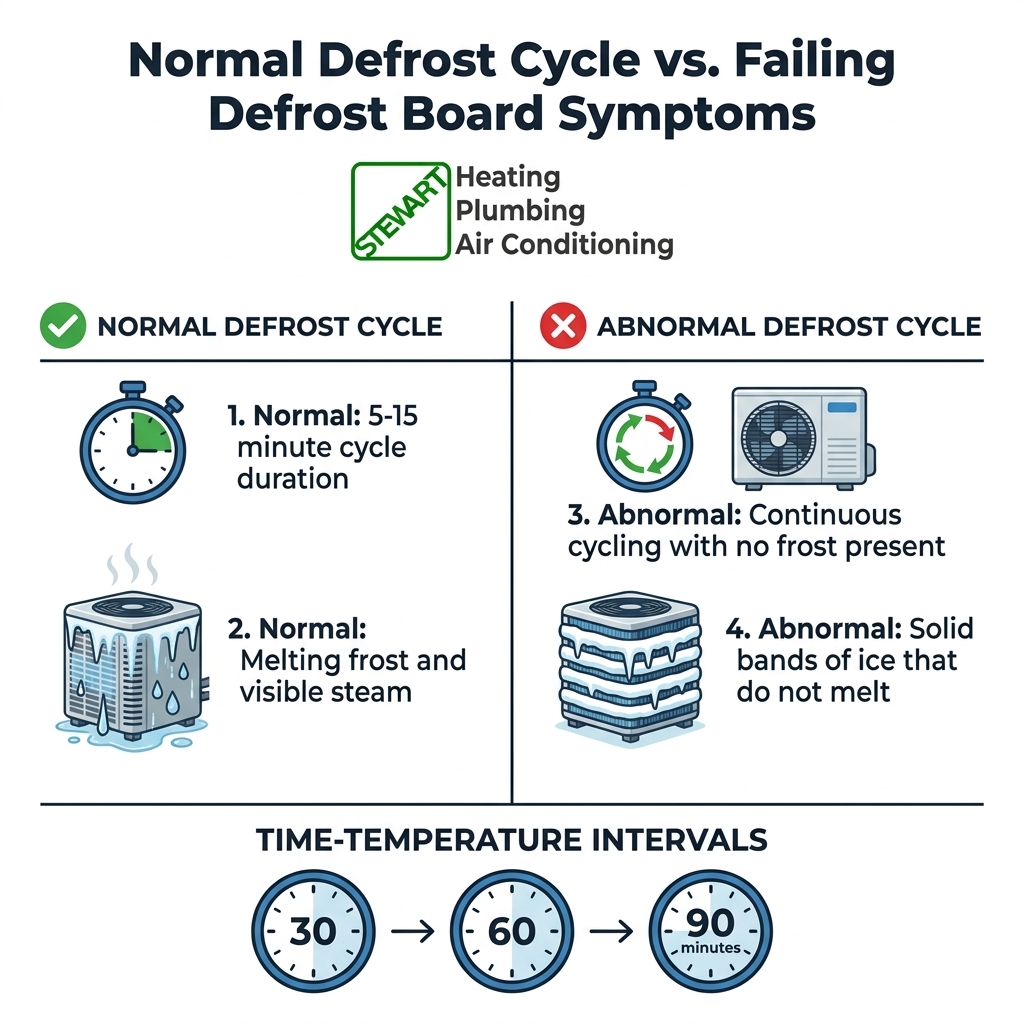
3. Timers dictate the cycle: Many systems utilize 30, 60, or 90-minute time-temperature defrost intervals. This means the system checks the coil temperature after a set amount of compressor run time. If the sensor reads below a specific threshold (usually around 32°F), the defrost mode activates.
4. Auxiliary heat activates: Because the system is technically in cooling mode during a defrost cycle, it would blow cold air into your home. To prevent this, the system automatically turns on your indoor auxiliary heat strips to keep the indoor temperature stable.
5. Normal operation resumes: A typical cycle lasts anywhere from 5 to 15 minutes. Once the outdoor coil reaches a designated temperature (often around 57°F), the reversing valve shifts back, the outdoor fan restarts, and standard heating resumes.
This automated sequence is a brilliant piece of engineering designed to keep the system running efficiently throughout the colder months.
In our decades of experience serving Pittsburg, Contra Costa County, and the surrounding East Bay areas, we see firsthand how unique local weather patterns directly impact HVAC performance. The local topography creates distinct microclimates where the weather can shift dramatically within a matter of hours. During the early fall and winter, it is common to experience chilly, frosty early mornings that quickly give way to much warmer, sunnier afternoons.
These sudden overnight temperature drops—often dipping down into the 30s and 40s—combine with coastal moisture and high humidity to create rapid frost accumulation on outdoor condenser units. The metal coils of your heat pump act like a magnet for this moisture. Because the air is damp and the temperatures are hovering right around freezing, our team typically sees frost build up much faster here than it might in a dry, arid climate.
If you notice your system going into defrost mode frequently between the hours of 4:00 AM and 8:00 AM, but operating normally throughout the rest of the day, this is a direct result of the East Bay microclimate. These isolated morning defrost cycles are a normal, automated response to specific local weather conditions. The system is simply clearing the overnight frost so it can operate efficiently as the sun comes up. It does not necessarily indicate a breakdown or a failing component.
While occasional defrosting is expected, continuous or erratic cycling points to a mechanical failure. Knowing the difference between a system doing its job and a system crying out for help can prevent major compressor damage. The control board and sensors are responsible for initiating and terminating these cycles, and when they fail, the system loses its ability to regulate itself.
A properly functioning system will only enter this mode when it is strictly necessary to clear ice. You can rest easy if you observe the following behaviors:
• Occurs primarily on frosty mornings: The cycle aligns with visible frost on the ground or freezing outdoor temperatures.
• Short duration: The entire process wraps up within 5 to 15 minutes.
• Visible steam: As the hot refrigerant melts the ice, you may see a cloud of steam rising from the outdoor unit. This is normal evaporation, not smoke.
• Successful clearing: By the time the outdoor fan kicks back on, the metal fins on the condenser are completely free of ice.
If the system's logic board or sensors begin to fail, the heat pump will exhibit clear warning signs that require immediate attention. Look out for these symptoms:
• Stuck in defrost mode: The system shifts into defrost but never returns to standard heating, leaving your home relying entirely on expensive auxiliary heat.
• Solid ice accumulation: Instead of a light coating of white frost, the unit is encased in thick, solid bands of clear ice that do not melt after a cycle completes.
• Cycling during warm afternoons: The system attempts to defrost the outdoor coil even when the outside temperature is 55°F or higher and the coil is completely dry.
• Continuous rapid cycling: The unit shifts back and forth between heating and defrosting every few minutes, never completing a full cycle in either mode.
• Light frost melting quickly in 10 minutes — Likely Cause: Normal time-temperature response — Recommended Action: Monitor operation; no action needed
• Steam rising from the outdoor unit — Likely Cause: Normal ice evaporation — Recommended Action: Monitor operation; no action needed
• Defrosting when it is 60°F outside — Likely Cause: Failing sensor or control board — Recommended Action: Schedule professional diagnostics
• Thick, solid blocks of ice on the coil — Likely Cause: Restricted airflow or low refrigerant — Recommended Action: Turn off unit and call a technician
If you have ruled out the normal weather responses and your system is still over-defrosting, there are several hidden technical malfunctions that could be to blame. The most common culprit is a malfunctioning defrost control board. This circuit board acts as the brain of the outdoor unit. When it begins to fail, it misreads the system's needs, forcing unnecessary cycles even when the outdoor coil is completely free of ice. A damaged board might send continuous voltage to the reversing valve, locking the system in a permanent state of confusion.
Another frequent issue is a faulty defrost sensor (thermistor). This small temperature probe is clamped directly to the outdoor coil. Its sole job is to accurately detect the temperature of the metal fins. If the sensor degrades or slips out of place, it may constantly report that the coil is freezing, triggering back-to-back defrost cycles. Because the sensor and the board work in tandem, diagnosing which component has failed requires testing the electrical resistance of the sensor against the voltage output of the board.
Beyond electrical failures, restricted airflow or low refrigerant levels act as secondary culprits that cause the system to freeze up prematurely. If the outdoor fan motor is failing, or if the coil is packed with dirt and debris, the system cannot absorb enough heat from the outside air. This causes the coil temperature to plummet, creating massive amounts of ice that the system cannot keep up with.
During a recent early fall service call in Pittsburg, our technicians encountered a heating and cooling unit that was acting erratically due to an unusually placed unit exposed to severe wind chill. Our team quickly diagnosed a malfunctioning circuit board and resolved the issue on the spot. Because these systems are highly interconnected, addressing board issues often involves ensuring the indoor thermostat is communicating correctly with the outdoor unit, making thermostat upgrades a smart consideration when replacing older control boards.
Allowing a heat pump to continuously cycle in and out of defrost mode is one of the fastest ways to shorten the lifespan of your equipment. Every time the reversing valve shifts, it places a sudden, massive strain on the compressor. The compressor is the heart of your system, responsible for pumping refrigerant through the lines. Constant, rapid reversing causes excessive wear and tear on the internal valves and bearings, greatly increasing the risk of a catastrophic compressor failure.
Furthermore, an overactive defrost cycle leads to unnecessary energy waste and a severe loss of heating efficiency. Because the system utilizes auxiliary electric heat strips to warm your home while the outdoor unit is defrosting, continuous cycling means those high-draw heat strips are running constantly. Homeowners who ignore a stuck defrost board often discover the problem when they receive an unusually high winter electricity bill.
If a sensor or board issue is ignored for too long, it can lead to complete system freeze-ups during the peak of winter. When the system fails to clear the ice properly, the frost turns into a solid block of ice that crushes the delicate aluminum fins on the outdoor coil. Once the coil is crushed, the system can no longer transfer heat, leaving you without warmth on the coldest nights of the year.
For older systems that require major component replacements, repairing a burnt-out board and a damaged compressor may not be the most cost-effective route. If your unit is aging and struggling to maintain efficiency, it might be worth exploring how local utility energy rebates can offset the cost of upgrading to a modern, high-efficiency heat pump system. We always recommend verifying current incentive programs with your utility provider or a tax professional.
Testing or replacing a defrost control board is not a weekend DIY project. These components are tied directly into the system's high-voltage electrical supply and the dual-run capacitor, which stores a lethal electrical charge even after the power is turned off at the breaker. Diagnosing a heat pump requires specialized multimeters, a deep understanding of electrical schematics, and the proper licensing to handle high-voltage and refrigerant-related issues safely.
The true value of a professional diagnostic visit lies in pinpointing the exact cause of the failure. A trained technician will test the thermistor resistance, verify the board's voltage output, measure the refrigerant pressures, and check the airflow across the coils. This comprehensive approach ensures that you are treating the actual disease, not just the symptoms. Proactive pre-season check-ups can also calibrate the defrost intervals—adjusting them from 30 minutes to 90 minutes, for example—before the coldest winter months arrive, optimizing the system for the local climate.
Clear communication from your technician regarding the repair process and long-term system health is just as important as the repair itself. Just this September, one of our local customers required a pre-heating-season tune-up following a previous repair; our visiting technician performed a thorough inspection, explained the work in detail, and even advised the homeowner on proper filter storage to maintain airflow. This level of thoroughness prevents minor issues from compounding.
As a family-owned business serving the community since 1974, Stewart Heating, Plumbing and Air Conditioning is committed to honest diagnostics and deep local knowledge. We believe in educating homeowners about their systems, ensuring you only pay for the repairs you actually need. Securing a preventative maintenance plan is the best way to ensure your defrost sensors and control boards are tested annually by professionals who understand exactly how the East Bay weather impacts your equipment.
A heat pump should only go into defrost mode when there is sufficient frost buildup on the outdoor coil, which typically happens when outdoor temperatures drop below 40°F. Depending on the moisture in the air, a healthy system operating on time-temperature intervals may cycle every 30, 60, or 90 minutes of active compressor run time. If the air is dry or temperatures are mild, the system may not need to defrost at all.
The most obvious sign of a bad defrost board is a system that continuously cycles into defrost mode even when the outdoor coil is completely dry and the weather is warm. You might also notice the system getting stuck in cooling mode, failing to switch back to heating. Additionally, if the outdoor unit develops thick, solid bands of ice that never melt, the board may be failing to initiate the cycle entirely.
Heat pumps naturally develop a light layer of frost during winter operation due to condensation freezing on the cold outdoor coils. However, if the unit is completely encased in solid ice, it indicates a severe malfunction. This heavy freezing is usually caused by a failed defrost control board, a broken temperature sensor, restricted airflow from a dirty coil, or low refrigerant levels preventing the system from absorbing heat.
A normal defrost cycle is relatively brief, typically lasting between 5 and 15 minutes. The exact duration depends on how much ice has accumulated and the current outdoor temperature. Once the internal sensors detect that the outdoor coil has warmed up enough to melt all the frost (usually around 57°F), the system will automatically terminate the cycle and resume standard heating.
Technically, the heat pump is operating in cooling mode during a defrost cycle, which means the indoor unit is producing cold air. However, you should not feel cold air blowing through your vents. To counteract this, the system automatically activates your indoor auxiliary heat strips to warm the air before it circulates through your home, keeping your indoor temperature stable while the outdoor unit clears the ice.
While a light layer of morning frost and an occasional 10-minute defrost cycle are perfectly normal responses to the chilly autumn weather, continuous cycling or solid ice accumulation requires expert attention. Ignoring a struggling system forces your compressor to work overtime, driving up your energy waste and risking a complete breakdown when you need warmth the most.
Having a clear, honest explanation of your system's health brings true peace of mind. You do not have to guess whether that loud whooshing sound is a normal weather response or a failing sensor. If your system is acting erratically, scheduling a professional evaluation with our team ensures your equipment is properly calibrated and ready for the winter ahead. Reach out to Stewart Heating, Plumbing and Air Conditioning for expert heat pump installation and repair to keep your home comfortable and your system running flawlessly.

Very professional and complete. I would recommend Stewart to anyone. Highest quality of workmanship and clean installation.
Stewart Heating Plumbing Air Conditioning just did some work for us for the first time. They did an installation at my home and it turned out well. I thought the price was fair and I definitely would use them again. The technicians were very friendly and knowledgeable about their work. I highly recommend Stewart Heating Plumbing Air Conditioning and already told friends to use them.
We have been using Stewart Heating Plumbing Air Conditioning since 1995. They put the original heating and air unit in the house, and we have just stayed with them. They are dependable and honest people, and they have done a good job for us every time that we have used them!
They came and did an inspection and are coming tomorrow to do the repair.
They replaced a regulator the first time, and then the water heater vent had to be replaced. They did great work.
The gentleman that serviced us was helpful, insightful, and knew what he was talking about. Overall, it was a great experience.