

Recent Blogs
Stay updated with our latest blog posts.

Are you searching for reliable home maintenance tips and troubleshooting because your furnace just filled the hallway with a suspicious odor? It is a common scenario: the first chilly night arrives, you adjust the thermostat, and moments later, a distinct burning smell drifts from your vents, often accompanied by unfamiliar mechanical noises. Before panic sets in, it helps to understand that this is one of the most frequent concerns homeowners face during a November pre-winter startup. The immediate challenge is determining whether that odor is simply harmless dormant dust burning off the heat exchanger, or a legitimate warning sign of a failing internal component that requires swift professional intervention.
For immediate assistance with your home's seasonal readiness, explore our residential plumbing services.
Turning on your heating equipment after months of inactivity forces dormant components back into heavy operation. During the spring and summer, your system sits idle, collecting microscopic debris. When the burners ignite for the first time in late fall, the sudden introduction of high heat causes a completely normal physical reaction. However, because a failing blower motor or a cracked heat exchanger can mimic these exact initial symptoms, knowing how to interpret what your system is telling you is the foundation of safe home management. By learning to distinguish between a temporary quirk and a true hazard, you can confidently decide whether to wait out the smell or call for an expert evaluation.
To understand why your heating system produces odors during a November pre-winter startup, you have to look at the physical mechanics of the equipment. Inside your furnace lies a component called a heat exchanger—a series of metal tubes or coils that absorb heat from the combustion process and transfer it to the air circulating through your home. Throughout the warmer months, this metallic surface acts as a magnet for airborne particles, pet dander, and standard household dust.
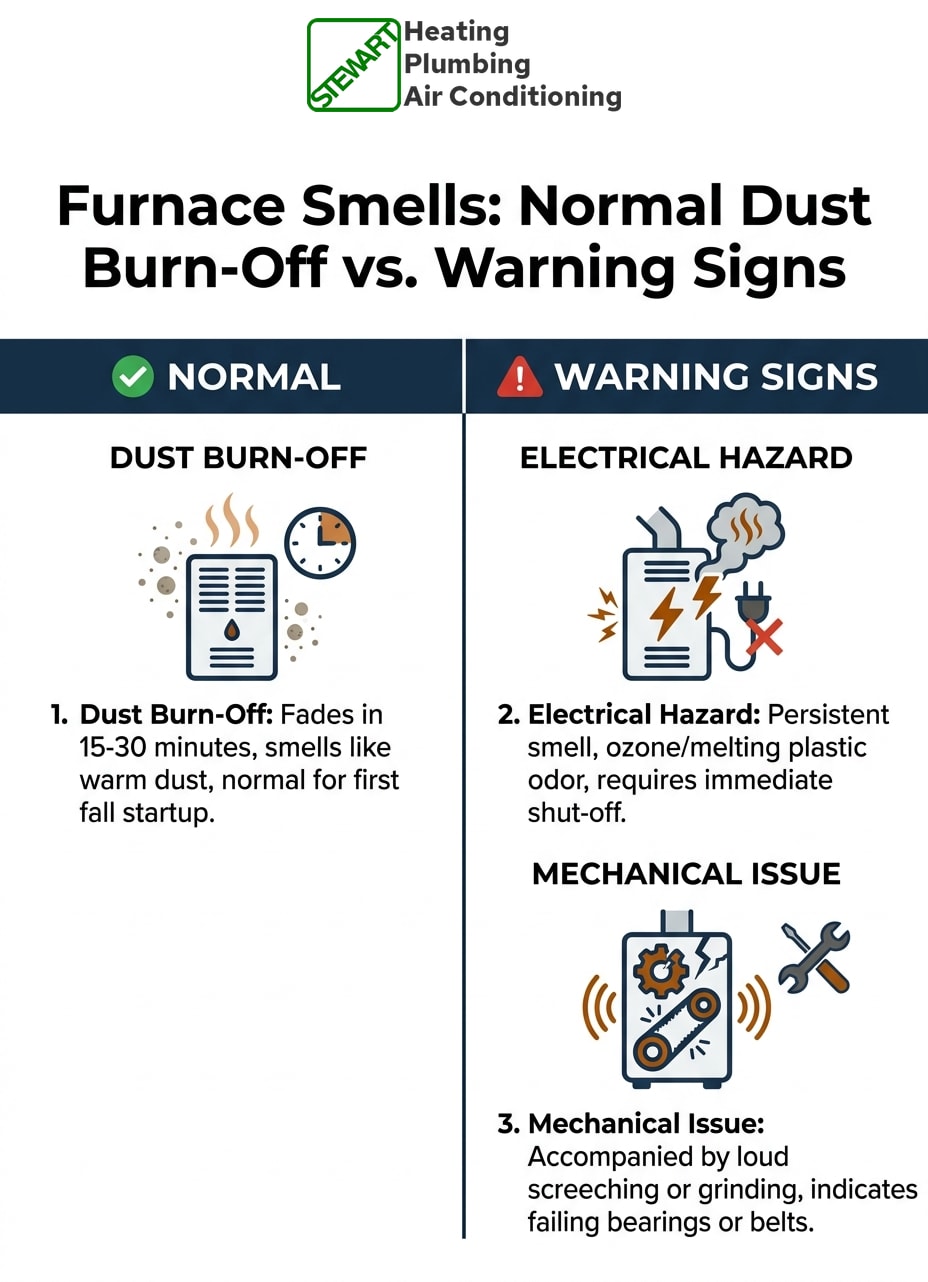
When the system fires up for the first time, the heat exchanger rapidly reaches extreme temperatures. The layer of settled dust has nowhere to go, so it incinerates directly on the metal surface. This process creates a distinct, somewhat organic burning smell that resembles toasted dirt or warm lint. Because the volume of dust is relatively small, this burn-off phase is brief. In most well-maintained systems, the odor will peak within the first ten minutes of operation and completely dissipate within 15 to 30 minutes of the heating cycle.
If the smell lingers past the half-hour mark, or if it grows noticeably stronger, the situation shifts from a harmless physical reaction to a potential hazard. This is where accurate symptom recognition becomes highly valuable.
Not all burning smells are created equal. While dust burn-off is a routine part of seasonal transitions, other odors indicate immediate danger to the equipment. If you detect a sharp, acrid scent that reminds you of melting plastic, burning rubber, or electrical ozone, you are likely dealing with a failing component rather than settling dust.
• Electrical ozone: Often indicates an overheating blower motor, a failing capacitor, or compromised wire insulation melting under the electrical load.
• Sulfur or rotten eggs: A universal warning sign of a natural gas leak, requiring immediate evacuation and a call to your utility provider.
• Exhaust fumes: If your vents smell like a running vehicle, this points to a cracked heat exchanger leaking combustion gases into your breathing air.
Never attempt DIY electrical diagnostics on heavy heating equipment. If you suspect an electrical fire or a cracked heat exchanger, the safest course of action is to shut off power at the main breaker panel and contact a licensed technician immediately.
Alongside unusual odors, the first heating cycle of the season often brings unexpected mechanical sounds. A dormant system in Pittsburgh CA may groan or rattle as cold metal expands and unlubricated parts begin to move again. While a brief hum or a soft click is standard operational noise, loud or persistent sounds usually point to mechanical wear.
The blower assembly is responsible for pushing conditioned air through your ductwork, and it is the source of most startup noises. If the system utilizes a belt-driven motor, a loud squealing sound typically means the belt has dried out, stretched, or slipped out of alignment during the off-season. In direct-drive motors, a harsh grinding or metal-on-metal screech points directly to worn-out bearings that have lost their lubrication.
Rattling sounds present a different diagnostic path. When a furnace rattles heavily upon startup, the cause is often loose exterior panels, unfastened ductwork vibrating against floor joists, or an unbalanced blower wheel wobbling on its axis. While a loose panel is a minor nuisance, an unbalanced blower wheel can eventually tear the motor apart if left unchecked.
• High-Pitched Squeal — Likely Mechanical Cause: Slipping blower belt or dry motor bearings — Recommended Action: Schedule professional lubrication or belt replacement
• Heavy Grinding — Likely Mechanical Cause: Failed bearings causing metal-on-metal friction — Recommended Action: Immediate shut-off to prevent motor burnout
• Rattling / Vibrating — Likely Mechanical Cause: Loose cabinet panels or unbalanced blower wheel — Recommended Action: Secure panels; request blower assembly inspection
• Loud Boom on Startup — Likely Mechanical Cause: Delayed gas ignition (dirty burners) — Recommended Action: Requires urgent burner cleaning and safety check
Catching these auditory warning signs early is the best way to prevent a total breakdown in the middle of winter. Enrolling in a routine maintenance plan ensures that technicians can inspect belts, oil bearings, and tighten loose components before the heavy heating season even begins.
While checking the furnace is a priority in the fall, comprehensive home readiness also requires evaluating the systems that work harder as temperatures drop. As the ground cools in Pittsburgh CA, the incoming municipal water supply becomes much colder. This forces your water heater to expend significantly more energy to reach your target temperature, exposing underlying vulnerabilities in the tank.
The most significant vulnerability in this region is local water quality. Local water district reports often indicate hard to very hard water—frequently measuring 14 or more grains per gallon. Hard water contains high concentrations of dissolved minerals, primarily calcium and magnesium. When this mineral-heavy water enters your water heater and is subjected to high temperatures, a chemical reaction occurs. The heat causes the calcium and magnesium to precipitate out of the water, settling at the bottom of the tank as a solid, chalky substance known as scale.
Over months and years, this scale hardens into a thick layer of rock-like sediment. Because the gas burners or electrical heating elements are located at the bottom of the tank, they must now heat through this dense layer of insulation before they can actually heat the water. This forces the appliance to run longer, consume more energy, and endure higher internal stress. The rapid accumulation of scale is the primary reason water heaters lose efficiency, suffer premature part failure, and begin producing alarming noises during the colder months.
If you hear a distinct popping, rumbling, or knocking sound coming from your utility closet during a November pre-winter startup, the culprit is almost certainly mineral scale. The mechanics behind this noise are fascinating but destructive. As the thick layer of sediment settles at the bottom of the tank, small amounts of water become trapped underneath the crust, directly against the heat source.
When the burners fire up, this trapped water flash-boils into steam much faster than the rest of the tank. The steam expands violently, bursting upward through the heavy layer of mineral scale. The popping or knocking sound you hear is literally the sound of miniature steam explosions cracking through solid calcium inside your tank. Beyond being noisy, this process is highly inefficient and physically damages the inner lining of the appliance.
Secondary symptoms of severe scale buildup include inconsistent water temperatures at your faucets and noticeable pressure imbalances throughout the house. When a tank is choked with sediment, components like the pressure switch or the temperature and pressure relief (TPR) valve can become compromised, leading to erratic performance.
A noisy tank is an inefficient tank, but knowing when that noise transitions into a structural risk is highly important. If the rumbling is accompanied by visible rust near the base, moisture pooling on the floor, or a complete inability to sustain hot water, the structural integrity of the steel tank has likely been compromised by prolonged overheating.
At this stage, flushing the tank is no longer a viable solution, as the hardened scale cannot be drained away. Attempting DIY repairs on a pressurized vessel connected to a gas line or heavy electrical circuit is never recommended. When symptoms reach this level of severity, the safest path forward is exploring professional water heater repair and replacement to secure your home's hot water supply for the winter.
The ultimate goal of troubleshooting is knowing exactly when to step back and hand the situation over to an expert. Whether you are dealing with a furnace in the attic or a water heater in the garage, establishing a clear decision framework prevents small issues from escalating into major property damage.
For standard dust burn-off smells, the timeline is your best diagnostic tool. If the odor is mild, smells like warm dust, and noticeably fades within 30 minutes, the system is simply clearing its throat for the season. However, there are specific triggers that should prompt you to immediately shut off the equipment at the thermostat and the main breaker panel.
• Persistent electrical odors: Any smell resembling ozone or melting plastic that lasts longer than a few minutes.
• Loud metal-on-metal grinding: A sign that bearings have completely failed and the motor is destroying itself.
• Visible water pooling: Any moisture found around the base of a furnace or water heater indicates a breach that requires immediate isolation.
• Repeated system tripping: If the equipment repeatedly trips your electrical breaker, do not keep resetting it; this indicates a dangerous electrical short.
When these warning signs appear in your Pittsburgh CA home, relying on a family-owned team trusted by the East Bay community since 1974 ensures you receive honest, experienced diagnostics rather than unnecessary upselling. A professional evaluation protects your infrastructure and guarantees the equipment is safe to operate.
Navigating a November pre-winter startup often generates a specific set of questions. Below are direct answers to the most common concerns homeowners raise when preparing their systems for cold weather.
Your furnace smells like burning on its first use because dust and airborne particles have settled on the heat exchanger over the summer. When the burners ignite, this accumulated debris incinerates instantly, producing a distinct, warm, dusty odor that travels through your ductwork.
The burning dust smell should last no longer than 15 to 30 minutes during the initial heating cycle. If the odor persists beyond half an hour, grows stronger, or smells like melting plastic, shut the system down, as this indicates a mechanical or electrical problem.
Dangerous furnace noises include loud metal-on-metal grinding, high-pitched screeching, and loud booming sounds upon startup. Grinding indicates failing motor bearings, while a loud boom suggests delayed gas ignition, which allows dangerous amounts of combustible gas to build up before lighting.
You should call a professional if the heating smell resembles electrical ozone, melting wire insulation, sulfur, or vehicle exhaust. Additionally, contact an expert if a standard dust smell fails to dissipate after 30 minutes, as this points to an underlying operational failure.
A water heater makes a popping sound when mineral scale builds up at the bottom of the tank, trapping water against the heat source. The trapped water flash-boils into steam and violently bursts through the sediment layer, creating a distinct popping or rumbling noise.
No, it is never safe to run a furnace if it smells like burning plastic. This odor strongly indicates melting wire insulation, an overheating capacitor, or a failing blower motor, which poses an immediate electrical fire risk. Shut off the power and request an inspection, or learn more about why a water heater pressure switch fails open and how electrical safety mechanisms protect your appliances.
Understanding the difference between normal burn-off and critical failure is the key to securing peace of mind during a November pre-winter startup. When you know exactly how your equipment is supposed to sound and smell, you remove the guesswork from your seasonal home maintenance tips and troubleshooting routines. Recognizing the impact of hard water on your tank and the mechanics of dormant dust on your heat exchanger empowers you to make safe, informed decisions.
Always prioritize safety over convenience. If a symptom falls outside the boundaries of normal operation, shutting down the system and requesting a professional evaluation is the most effective way to protect your home. To ensure your systems are thoroughly prepared for the cold months ahead, take advantage of current plumbing repair specials and schedule a comprehensive inspection today.

Very professional and complete. I would recommend Stewart to anyone. Highest quality of workmanship and clean installation.
Stewart Heating Plumbing Air Conditioning just did some work for us for the first time. They did an installation at my home and it turned out well. I thought the price was fair and I definitely would use them again. The technicians were very friendly and knowledgeable about their work. I highly recommend Stewart Heating Plumbing Air Conditioning and already told friends to use them.
We have been using Stewart Heating Plumbing Air Conditioning since 1995. They put the original heating and air unit in the house, and we have just stayed with them. They are dependable and honest people, and they have done a good job for us every time that we have used them!
They came and did an inspection and are coming tomorrow to do the repair.
They replaced a regulator the first time, and then the water heater vent had to be replaced. They did great work.
The gentleman that serviced us was helpful, insightful, and knew what he was talking about. Overall, it was a great experience.