

Recent Blogs
Stay updated with our latest blog posts.

If your furnace is acting erratically or your water heater is running cold on the exact morning you finally need them, having reliable home maintenance tips and troubleshooting strategies can save the day. When the hot, dry East Bay summer finally gives way to chilly fall mornings, your dormant mechanical systems face sudden thermal and mechanical stress. Firing up equipment that has sat idle for months often reveals hidden issues, from strange odors to unexpected shutdowns. In our decades of experience serving Pittsburgh CA since 1974, our team at Stewart Heating, Plumbing and Air Conditioning has seen these exact mid-fall startup issues time and time again. During a typical October heating startup, understanding the difference between normal operational behavior and a legitimate mechanical failure is critical to keeping your home safe, warm, and comfortable.
For comprehensive support with your home systems, explore our Plumbing Services or schedule Water Heater Repair & Replacement today.
Mechanical systems are designed to run. When a furnace or heating component sits unused from May through September, several things happen internally. Lubricants in motors can settle, dust accumulates heavily on stationary components, and electrical contacts can develop slight oxidation. When you demand immediate, high-capacity performance on the first cold morning of the year, these dormant components are suddenly subjected to rapid heating, expansion, and friction. This sudden shift is why our technicians notice the majority of heating and plumbing quirks presenting themselves all at once during the transition into the colder months.
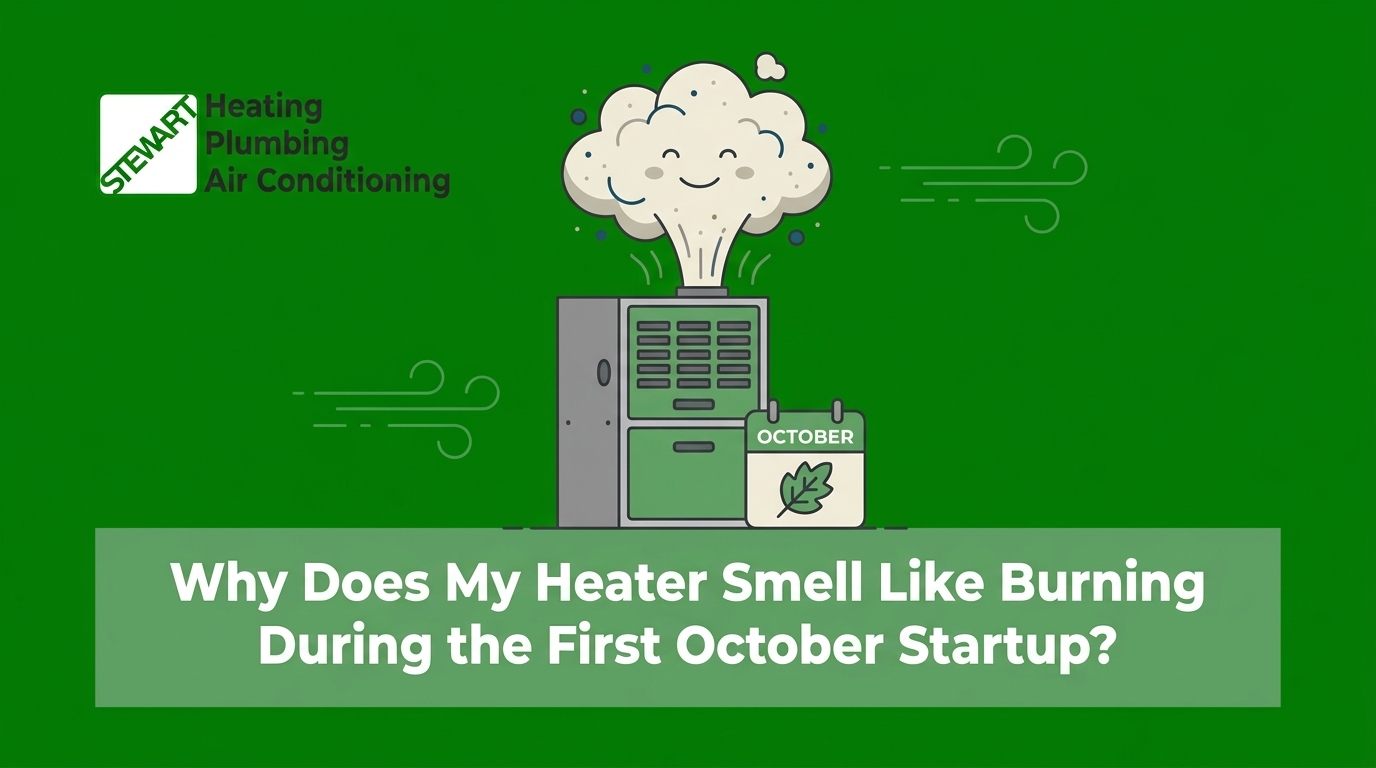
One of the most alarming experiences for a homeowner in Pittsburgh CA / East Bay is turning on the thermostat for the first time in months and immediately smelling something burning. Our dispatchers frequently receive panicked calls about this exact issue every fall. While your first instinct might be to panic, the source of the odor dictates whether you are experiencing a normal seasonal occurrence or a serious safety hazard.
Throughout the long, dry California summer, your home's air continues to circulate through your ductwork if you run your air conditioning. Even with a good filter, microscopic dust particles, pet dander, and airborne debris settle directly onto your furnace's heat exchanger. Because the heating cycle is completely inactive during the summer, this layer of dust remains undisturbed.
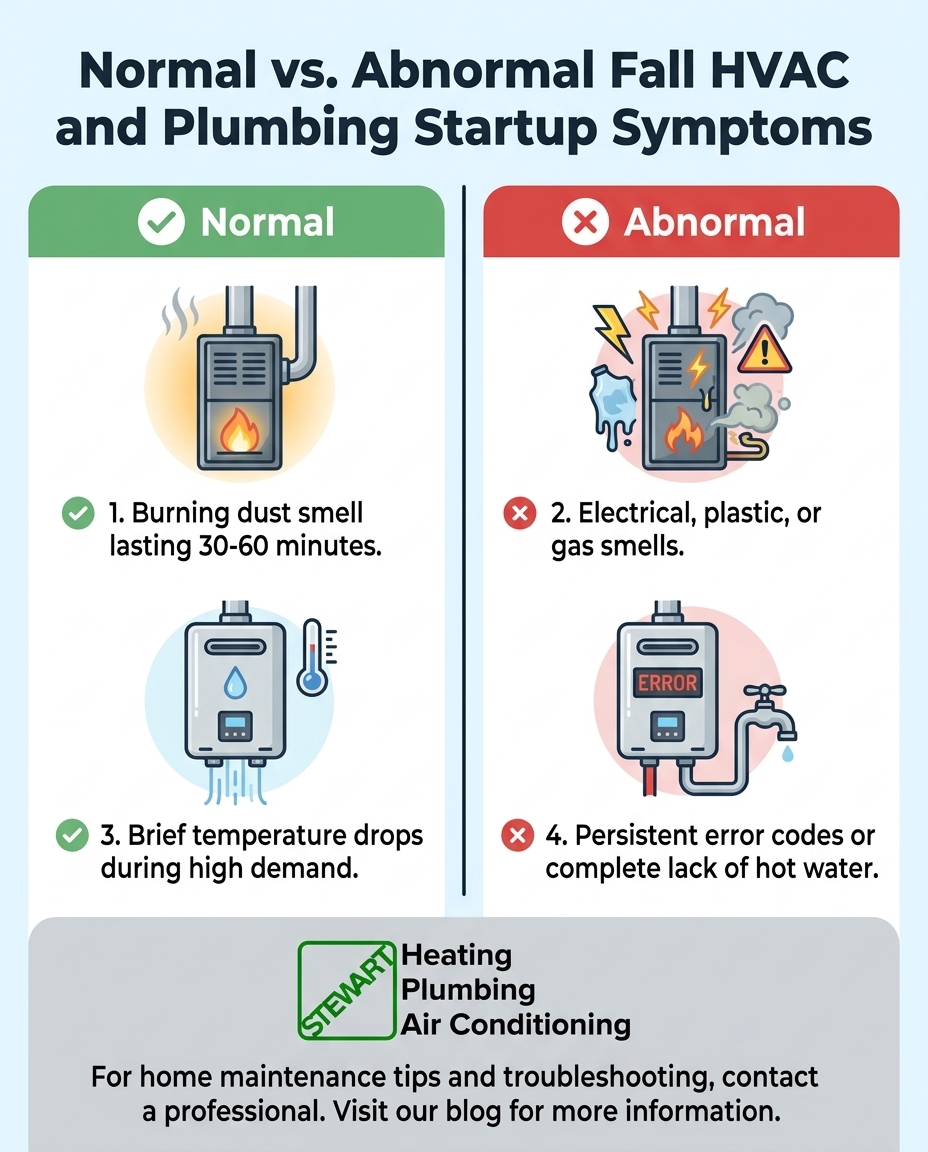
When you finally initiate a mid-fall / October heating startup, those burners ignite, rapidly heating the metal heat exchanger to hundreds of degrees. The settled dust immediately incinerates. This creates a distinct, slightly acrid smell that permeates the house through the vents. The key takeaway: A burning dust smell is entirely normal and typically dissipates within 30 to 60 minutes of the first startup as the debris finishes burning off.
Not all odors are harmless. If the smell coming from your vents does not resemble burning dust, or if it persists well beyond the first hour of operation, you must take immediate action. Certain odors indicate severe mechanical or electrical failures that require professional intervention.
• Burning Plastic or Rubber — Likely Cause: Overheating fan motor, melting wire insulation, or a foreign object in the ductwork. — Required Action: Turn off the system immediately at the thermostat and breaker. Call a licensed professional.
• Electrical or "Ozone" Smell — Likely Cause: Failing electrical components, short circuits, or an overheating blower motor. — Required Action: Shut down power to the furnace immediately. Do not attempt to restart.
• Rotten Eggs or Sulfur — Likely Cause: A natural gas leak from the furnace valve or supply line. — Required Action: Evacuate the home, leave doors open, and call your gas utility provider or emergency services.
Another highly common issue our team encounters during a mid-fall / October heating startup is a phenomenon known as "short cycling." This occurs when your furnace turns on, runs for a very brief period (often just a few minutes), and then shuts down prematurely before the home has reached the target temperature set on the thermostat. The system will then attempt to restart shortly after, repeating the frustrating cycle.
Modern heating systems are built with strict safety protocols. The most critical of these is the high-limit switch, which monitors the internal temperature of the heat exchanger. If the internal temperature rises too high, the switch intentionally cuts the power to the burners to prevent a catastrophic failure or fire hazard. Short cycling is most often the direct result of this safety switch doing exactly what it was designed to do: protecting your home from an overheating furnace.
When a furnace overheats and short cycles, the root cause is almost always restricted airflow. If the heat generated by the burners cannot be pushed out of the system and into your home by the blower motor, it gets trapped inside the cabinet.
1. Check and replace the air filter: A filter that was neglected during the heavy summer air conditioning season is likely clogged with dust and debris. This severely chokes the system's intake. Replacing a dirty filter is the single most effective step a homeowner can take to resolve short cycling.
2. Verify thermostat settings: Ensure the thermostat is set firmly to "Heat" and that the fan is set to "Auto." Sometimes, a weak thermostat battery can also cause erratic cycling signals.
3. Ensure all vents are open: Closing vents in unused rooms increases static pressure inside the ductwork, which can trap heat and trigger the limit switch. Ensure at least 80% of your home's supply vents are fully open and unobstructed by furniture.
A critical warning: Never attempt to bypass a high-limit safety switch, and never open the blower compartment to inspect internal wiring. If replacing the filter and checking the vents does not resolve the short cycling, the issue may be a failing blower motor, a faulty control board, or a malfunctioning sensor. These issues require the specialized tools and expertise of a licensed technician.
Few things are more jarring on a brisk morning in Pittsburgh CA / East Bay than stepping into a shower only to be met with freezing water. Tankless water heaters are highly efficient and generally reliable, but they operate differently than traditional storage-tank models. When a tankless unit fails to produce hot water, it requires a specific troubleshooting approach that we've perfected over years of local service.
Before assuming the unit has suffered a catastrophic failure, walk through these basic, safe diagnostic checks to rule out simple external factors:
• Check the digital display: Most modern tankless units feature a digital control panel. If the system has shut down, it will almost always display an alphanumeric error code. Document this code—it is the exact diagnostic clue a technician will need to understand the failure.
• Verify the power supply: Tankless water heaters, even gas-powered models, require electricity to operate the control board, sensors, and ignition system. Check your home's electrical panel to ensure the dedicated circuit breaker hasn't tripped.
• Confirm the gas supply: Ensure the gas valve leading to the unit is in the fully open position (parallel to the gas line). If other gas appliances in your home are working, the issue is isolated to the water heater.
• Assess your household demand: Tankless units heat water on demand, which means they have a maximum flow rate capacity. If you are running a washing machine, a dishwasher, and two showers simultaneously on a cold morning, you may be exceeding the unit's ability to keep up, resulting in lukewarm water.
If you suspect that high demand is the culprit rather than a mechanical failure, you can learn more about how flow rates affect your system by reading our guide on Why Your Tankless Water Heater Randomly Runs Cold During Back-to-Back Showers.
If your basic checks do not resolve the issue and the unit refuses to ignite, you are likely dealing with an internal mechanical failure. A mid-fall / October heating startup often coincides with a drop in municipal groundwater temperatures. Colder incoming water forces the tankless unit to work significantly harder to achieve the desired output temperature, which can push aging or unmaintained components past their breaking point.
A tankless water heater only fires its burners when it senses water physically moving through the system. It detects this movement using an internal flow sensor. Over time, sediment and debris from the municipal water supply can foul this delicate sensor. If the sensor is stuck or coated in grime, it will fail to signal the control board that a hot water tap has been opened, and the unit will simply remain off.
Similarly, the unit features a cold water inlet filter designed to catch large debris before it enters the heat exchanger. If this filter becomes clogged with sediment, it restricts the incoming water flow. If the flow drops below the unit's minimum activation threshold (usually around 0.5 gallons per minute), the system will not ignite.
The most common and destructive mechanical issue for tankless water heaters is hard water scale buildup. As water is rapidly heated, dissolved minerals (primarily calcium and magnesium) precipitate out of the water and bond to the walls of the internal copper heat exchanger. This scale acts as a stubborn insulator, forcing the burners to run hotter and longer to transfer heat into the water.
Eventually, severe scale buildup will restrict water flow entirely or cause the heat exchanger to overheat, triggering a safety lockout. Removing this scale requires a professional descaling procedure, which involves flushing the system with a specialized, food-grade acidic solution for an extended period. Attempting to descale a unit without the proper equipment or using the wrong chemicals can easily destroy the heat exchanger and void the manufacturer's warranty.
Transitioning from reactive troubleshooting to proactive maintenance is the smartest way a homeowner in Pittsburgh CA / East Bay can protect their property and their comfort. Waiting for a system to fail on the coldest night of the year guarantees discomfort and often leads to more extensive, emergency repairs. The alternative is scheduling a comprehensive pre-winter inspection.
An annual heating and plumbing inspection goes far beyond simply changing a filter. During a professional tune-up, a licensed technician performs a deep dive into the mechanical health of your systems:
• Combustion analysis: Verifying that the furnace burners are operating efficiently and that the heat exchanger is free of dangerous cracks that could leak carbon monoxide.
• Electrical testing: Measuring the voltage and amperage of blower motors and checking the integrity of all wiring connections to prevent sudden electrical failures.
• System flushing: Performing the required annual descaling of tankless water heaters to remove mineral buildup, restore efficiency, and prevent heat exchanger lockouts.
• Safety verification: Testing all high-limit switches, flame sensors, and pressure relief valves to ensure the systems will shut down safely in the event of a malfunction.
Addressing minor wear and tear before the heavy winter usage begins is the best way to prevent total system lockouts. To keep your home's vital systems running optimally year-round, our team highly recommends considering the long-term benefits of a comprehensive plumbing maintenance plan.
When preparing for a mid-fall / October heating startup, it is natural to have questions about the strange noises, smells, and behaviors your systems might exhibit. Here are the most common questions we receive.
Yes, if the heating system has been dormant throughout the summer, a burning dust smell is entirely normal. Dust naturally settles on the heat exchanger over the warmer months, and when the burners ignite for the first time, this dust incinerates. The odor should completely dissipate within 30 to 60 minutes of continuous operation.
Short cycling is most often caused by a dirty air filter that severely restricts airflow through the system. This lack of airflow causes the heat exchanger to rapidly overheat, which trips the high-limit safety switch and shuts the furnace down prematurely. Replacing the air filter and ensuring all household vents are open is the first step in resolving this issue.
Common external culprits include a tripped dedicated circuit breaker, a closed gas supply valve, or a clogged cold water inlet filter. Internally, issues like severe hard water scale buildup or a fouled flow sensor will prevent the system from recognizing that a hot water tap has been opened, stopping ignition entirely.
Sudden operational stops are almost always linked to the system's internal safety protocols triggering an error code. These lockouts can be caused by venting blockages, ignition failures, sudden gas pressure drops, or an overheating heat exchanger. Checking the digital display for the specific error code is the best way to determine the cause of the sudden stop.
You should contact a professional immediately if a burning smell persists well beyond the first hour of operation, or if you ever detect odors resembling burning plastic, electrical ozone, or rotten eggs. Additionally, if your tankless unit displays persistent error codes or your furnace continues to short cycle after you have replaced the air filter, a licensed technician is required to diagnose the underlying mechanical issue.
While some early-season startup quirks are a normal part of homeownership, persistent mechanical failures require a trained, professional eye. Navigating the transition into colder weather doesn't have to be stressful when you have a reliable partner to ensure your systems are operating safely and efficiently. Stewart Heating, Plumbing and Air Conditioning has proudly served Contra Costa County since 1974, bringing decades of trusted, expert diagnostic solutions to every home we visit in Pittsburgh CA / East Bay.
Don't wait for a minor system quirk to turn into a major mid-winter breakdown. We encourage you to schedule a professional diagnostic today to ensure safe, reliable heating and hot water all season long. Be sure to review our current plumbing specials to make your proactive fall maintenance even more accessible.

Very professional and complete. I would recommend Stewart to anyone. Highest quality of workmanship and clean installation.
Stewart Heating Plumbing Air Conditioning just did some work for us for the first time. They did an installation at my home and it turned out well. I thought the price was fair and I definitely would use them again. The technicians were very friendly and knowledgeable about their work. I highly recommend Stewart Heating Plumbing Air Conditioning and already told friends to use them.
We have been using Stewart Heating Plumbing Air Conditioning since 1995. They put the original heating and air unit in the house, and we have just stayed with them. They are dependable and honest people, and they have done a good job for us every time that we have used them!
They came and did an inspection and are coming tomorrow to do the repair.
They replaced a regulator the first time, and then the water heater vent had to be replaced. They did great work.
The gentleman that serviced us was helpful, insightful, and knew what he was talking about. Overall, it was a great experience.