

Recent Blogs
Stay updated with our latest blog posts.

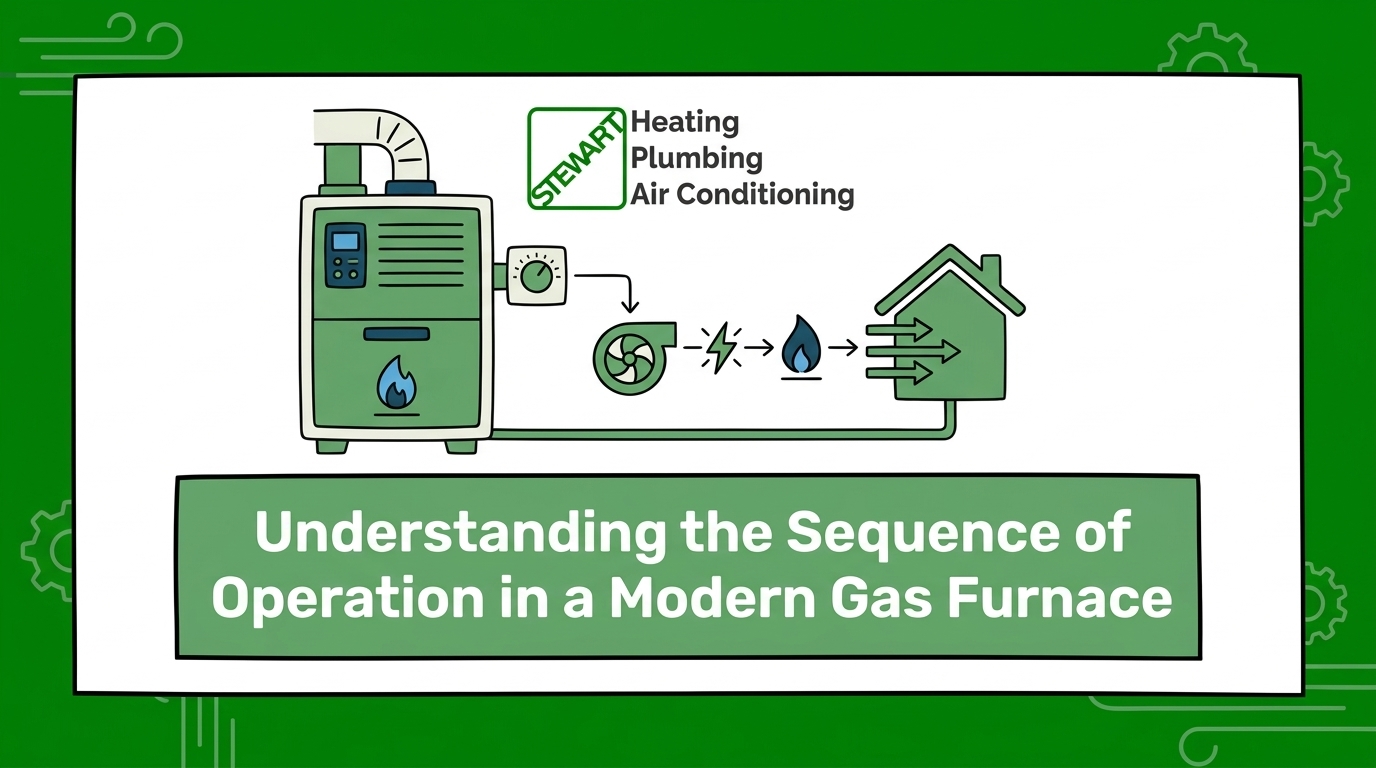
Your thermostat clicks, the furnace hums to life, but instead of warm air filling the room, the system abruptly shuts down—this is why understanding the sequence of operation in a modern gas furnace is so critical. That sudden silence can be incredibly frustrating, especially when you are just trying to take the chill out of the air on a cool September evening in Pittsburgh. If you are performing your early fall pre-heating-season test and the system immediately halts, you are likely experiencing a safety lockout. Modern heating systems are engineered with a strict mechanical checklist. If any single step in their ignition process fails, the entire system aborts the startup to keep your home safe.
This strict checklist is known as the sequence of operation. It is not a random series of events, but a precise, step-by-step communication between your thermostat, control board, and mechanical components. By learning how to translate the clicks, hums, and pauses coming from your utility closet, you can gather valuable diagnostic clues about what is going wrong. If your system won't start, professional diagnostics for your heating systems can restore comfort quickly and safely.
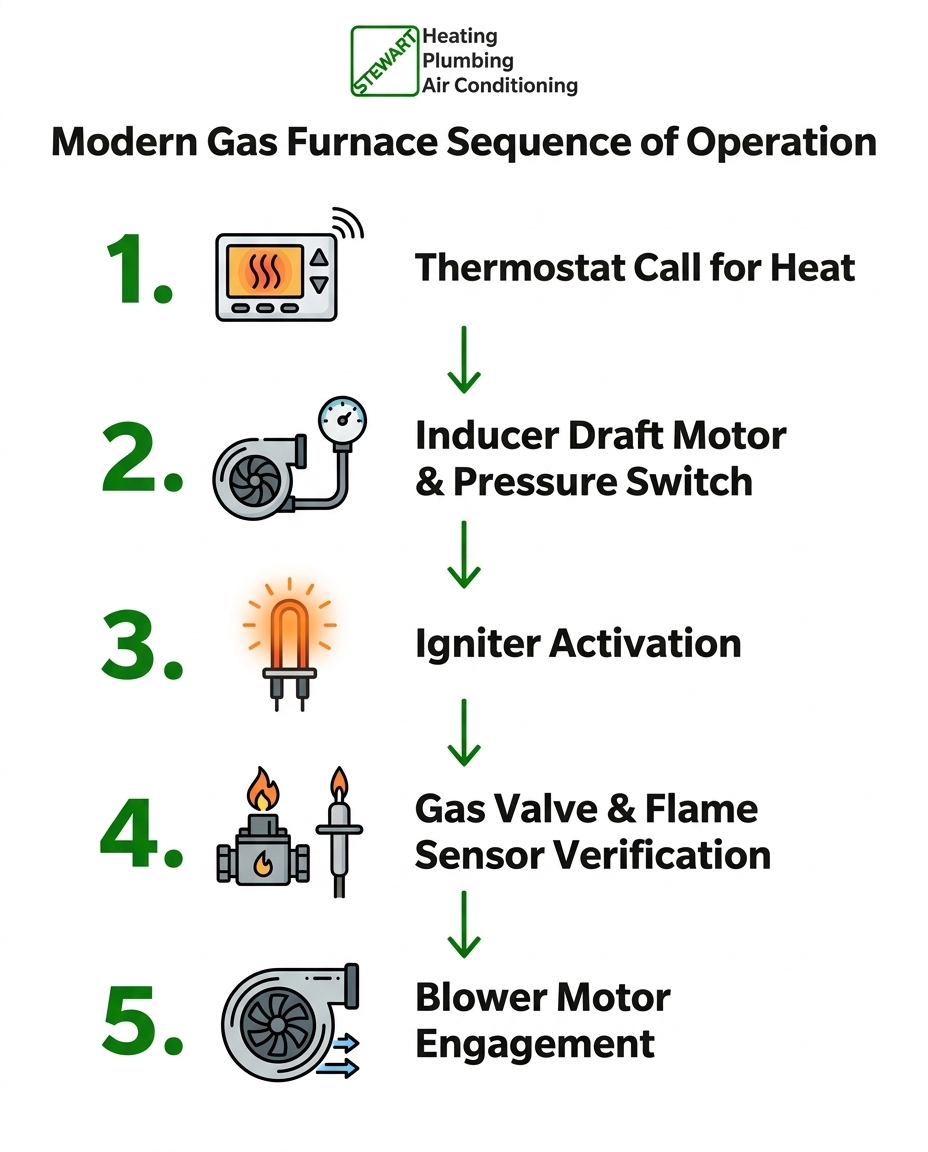
The entire sequence begins quietly in your hallway or living room. When the indoor temperature drops below the set point on your thermostat, the device acts as a switch, closing a circuit and sending a low-voltage (usually 24-volt) signal down to the furnace's main control board. This signal is the official "call for heat." Without this initial communication, the furnace will remain completely dormant, regardless of how cold the house gets.
Before any moving parts engage, the control board performs a microsecond self-check. Think of this as the furnace scanning its own internal safety parameters. The board verifies that all limit switches and rollout switches are in their proper open or closed default positions. If a safety switch is already tripped—perhaps from an overheating event at the end of last winter or a previous lockout—the sequence stops right here. The board will typically flash a diagnostic LED light, but the furnace will not make a sound.
During an early fall pre-heating-season test, homeowners often discover that their thermostat batteries have died over the summer, or that dust has interfered with the thermostat's internal sensors. If the control board never receives that initial 24-volt signal, the furnace assumes everything is fine. This is a common point of confusion, as the furnace itself may be in perfect working order, but the command center is failing to communicate. If you suspect your control board is receiving the signal but refusing to proceed, it is time to request heating service so a technician can test the electrical pathways.
If the control board's initial safety check passes, the first audible step of the sequence begins. You will hear a distinct, low humming or whirring sound coming from the unit. This is the inducer draft motor spinning up. The inducer is a small exhaust fan with a very important job: it pulls air through the heat exchanger to clear out any residual, potentially dangerous gases before ignition occurs.
As the inducer draft motor runs, it creates a negative draft or vacuum inside the system. The furnace must verify that this draft is strong enough to safely vent exhaust gases (like carbon monoxide) out of your home. This verification is handled by the pressure switch, a small, disc-shaped component connected to the inducer housing by a flexible rubber tube.
The pressure switch is a strict gatekeeper. It must detect the precise amount of negative pressure created by the inducer. If the flue pipe is blocked by summer bird nests, fallen leaves, or internal debris, the draft will be weak, and the pressure switch will refuse to close. When this happens, the furnace aborts the sequence to prevent toxic gases from backing up into your living space.
During an early fall tune-up right here in Pittsburgh, our technicians at Stewart Heating, Plumbing and Air Conditioning showed a customer how a small amount of summer debris in the exhaust flue had blocked the pressure switch, halting the sequence entirely. By understanding that the inducer must satisfy the pressure switch, you can see why keeping your exhaust vents clear during your early fall pre-heating-season test is absolutely vital.
Once the pressure switch closes and verifies that the exhaust pathway is clear, the control board gives the green light for the next step: ignition. In older systems, this is where a standing pilot light would come into play. However, modern systems use electronic ignition methods that only activate when heat is actively required, saving energy and improving safety.
The control board sends voltage to the ignition system. Most contemporary furnaces use a Hot Surface Igniter (HSI). An HSI is made of a specialized silicon carbide material that resists intense heat. When voltage passes through it, the igniter glows a bright, white-hot orange, reaching temperatures high enough to ignite natural gas instantly. Alternatively, some systems use a direct spark igniter, which produces a rapid, audible clicking sound as it generates an electrical arc—similar to the spark igniter on a gas BBQ grill.
Because the igniter undergoes extreme temperature changes every time the furnace cycles on and off, it is one of the most common components to fail over time. A cracked, brittle, or worn HSI will fail to glow, or won't reach the required temperature. If the control board sends the voltage but the igniter fails to activate, the sequence halts before any gas is ever released into the system. If you recently upgraded from an older system and are wondering why your furnace pilot light keeps going out, the answer is likely that you no longer have one—you have an electronic igniter that requires professional testing during your early fall pre-heating-season test.
Step four is the most critical safety juncture in the entire sequence of operation. With the inducer motor running and the igniter glowing hot (or sparking), the control board sends a signal to open the gas valve. The valve opens for a very brief, strictly timed window—usually just 3 to 7 seconds—allowing natural gas or propane to flow into the burners and meet the igniter.
When the gas meets the heat source, the burners ignite, producing a distinct, soft "whoosh" sound. But the furnace does not just assume the fire is burning safely. It demands immediate proof. This is where the flame sensor steps in. The flame sensor is a thin metal rod positioned directly in the path of the burner flame.
The flame sensor uses a process called flame rectification. When the flame engulfs the sensor rod, the fire itself conducts a tiny electrical current sent by the control board. The sensor must read a specific flame sensor microamp signal (typically between 1 to 4 microamps) and send it back to the board. This microamp signal proves that combustion is actively happening.
If the sensor fails to register the flame, the control board assumes raw gas is pouring into the combustion chamber without burning. To prevent a dangerous gas buildup, the board snaps the gas valve shut instantly. In our decades of servicing furnaces across Contra Costa County, this is a pattern we see often. Just last fall, our team visited a local home where the system kept short-cycling after just a few seconds. We explained to the homeowner that a microscopic layer of summer dust on the flame sensor was blocking the flame sensor microamp signal. After we cleaned it and restored the sequence, they immediately signed up for our ongoing maintenance plan. Summer dust buildup is the number one reason furnaces fail this specific step during an early fall pre-heating-season test.
You might assume that as soon as the burners ignite, warm air should immediately start blowing out of your vents. However, the sequence of operation includes a deliberate pause. Even after stable flames are established and verified by the flame sensor microamp signal, the main blower fan delays turning on for about 30 to 60 seconds.
This delay serves a very specific comfort purpose. If the blower fan engaged the exact second the burners ignited, it would push the cold air that has been sitting in your ductwork directly into your living spaces. By delaying the blower, the furnace allows the heat exchanger—the metal chamber that transfers heat to the air—to warm up sufficiently. Once the internal temperature reaches the ideal threshold, the blower motor engages, pushing comfortable, warm air through your home.
The system will continue to run until the thermostat detects that the room has reached the desired temperature. Once the call for heat is satisfied, the sequence of operation safely reverses:
1. The gas valve closes: Fuel is cut off immediately, extinguishing the burner flames.
2. The inducer motor runs briefly: The exhaust fan continues to spin for a short post-purge cycle to clear out the last remaining combustion gases.
3. The blower motor runs: The main fan continues to blow for a few minutes to extract the remaining heat from the heat exchanger, maximizing efficiency and cooling the metal down safely.
4. Standby mode: The system goes quiet, waiting for the next call for heat.
Understanding the sequence of operation in a modern gas furnace empowers you to become a better observer of your own home comfort system. By paying attention to the specific sounds your furnace makes during an early fall pre-heating-season test, you can often pinpoint exactly where the sequence stalled. While you should never attempt to fix internal gas or electrical components yourself, providing these auditory clues to your technician can drastically speed up the diagnostic process.
Here is a breakdown of how to translate common furnace sounds into actionable diagnostic clues:
• Absolute silence (no hum, no click) after adjusting the thermostat. — Where the Sequence Stalled: Step 1: Thermostat Call — Likely Cause of the Lockout: Dead thermostat batteries, tripped breaker, or an open safety limit switch preventing the sequence from starting.
• A low hum begins, but the system shuts down without a click or "whoosh." — Where the Sequence Stalled: Step 2: Inducer / Pressure Switch — Likely Cause of the Lockout: Blocked exhaust flue, failing inducer draft motor, or a faulty pressure switch unable to verify safe venting.
• The hum starts, followed by a rapid clicking, but no "whoosh" of ignition. — Where the Sequence Stalled: Step 3/4: Igniter / Gas Valve — Likely Cause of the Lockout: A cracked Hot Surface Igniter, a failing spark mechanism, or a gas valve refusing to open.
• The burners ignite with a "whoosh," but shut off completely after 3 to 5 seconds. — Where the Sequence Stalled: Step 4: Flame Sensor — Likely Cause of the Lockout: A dirty flame sensor failing to read the required flame sensor microamp signal, causing the board to cut the gas.
When you call for service, telling our dispatchers, "My furnace hums, ignites for three seconds, and then shuts off," gives the technician a massive head start before they even pull into your driveway.
While understanding the sequence of operation is incredibly empowering, it is vital to clearly define the boundary between homeowner observation and the need for licensed professional intervention. Opening gas valves, attempting to replace inducer draft motors, or bypassing safety limit switches to force a furnace to run is highly dangerous. The sequence exists specifically to prevent fires, explosions, and carbon monoxide leaks.
If your furnace attempts the sequence and fails, it will usually try again. However, after 3 to 5 consecutive failed attempts, the control board will trigger a hard lockout. A hard lockout requires a professional diagnostic to reset safely. Professional technicians carry specialized multimeters to measure the exact flame sensor microamp signal, manometers to test draft pressures, and the training to handle high-voltage and combustible gas components safely.
During a recent pre-heating-season efficiency review, our team found an aging inducer motor drawing too many amps, jeopardizing the entire sequence. We clearly explained the issue to the homeowner, who appreciated our transparent approach. Because chilly winter nights in Contra Costa County make a reliable ignition sequence critical, routine preventative heating maintenance is your best defense. As a family-owned business serving the Pittsburgh community since 1974, our experienced technicians at Stewart Heating, Plumbing and Air Conditioning can pinpoint exactly which step is failing safely and accurately, clearing the dust and debris that commonly interrupt the sequence before the cold weather hits.
The sequence of operation is a strict mechanical checklist the furnace must pass to run safely. It begins with a thermostat call for heat, followed by the inducer motor starting to clear exhaust gases. Next, the pressure switch verifies the draft, the igniter activates, the gas valve opens, the flame sensor confirms combustion via a microamp signal, and finally, the main blower motor engages to distribute heat.
A furnace shutting off after just a few seconds of burning is typically caused by a dirty or failing flame sensor. The sensor must read a specific electrical current to prove the fire is safely burning. If dust or carbon buildup blocks this reading, the control board instantly cuts the gas for safety, aborting the sequence.
A lockout occurs when the main control board detects a failed safety check multiple times in a row. Common triggers include a blocked exhaust flue, a cracked igniter, an overheating heat exchanger, or a lack of verified flame. The lockout is a deliberate safety feature designed to prevent raw gas accumulation or carbon monoxide exposure.
You can usually tell an igniter is bad by listening to and watching the sequence of operation. You may hear the inducer motor hum, but you won't hear the rapid click of a spark igniter or see the bright orange glow of a Hot Surface Igniter. Because the igniter fails to activate, the sequence stalls, and the gas valve will never open.
Furnaces frequently fail their first seasonal test because months of summer dormancy allow dust and debris to settle on sensitive internal components. A microscopic layer of dust on the flame sensor or a small spider web inside the pressure switch tubing is often enough to disrupt the strict safety sequence, resulting in a lockout.
Understanding the sequence of operation in a modern gas furnace transforms a confusing breakdown into a logical, mechanical process. A furnace lockout is not a nuisance; it is a vital safety mechanism protecting your home. Pay attention to your system's sounds during early fall test runs, and if the sequence stalls, trust a qualified professional to quickly diagnose the exact mechanical step and resolve the issue safely.

Very professional and complete. I would recommend Stewart to anyone. Highest quality of workmanship and clean installation.
Stewart Heating Plumbing Air Conditioning just did some work for us for the first time. They did an installation at my home and it turned out well. I thought the price was fair and I definitely would use them again. The technicians were very friendly and knowledgeable about their work. I highly recommend Stewart Heating Plumbing Air Conditioning and already told friends to use them.
We have been using Stewart Heating Plumbing Air Conditioning since 1995. They put the original heating and air unit in the house, and we have just stayed with them. They are dependable and honest people, and they have done a good job for us every time that we have used them!
They came and did an inspection and are coming tomorrow to do the repair.
They replaced a regulator the first time, and then the water heater vent had to be replaced. They did great work.
The gentleman that serviced us was helpful, insightful, and knew what he was talking about. Overall, it was a great experience.