

Recent Blogs
Stay updated with our latest blog posts.

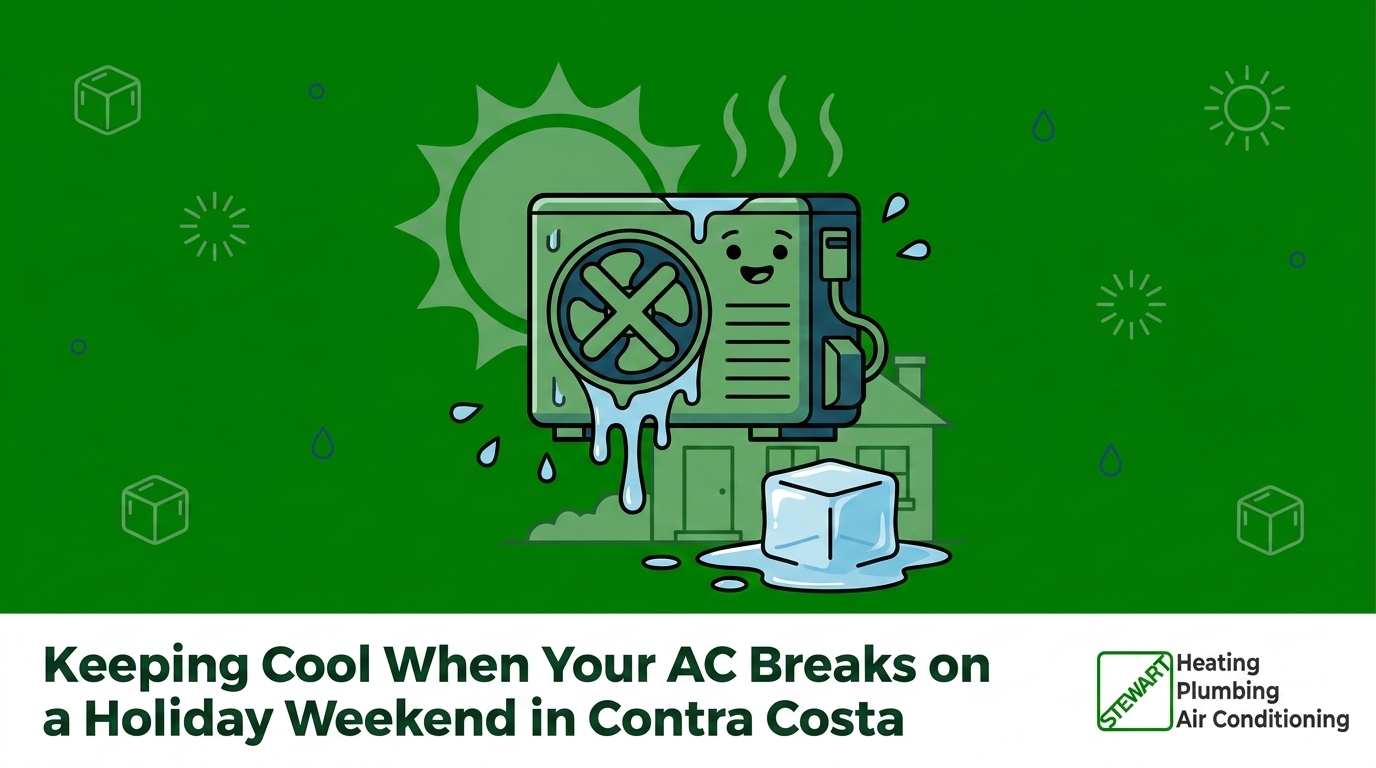
The long weekend is finally here, but keeping cool when your AC breaks on a holiday weekend in Contra Costa can quickly turn a relaxing break into a stressful ordeal. You walk inside expecting a blast of cold air, only to realize the vents are blowing warm air—or worse, nothing at all. The panic sets in as you look at the calendar, realizing that standard supply houses and many local businesses have already closed their doors for the holiday.
Dealing with a sudden breakdown presents a dual challenge: you have to manage your indoor temperatures safely while navigating holiday repair timelines. The good news is that while the wholesale parts suppliers might be locked up, dedicated emergency dispatch teams are actively routing calls and sending technicians out into the field. You are not out of options, and there are immediate, practical steps you can take to keep your home tolerable until help arrives.
Before the peak July heat turns your living room into a sauna, you need to secure your air conditioning systems and request emergency service.
When a cooling system fails during extreme weather, your first reaction might be to repeatedly adjust the thermostat in hopes that the unit will suddenly kick back to life. This is the exact opposite of what you should do. Taking a few calculated steps immediately after a failure can prevent a minor electrical glitch from turning into a catastrophic compressor failure.
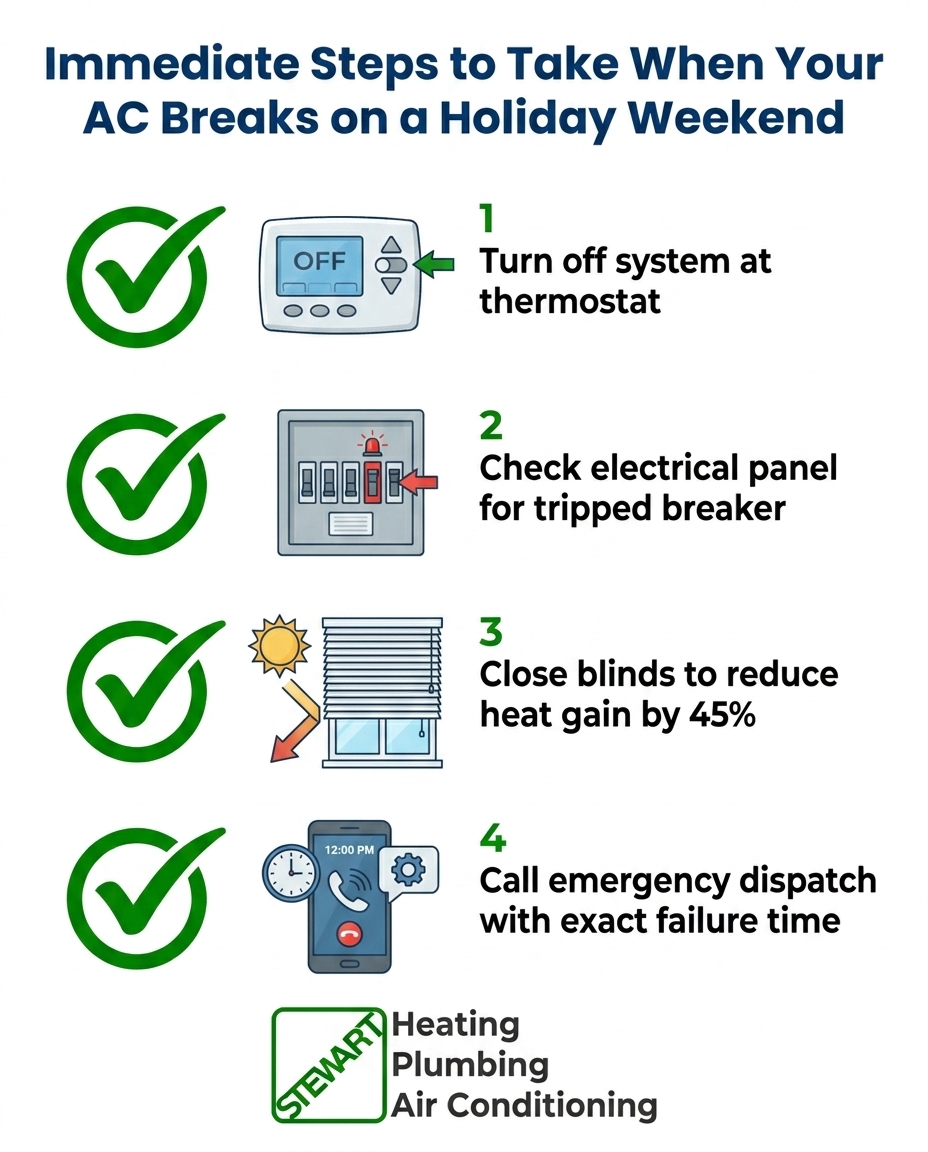
Follow this rapid-triage checklist to secure your equipment:
• Turn off the system completely: Switch the thermostat to the "Off" position immediately. If the unit is blowing warm air, leaving it running forces the compressor to work continuously without actually cooling the house, which can cause the motor to burn out.
• Check the electrical panel: A tripped breaker is a very common symptom of an overworked system. Locate your main electrical panel and look for the HVAC or AC breaker. If it sits in the middle position, flip it completely off, then firmly back on. If it trips again, do not force it—leave it off.
• Document the failure details: Note the exact time the system stopped working and any unusual sounds or smells. A squealing noise points to a different mechanical issue than a burning plastic smell. Relaying this information helps the dispatch team prepare the right parts.
• Avoid the temptation to restart: Repeatedly turning the system on and off can cause heavy electrical surges. Once it is off, leave it off until a professional evaluates it.
Acting quickly makes a massive difference in the final repair outcome. In one documented instance, a homeowner noticed their air conditioning was sending out heat at 7 p.m. on a Friday evening heading into Labor Day weekend. By leaving the system off and calling for help immediately, a technician was able to troubleshoot the unit for two hours, discover a loose wire, and resolve the issue without needing major replacement parts. That quick thinking kept their home cool for the rest of the holiday weekend across Contra Costa County and Pittsburg CA.
• Blowing warm air from vents — Probable Cause: Compressor issue or refrigerant leak — Immediate Action Required: Turn off at thermostat immediately
• System unresponsive / blank thermostat — Probable Cause: Tripped breaker or blown fuse — Immediate Action Required: Check electrical panel; replace thermostat batteries
• Loud grinding or squealing noise — Probable Cause: Failing blower motor or fan belt — Immediate Action Required: Shut down system to prevent motor burnout
• Water pooling around indoor unit — Probable Cause: Clogged condensate drain — Immediate Action Required: Turn off system; clean up standing water
Understanding how your house absorbs and retains heat is the key to staying comfortable while you wait for a technician. This concept is known as thermal mass. Your walls, furniture, floors, and ceiling all absorb heat from the air and from direct sunlight. Once those physical objects get hot, they act like giant radiators, constantly releasing heat back into the rooms even after the sun goes down.
The first two hours after an AC failure are the most critical. If you can stop the house from absorbing heat during this window, you can extend your indoor comfort significantly. This requires immediate defensive action against the sun.
Close all windows, blinds, and curtains the moment you realize the air conditioner is broken. Blocking direct sunlight is one of the most effective ways to maintain your indoor climate; proper window treatments can reduce heat gain by up to 45%. Keep all exterior doors closed tightly and limit foot traffic in and out of the house. Every time a door opens, you lose trapped cool air and invite the peak July heat inside.
Because of Pittsburg's dry heat microclimates, eastern Contra Costa County tends to trap high temperatures much longer into the late afternoon than coastal areas. The western side of your home will take the brunt of this late-day solar radiation. Identify these hot, west-facing rooms and close their interior doors. By compartmentalizing the house, you trap the remaining cool air in the main living spaces and prevent the most intensely heated rooms from warming up the rest of the floor plan.
Once you have locked down the house to prevent new heat from entering, you need actionable ways to stay comfortable without relying on the broken central air system. Temporary cooling is about managing how your body feels rather than trying to lower the ambient temperature of the entire house.
Utilize your ceiling fans strategically. Ensure the blades are rotating counterclockwise, which pushes air straight down and creates a wind-chill effect on your skin. It is important to remember that fans cool people, not rooms. Leaving a ceiling fan running in an empty room simply wastes electricity and adds a small amount of motor heat to the space. Turn them off when you walk out.
You should also eliminate any unnecessary indoor heat sources:
• Avoid the oven and stove: Opt for outdoor grilling, microwave meals, or cold foods.
• Turn off incandescent lighting: Traditional bulbs generate significant heat; rely on natural ambient light or LEDs.
• Delay heavy chores: Running the dishwasher or dryer pumps hot, humid air directly into your living space.
Focus on personal hydration. Drinking plenty of ice water and applying damp, cool cloths to pulse points—like your wrists, neck, and temples—can rapidly lower your core body temperature during peak July heat.
Finally, recognize that a sudden system shutdown might actually be a built-in safety feature rather than a complete mechanical failure. For example, if your indoor unit is located in a closet or attic, water safety switches will trigger and shut the entire system down to prevent flooding if you have a clogged AC drain line. Knowing this can provide peace of mind while you wait for the professional diagnosis.
When you call for help on a Saturday afternoon during a holiday weekend, you might wonder what happens after you hang up the phone. Understanding the dispatch process helps set realistic expectations for wait times and reassures you that your emergency is being actively managed.
There is a massive difference between a standard answering service that simply takes messages and a dedicated weekend dispatch system. Stewart Heating and Air utilizes a dedicated weekend dispatch system, which actively reduces wait times and improves rapid response compared to competitors who simply log calls for Monday morning.
Here is how the triage and routing process generally works for homes in Contra Costa County and Pittsburg CA:
1. Initial Triage: Dispatchers assess the severity of the call. A home with elderly residents, infants, or documented medical needs will often be prioritized due to safety risks. Complete system failures take precedence over minor performance issues.
2. Routing Efficiency: Rather than sending technicians randomly across the county, dispatchers actively group calls by neighborhood. If a technician is already in your zip code, they can be rerouted to your home much faster.
3. Parts Sourcing: Because standard supply houses are closed on holidays, technicians rely heavily on their "truck stock." Fully equipped vans carry universal capacitors, contactors, and motors specifically to handle weekend emergencies without waiting for a supplier to open.
4. Communication Updates: A professional dispatch team will provide a realistic arrival window and update you if the technician gets delayed at a previous emergency, ensuring you are never left guessing.
Once the immediate crisis is resolved and your home is cool again, it is time to look at long-term solutions. Extreme heat waves are notorious for exposing underlying weaknesses in aging or unmaintained systems. A component that functions fine in mild May weather will often fail under the relentless stress of peak July heat.
Pre-season inspections are designed specifically to catch these hidden issues. A technician can identify frayed electrical wires, measure the electrical draw of a failing capacitor, and clean out debris before these minor wear-and-tear items cause a complete holiday outage. Regular care keeps the system running efficiently, reducing your monthly energy usage even under maximum summer load.
Getting on a routine HVAC maintenance plan ensures that your equipment is evaluated before the extreme weather hits. Proactive scheduling often provides access to priority routing, meaning if you do experience an unexpected issue, you are already at the front of the line.
A comprehensive seasonal visit goes far beyond just changing the air filter. It includes a thorough review of your current system performance, checking refrigerant levels, testing safety controls, and clearing condensate drains. If your system is older and struggling to keep up, this is also the perfect time to explore available opportunities for seasonal system updates. By reviewing HVAC service specials, you can upgrade an aging unit on your own schedule, rather than being forced into a rushed decision during a weekend emergency.
The very first step is to turn the system completely off at the thermostat to prevent further mechanical damage. Next, check your main electrical panel for a tripped breaker and reset it if necessary. If the system still fails to turn on, document the exact time it stopped and any strange noises, then call an emergency dispatch line for homes in Contra Costa County and Pittsburg CA.
Start by blocking out the sun; closing all windows, blinds, and curtains can drastically reduce heat gain. Run ceiling fans counterclockwise to create a cooling breeze for the people in the room, and avoid using any heat-generating appliances like ovens or dryers. You can also apply damp, cool cloths to your pulse points to safely lower your body temperature.
An HVAC emergency is typically defined by extreme indoor temperatures that pose a health and safety risk, particularly if elderly individuals, infants, or immunocompromised people are in the home. A complete system failure during a severe heatwave, electrical burning smells, or water leaking heavily from the indoor unit all require immediate professional intervention.
Wait times vary based on call volume and triage priority, but a dedicated dispatch team will generally provide a specific arrival window within a few hours of your call. The actual repair time depends on the issue; replacing a blown capacitor might take less than an hour, while diagnosing a complex refrigerant leak can take several hours.
Yes, it is entirely safe and highly recommended to run ceiling fans when your central air is down. Ceiling fans operate on a completely separate electrical circuit from your HVAC equipment. Just remember to turn them off when you leave the room, as the localized wind-chill effect only benefits you when you are standing in the breeze.
A breakdown during a long weekend does not have to ruin your time off. Acting quickly to secure your equipment and manage your home's thermal mass can keep your family safe and comfortable while you wait for a technician. Remember that even during peak July heat, expert dispatch is available to triage your situation and route help to your door.
Do not wait for the house to reach unbearable temperatures. Reach out immediately to get in the service queue, set clear expectations for your repair timeline, and take the right actionable steps to restore your home's comfort.

Very professional and complete. I would recommend Stewart to anyone. Highest quality of workmanship and clean installation.
Stewart Heating Plumbing Air Conditioning just did some work for us for the first time. They did an installation at my home and it turned out well. I thought the price was fair and I definitely would use them again. The technicians were very friendly and knowledgeable about their work. I highly recommend Stewart Heating Plumbing Air Conditioning and already told friends to use them.
We have been using Stewart Heating Plumbing Air Conditioning since 1995. They put the original heating and air unit in the house, and we have just stayed with them. They are dependable and honest people, and they have done a good job for us every time that we have used them!
They came and did an inspection and are coming tomorrow to do the repair.
They replaced a regulator the first time, and then the water heater vent had to be replaced. They did great work.
The gentleman that serviced us was helpful, insightful, and knew what he was talking about. Overall, it was a great experience.